











InsightFinance
Gan & Lee inks third overseas out-licensing deal for its GLP-1 asset with Korea's JW Pharma, worth up to $81M
Furthermore, Gan & Lee Pharmaceuticals is developing an oral formulation of Bofanglutide. The GZR18 tablet utilizes SNAC absorption enhancer technology. Phase I data indicated that after two weeks of treatment with a 60mg dose, healthy subjects achieved a mean body weight reduction of 4.16% from baseline.
6min read
Read More
We help global healthtech companies, investors, and institutions with the right local partners—from distributors and licensees to investment targets and R&D collaborators.
Startups
Fill the Technical Path Gap of Local Similar Products! "RF + Mechanical" Dual-Technology Atrial Septal Puncture System Approved
In the first quarter, Huiyang Medical obtained registration certificates for two innovative medical devices, forming China's first RF-cross® Radiofrequency Atrial Septal Puncture System with "Zero Exchange, Mechanical + Radiofrequency Dual Technology, and Compatibility with Adjustable Bending." In 2024, it entered the National "Special Review Channel for Innovative Medical Devices" and has now initiated the commercialization process, offering the potential to provide a safer and more controllable domestically produced solution for cardiac interventional surgeries. Atrial septal puncture is a commonly used technique in left atrial interventional treatments. Taking atrial fibrillation (AF) treatment as an example, the number of AF patients in China is vast and continuously growing, with the volume of AF ablation surgeries constantly rising, driving the market demand growth for core devices such as puncture needles and puncture sheaths used in atrial septal puncture procedures. However, the current clinically prevalent mechanical puncture methods have shortcomings, including high operational difficulty, a steep learning curve for doctors, potential severe complications, challenges in precisely predicting the puncture site, and time-consuming puncture processes.
6min read
Read More
Startups
From Single-point Tools to Intelligent Foundation: Deepwise Completes Strategic Leap in Medical AI through Scenario-based Solutions
At this year's CMEF, AI has permeated every corner of medical devices, with Deepwise completing a transformation from technology-centric to clinically-focused. By reshaping the AI empowerment pathway through scenario-based thinking, it builds AI tailored to specific diseases and around the entire clinical diagnosis and treatment process, offering departments comprehensive solutions—fundamentally different from single-point AIs in the market. At this CMEF, Deepwise launched its multimodal clinical intelligence platform, Deepwise MetAI X, positioned as an all-hospital-level multimodal intelligent hub and digital intelligence foundation. Relying on a "dual-bus" architecture and dual AI engines for "imaging + text," it can centrally manage multimodal imaging data, deeply integrate key processes, form an end-to-end intelligent service system, and reconstruct the operational logic of radiology departments. Its core breakthrough lies in AI-native integration, being both scalable and expandable, providing hospitals with a one-stop intelligent imaging hub.
5min read
Read More
Startups
Raised $800M+! How is this Biotech using AI to tackle "undruggable" cancer targets?
Clinical-stage biopharmaceutical company Parabilis Medicines (formerly FogPharma) announced the completion of a $305 million Series F financing round, co-led by RA Capital Management, Fidelity Management & Research Company, and Janus Henderson Investors, with participation from Frazier Life Sciences, Soleus Capital, and other institutions. The financial advisor was not mentioned. Following this round of financing, Parabilis has cumulatively raised $801 million. Since its establishment, the company has focused on the field of oncology, founded by Harvard chemist Dr. Gregory Verdine, who has established more than 10 biotech companies, in collaboration with the former head of global R&D at Johnson & Johnson. Their aim is to address the challenge in cancer treatment where "targets are identifiable, but drugs are difficult to develop," by creating new drugs capable of penetrating cell membranes and precisely binding to flat intracellular targets.
9min read
Read More
Startups
$15.725 Billion Four-Deal Spree! Gilead Sciences Not Content Being Just the HIV Leader
Gilead Sciences, Not Content as HIV Leader, Shows Strong Ambition in Oncology. On April 9, it secured global development rights for KT-200. The original developer, Kymera, will receive a $45 million milestone payment and is eligible for substantial total payments and tiered royalties. On the 100th day of 2026, Gilead made its fourth move, with a potential total deal value of approximately $15.725 billion, including the acquisition of CAR-T company Arcellx, the merger with Ouro Medicines, and the purchase of Germany's next-generation ADC company Tubulis Technologies. KT-200, the subject of this transaction, is the world’s first oral molecular glue degrader targeting CDK2, which selectively eliminates CDK2, a key driver of tumor growth, offering a more precise, safe, and effective oral treatment option for cancers dependent on CDK2 activity. Preclinical tests have shown strong activity, potential for brain penetration, and good safety.
6min read
Read More
Startups
Reaching the Top of "Radiology", Phased Array CT Rewrites the Evolution Path of Ultra-High-End
On April 10, 2026, it was reported that *Radiology*, the top international journal in radiology, published a highly anticipated prospective clinical study. The study focused on the clinical performance of using "dual-ring phased array static CT" for diagnosing small pulmonary nodules. The research demonstrated that the dual-ring phased array static CT, independently developed by Beijing Nano-dimensional King Technology Co., Ltd., performed exceptionally well in detecting small nodule lesions. With an ultra-fine slice thickness of 0.165mm and tens of millions of pixel-level imaging, the device can clearly capture pathological details of terminal bronchioles at levels 9 to 12 and small nodule lesions. The achievement of extremely high-resolution imaging is due to the reconstruction of the imaging logic. The dual-ring phased array static CT abandons the principle of "mechanical rotation" imaging and instead adopts "optical rotation" imaging, completing 360° data acquisition through sequential pulse exposure from numerous X-ray sources on a ring gantry, completely eliminating the centrifugal force limitations and artifacts caused by mechanical rotation. In the study, the phased array CT was compared with globally leading high-end spiral CTs. The results showed that while traditional CTs could only visualize bronchi up to level 7, the phased array CT could display terminal bronchioles at levels 9 to 12; among 11 pulmonary structures, the visibility scores for 8 structures significantly surpassed those of traditional devices.
4min read
Read More
Finance
Oricell Therapeutics closes $110 million Pre-IPO financing to accelerate global development of solid tumor CAR-T therapies
As a frontrunner in cell therapy, OriCell is focused on engineering CAR-Ts with global clinical impact, having already secured confirmatory proof-of-concept (POC) data across multiple pipelines. By leveraging its proprietary triad: the Ori®Ab antibody screening and engineering platform, the Ori®Armoring functional enhancement platform, and the OnGo(Fast) rapid CMC manufacturing expertise, the company has built a differentiated portfolio that positions it at the vanguard of the global CAR-T race.
7min read
Read More
Finance
NorrDia Medical completes new financing round exceeding RMB 100 million to accelerate the development of a global full-category blood purification platform
The significant scale increase of this current round signals that NorrDia Medical has formally transitioned from a single-line focus on acute critical care into a new stage of platform-based development, characterized by the synergistic advancement of both acute and chronic disease portfolios, driven by a dual-engine approach in both domestic and international markets.
3min read
Read More
Startups
Ammunition's Second Filing with the Hong Kong Stock Exchange: Anchored by 5 Class III Certificates, the Early Screening Giant’s Breakthrough in the IPO Battle
On April 7, Ammunition submitted its second application for a main board listing on the Hong Kong Stock Exchange, with joint sponsors being CCB International and BOCOM International. In 2015, founder Zhang Lianglu gave up the pan-cancer screening trend and focused on DNA methylation testing for high-incidence cancers and the qPCR platform, pursuing a differentiated path. In 2022, the colorectal cancer detection product "Aichangkang" obtained Class III certification and achieved commercialization; in 2025, Ammunition will have a "big year" of obtaining certifications, acquiring three Class III certificates within one year, accumulating five in total, ranking first among domestic methylation early screening companies. Currently, Ammunition has developed more than 10 cancer early screening products, with five approved as Class III medical devices, covering four major high-incidence cancers. "Aixinggan" and "Aiguangle" are the core pillar products, where "Aixinggan" is the world's first liver cancer early screening Class III certified product based on qPCR technology, with an overall sensitivity of 92.3%. The supplementary financial data from the second submission is impressive, but cash reserves are under pressure, making the listing on the secondary market a critical step for the company at this stage.
7min read
Read More
FinanceInnovation
China's first domestically developed carbon dioxide contrast injection device has been approved, and AMT Medical has completed a Series D financing round of over RMB 200 million
The rapid advancement of technologies such as minimally invasive interventions, coupled with increased disease awareness among patients, has led to a sharp rise in the demand for pan-vascular interventional diagnosis and treatment. This, in turn, has driven a rapid increase in the demand for medical devices used in diagnostic and treatment services, thereby accelerating the expansion of the pan-vascular interventional device market.
8min read
Read More
Startups
67% Objective Response Rate, Discontinuation Rate <2%, World's First Targeted Therapy for High-Grade Glioma Receives FDA Breakthrough Therapy Designation
FORE Biotherapeutics, a cancer-targeted therapy company, announced that its self-developed novel BRAF inhibitor, plixorafenib, has received Breakthrough Therapy Designation from the FDA for the treatment of adult patients with high-grade glioma (HGG) carrying the BRAF V600E mutation. This marks the world's first targeted therapy for HGG to receive such a designation. BRAF is a kinase in the MAPK pathway, and the V600E mutation accounts for 90% of BRAF variations, appearing in various types of brain tumors and increasing the risk of low-grade gliomas progressing to HGG. Traditional BRAF inhibitors have limitations, including insufficient anti-tumor activity against BRAF dimers or Class 2 mutations and causing "paradoxical activation," which leads to treatment resistance. Plixorafenib, as a new oral small-molecule BRAF inhibitor, demonstrates high selectivity for BRAF mutations, and its design mechanism addresses the limitations of the previous two generations of drugs.
6min read
Read More
We provide comprehensive advisory services to global healthtech companies, international investors, and institutions seeking to understand, assess, and enter the complex Chinese healthcare market.
2025 Innovative Drug & Supply Chain Innovation White Paper

We stand today at a pivotal moment in the era of biopharmaceuticals. Accelerating global health demands, deepening convergence of cutting-edge technologies, and dramatic restructuring of the industrial landscape are shaping our collective future—and China is integrating into this wave of innovation with unprecedented momentum. In 2025, following a period of rational consolidation, China's innovative drug and supply chain industry has entered a phase of value reorientation and structural reinvention. This year has thus become a defining chapter in which Chinese innovation repositions itself within the global healthcare ecosystem.

2025 Digital Health Innovation White Paper

In 2025, the digital health industry demonstrated vigorous growth driven by technological innovation and robust capital support. Breakthroughs in two core fields—artificial intelligence and brain-computer interfaces—have been particularly significant, injecting strong momentum into the sector's development.

2025 Healthcare AI Industry Report: Exploring Value Measurement and Payment to Overcome the Challenges of Medical AI

From deep learning to large language models, the widespread adoption of AI has already transformed the revenue structures of many leading companies, becoming a key driver of innovation and productivity. Yet, the medical field appears largely disconnected from this wave. Despite multiple waves of underlying technological change and thousands of enterprises striving tirelessly, none have managed to achieve large-scale profitability. Does the healthcare sector truly have a demand for AI? Is the bottleneck in data, computing power, or algorithms? What can we expect in the short and long term? And where does the key to commercial breakthrough lie?


In Depth
The Real Ledger Behind 60 Billion Pipeline BD: Do Pharmaceutical Companies Actually Receive Less Than 5%?
In the first three months of 2026, the total amount of China's innovative drug out-licensing transactions exceeded $60 billion, triggering industry repercussions and a surge of limit-up trading in A-share innovative drug stocks. However, in BD transactions, upfront payments account for only 2% to 5%, with subsequent milestone payments deeply tied to clinical and commercialization progress. The payment rate is extremely low, with preclinical milestone fulfillment rates at about 55%, dropping to 12% in Phase III clinical trials, and further declining to around 5% in the commercialization stage. Most high-value BD deals only realize meager upfront payments. Nevertheless, changes are underway. In the first quarter of 2026, the total amount of upfront payments from China’s innovative drug overseas BD reached $3.3 billion, a year-on-year increase of 267%. The average per-deal amount also significantly rose, and numerous milestone payment events occurred, such as multiple payments received by Bio-Thera Solutions. Does this signify that China’s innovative drug overseas BD is transitioning into a new phase characterized by "high upfront payments and milestone-driven" terms?
11min read
Read More
In Depth
An Innovative High-Priced Skin Drug Sells Like Hotcakes on E-Commerce Platforms!
The Potential of the Dermatological Drug Market is Huge. In March 2026, CMS launched its innovative dermatological drug, **Prolutex® Ruxolitinib Phosphate Cream**, which set a sales record for self-paid innovative drugs in China upon its market debut. On the first day of its launch on Jingdong Health, over 5,000 units were sold, and within a month, sales exceeded 10,000 units. The explosive popularity stemmed from CMS's transformation. In 2018, CMS announced its transition to an innovative pharmaceutical company, and in 2022, it partnered with Incyte Corporation to acquire the rights to Ruxolitinib Cream in Greater China and Southeast Asia. The success of Ruxolitinib Phosphate Cream as a blockbuster product lies in its precise selection. As a topical targeted JAK inhibitor, it accurately blocks abnormal immune signaling, reduces the area of vitiligo lesions, restores skin color, and demonstrates good tolerability. After 24 weeks of treatment, the F-VASI75 response rate reached 49.5%. It also gained recognition in the *Chinese Expert Consensus on Vitiligo Diagnosis and Treatment (2024 Edition)*.
8min read
Read More
In Depth
Is Medical AGI Coming? Can It Help Humans Live to 120?
By the end of the "14th Five-Year Plan," China's average life expectancy will rise to over 79 years, and the "15th Five-Year Plan" outline proposes to increase the average life expectancy to 80 years over the next five years. Advances in medical technology are a direct driving force for extending life expectancy. In a dialogue between Wang Shirui, founder of Future Doctor, and Kevin Kelly, it was predicted that medical AGI might extend human lifespan to 120 years. Artificial General Intelligence (AGI) is the ultimate goal of AI development, but its realization faces two major challenges: the level of intelligence and human-like consciousness, which are fraught with uncertainty. Wang Shirui believes that medical AGI has clear objectives and iterative paths and will be achieved before general AGI. It possesses the professional personality of doctors, adheres to medical ethics, can integrate into clinical scenarios, and self-iterate. The current healthcare industry faces pain points such as scarce high-quality resources and insufficient capacity for diagnosing and treating complex diseases. Medical AGI could be key to solving these problems. The high level of societal participation in AI and favorable national policies have created a favorable environment for the technological exploration and application of medical AGI.
10min read
Read More
Expert Interview
After billions of dollars, how will China-produced IL-4Rα play its cards?
Clinical results show that, compared with conventional therapy and immunotherapy, Stapokibart, as a biologic, directly targets the core drivers of type 2 inflammation (IL-4 and IL-13). Provides a new precise treatment pathway for patients with moderate to severe allergic rhinitis. By targeting allergic rhinitis, Stapokibart has avoided direct competition with Dupilumab and found a differentiated market for itself.
8min read
Read More
Policy
China's National Healthcare Security Administration Implements New Regulations: Precisely Cracking Down on Inducement-based Insurance Fraud with "Free Rice, Flour, and Oil," Solving DRG/DIP Supervision Challenges
On April 1, 2026, the seventh order of the National Healthcare Security Administration, "Detailed Rules for the Implementation of the Regulations on the Supervision and Administration of the Use of Medical Security Funds," will officially come into effect. The "Detailed Rules" consist of five chapters and 46 articles, providing stronger legal basis for fund supervision. Since the implementation of the "Regulations" nearly five years ago, the healthcare security departments have recovered approximately 120 billion yuan of medical insurance funds, with intelligent supervision recovering 9.5 billion yuan in fund losses, but some problems still remain. The "Detailed Rules" smooth out the "last mile" of implementing the "Regulations," precisely cracking down on fraud and deception related to insurance claims. It focuses on tackling fraudulent practices such as "vehicle pick-up and drop-off, fee reduction or exemption, and giving away rice, flour, and oil." Clear regulations are provided for fraudulent behaviors by different entities, including designated medical institutions, individuals, drug traffickers, and insured persons. It particularly emphasizes combating the resale of "recycled drugs," stating that drug traceability codes can serve as evidence for law enforcement. Additionally, it elaborates on scenarios of individual fraud.
5min read
Read More
In Depth
OpenEvidence is by no means the endgame for domestically produced medical AI in China.
U.S. Tech Companies Continue to Break Records in Healthcare AI Funding: Abridge Raises $300 Million, Tala Health Secures $100 Million Super Seed Round, Open Evidence Receives $250 Million from Thrive Capital and DST Global; Financial Advisors Not Disclosed. Funds to Be Used for Business Expansion, Valuation Growth, etc. Abridge Focuses on AI-Powered Clinical Documentation Automation Platform, Addressing the Pain Points of Physicians in Medical Record Keeping; In China, Companies Such as Fuxin Innovation Have Similar Technologies with Slightly Superior Capabilities. Tala Health Concentrates on Full-Process Healthcare Navigation, Its Platform Covers the Entire Patient Journey from Initial Diagnosis to Recovery; In China, Companies Like WeDoctor Emphasize Full-Process Medical Coordination and Chronic Disease Closed-Loop Management. The Development of China’s Healthcare IT Companies Remains Lackluster, With Winning Health and B-Soft Experiencing Losses and Declining Market Value; Many Startups Seek to "Localize" the U.S. Model for Quick Monetization.
8min read
Read More
Expert Interview
How to Accelerate the Implementation of Scientific Research Achievements? Beijing-Tianjin-Hebei Builds Regional Synergistic "New Infrastructure"
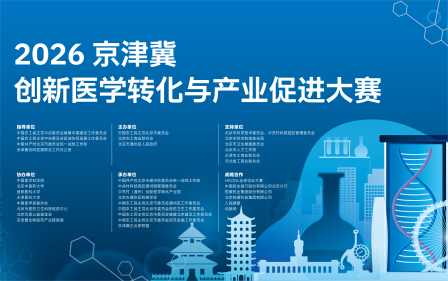
Medical innovation faces the "valley of death" dilemma, with long-standing issues of key link and resource mismatches in the innovation chain from laboratories to bedside applications. Against this backdrop, systematic pathways for medical innovation transformation and industry cultivation have become an urgent necessity. On April 2nd, the 2026 Beijing-Tianjin-Hebei Innovative Medical Transformation and Industry Promotion Competition was launched in Beijing's sub-center city. After being upgraded to a Beijing-Tianjin-Hebei branded event, the 2026 competition brings three major upgrades, offering systematic solutions and defining the "new infrastructure" model for healthcare innovation. Among these, the competition collaborates with national teams, placing clinical needs at the forefront as the starting line for innovation, establishing efficient and precise transmission mechanisms. National platforms share demand lists and technology roadmaps, open up diverse collaborations, provide verification channels and authoritative endorsements for projects, reducing trial-and-error costs, while also leveraging its pivotal position to offer "hidden resources." Additionally, the competition has introduced specialized tracks for the first time, with independent awards, inviting four national medical centers to take direct leadership.
9min read
Read More
We provide international health innovators with strategic visibility, key connections, and deep market insights in China through a full suite of engagement services.
Startups
$15.725 Billion Four-Deal Spree! Gilead Sciences Not Content Being Just the HIV Leader
Gilead Sciences, Not Content as HIV Leader, Shows Strong Ambition in Oncology. On April 9, it secured global development rights for KT-200. The original developer, Kymera, will receive a $45 million milestone payment and is eligible for substantial total payments and tiered royalties. On the 100th day of 2026, Gilead made its fourth move, with a potential total deal value of approximately $15.725 billion, including the acquisition of CAR-T company Arcellx, the merger with Ouro Medicines, and the purchase of Germany's next-generation ADC company Tubulis Technologies. KT-200, the subject of this transaction, is the world’s first oral molecular glue degrader targeting CDK2, which selectively eliminates CDK2, a key driver of tumor growth, offering a more precise, safe, and effective oral treatment option for cancers dependent on CDK2 activity. Preclinical tests have shown strong activity, potential for brain penetration, and good safety.
6min read
Read More
In Depth
An Innovative High-Priced Skin Drug Sells Like Hotcakes on E-Commerce Platforms!
The Potential of the Dermatological Drug Market is Huge. In March 2026, CMS launched its innovative dermatological drug, **Prolutex® Ruxolitinib Phosphate Cream**, which set a sales record for self-paid innovative drugs in China upon its market debut. On the first day of its launch on Jingdong Health, over 5,000 units were sold, and within a month, sales exceeded 10,000 units. The explosive popularity stemmed from CMS's transformation. In 2018, CMS announced its transition to an innovative pharmaceutical company, and in 2022, it partnered with Incyte Corporation to acquire the rights to Ruxolitinib Cream in Greater China and Southeast Asia. The success of Ruxolitinib Phosphate Cream as a blockbuster product lies in its precise selection. As a topical targeted JAK inhibitor, it accurately blocks abnormal immune signaling, reduces the area of vitiligo lesions, restores skin color, and demonstrates good tolerability. After 24 weeks of treatment, the F-VASI75 response rate reached 49.5%. It also gained recognition in the *Chinese Expert Consensus on Vitiligo Diagnosis and Treatment (2024 Edition)*.
8min read
Read More
InnovationMNC China LensIn DepthInsight
2026’s hottest drug asset: with limited clinical data, are pan-KRAS inhibitors overheated?
An unavoidable issue is that the clinical application of pan-KRAS inhibitors still faces inherent technical challenges. For example, achieving high selectivity for mutant KRAS over wild-type KRAS and other RAS subtypes to minimize off-tumor toxicity remains difficult. Additionally, the short half-life of existing pan-KRAS inhibitors and the unclear mechanisms of resistance also limit their widespread clinical use to some extent.
8min read
Read More
InsightFinance
Keymed nets $250M upfront as Gilead acquires Ouro in $2.2B deal, marking China's largest NewCo payout
Pursuant to the merger agreement, as a shareholder of Ouro Medicines, Keymed Biosciences will receive approximately $250 million in upfront payment upon completion of the transaction, along with milestone payments of up to approximately $70 million, resulting in total consideration of approximately $320 million. Concurrently, the tiered sales royalties for CM336/OM336 will be fulfilled by Gilead.
7min read
Read More
InsightInnovation
After the GLP-1 combination drug, does Hengrui have three more "Ace" cards up its sleeve?
Recently, Hengrui Pharma announced that the New Drug Application (NDA) for its independently developed Shudi Insulin Noiiglutide Injection (HR17031) has been formally accepted by the National Medical Products Administration (NMPA). However, the acceptance of this product appears to signal the beginning of a defensive battle rather than a charge forward.
7min read
Read More
MNC China Lens
Rolling out the $15B bet: AstraZeneca unveils cell therapy and RDC hubs in China
Meanwhile, total revenue from the China region in 2025 reached USD 6.654 billion, a 4% increase year-over-year. Although this growth rate slowed from 9% in 2024, China's revenue still accounted for 43.5% of total revenue from emerging markets, positioning it as an indispensable strategic pillar in AstraZeneca's global footprint.
6min read
Read More
Startups
Mindray's Entrepreneurial Roots, Overseas Market Holds Up Half the Sky: MEDCAPTAIN's Journey to Conquer the Hong Kong Stock Market
In March 2026, Shenzhen MEDCAPTAIN MEDICAL TECHNOLOGY CO., LTD. filed for listing on the Hong Kong Stock Exchange, jointly sponsored by Morgan Stanley and Huatai International. MEDCAPTAIN's products have entered nine out of ten tertiary hospitals in China, covering over 6,000 hospitals, and are exported to more than 140 countries worldwide. The company holds three major business matrices: life support, minimally invasive intervention, and in vitro diagnostics, with over 300 products forming a synergistic effect. The company’s team is considered the "golden veteran group" in the medical industry. Founder Liu Jie is a veteran of Mindray, having participated throughout Mindray’s globalization process, while partner Zhong Yaoqi specializes in international marketing and strategic mergers and acquisitions. Among the seven senior executives, five have work experience at Mindray Medical. This experienced team enabled MEDCAPTAIN to target the high-end market from the start, avoiding low-end competition and cheap contract manufacturing, focusing instead on technology and quality. Since 2016, MEDCAPTAIN has completed 10 rounds of financing, raising a total of 2.259 billion yuan, with Hillhouse Capital being the largest institutional shareholder, holding over 20% of shares.
7min read
Read More
In Depth
Will a New $54 Billion Diabetes Leader Soon Emerge?
MiniMed, the diabetes business spun off from Medtronic, has filed its prospectus, planning to raise $784 million with a potential valuation exceeding 54 billion yuan. Founded by Alfred E. Mann in 1983, MiniMed has launched numerous industry-first products and was acquired by Medtronic in 2001. After joining Medtronic, MiniMed continued to innovate, releasing several groundbreaking products that solidified Medtronic’s leading position in the diabetes sector. In mid-2022, Medtronic announced the spin-off of its diabetes business. On one hand, MiniMed is the smallest business unit within Medtronic, contributing a low percentage of revenue, with a business model significantly different from other divisions, making it difficult to achieve synergies and leaving it at a disadvantage in internal resource allocation. On the other hand, the diabetes technology market holds immense potential, and MiniMed has achieved growth rates exceeding double digits for multiple consecutive quarters, making it the fastest-growing division within Medtronic. Against this backdrop, Medtronic decided to spin off MiniMed.
9min read
Read More
MNC China LensFinance
Sino Biopharm and Sanofi reach exclusive global licensing agreement for rovadicitinib, with total transaction value up to $1.53 billion
As a first-in-class drug independently developed by CTTQ Pharma, Rovadicitinib is the world's first dual JAK/ROCK inhibitor. Through synergistic action on two pathways, it achieves dual pharmacological effects of anti-inflammation and anti-fibrosis, precisely targeting the core pathological mechanisms of diseases such as myeloproliferative neoplasms and transplant rejection.
4min read
Read More
Startups
Can an Implantable Insulin Pump with FDA Breakthrough Designation Become the "Ultimate Solution" for Type 1 Diabetes?
In the field of diabetes management, while wearable insulin pumps have alleviated the pain of injections for patients, they have not completely eliminated the inconveniences in their daily lives. Recently, after more than two decades of dormancy, implantable insulin pumps have achieved a breakthrough. In February 2026, the Portal Pump™ developed by Portal Diabetes received the FDA's "Breakthrough Device Designation." This system, combined with modern real-time continuous glucose monitoring technology, is expected to achieve closed-loop control of insulin infusion. With the rising prevalence of diabetes, the global insulin pump market is growing rapidly. However, most current products still fall under the "wearable" category, carrying various risks and requiring patients to inform the system in advance about meals and physical activities. As patients increasingly demand higher quality of life, implantable devices are becoming a high point of competition in the industry due to their discreet nature and infusion pathways that better align with physiological characteristics. Previously, Medtronic had developed similar products, but most were discontinued due to cost and technical reasons. Currently, Medtronic is preparing for the independent listing of its diabetes business.
4min read
Read More