

Behind the $60B licensing boom: do biotechs really get less than 5%?
Bio-Thera
Innovative Drug Developer
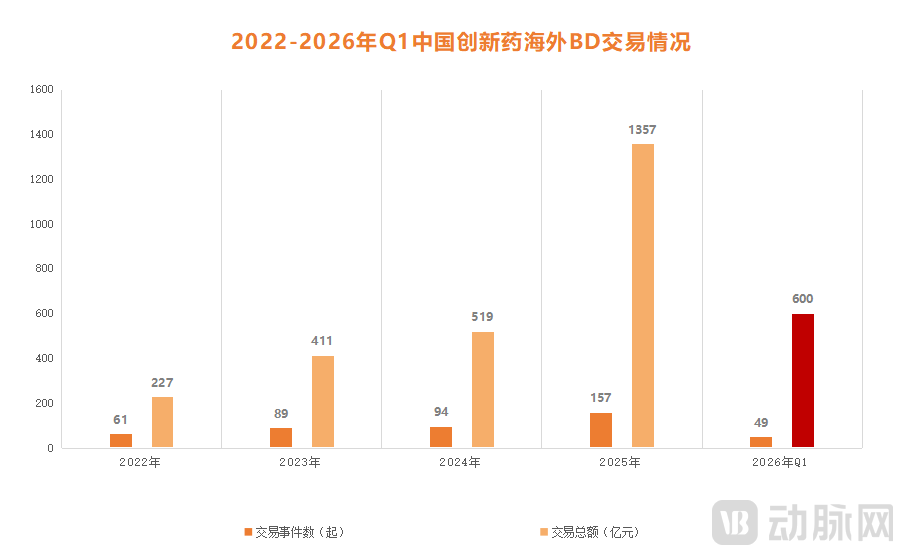
Figure 1. Number and Value of Out-Licensing Transactions for Chinese Innovative Drugs (Q1 2022–Q1 2026)(Source: PharmaCube)
On March 28, the National Medical Products Administration released a set of data showing that in the first three months of 2026, the total value of out-licensing transactions for Chinese innovative drugs exceeded 60 billion US dollars, already approaching half of the full-year total for 2025.
This immediately sparked strong reactions across the industry. On March 30, the first trading day after the news was released, A-share innovative drug stocks surged to their daily upward limits. Several stocks, including Yatai Pharma and Lianhuan Pharma, hit their upper price limits, while companies such as 3S Guojian Pharmaceutical, RemeGen, and Innocare posted gains of more than 15 percent. The primary reason for this market reaction is the unprecedented transaction value. The 60 billion US dollars achieved in just the first quarter is equivalent to the full-year revenue of a top global pharmaceutical company and also equals the combined annual sales of tirzepatide and semaglutide, the world's top two best-selling drugs.
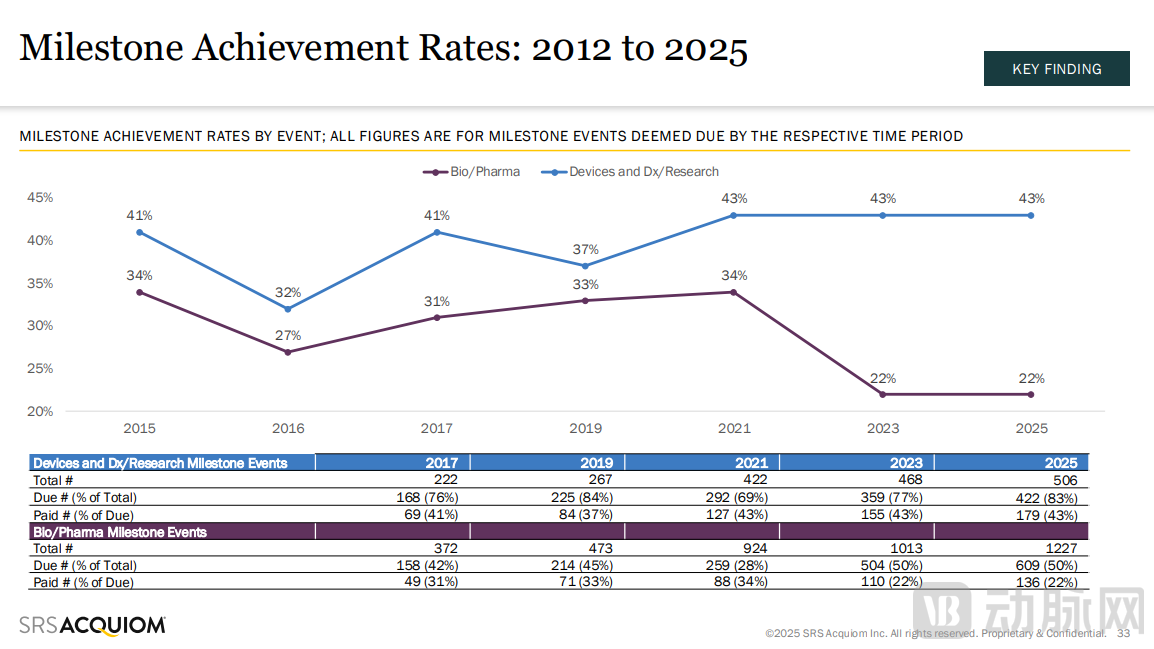 Figure 2. Milestone Achievement Rate for Licensing Deals (2015-2025) (Source: SRS Acquiom)
Impressive as this figure may be, it does not mean that the entire 60 billion US dollars will be fully received. In fact, the value of a licensing deal is mainly composed of two parts. The first is the upfront payment, which is received immediately upon the closing of the deal. This amount is generally small, typically accounting for about 2 to 5 percent of the total deal value. The real substantial portion is the subsequent milestone payments. However, these payments are deeply tied to clinical and commercial progress, resulting in a very low payment rate. According to the recently released 2025 Life Sciences M&A and Deal Report by SRS Acquiom, when calculated by value, the achievement rate for preclinical milestones in licensing deals is approximately 55 percent. By Phase III clinical trials, this rate drops to 12 percent, while the achievement rate for commercial-stage milestones is only about 5 percent.
Therefore, in many cases, some billion-dollar licensing deals are merely deferred promises hanging on distant branches—visible but not truly quenching one's thirst. The vast majority of deals ultimately only deliver a meager upfront payment.
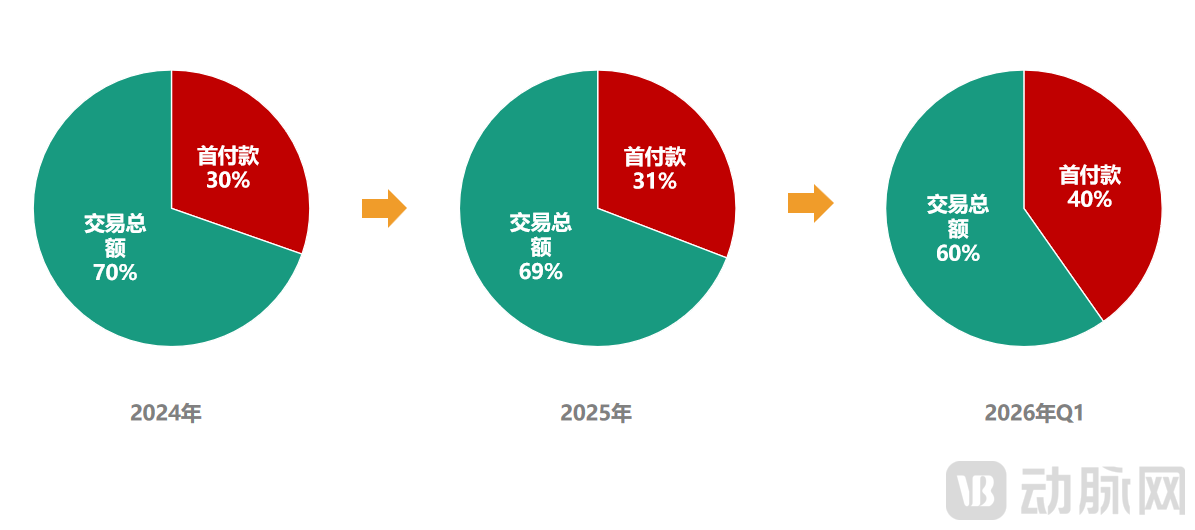
Figure 3. Changes in Upfront Payment Ratio (2024, 2025, and Q1 2026)(Source: PharmaCube)
However, this situation is changing. According to the PharmaCube NextPharma database, the total upfront payments for out-licensing deals of Chinese innovative drugs in the first quarter of 2026 reached 3.3 billion US dollars, a year-on-year increase of 267 percent. The average upfront payment per deal was 67 million US dollars, representing a significant increase of 53 percent compared to the full-year average of 2025. In addition, milestone payment events are also occurring frequently. In January 2026 alone, Bio-Thera Solutions received two milestone payments totaling 12.5 million US dollars. It is worth noting that since its listing in 2020, Bio-Thera has disclosed receipt of milestone payments on seven separate occasions, with the total amount approaching 100 million US dollars, all of which have been fully received.
With more and more "real money" flowing into pockets, does this mean that the out-licensing of Chinese innovative drugs has broken free from the "peak at signing" curse and is accelerating into a new phase of value realization driven by high upfront payments and milestones?
What Supports the High Down Payment?
According to incomplete statistics from VCBeat, among the 49 out-licensing deals for Chinese innovative drugs reached in the first quarter of 2026, as many as 12 had upfront payments exceeding 100 million US dollars. Among these, a blockbuster deal worth 18.5 billion US dollars between CSPC Pharmaceutical Group and AstraZeneca, involving sustained-release drug delivery technology and an artificial intelligence discovery platform for peptide drugs, included an upfront payment of an astonishing 1.2 billion US dollars, approaching the highest record for upfront payments in the overseas out-licensing of Chinese innovative drugs.
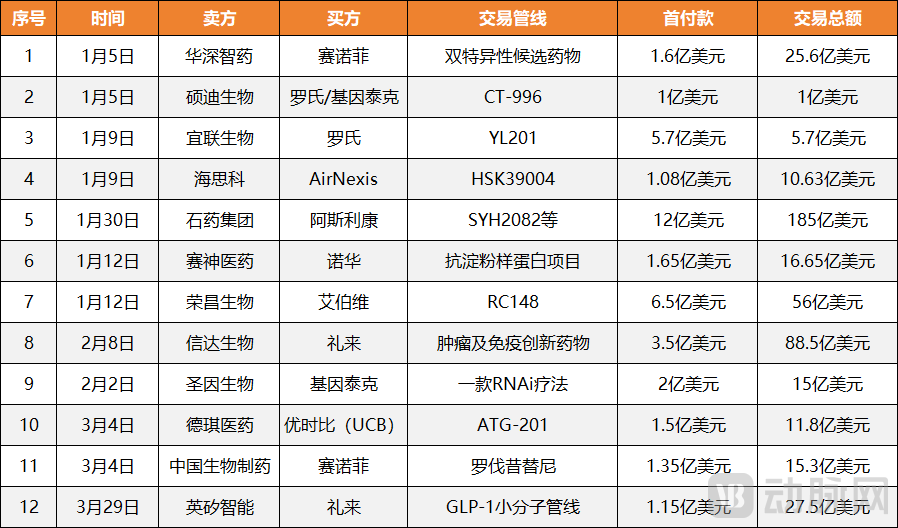 Figure 4. Overseas Out-Licensing Deals with Upfront Payments Exceeding 100 Million US Dollars (Q1 2026)
(Source: PharmaCube)
This would have been unimaginable in the past. For a long time, Chinese innovative drugs had been typical representatives of low-priced transactions in overseas markets. Upfront payments were generally only a few million US dollars, and deals exceeding ten million US dollars were already considered blockbuster transactions, while those reaching the hundred-million level were extremely rare.
There were several reasons for this. First, from the seller's perspective, namely the Chinese innovative drug companies, the quality of their licensed pipelines was indeed low in the early days. There was a general lack of groundbreaking innovation, and their differentiation advantages were insufficient, making it difficult to command higher prices. In addition, Chinese innovative drug companies lacked both bargaining power and international vision. Coupled with the fact that many companies were eager to secure licensing cash flows to support subsequent research and development, they were easily placed at a disadvantage in negotiations, with almost no control over the transaction value.
On the other hand, from the buyer's perspective, namely overseas pharmaceutical companies, their strategic need for Chinese innovative drugs was not significant in the early years. They primarily operated under a "broad coverage" model, broadly bringing in early-stage pipelines to hedge against market pressure while simultaneously positioning for the future. Therefore, in transactions, they generally kept upfront payments low to control early collaboration risks and thereby disperse financial pressure.
However, starting from 2025, this situation has changed significantly. According to statistics from the PharmaCube NextPharma database, the total upfront payments for out-licensing deals of Chinese innovative drugs in 2025 reached 7 billion US dollars, a year-on-year increase of 71 percent. Entering 2026, this growth momentum has intensified. In the first quarter alone, 3.3 billion US dollars in upfront payments were delivered, a 267 percent increase compared to the same period last year. The average upfront payment per deal was 67 million US dollars, an increase of 180 percent compared to 2022, the first year of such licensing deals.
This is, of course, also the result of the joint efforts of both buyers and sellers. First, from the perspective of Chinese innovative drug companies, the quality of their licensed pipelines has significantly improved in the past year or two. Particularly in cutting-edge fields such as bispecific antibodies, multispecific antibodies, and antibody-drug conjugates, not only are there a large number of pipeline assets, but they also possess strong international competitiveness. Some early-stage molecules have even begun to demonstrate "Best-in-Class" or "First-in-Class" market potential.
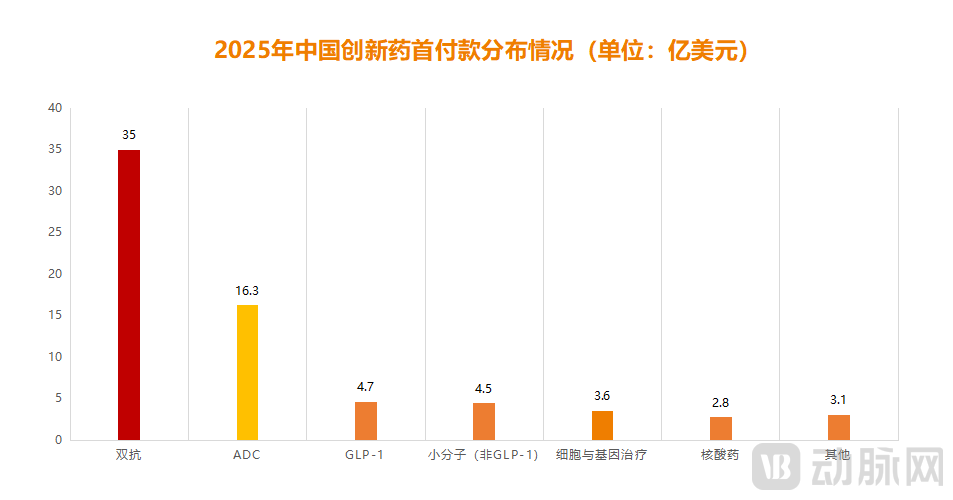 Figure 5. Distribution of Upfront Payments for China's Innovative Drugs in 2025 (Data Source: Southwest Securities)
This is particularly evident in upfront payments. According to research data from Southwest Securities, in 2025, out-licensing deals for Chinese bispecific antibody drugs generated a total of 3.5 billion US dollars in upfront payments, a year-on-year increase of 414.7 percent, accounting for 49.8 percent of all upfront payments from drug out-licensing deals that year. Out-licensing deals for antibody-drug conjugates generated a total of 1.63 billion US dollars in upfront payments, a year-on-year increase of 676.2 percent. The same holds true for 2026. Among the 12 deals with upfront payments exceeding 100 million US dollars in the first quarter, as many as seven were related to monoclonal antibodies, bispecific antibodies, and antibody-drug conjugates, accounting for more than half of the total.
In addition to pipeline quality, the bargaining power of Chinese innovative drug companies in transactions has also significantly increased. As a result, they have gained greater negotiating power over upfront payments, which is often seen as a key indicator of a deal's substance and the buyer's sincerity. It is understood that starting from 2025, deep collaboration models such as NewCo, Co-Co, and joint development have significantly increased, gradually driving the transformation of out-licensing deals for Chinese innovative drugs from pure "technology selling" to "value co-creation." As the starting point of value co-creation, upfront payments have naturally risen accordingly.
Of course, overseas pharmaceutical companies, as buyers, have their own calculations for being willing to significantly increase upfront payments. On the one hand, compared with the early "broad coverage" approach, their demand for licensed pipelines has become more specific at this stage, making them more willing to offer higher upfront payments for high-quality pipelines. On the other hand, Chinese innovative drugs, with their greatly enhanced market value and industry competitiveness, have also become important leverage for many overseas pharmaceutical companies to alleviate cash flow pressures and fill gaps in their research and development pipelines. Thus, high upfront payments have become their "entry ticket" to acquire high-quality assets.
In this regard, a seasoned business development professional commented, "The increase in upfront payments is essentially a restoration of the valuation system for Chinese innovative drugs in overseas transactions. As a core indicator that best reflects the substance of a licensing deal and the level of buyer recognition, the substantial growth in upfront payments fundamentally demonstrates that Chinese innovative drugs have established competitive advantages across multiple dimensions—including technology platforms, development stages, and disease areas—and have gained certain pricing power."
Why Is the Milestone "Paper Wealth" with a Payment Ratio of Less Than 3%?
The current increase in upfront payments is certainly encouraging, but their proportion remains very small, typically ranging from 2 to 5 percent of the total deal value. The subsequent milestone payments are where the real substance lies. Take, for example, the blockbuster deal worth 18.5 billion US dollars signed between CSPC Pharmaceutical Group and AstraZeneca in January 2026. Even though the upfront payment was as high as 1.2 billion US dollars, it still accounted for only 6.5 percent of the total deal value, which is not even in the same order of magnitude compared with the milestone payments, representing over 90 percent of the total.
However, it must be acknowledged that milestone payments in licensing deals are indeed a very tough nut to crack. As a key indicator for hedging against the risks of product development or commercialization, milestone payments are deeply tied to clinical and market progress. But it is well known that the success rate of innovative drug development is extremely low. According to relevant research reports, the overall success rate from Phase I clinical trials to final FDA approval is only about 8 percent. When subsequent commercial launch is also taken into account, the success rate falls to less than 3 percent.
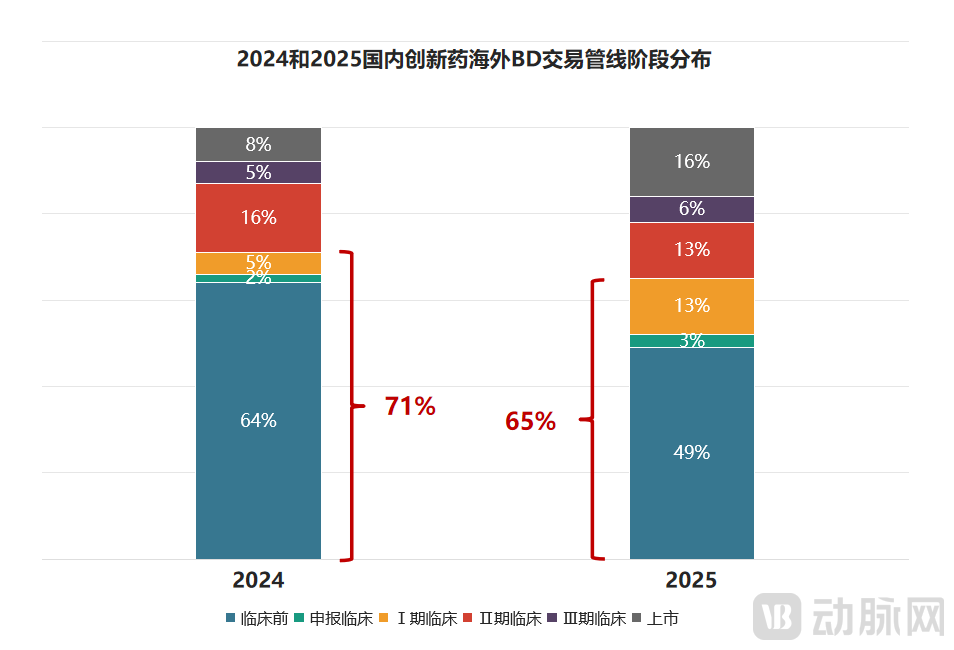 Figure 6. Stage Distribution of Out-Licensing Pipelines for Chinese Innovative Drugs (2024 and 2025)
Therefore, for Chinese innovative drugs, the current wave of out-licensing deals is heavily concentrated on early-stage pipelines, which means the associated risks are higher. According to statistics, among the 157 out-licensing deals in 2025, projects at Phase I clinical trials or earlier stages accounted for up to 65 percent, thereby adding greater uncertainty to subsequent milestone payments. In this regard, VCBeat once published a set of data showing that the "return rate" for out-licensing deals of Chinese innovative drugs is 40 percent, with most terminations attributed to poor clinical data, strategic adjustments, unclear commercial prospects, and other reasons. In essence, the technical value of the early-stage licensing failed to meet expectations.
Therefore, despite the exceptional buzz of out-licensing deals in the past two years, with ten-billion-dollar blockbuster transactions frequently appearing, the disclosure of milestone payment events remains relatively rare.
Fortunately, signs of a breakthrough are now emerging. In November 2025, Biokin Pharmaceutical announced that its subsidiary, SystImmune, had received a milestone payment of 250 million US dollars from Bristol-Myers Squibb, setting a record for the highest milestone payment for a Chinese antibody-drug conjugate asset. This windfall originated from a key clinical progress announced in September 2025—the global Phase II/III pivotal registration clinical trial IZABRIGHT-Breast01 for their collaborative project achieved a predefined milestone, successfully triggering the payment condition.
Another representative case is Legend Biotech. At the beginning of 2025, leveraging the commercial success of ciltacabtagene autoleucel, Legend Biotech received a one-time milestone payment of 410 million US dollars from Johnson & Johnson, setting the highest milestone payment record for Chinese innovative drugs. Furthermore, as the sales of ciltacabtagene autoleucel reached 1.887 billion US dollars in 2025, making it the world's first "blockbuster" BCMA CAR-T product, it implies that Legend Biotech still has nearly 1 billion US dollars in future payments to be realized.
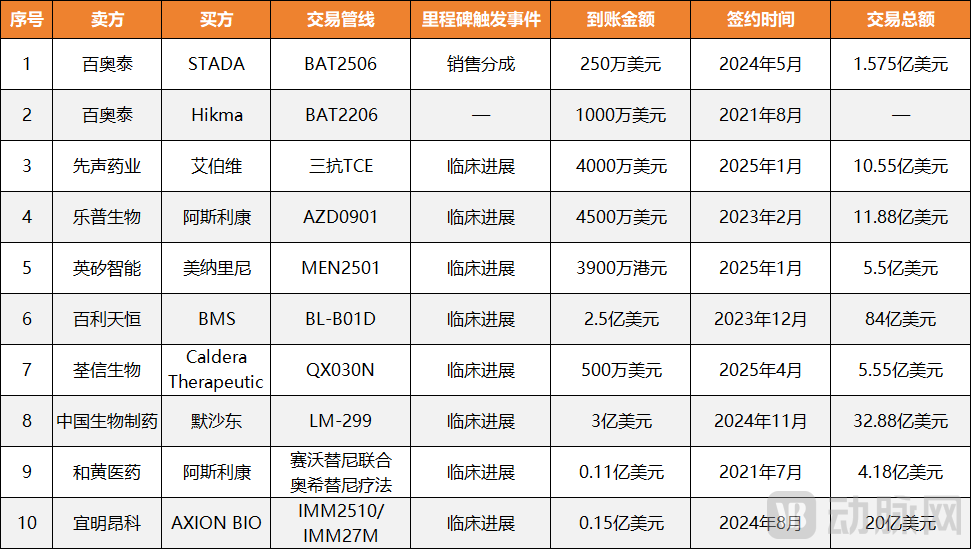 Figure 7. Representative Events Triggering Milestones for China's Innovative Drugs in the Past Six Months
One reason is positive progress in pipeline development, and the other is significant success at the commercial level. These are both highly typical cases of milestone triggers. Focusing on Chinese innovative drugs, most milestone payments are attributed to the former, namely progress in pipeline development. According to incomplete statistics from VCBeat, in the past six months, out-licensing deals for Chinese innovative drugs have triggered nearly 20 milestone events, with a total of over 1.5 billion US dollars received. Among these, as many as 18 were triggered by pipeline progress, accounting for more than 95 percent, far exceeding the proportion of milestone payments triggered by commercial performance.
There are reasons for this. In this regard, a professional who has long been rooted in out-licensing deals commented, "On the one hand, the quality of Chinese innovative drugs is significantly improving, so with the continuous advancement of clinical development, payment conditions are generally triggered within one to two years. On the other hand, the majority of Chinese innovative drug pipelines currently being transacted are at early stages, so waiting for them to transition to commercialization is inherently a very long and complex process. Furthermore, even for deals that are anchored to commercialization from the outset, they remain subject to unpredictable changes in market and industry environments, creating significant uncertainty, which makes it even more difficult to trigger milestone payments."
However, this situation is expected to improve comprehensively in the future.
"3.0 Era" of Innovative Drug Exports: The Curtain on High Milestones About to Rise?
Currently, out-licensing deals for Chinese innovative drugs have entered a new stage of development. They are no longer limited to simple license-out arrangements but are gradually transitioning to deeper "high-value creation," shifting from past "financing substitutes" to a more profound "strategic symbiosis."
At the same time, the industry is no longer fixated on those seemingly flashy billion-dollar deals. Instead, it is paying more attention to the "real money" that pharmaceutical companies can actually secure, namely the upfront payments received upon deal closure and the milestone payments realized subsequently. In particular, milestone payments, which constitute the largest portion of a deal, are highly anticipated by the industry. This is because they not only maximally supplement corporate cash flow but also reflect that the development risks of the licensed pipelines are decreasing and the product value is gradually becoming prominent. Their significance goes far beyond mere commercial monetization.
However, this is precisely the most difficult part to achieve and also the area where current Chinese domestic innovative drugs are generally weak. So, how can this challenge be addressed?
As mentioned earlier, clinical progress of pipelines is the most critical factor in triggering milestones in current out-licensing deals. However, it is influenced by many factors, including clinical efficacy falling short of expectations, slow product advancement, subtle changes in the industry environment, or even strategic adjustments by the buyer. Any of these factors can prevent milestone payments from being realized, ultimately leading to the embarrassing situation of being returned by overseas pharmaceutical companies.
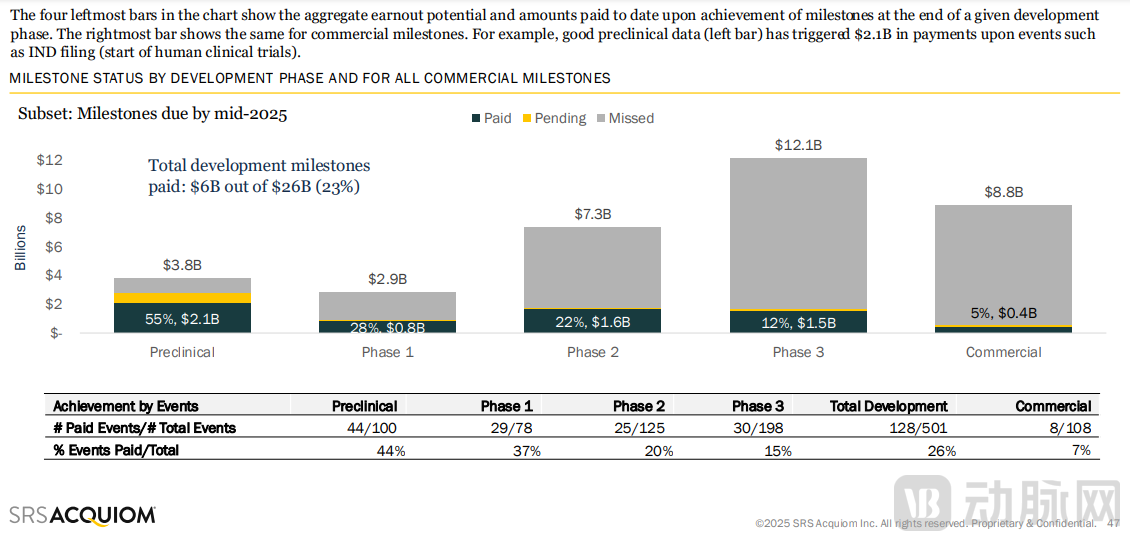 Figure 8. Milestone Achievement Rates by Development Stage in Innovative Drug Licensing Deals (Source: SRS Acquiom)
For example, CSPC Pharmaceutical Group's Claudin18.2 antibody-drug conjugate project was terminated because its objective response rate in a United States Phase I trial was only 22.2 percent, falling short of expectations. Kelun-Biotech's SKB315 was returned by MSD due to slower clinical development progress, resulting in the loss of a potential 936 million US dollars in milestone payments. Additionally, at the beginning of this year, ImmuneOnco announced that it had voluntarily reclaimed the overseas rights to IMM2510. A blockbuster collaboration worth over 2 billion US dollars ultimately realized only 35 million US dollars. The trigger for this was the financial pressure on its partner Instil, which was simply unable to support the subsequent high research and development costs and milestone payments.
In fact, the problem itself is the answer. By analyzing over a hundred "failed" cases and combining the research methodologies of several seasoned professionals, VCBeat has developed a clearer understanding of how to trigger milestone payments and has distilled this understanding into the following three points:
The first point is to develop good products and truly focus on the product itself, rather than on specific pathways. First and foremost, high-quality products inherently have a greater likelihood of realizing milestone payments. Therefore, a good product itself is the foundation for achieving milestones. Furthermore, when establishing milestone payment conditions, the focus should be directly on product progress as the outcome, rather than on the various pathways to achieve that outcome. For example, "product approval and market launch" as a result should be the trigger condition, without adding excessive additional clauses on how it was achieved or which pathway was chosen.
The second point is to achieve deeper integration in the collaboration and to manage the partnership with a professional approach. Specifically, the deeper the collaboration between the buyer and the seller, the more it can drive faster and better product development, thereby making milestone realization more certain and accelerating its pace. Of course, to achieve a "one plus one greater than two" effect, the collaboration must be more professional. For example, the designated shareholder representatives must possess sufficient sense of commitment, time investment, and professional knowledge to continuously manage the long-term relationship with the acquirer after closing. Additionally, when negotiating earnout provisions, it is also necessary to introduce legal counsel with expertise in mergers and acquisitions as well as collaboration transactions.
The third point is to embed sufficient information rights provisions into the agreement, including regular written reports, reasonable detailed disclosures, the right to access supporting information, channels to hold meetings with the buyer's representatives, and consistent reporting standards. These provisions may seem basic, but they are key safeguards for the seller, namely the Chinese innovative drug company, to "see the situation clearly and respond in a timely manner" after closing.
In this regard, a seasoned industry professional commented, "Milestones are crucial. They indicate that the product is still progressing and represent a manifestation of market confidence. Therefore, the receipt of milestone payments can not only drive financing in the primary market but also sustain stock price increases for listed companies. However, to truly realize more milestones, companies need to achieve comprehensive breakthroughs in areas such as research and development quality, credibility of clinical data, international compliance capabilities, and bargaining power in business negotiations. Only then can milestone clauses be truly transformed from paper commitments into bankable commercial value."
In any case, the current and increasingly clear industry situation is that the "peak at signing" frenzy for out-licensing deals of Chinese innovative drugs is rapidly receding. Compared with the past discussions of "who sold for how much," the industry has begun to pay close attention to "whose upfront payments are higher" and "whose milestone payments have been received." This essentially indicates a rational return of the transaction itself from "paper wealth" to "real money." It also marks that the overseas out-licensing of Chinese innovative drugs is entering the deep waters of "value realization" from the "storytelling" stage.