

How to Accelerate the Implementation of Scientific Research Achievements? Beijing-Tianjin-Hebei Builds Regional Synergistic "New Infrastructure"
The "Valley of Death" in medical innovation is increasingly becoming a structural dilemma.
As a concept born out of venture capital, ""Valley of Death" initially referred to the funding gap between laboratory validation and commercial application of scientific research outcomes. In the context of medical innovation, the meaning of "Valley of Death" is more complex — it represents not only a funding gap but also multiple ecological needs such as information symmetry, knowledge transformation, interest coordination, and institutional alignment.
From Lab to BedsideIn the innovation chain, there has long been a problem of misallocation of key resources and links:A large number of clinical needs and innovative starting points have been accumulated on the front line, but due to the lack of a smooth transmission path, they are difficult to accurately and efficiently transform into corporate R&D projects and application innovations. Conversely, many laboratories' explorations of cutting-edge science are hindered by the lack of commercialization pathways and clinical demand evaluation mechanisms.
Against this backdrop, the systematic pathway for the transformation of medical innovation and industrial cultivation has become an urgently needed "new infrastructure" on the industry side.Who can pull together this initiative? Who will打通多项资源链接与需求置换的通道?And how can we achieve broader resource exchange and regional collaboration through a single competition?
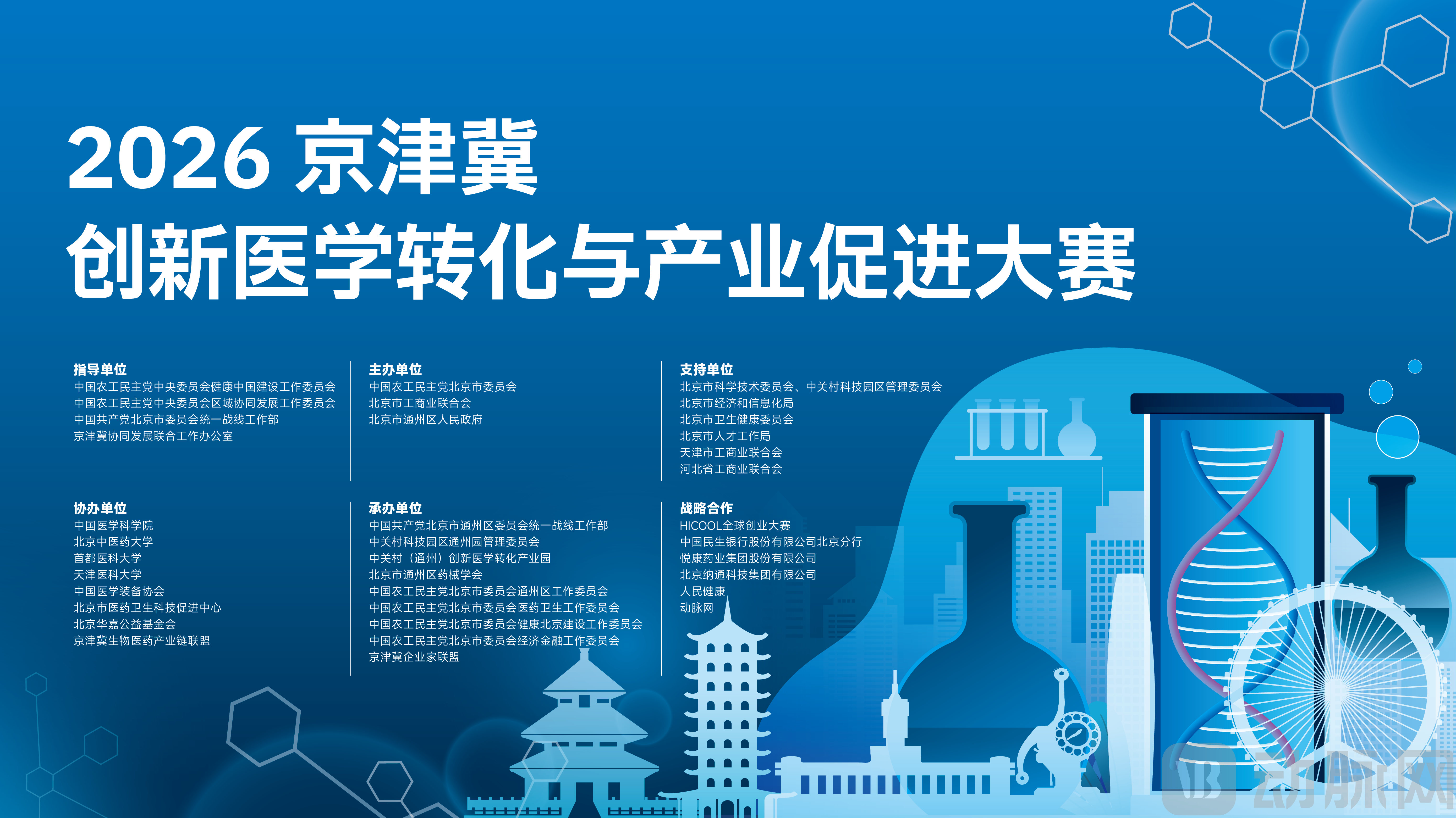
April 2,2026 Jing-Jin-Ji Innovative Medical Transformation and Industry Promotion CompetitionOfficially launched in Beijing's Sub-Center.Since its upgrade to a Beijing-Tianjin-Hebei brand event in 2025, the 2026 competition will bring three major upgrades, offering a systematic solution to the structural challenges of innovative medical transformation and redefining the "new infrastructure" form of healthcare innovation.
1Collaborate with the National Team: Partnering with National Medical Platforms to Jointly Explore New Paradigms for Clinical Medicine Translation
In the past model, after the innovation team completed laboratory research, they often needed to actively "knock on doors" to seek cooperation with hospitals for clinical validation. This process is full of uncertainties: the team struggles to accurately reach relevant experts, clinical resources are tight, and the matching process is lengthy, often leading to projects consuming significant time and cost before even reaching the clinical validation stage, or even coming to a halt.
The new format established in this year's competition has achieved a fundamental shift: bringing clinical needs to the forefront as the starting line for innovation and establishing an efficient and precise transmission mechanism.In this new paradigm, national platforms will not only share forward-looking and pressing clinical needs lists and technology roadmaps, but also open up diverse collaborations in core clinical scenarios such as specialized disease cohort resources, real-world research platforms, and multi-center clinical trial networks, providing validation channels and authoritative endorsements for projects at different stages.Projects participating in the competition can receive professional guidance on clinical endpoint design at an early stage, which is expected to significantly reduce the trial-and-error costs associated with later-stage registration submissions.
On a deeper level, relying on the industry hub status of national medical centers, the linked innovation bases for industry-medicine integration, concept validation centers, and industrial transformation funds behind them will provide "hidden resources" for the selected entrepreneurial projects.
2026 Jing-Jin-Ji Innovative Medical Transformation and Industry Promotion Competition Adds Professional Tracks for the First Time, with Independent Awards Specifically Established, and Extends a Heavyweight InvitationFour major national medical centers directly lead the professional track:
· National Children's Medical CenterLead the Pediatric Medical Clinical Innovation TrackCovering pediatric critical care, pediatric respiratory, pediatric surgery, clinical nursing, integrated traditional Chinese and Western medicine pediatrics, pediatric hematology, pediatric oncology, neurosurgery, and otorhinolaryngology-head and neck surgery, etc.
· National Clinical Research Center for Digestive Diseases, Key Laboratory of Digestive Health of China, leading the field of digestive system and digestive health,Covering minimally invasive surgery of the digestive system, intelligent imaging, diagnosis and treatment of gastrointestinal tumors, early gastrointestinal cancer, new drugs for digestive diseases, nutrition, etc.
· National Clinical Research Center for Cardiovascular DiseasesLeading the Cardiovascular Clinical Innovation Track,Covering precision interventional and imaging for coronary heart disease, structural heart disease treatment, electrophysiology for arrhythmia, artificial hearts and assistive devices, interventional treatment for hypertension, smart healthcare for cardiovascular diseases, innovative cardiovascular drugs, etc.
· National Center for Neurological Diseases Medicine Collaborates with Brain-Computer Interface Transformation Research Center,Lead the nervous system and brain-computer track.Covering treatments related to cerebrovascular diseases, central nervous system disorders, neurodegenerative diseases, as well as clinical applications of neurointervention, neurorehabilitation, and brain-computer interfaces.
On the resource support side, national medical centers and top clinical institutions also have the need to screen cutting-edge achievements, high-quality innovations, and high-standard entrepreneurial teams from external sources, but this is often overlooked. Meanwhile, traditional decentralized and passive对接methods are inefficient. Through the competition platform, they can systematically and cost-effectively evaluate multiple high-quality projects and efficiently identify potential top-tier teams.
Thus, the professional track model is more akin to the前置发布 of a national "demand list." Through competition screening and platform verification mechanisms, it essentially provides a national authoritative framework for clinical needs in medical innovation—directly iterating from "searching for scenarios" and "seeking clinical trials" to "entering the system," allowing promising projects to be directly connected to the most suitable clinical validation platforms.
For example, this competition has keenly responded to the newly issued national "Regulations on the Clinical Research and Clinical Transformation Application Management of Biomedical New Technologies," seizing the policy window period by adding a "Biomedical New Technologies" project direction in the "Innovative Drugs and Biotherapy" track. On a deeper level, this positions the competition as an interface for the implementation of forward-looking policies—pre-screening and cultivating projects that meet the requirements of the new regulations, creating a high-quality reserve for the industry, and forming two-way support between a "project reserve pool" and an "investment-industry docking port."
2Collaborating with Beijing-Tianjin-Hebei: Upgrade of Regional Collaboration Mechanism, Building a Four-dimensional Support System
The Beijing-Tianjin-Hebei region has gathered the top medical resources, scientific research institutes, and biopharmaceutical enterprises in China. The scale of the industrial cluster has exceeded 6,000 enterprises, with a total output value surpassing the 400 billion yuan mark. Beijing's pharmaceuticals and health industry has achieved leapfrog development, with the industry scale breaking through 1.13 trillion yuan in 2025, a year-on-year increase of 6.5%, making it the first city in China to have a pharmaceuticals and health industry exceeding one trillion yuan. In November 2025, the "Action Plan for Collaborative Innovation Across the Entire Industrial Chain of the Beijing-Tianjin-Hebei Free Trade Pilot Zone" was signed and implemented, clearly stating that after about three years of exploration, the region will jointly create a model of regional collaborative openness and an innovation highland covering the entire industrial chain.
Specifically, the core issue lies in: how to align the resource advantages of the three regions and promote the free flow of innovative elements?
In 2025, the competition will be upgraded for the first time to cover the core areas of the Beijing-Tianjin-Hebei region., successfully collected 405 high-quality projects; the live broadcast of the finals exceeded 600,000 views; facilitatedAnYu Aixin Receives 5 Million Yuan Investment from Industrial Fund、Dalie Medical Obtains Certification and Begins Production、A series of achievements such as the intention signing of Guodian Pharmaceutical。
The 2026 Beijing-Tianjin-Hebei Innovative Medical Transformation and Industry Promotion Competition, guided by the Central Committee of the Chinese Peasants' and Workers' Democratic Party (CPWDP) Health China Construction Working Committee, CPWDP Central Regional Coordinated Development Working Committee, the United Front Work Department of the CPC Beijing Municipal Committee, and the Beijing-Tianjin-Hebei Coordinated Development Joint Office, and jointly organized by the Beijing Municipal Committee of CPWDP, Beijing Federation of Industry and Commerce, and Tongzhou District Government, focuses on both clinical needs and industrial transformation. By leveraging competition to build industry chains, using industry chains to promote industrial development, and enhancing efficiency through industrial output, it aims to create a science and technology innovation achievement transformation platform oriented toward practical applications, establishing a two-way bridge for production, education, research, and application supply-demand matching.
Beijing Municipal Committee of the Chinese Peasants' and Workers' Democratic PartyLeveraging the advantages of the medical and health sector, we have consistently focused on the construction of Healthy China. Collaborating closely with the Tianjin and Hebei Agrarian Labor Party organizations, we facilitate the transformation of regional medical innovation achievements. By pooling resources and connecting clinical experts from tertiary hospitals with real-world treatment scenarios, we achieve rapid matching for technology transfer and cooperation.Beijing Federation of Industry and CommerceAs the "home for private economy figures," it always builds on the advantages of the biopharmaceutical industry in the Beijing-Tianjin-Hebei region, closely collaborates with the Tianjin and Hebei Federations of Industry and Commerce, gathers industrial momentum from the three regions, leverages the platform role of the Beijing-Tianjin-Hebei Entrepreneurs Alliance, maintains a good database, utilizes the project library effectively, and strengthens follow-up services for the implementation of competition projects.Tongzhou District GovernmentProvide high-quality policies and services to protect market players, collaborate with Zhongguan Village (Tongzhou) Innovative Medical Transformation Industrial Park to offer open application scenarios, park space, and supporting services for the implementation of innovative achievements, reducing the time and compliance costs of implementation.
On this basis, this year's competition continues to deepen the coordinated linkage mechanism of the Beijing-Tianjin-Hebei region:Collaborate with Beijing University of Chinese Medicine to establish a TCM Inheritance and Innovation Group;Tianjin Medical University becomes a co-organizer for the first time,Co-organize the Tianjin Regional Competition, further mobilizing affiliated hospitals and industry chain resources; collaborateTianjin Federation of Industry and Commerce, Hebei Federation of Industry and Commerce, to open up the southern resource belt with vast industrial space and strong production support capabilities;Minsheng Bank Beijing Branch, Yoohe Pharmaceutical GroupProvide strategic support to accelerate the empowerment of the competition in the industrial and market sectors, ultimately forming an innovation network covering the entire Beijing-Tianjin-Hebei city cluster.
Liu Cunzhi, Vice President of Beijing University of Chinese Medicine, mentioned that its technology transfer and transformation center features a "management + operation + incubation"三位一体 structure. Equipped with a professional operation team and a pilot experimental platform, it provides an end-to-end process from achievement evaluation to project incubation. With the support of Beijing University of Chinese Medicine, the 2025 competition has added a Traditional Chinese Medicine Inheritance and Innovation category, which not only includes classic fields such as new formulations and medicinal herb processing but also extends to interdisciplinary areas like "digital intelligence," "traditional Chinese medicine devices," and "intelligent diagnostic equipment." This demonstrates a trend of extending specific clinical scenarios and implementing cross-disciplinary applications.
Equally noteworthy is that in 2025, Tianjin Medical University took the lead in forming the "Tianjin Medical Innovation Alliance" with 52 participating organizations. The "government-industry-academia-research-application" closed loop composed of these 52 member units will strategically align with the platform of this competition — the competition will serve as a resource interface for the outward radiation of the alliance's achievements, while the alliance will recommend high-quality projects that have undergone preliminary screening and possess a foundation for transformation, accelerating the aggregation of innovative elements in Tianjin.
Yu Chunshui, Vice President of Tianjin Medical University, introduced that since the "13th Five-Year Plan," Tianjin Medical University has undertaken 2,807 provincial and ministerial-level vertical scientific research projects, with contract funding of nearly 1.5 billion yuan. Among these, there were 1,559 projects funded by the National Natural Science Foundation of China, with research funding of approximately 900 million yuan, ranking first among municipal universities. The university independently built an integrated "campus-industry" science and education source circle, creating an important platform for promoting innovation and building a dual-entrepreneurship ecosystem, supporting the formation of a three-circle synergy: Wuqing's achievement transformation circle, and the Beijing-Tianjin biomedicine industry collaboration circle.
Covering the entire Beijing-Tianjin-Hebei region and expanding the participants at the decision-making level, this is not only about the increase in the scale of participants and the cluster of innovators, but also about building a cross-administrative region platform for innovation resource allocation – no longer viewing Beijing's innovation origination, Tianjin's clinical transformation, and Hebei's industrial capacity as isolated advantages, but as indispensable and functionally complementary parts of the Beijing-Tianjin-Hebei innovation ecosystem, where innovation elements and transformation resources will flow freely.
3Empower the Entire Cycle: Link Multi-Party Industry Resources, Match Innovation and Transformation Needs at Different Stages
Scientists or university teams in the seed stage lack industrial resources, market vision, and engineering capabilities. Their core demand is "from 0 to 1" validation support and angel investment; growing enterprises face the core bottleneck of high clinical validation costs and finding authoritative clinical validation scenarios; mature projects are upgraded to diverse industry needs such as market access, scaled production, internationalization, and overseas expansion challenges. Innovation entities at different stages have varying demands, requiring significantly different types of knowledge, resources, and capital.
If medical innovation projects are compared to trees that need to be cultivated, traditional competition models typically use the same set of evaluation criteria and reward mechanisms, attempting to measure individuals at different stages, from saplings to mature trees, with one single ruler. This makes it difficult to provide precise empowerment for projects at each stage, leading to resource misallocation. As a result, many potential projects stagnate during critical validation periods due to a lack of targeted support.
This competition features four-dimensional support: "policy对接+scenario引入+capital赋能+space孵化".Supporting facilities cover key subsystems that innovative projects must go through when moving from the laboratory to the market, including policy compliance, clinical validation, financial support, and physical infrastructure.Build a ladder-style, full-cycle industrial support system to meet the resource needs of innovative projects at different stages:
·"Talent Evaluation Mechanism of 'Replacing Review with Competition'":Beijing's Sub-Center Establishes Special Scientific Research Funds
· Innovation Transformation Plan Collaboration:The 2026 Competition continues to collaborate with the Beijing Municipal Health Commission as the host and the Beijing Medical and Health Science Promotion Center as the organizer for the "Capital Medical Science and Technology Innovation Achievement Transformation Promotion Plan." Projects categorized as potential or higher in previous years are exempt from the preliminary round and will advance directly to the semifinals. Both parties work in synergy to jointly establish a high-quality asset pool that has undergone dual validation of clinical needs authenticity and technical feasibility.
· Two-way Linkage of Entrepreneurship Competitions:The competition has joined hands with the HICOOL Global Entrepreneurs Summit and Entrepreneurship Competition for the first time, forming a two-way direct event access and resource sharing.——HICOOL connects international capital, talent, and market channels; the Beijing-Tianjin-Hebei Innovative Medical Transformation and Industry Promotion Competition directly links university and laboratory research achievements based on the clinical scenarios and regional industrial resources of the Beijing-Tianjin-Hebei region, providing a strong foundation of industrial resources and clinical access.
The deep value of resource integration lies in the construction of a systematic ecological closed loop. The "Youth Promotion Plan," "Canal Elite Plan," and the HICOOL Competition emphasize the exchange of innovative projects; collaborations with the Beijing Municipal Committee of the Chinese Peasants' and Workers' Democratic Party, Beijing Federation of Industry and Commerce, and the Tongzhou District Government, among others.The formation of a three-way channel creates a strategic response - the former solution"The question of 'where innovation comes from' addresses the root issue, while the answer to 'where achievements go' tackles the implementation problem. The competition serves as a bridge, integrating fragmented resources into systematic service modules."
InnovationMedicineTransformation has never been a single breakthrough, but ratherIndustry PromotionSystem Engineering.
Based on Threefold Upgrades, the 2026 Beijing-Tianjin-Hebei Innovative Medical Transformation and Industry Promotion Competition is Evolving into a Sustainable, Self-growing Innovation Ecosystem Operation Platform, Building a Future-oriented Project Reserve Pool, Resource Connector, and Standard Incubator for the Medical Industry. This is precisely the essence of how to transform a major competition into "new infrastructure" for innovation.
Its true innovative transformative power lies not in isolated laboratory breakthroughs or star projects, but in how to build an ecosystem that continuously nurtures, screens, and fosters, ultimately producing innovative outcomes that benefit clinical patients.
The registration channel is now open, and we sincerely invite high-quality projects to participate.
