Limited-time Discount: $49.9 Per Year
Limited-time offer: just $49.9! Early buyers enjoy full equal access to all iterative data updates for one year.
Vertical Industries Brain-Computer Interface

Brain-Computer Interface

01
China's Strategic Future Industry
Brain-Computer Interface (BCI), as a frontier core technology enabling direct interconnection between the human brain and external terminals, has been listed as China's strategic future industry, marking the industry's official shift toward commercialization and on-the-ground implementation.
02
Specialized Survey of Nearly 200 Enterprises
VCBeat conducted a specialized survey of nearly 200 Chinese BCI-related enterprises. It screened companies from multiple dimensions including financing strength, patent portfolio, certified products, cross-border partnerships and core team capabilities. By deconstructing the industrial structure based on core products and business lines, VCBeat has compiled a comprehensive BCI industry map.
03
Multi-dimensional BCI Industry Map
This map clearly presents company numbers and technological focuses across four major sub-sectors. It also compiles basic information of nearly 200 companies, including establishment time, location, staff size, contact details, official website, financing history and corporate news.
04
Full-spectrum Data Support & Collaboration
VCBeat has built in-depth connections with all enterprises on the map, offering exclusive cooperation channels and providing full-spectrum, authoritative data to support industrial planning, trend analysis, business collaboration and investment decision-making.

Industry Map

Upstream Industry (61)
The upstream industry focuses on the supply of hardware and software, covering core products such as electrodes/probes, BCI chips, signal processing algorithms and system software.
Decoding Algorithm and Software Platform (21)
BCI software typically comprises four core modules — data acquisition, signal analysis, output execution and system protocols — forming a closed-loop interaction platform. Acquisition handles signal recording and parameter configuration; analysis decodes brain signals into control commands via feature extraction and classification; output delivers commands to devices or users; and protocols coordinate overall system operation.
More
Hardware (40)
BCI hardware is mainly responsible for acquiring, amplifying, digitizing and transmitting brain signals, and includes sensors, analog front ends and computing processing units.
Electrode(23)
In neural interface systems such as brain-computer interfaces (BCIs), electrodes serve as core interface sensors linking electronic devices to the biological nervous system. Their channel count and dimensions directly determine the quality of signal acquisition.
More
Chip(17)
BCI signal processing chips generally consist of analog-to-digital converters, filters, amplifiers, digital signal processors, wireless communication modules and power management units. In terms of design approaches, they fall into two categories: dedicated ASIC solutions and general-purpose solutions.
More
Midstream Industry (123)
The midstream industry acts as a pivotal link between upstream and downstream, mainly covering two major segments: BCI products and EEG acquisition platforms. Based on signal acquisition methods, BCI technologies are divided into two categories: invasive (including semi-invasive) and non-invasive.
Invasive BCI (36)
Invasive technology involves surgically implanting electrodes into the cerebral cortex. It has become the core approach in medical rehabilitation due to its high signal acquisition accuracy, yet carries clinical risks including surgical trauma, infection, immune rejection, and long-term signal stability degradation of electrodes.
More
Non-invasive BCI (87)
Non-invasive technology is an approach where electrodes are attached to the scalp. It features no surgical trauma, low costs, and simple operation, yet its signals are prone to interference and relatively low accuracy.
More

Finance

VIEW ALL
Time
Company Name
Brief Introduction
Area
Funding rounds
Amount
July 03, 2026
Ultrasound Brain-Computer Interface Technology Developer
Sichuan,China
Angel Financing
CNY 420M
July 01, 2026
Developer, Manufacturer, and Seller of Limb Rehabilitation Devices
Shanghai,China
Series A
Nearly CNY 100M
June 30, 2026
Full-stack Brain-inspired Intelligence Solutions and Service Provider
Zhejiang,China
Series B
Hundreds of Millions of CNY
June 23, 2026
Developer of Digital Therapeutics for Generalized Brain Dysfunction
Zhejiang,China
PreB Round
Tens of Millions of CNY
Time
Company Name
Brief Introduction
Area
Funding rounds
Amount
August 11, 2022
Developer of Intelligent Pelvic Floor Rehabilitation Diagnosis and Treatment System Products
Jiangsu,China
IPO
CNY 909.8M
August 20, 2021
Neurointerventional Medical Device Developer
Shanghai,China
IPO
HKD 1.0148B
March 31, 2021
Intelligent Rehabilitation Equipment R&D and Manufacturer
Henan,China
IPO
CNY 1.153B
July 21, 2020
Developer, Manufacturer, and Distributor of Rehabilitation Medical Devices
Jiangsu,China
IPO
CNY 1.063B

Industry Insights

VIEW ALL
FinanceInsight
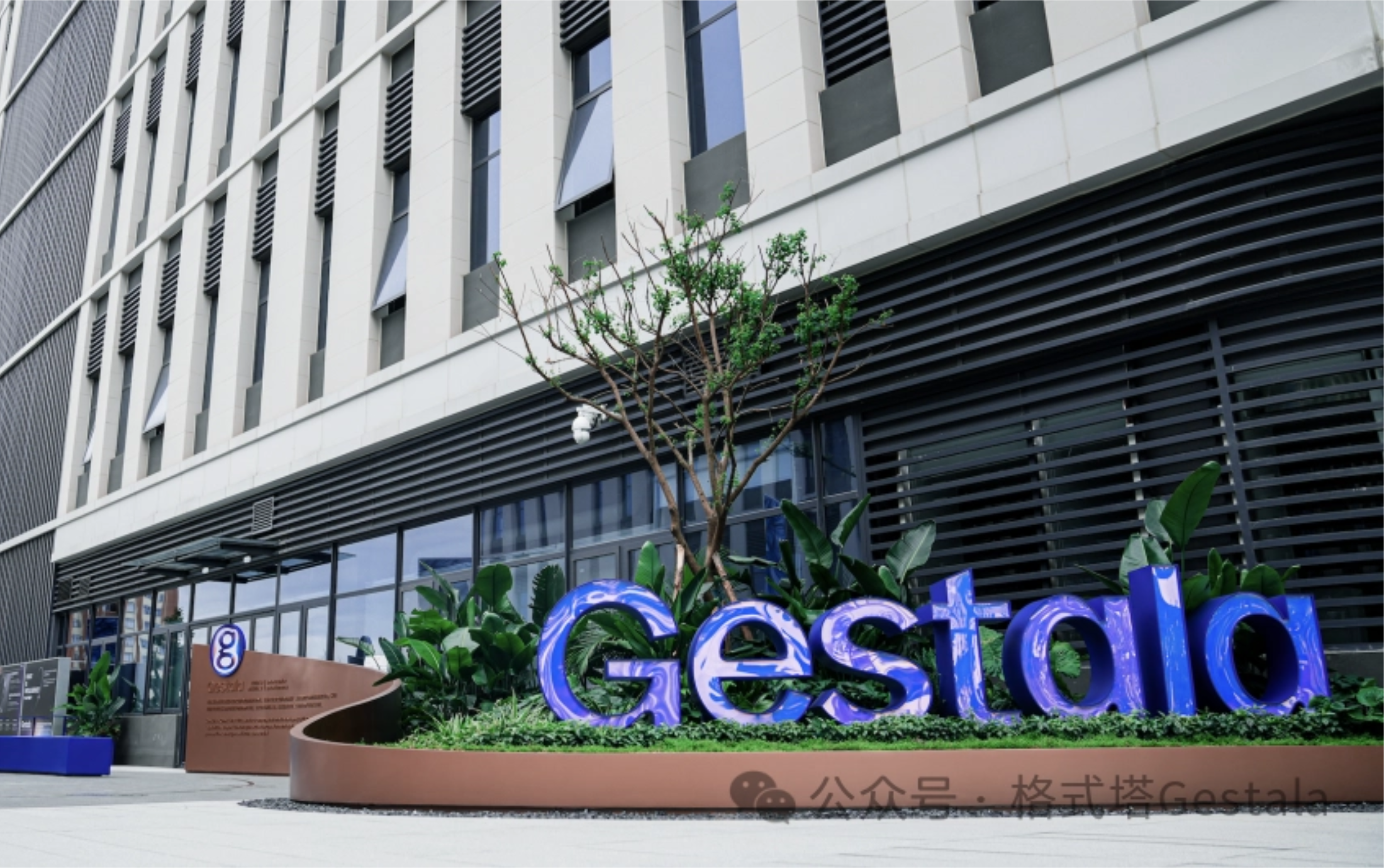
Gestala Completes RMB 420 Million Angel+ Financing Round, Shanghai Headquarters Inaugurated Simultaneously
At the research, development, and industrialization level, Gestala's Chengdu global headquarters and the world's first ultrasonic brain-computer interface super factory were officially commissioned in June, marking the company's transition from the laboratory phase to a new stage where engineering manufacturing and clinical translation proceed in parallel. Concurrently, with the inauguration of the Shanghai headquarters, the company has established a research, development, and innovation system driven by dual centers in Chengdu and Shanghai, creating the "Neolab" frontier laboratory in the field of brain sciences, and further strengthening its fundamental research capabilities at the intersection of brain sciences and artificial intelligence, as well as its ability to connect with global innovation resources.
9min read
Read More
Finance
Niantong Intelligence Completes Nearly RMB 100 Million Series A Financing with 85% Efficacy Rate in Brain-Computer Interface Rehabilitation
Stroke is known as the "number one killer" threatening life and health, characterized by high incidence, high disability rate, and high mortality. According to the China Stroke Prevention and Treatment Report (2025), stroke is the leading cause of death and acquired disability in China, with approximately 3.5 million new cases each year, and the disease is showing a trend of affecting younger populations.
5min read
Read More
FinanceInsight
SynSense Completes Several-Hundred-Million-RMB Series B Financing Led by National-Level Fund
Driven by the surging global demand for edge intelligence and the maturation of neuromorphic technologies, SynSense has experienced exponential growth in its business performance in recent years, with a compound annual growth rate exceeding 160% over the past two years. This robust growth trajectory marks the company's effective transition from technology research and development to mass production and delivery, and from benchmark case studies to scalable replication.
2min read
Read More
Innovation
Weekly Medical Device News [0622-0628]: Funding Surges, MicroPort's EU CE Milestone, NMPA Approvals, and Global Regulatory Updates
This week's medical device news highlights a surge in capital for Chinese startups, including funding rounds for AlphaStar Medical, Barty Medical, and Nansu Technology, alongside Percutek Therapeutics' pivot to a Beijing Stock Exchange listing. Key technological milestones include MicroPort Robotics' Toumai remote surgery system receiving EU CE certification. Domestically, the NMPA approved new cardiovascular and blood purification devices from Fengkaili Medical and Tianyi Medical, while strategic partnerships and AI-driven regional initiatives advanced across China. In global regulatory updates, the US FDA reclassified several devices to Class II, and Australia's TGA gears up for mandatory UDI implementation for high-risk devices on July 1, 2026.
5min read
Read More
Innovation
XS Vision Achieves Breakthrough with 10,000-Channel Neural Graphics Card System for Visual Brain-Computer Interface
Beijing-based XS Vision, spun out of Peking University, has achieved significant breakthroughs in invasive visual brain-computer interface technology. The company has developed a 10,000-channel neural graphics card system architecture, recognized as a key international benchmark for high-bandwidth, high-resolution information exchange in the visual BCI field. The technology uses high-density electrode arrays to directly stimulate the brain's visual cortex, encoding external images into electrical signals to reconstruct artificial vision for patients with damaged optic nerve pathways. The team has also developed and validated a multi-scale neural interface system-level chip, removing physical barriers to full implantation. Preliminary human clinical trials have returned positive feedback. Backed by over a decade of accumulated data from more than 100 cases of invasive electrophysiology, the company aims to establish an independent and controllable technology path for China's brain-computer interface development.
2min read
Read More
InnovationIn Depth
Curing Addiction! A Chinese Company SceneRay Featured in Nature's Main Journal
It is precisely due to the in-depth research into the neural mechanisms underlying addiction that Neurestora® multicenter clinical trial data demonstrate significantly superior outcomes compared to traditional drug detoxification regimens, with particularly prominent long-term efficacy advantages: the 6-month abstinence rate (non-relapse rate) reaches 80%, approximately 70% of patients achieve 10-year abstinence, and some patients can have the device removed after two years of treatment, allowing them to return to normal daily life.

8min read
Read More
Finance
Nans Tech Secures Tens of Millions in Pre-B Financing with "Temporal Targeting" as First BCI-DTx Product Nears Launch
More importantly, neural activity itself is a bioelectrical signal that changes over time. To truly achieve modulation coding, one cannot rely solely on fixed-frequency, fixed-intensity stimulation patterns; rather, stimulation sequences that dynamically match neural activity must be applied. By linking task-based stimulation, electroencephalographic feedback, modulation parameters, and training data, Nans Tech aims to make treatment protocols and outcomes more predictable and interpretable, while also providing more robust data support for clinical research and product iteration.
5min read
Read More
In DepthInnovation
Chinese BCI Firm Nanochap Sets World Record: Blind Patient Recognizes Letters One Day After Implant Activation
Nanochap Electronics Co., Ltd. has unveiled interim GCP trial results for its high-resolution visual brain-computer interface, setting a global record: a patient blind for nearly two decades recognized complex letters one day after implant activation. The breakthrough outpaces conventional artificial retinal devices, which typically require 3–6 months of intensive training to deliver functional vision, marking a key leap from lab research to clinical application. The milestone was delivered by its retinal-pathway E-BCI product, part of the company’s dual-track visual restoration pipeline that also includes a cortical V-BCI offering.
7min read
Read More
Innovation
Evening Brief: Cell "Rejuvenation" Therapy Launches Human Trial; NeuroXess BCI Enables Chess Match Between Two Paralysis Patients 800km Apart
Life Biosciences has initiated the first human trial of a partial cellular reprogramming gene therapy targeting glaucoma, with the first patient dosed on June 9. The approach activates three genes to restore youthful cell function while avoiding carcinogenic risks. Separately, Chinese BCI company NeuroXess enabled two high-level paralysis patients—located 800 kilometers apart in Shanghai and Nanchang—to play a real-time chess match using brain-controlled interfaces, demonstrating end-to-end system latency under 50 milliseconds and robust cross-user generalization.



3min read
Read More
Innovation
800 Kilometers Apart, Two Paralyzed Patients Play Chess Using Brain-Computer Interfaces
In a landmark demonstration by NeuroXess (BrainCo), two high-level quadriplegic patients played a full game of Chinese chess across 800 kilometers using only their thoughts. One patient in Shanghai controlled a virtual chessboard via BCI, transmitting moves to a robot in Nanchang that physically moved pieces, while the other used a brain-controlled exoskeleton glove to manipulate real chess pieces. The system achieved a full-chain latency of under 50 ms and a brain-control rate of 5.2 bits/s, showcasing advanced neural decoding, real-time device control, and fine motor assistance.
2min read
Read More

Unlock to access premium whole insights

More Details
Research-led
Multiple Dimensions
Updated Quarterly
High-quality Chinese Assets Selected