

Curing Addiction! A Chinese Company SceneRay Featured in Nature's Main Journal

SceneRay
Innovative High-Tech Medical Device R&D and Manufacturer
On June 25, the day before the International Day Against Drug Abuse and Illicit Trafficking, in the operating room of the Ganjiang New Area Hospital of the First Affiliated Hospital of Nanchang University, the world's first commercialized dual-target implantable deep brain stimulation system, Neurestora®, was successfully implanted into the brain of a patient with opioid addiction.
Just one week ago, on June 18, Nature published a major report for the global scientific community, highlighting this groundbreaking achievement originating from China and benefiting the world—the first brain-computer interface (BCI) neuromodulation medical device approved globally for the treatment of drug addiction. The article opens by highlighting the milestone significance of this technology: "Although overcoming bad habits such as nail-biting or procrastination is difficult, it is not impossible; however, overcoming opioid addiction seems insurmountable."
In the field of psychiatric disorder treatment, where countless giants have failed, why has a Chinese company secured the world's only regulatory approval for a brain-computer interface neuromodulation device indicated for addiction treatment, and been featured in Nature? VCBeat Exclusive Interview with Ning Yihua, Chairman of SceneRay: How Chinese innovators ventured into uncharted territory, honed their craft for a decade, and ultimately ignited the first spark in the global quest to "cure" drug addiction.
Nature's report was not an impromptu decision. It is reported that the Nature team had been closely tracking this technology for over a year, only publishing the article after China's National Medical Products Administration (NMPA) completed its review and issued the registration certificate. This prudence itself carries significant weight—as a global bellwether for scientific research, Nature does not rashly comment based merely on conceptual hype or preliminary results. Instead, it awaits the completion of the regulatory cycle, the accumulation of comprehensive clinical data, and validation through long-term follow-up results.
In response, SceneRay has presented a chain of evidence spanning fourteen years, further corroborating that an original innovation directly addressing a global public health pain point and possessing genuine clinical value is not only rooted in China but also belongs to the world.
Drug addiction is a major global public health challenge. The World Drug Report 2025 shows that the number of drug users worldwide reached 316 million in 2023; furthermore, recent research published in Nature Medicine highlights that the disease burden of opioid use disorder has nearly doubled globally over the past three decades.
Yet the greater dilemma lies in this: despite the vast population of patients and the heavy societal toll, humanity has yet to find an effective solution. Various traditional approaches face significant limitations in terms of long-term efficacy and relapse control. As highlighted in a recent report by Nature, even when patients fully recognize the harms of addiction and possess a strong willingness to quit, most still repeatedly fall into the cycle of withdrawal and relapse, struggling to break free from drug dependence entirely. Data disclosed by China Anti-Drug News indicates that the one-year relapse rate among individuals undergoing drug rehabilitation worldwide exceeds 60%.
Treating the symptoms, not the root cause—Ning Yihua, Chairman of SceneRay, early identified this core pain point. As one of the earliest pioneers in China to deeply cultivate DBS technology, he, then working at Medtronic, held a clear and long-term scientific judgment on this technology: "If DBS were limited solely to the treatment of Parkinson's disease, its value would be quite limited. In my view, DBS is far more than just a single medical device; it is more like a key that has unlocked new frontiers in the treatment of functional brain disorders."
In 2012, SceneRay and Professor Gao Guodong of Tangdu Hospital of the Fourth Military Medical University, through teamwork, proposed the dual-target DBS therapy for the first time internationally. In 2014, the team completed eight cases of early clinical exploration, with an abstinence rate of 63%; in 2017, Neurestora® entered the NMPA's Special Approval Channel for Innovative Medical Devices, received FDA Breakthrough Device designation the following year, and initiated GCP clinical trials in the same year. In 2021, Professor Hao Wei of The Second Xiangya Hospital of Central South University led an expert panel in an independent efficacy assessment of the 26 subjects who received early implants, with 19 followed up, among whom 17 achieved satisfactory treatment outcomes. In early 2025, the team conducted another cross-sectional follow-up assessment, reaching 18 cases, all of whom showed favorable outcomes.
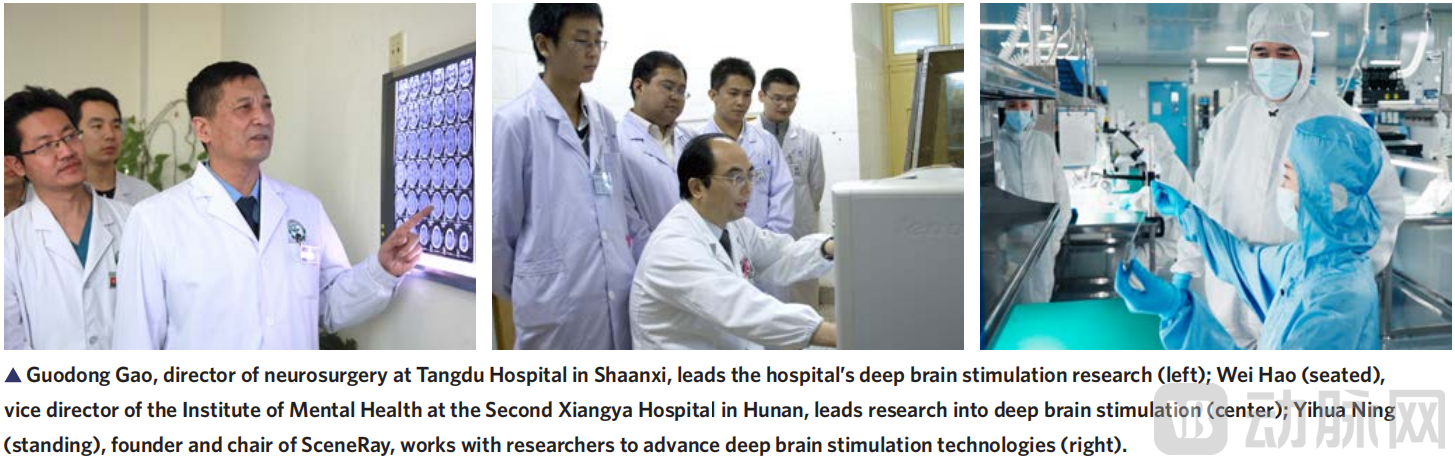
Professor Guodong Gao, Professor Wei Hao, and Yihua Ning, Chairman of SceneRay
In December 2025, Neurestora® was approved for Class III medical device certification. For the first time, humanity has gained the capacity to help brains mired in crisis rebuild themselves. And it all began with what seemed like a crazy idea by Ning Yihua just over a decade ago—while the world was using DBS to treat Parkinson's disease, he set his sights on addiction; when everyone said it was impossible, he refused to believe it.
From the proposal of an original dual-target scientific hypothesis, through the "0 to 1" breakthrough of comprehensive clinical validation, to the successful execution of the world's first commercialized surgery, Dr. Ning Yihua has led SceneRay to establish a complete evidence-based closed loop spanning R&D, clinical trials, and commercialization, thereby embarking on the journey of scaling from "1 to N."
As he stated in the interview, true innovation must be rooted in science. "The 'zero-to-one' breakthrough relies on profound insights into neuroscience; without this foundation, innovation in the field of brain science would be impossible. Meanwhile, the 'one-to-N' leap tests the reliability of technology and engineering. It is precisely for this reason that SceneRay's vision has always been: 'Adhere to scientific exploration and technological innovation.'"
Returning to the pathogenic mechanism, drug addiction is not a moral failing, but rather a chronic recurrent encephalopathy. Treatment for drug addiction is divided into two phases: detoxification and relapse prevention. Traditional approaches, such as compulsory rehabilitation, medication-assisted treatment, and traditional Chinese medicine therapy, can reduce physical dependence on addictive substances—i.e., achieve "detoxification"—but have minimal impact on psychological craving, making it difficult to effectively prevent relapse. Consequently, patients often fall into a vicious cycle of "drug use–detoxification–relapse."
As an entrepreneur with a scientific spirit, Ning Yihua led his team to clarify the two core neural circuits that induce addiction, based on more than ten years of neuroscience research, and redefined them as brain circuit disorders amenable to precise modulation and clinical cure. "First, the reward circuit: drugs stimulate a massive release of dopamine, prompting the brain to compensatorily downregulate its secretion and the number of receptors. Patients fall into a low-dopamine state—experiencing depression, anxiety, and general malaise—and this physiological distress drives them to repeatedly seek the drug. Second, the memory circuit: after long-term addiction, patients develop strong conditioned reflexes to drug-related scenes, people, and objects. Even after physical detoxification, once these memories are triggered, the cravings become uncontrollable."
Based on this, SceneRay has innovatively proposed a dual-target synergistic modulation strategy of the "nucleus accumbens + anterior limb of the internal capsule," upgrading treatment from traditional single-target stimulation to dual-target network modulation.
Specifically, the nucleus accumbens (NAc) is a key nucleus mediating addictive behaviors, while the anterior limb of the internal capsule (ALIC) is responsible for emotional regulation and impulse management. Neurestora® enables precise targeting and penetration of these two key nuclei through electrodes implanted from specialized angles. The integrated dual-channel, dual-frequency neuromodulation chip is capable of delivering electrical stimulation with distinct voltages, frequencies, and pulse widths to two brain regions via a single electrode: stimulation of the nucleus accumbens aims to rapidly alleviate physiological discomfort caused by withdrawal, achieving detoxification; stimulation of the anterior limb of the internal capsule is used to gradually attenuate addiction-related pathological memories, preventing relapse. In addition, the entire system can monitor electroencephalographic signals from brain nuclei and supports remote dynamic adjustment of stimulation parameters, establishing a precise, dynamic, and personalized closed-loop treatment system.
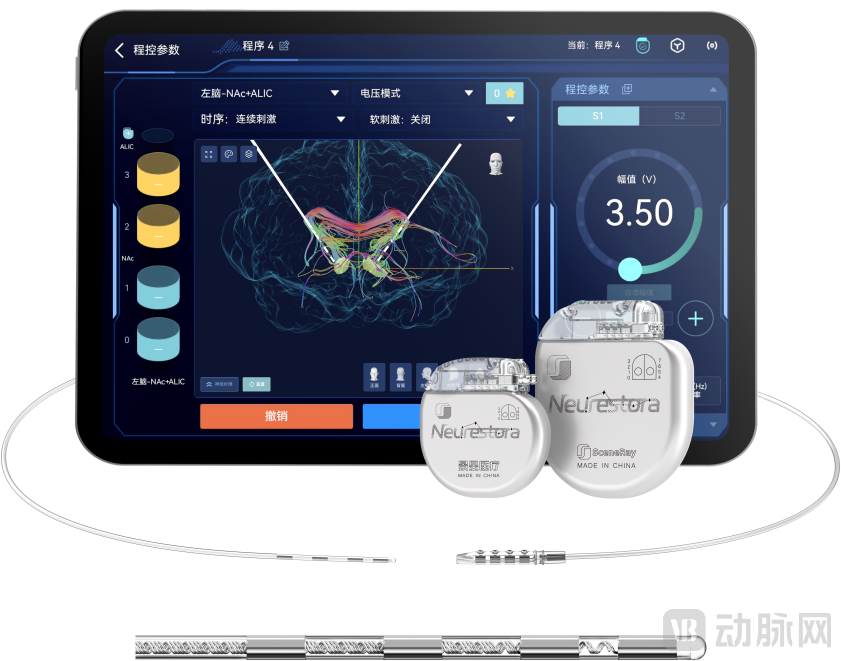
Neurestora®Dual-Target Implantable Deep Brain Stimulation System
It is precisely due to the in-depth research into the neural mechanisms underlying addiction that Neurestora® multicenter clinical trial data demonstrate significantly superior outcomes compared to traditional drug detoxification regimens, with particularly prominent long-term efficacy advantages: the 6-month abstinence rate (non-relapse rate) reaches 80%, approximately 70% of patients achieve 10-year abstinence, and some patients can have the device removed after two years of treatment, allowing them to return to normal daily life.
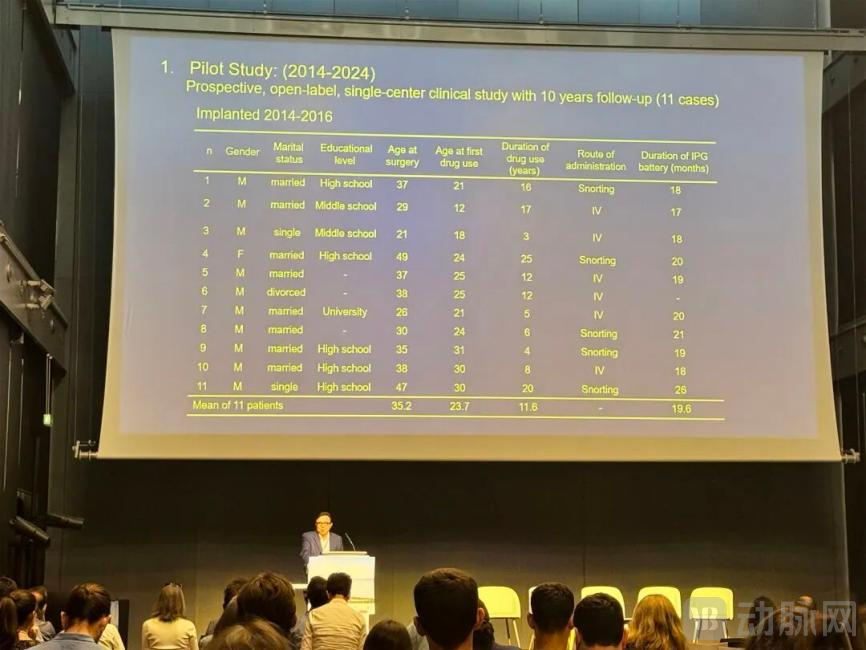
At OPTO-DBS 2026, Ning Yihua Presents Clinical Data from the Pilot Study (2014–2024)
Recalling his presentation at the OPTO-DBS 2026 conference not long ago, Ning Yihua still has vivid memories: "At the time, someone asked me, 'So many research centers in Europe and the United States are exploring DBS for addiction treatment—why does SceneRay have the best data?' I told them, 'They all use single-target approaches; we are the only ones using dual targets.'" Centered on this technological pathway, SceneRay has long established a comprehensive global patent portfolio, building an insurmountable intellectual property moat.
Ning Yihua, the driving force behind this endeavor, was among the first generation of biomedical engineering graduates in the People's Republic of China and previously worked at multinational corporations such as GE Healthcare, Medtronic, and Siemens. This unique background, combining engineering expertise, clinical insight, and a global industry perspective, has equipped him with a deep understanding of scientific boundaries, clinical language, and industrial logic.
He has always emphasized one thing: for 0-to-1 innovation, it is essential to provide comprehensive clinical evidence—convincing not only oneself but also the world.
From the dual-target hypothesis to the first commercial product, over fourteen years, Ning Yihua and SceneRay have answered a once-thought unsolvable problem with a complete chain of scientific evidence. To date, SceneRay has filed over 700 patent applications, including more than 100 international patents, obtained 38 product registration certificates, established a GMP production line with an annual capacity of 5,000 units, and achieved full independent control over all processes from chip design to final assembly.
From the terrifying Black Death of the 14th century to organic lesions such as tumors, the human disease spectrum has undergone two major shifts over the centuries. Today, brain disorders, represented by mental illnesses, have become the leading cause of disability worldwide.
Drug addiction, a chronic brain disorder characterized by high relapse rates and limited curability, has become increasingly difficult to address globally due to advances in chemical synthesis techniques for psychoactive substances. Each year, the direct medical expenditures, law enforcement costs, and productivity losses attributable to drug addiction amount to trillions of dollars worldwide, while the devastation inflicted upon family structures and the detrimental impact on the developmental environment of future generations are even harder to quantify numerically. According to a 2022 report by the Joint Economic Committee of the U.S. Congress, opioid abuse resulted in economic losses nearing $1.5 trillion in the United States in 2020, accounting for approximately 7% of that year's GDP.
In the face of this formidable global challenge, China's pioneering dual-target brain-computer interface (BCI) neuromodulation technology is rewriting history. According to Ning Yihua, participants in the initial clinical trials have, ten years later, married and had children, purchased cars and homes, returned to the workforce, and fully reintegrated into normal society, thereby transforming what was once a social burden into productive capacity.
Today, SceneRay is transitioning from being a global technological leader to leading the full industry ecosystem. Internally, the company is integrating multi-center clinical data and leading the development of unified clinical standards, industry consensus, and standardized diagnostic and treatment guidelines, and has collaborated with Jiangxi Ganjiang New Area to establish a "Brain-Computer Interface DBS Addiction Treatment Center"; externally, an "International Addiction Rehabilitation and Treatment Center" for global patients is also under preparation.
A Nature interview also placed this milestone in a broader perspective: "Studying the neural circuits of addiction not only helps us understand addiction, but also helps us understand the mechanisms of other diseases." In September 2025, SceneRay's refractory obsessive-compulsive disorder therapeutic implantable deep brain stimulator entered the NMPA's "Green Channel," completed clinical trials, and is poised for imminent market approval. Furthermore, exploration of additional indications such as autism, schizophrenia, bipolar disorder, depression, and alcoholism is also proceeding in parallel.
Twenty years of inquiry, a decade of clinical practice, and a dawn breaks. On this International Day Against Drug Abuse and Illicit Trafficking, humanity has, for the first time, a choice for curing drug addiction—one that originates from China, from a group of light-chasers who hold science as their faith and "believe in dreams." In the future, SceneRay will continue to deepen its expertise in brain science, creating more precise and reliable brain-computer interface (BCI) solutions and products for the treatment of brain functional disorders. By reshaping patients' healthy lives, SceneRay is committed to becoming a world-class leading enterprise, representing China's technological prowess in leading innovation and defining the future on the global stage.