

Zhiron Medical Achieves Global Milestone with First-in-Human Implantation of Ultra-Thin Flexible Deep Brain Electrode

SAHZU
China's First Grade III Class A Hospital

BCIFlex
Invasive High-Throughput Ultra-Thin Flexible Brain-Computer Interface System Developer
“Impedance test normal! A large number of neuronal spike potentials detected!”Looking at the continuously fluctuating EEG signals on the brain monitoring screen, a group of clinical experts in the ward all revealed heartfelt smiles. This scene occurred...The World's FirstUltra-thinFlexible DeepElectrodeImplant SurgeryLater. According to one of the investigators of this clinical trial,The Second Affiliated Hospital of Zhejiang University School of MedicineHospital (Hereinafter referred to as"Zhejiang University Second Hospital")NeurosurgeryAssociate Chief PhysicianJiang HongjieDoctorIntroduction,“This surgery will only haveFlexible electrode with a thickness of one-tenth of a hairImplanted in the deep brain regions of the patient's skull, causing minimal damage to the patient's brain tissue. After the patient woke up from the surgery, they began uninterrupted transmission throughHigh-Throughput MicroelectrodeDeeply collect single-cell level neural electrical signals from deep brain regions,This is the world's first time that so many neuronal signals have been simultaneously collected from deep brain regions in the human brain.Since the flexible electrodes used in this experiment effectively protected the survival of neurons around the electrodes, stable signal acquisition was achieved.”
In recent years, the rapid development of brain-computer interface technology has turned science fiction into reality. Brain-computer interfaces capture and decode neural electrical signals from the brain, converting them into output commands to enable direct control of external devices through brain signals.
The neural electrical signals of the brain can be divided into those representing the functions of neuronal ensembles.Local Field Potential (LFP)And representing the activity of individual neuronsSpike Potential (Spike)。
Among them, the spike potential signal is the most basic and important electrical signal for information transmission in the brain.By monitoring the high-throughput neuronal spike signals, doctors can not only achieve more precise diagnosis and treatment of various neurological diseases and functional analysis but also significantly enhance the accuracy of brain-computer interface systems in reading and interpreting brain intentions, enabling high-bandwidth interaction between the human brain and external devices.
How to achieve stable acquisition of high-throughput neuronal spike potentials is the first challenge that needs to be addressed in the new generation of brain-computer interface technology. In response to this challenge, the clinical trial has achieved significant breakthroughs in multiple indicators and fields. As one of the investigators of this clinical trial,Dr. Zhu Junming, Deputy Chief of Neurosurgery at the Second Affiliated Hospital of Zhejiang UniversityWith rich experience in the research and application of brain-computer interfaces, he summarized these breakthroughs into two key points.
First, this clinical trial has achieved, for the first time globally, the stable collection of high-throughput neuronal spike potentials in deep brain regions over several weeks, providing important evidence for the precise diagnosis and treatment of brain diseases and the study of brain function.
Secondly, compared with the rigid electrodes commonly used in clinical practice in the past, this flexible electrode greatly reduces the damage to the patient's brain tissue. Postoperative routine examinations and imaging assessments have confirmed that the surgical process is safe and reliable, and patients recover quickly. At the same time, this clinical trial also achieved simultaneous acquisition of local field potentials and spike potentials, providing richer and more accurate information for clinical diagnosis.
It is reported that this clinical trial usedBeijing Bciflex Medical Technology Co., Ltd.(hereinafter referred to as "BCIFlex") developed high-throughput flexible electrodes.
Compared with traditional rigid electrodes, the high-throughput flexible electrodes developed by BCIFlex have excellent biocompatibility, which can better protect neuronal cells in the brain. Therefore, they can maintain stable neuronal signal acquisition ability for a long time after clinical implantation.
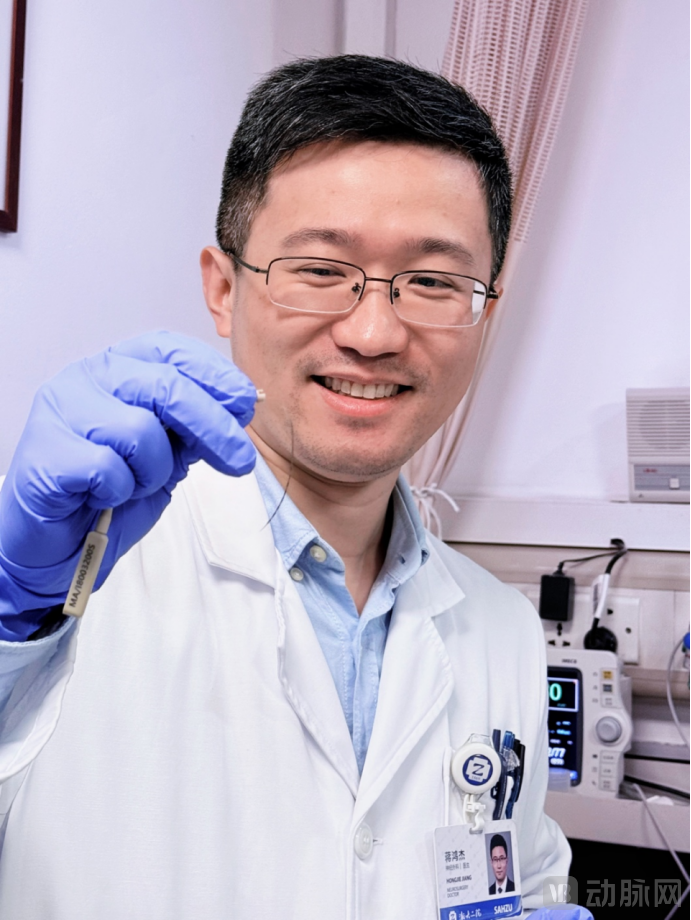
Dr. Jiang Hongjie, Deputy Chief Physician of the Department of Neurosurgery at the Second Affiliated Hospital of Zhejiang University
Showcase of Ultra-Thin Flexible Electrodes Used in Clinical Trials
Image source: BCIFlex
This electrode is also the world's only flexible electrode that simultaneously supports both signal acquisition and stimulation functions, providing richer evidence for patients' clinical diagnosis and treatment. Moreover, this clinical trial utilized BCIFlex's self-developed 1024-channel brain-computer interface system to achieve continuous and real-time acquisition of Spike signals and LFP signals, marking another significant milestone in the development of flexible brain-computer interface technology.
Currently, the clinical research on ultra-thin flexible deep electrodes supported by BCIFlex has been carried out in multiple medical centers.On November 28, 2024, the neurosurgery team of Zhejiang University Second Hospital successfully completed the world's first ultra-thin flexible deep electrode implantation surgery.
According to the trial plan, this project will gradually increase the number of flexible high-throughput electrodes implanted in subsequent surgeries. The implantation plan for the second case of hundreds of channels of flexible electrodes has officially started, which is expected to further expand the clinical application of flexible brain-computer interfaces.
Professor Gao Chen, Director of the Department of Neurosurgery at Zhejiang University Second Affiliated HospitalIn summary, this world's first ultra-thin flexible deep electrode implant surgery marks a significant breakthrough in the field of brain-computer interfaces. It not only signifies that China has taken a leading position in the global high-throughput brain-computer interface domain but also provides a new tool for precise diagnosis and treatment of brain diseases and brain science research, further advancing the development of neurosurgery in China to new heights.
In recent years, governments around the world have placed high importance on the development of brain-computer interface technology, introducing relevant policies and funding support programs. In China’s "14th Five-Year Plan," "brain science and brain-inspired research" was listed as one of the seven key "frontier technology fields for scientific and technological breakthroughs," elevating it to a national strategy. Additionally, during the 2024 Two Sessions, brain-computer interfaces were identified as one of the "new quality productive forces."
Implantable brain-computer interface technologies, represented by the new generation of flexible brain-computer interfaces, stand as the forefront of interdisciplinary integration involving neuroscience, advanced materials, micro-nano manufacturing, and artificial intelligence. On one hand, they can provide revolutionary solutions for the treatment of neurological diseases, and on the other hand, they are expected to become a bridge between human intelligence and machine intelligence, receiving widespread global attention.
Against this backdrop, BCIFlex has assembled a cross-disciplinary core team consisting of outstanding scientists in the field of brain-computer interfaces and business leaders with extensive experience in innovative medical device R&D and clinical translation. Together, they are committed to technological innovation in the high-throughput, fully implantable brain-computer interface domain, leveraging proprietary high-throughput ultra-thin flexible electrode technology to build a new generation of flexible brain-computer interface platform.
In terms of products, BCIFlex's high-throughput fully implantable wireless acquisition systemCurrently supports precise acquisition of 256-channel neuronal spike potentials and wireless signal transmission., which is currently the fully implantable brain-computer interface system with the highest number of channels in China. The high-throughput wireless acquisition system is equipped with BCIFlex's self-developed technology based onSignal Decoding Algorithm Based on Next-Generation Deep Neural Network Technology, supporting high-precision real-time decoding of high-throughput EEG signals. Key metrics such as signal acquisition stability, neuron collection efficiency, and information equivalent transmission rate are world-leading.
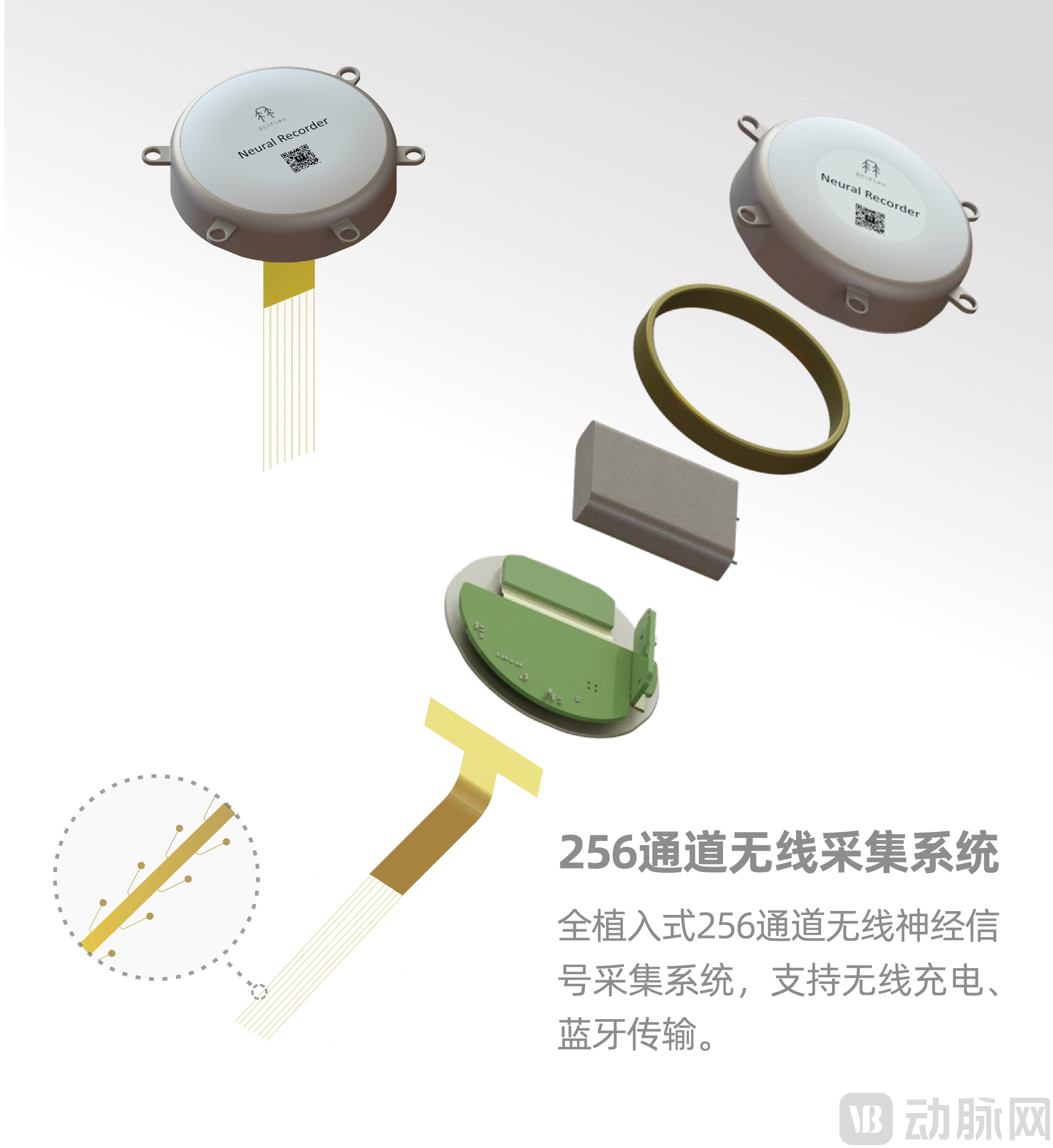
Source: BCIFlex
Currently, BCIFlex hasDozens of Chinese and American patents, fully covering key core technology areas of brain-computer interfaces, including flexible electrodes, hardware acquisition systems, implantation robots, and decoding algorithms. Meanwhile, BCIFlex possessesMore than 1,000 square meters of clinical-grade flexible electrode micro-nano processing platform and GMP workshop, with fully independent and controllable research, design, and mass production capabilities for flexible brain-computer interface products. In the future, BCIFlex will continue to focus on clinical needs, bringing "Chinese wisdom" to the precise diagnosis and treatment of global neurological diseases and brain science research.