

GI Windows Secures $43M Funding to Advance Incision-less Magnetic Anastomosis System for Obesity and Type 2 Diabetes

GI Windows
Surgical Anastomosis Technology and Product Development

Orlando Health Ventures
Startup Venture Capitalists

Rex Health Ventures
Venture Capital Firm

Johnson & Johnson
Healthcare Product Manufacturers, Health Service Providers

JC Investco
Early-Stage Venture Capital Firms
Recently, GI Windows Surgical, a surgical anastomosis technology development company located in Massachusetts, USA, announced that it has secured $43 million in financing.
The round of financing was led by Orlando Health Ventures, with support from Rex Health Ventures, Johnson & Johnson, JCInvestco, and Fred Moll, one of the inventors of the da Vinci Surgical Robot. The funds will mainly be used to support clinical research and subsequent commercialization of its core product, the magnetic anastomosis device Incision-less Anastomosis System (hereinafter referred to as IAS).
Brian was extremely excited about the financing of a medical device giant like Johnson & Johnson: "This funding will help GI Windows advance the FDA IDE clinical trial registration and pave the way for its U.S. market launch in 2025."
GI Windows was originally spun off from the endoscopy company Beacon Endoscopic. The company's team is composed of experienced clinical and commercial professionals, including clinical experts from Harvard Medical School and regulatory review experts with years of experience in FDA/CE/NMPA regulations. Brian Tinkham, CEO of GI Windows, has been a featured speaker at international gastrointestinal and surgical association conferences multiple times, sharing insights on innovation and entrepreneurship based on his extensive business experience.
GI Windows is dedicated to achieving revolutionary breakthroughs in anastomosis technology for device delivery and tissue fusion. Its core technology—magnetic anastomosis—was granted Breakthrough Device Designation by the FDA in 2020 for use in incisionless anastomosis systems to treat obesity and type 2 diabetes.
Obesity and diabetes have become global public health issues. According to the latest research published in The Lancet, the global obese population has exceeded 1 billion, accounting for about one-eighth of the global total population; from 1990 to 2022, the number of diabetic patients aged ≥18 years old surged from about 200 million in 1990 to 828 million. Although obesity is not the sole cause of diabetes, it remains a factor that cannot be ignored.
To address obesity and diabetes, solutions include scientific diet and exercise, medication, surgery, and other methods. Among weight-loss surgeries, Laparoscopic Sleeve Gastrectomy (LSG) and Laparoscopic Roux-en-Y Gastric Bypass (LRYGB) are two primary procedures, but both carry certain risks of complications. Studies indicate that anastomotic stenosis, bleeding, and gastroesophageal reflux disease are the most common complications of LSG, while LRYGB often leads to anastomotic leakage, ulcers, and nutritional deficiencies.1。
The IAS technology proposed by GI Windows provides a new approach for patients who need surgical treatment for obesity and diabetes. GI Windows' IAS product is currently in the clinical stage.
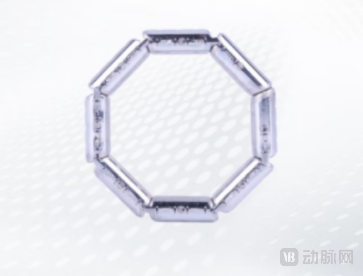
(Magnetic ring, image source: official website)
A surgical stapler is a medical device that can replace hand suturing in surgery, mainly used in gastrointestinal reconstruction and organ resection surgeries. Its working principle is similar to that of a stapler. It can be divided into two major categories: open staplers and endoscopic staplers.
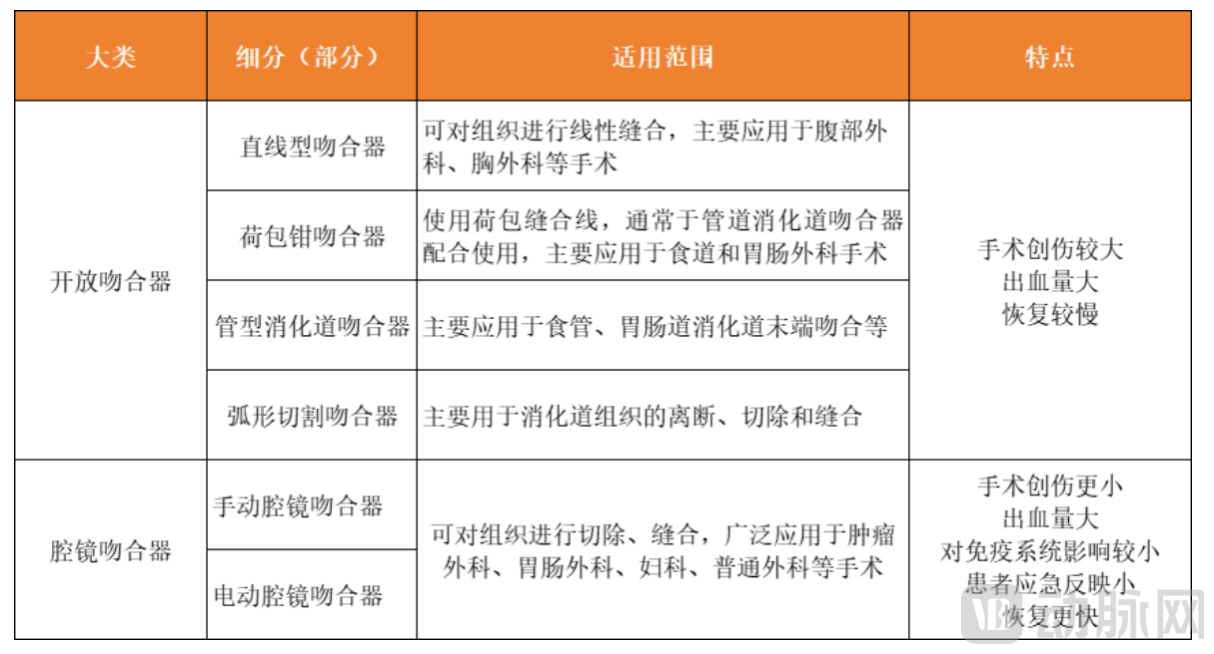
((Public data, chart by VCBeat)
Laparoscopic staplers can further minimize patient trauma and enhance surgical safety. With the rising incidence of obesity, cardiovascular diseases, and other conditions, coupled with the growing adoption of minimally invasive surgeries, there is an increasing demand for minimally invasive medical devices in the current era.
Magnetic Anastomosis is different from the types mentioned above. Its technical principle mainly involves two sutureless anastomotic fistulas caused by tissue ischemic compression, allowing anastomosis to be performed without leaving any foreign objects in the body. This technology is undoubtedly another innovation in surgical procedures.
IAS technology uses self-forming magnets, which are delivered to the desired fixation site via an endoscope or similar device. The magnetic rings released will form the required annular structure for the anastomosis. Subsequently, the mating magnets compress against each other, and when the tissue between them becomes necrotic, the magnetic rings automatically detach and are expelled through the digestive tract.
It is worth mentioning that in October, MagDI, a similar product of IAS, received FDA approval, becoming the world’s first approved magnetic anastomosis device for side-to-side duodenal anastomosis.
Like IAS, the MagDI system is an innovative anastomosis technology that is incision-free, suture-free, and staple-free.The differences between the two are mainly reflected in two places:
First, it is reflected in technology.IAS delivers the magnetic rings to the proximal and distal ends of the small intestine through two enteroscopes, then releases the rings to form an octagon, which couples to create an anastomosis point. The MagDI system, on the other hand, delivers two linear magnets into the patient’s body through the mouth and positions them with laparoscopy; the magnets self-align within the small intestine.
Secondly, the anastomosis cycles are different.The MagDI system requires 2-4 weeks to form an anastomosis, after which the magnets are naturally expelled. The IAS can achieve anastomosis in about a week; when the tissue around the magnetic ring支架 necrotizes, the magnetic ring automatically detaches and is expelled through the digestive tract.
MagDI, a同类 product of IAS, received FDA approval in October this year, becoming the world's first approved magnetic anastomosis device, primarily used for side-to-side duodenal anastomosis.
GI Windows Official Website Publishes Clinical Trial Data: The study included 10 obese patients with an average BMI of 41. Among them, four patients had type 2 diabetes, and another three were in the pre-diabetic stage. The research found that all patients successfully and safely underwent dual-path enteral bypass surgery and smoothly expelled the IAS implant. After six months, all patients showed a significant reduction in glycated hemoglobin and fasting blood glucose levels. All patients' fasting blood glucose levels returned to the normal range from the diabetic or pre-diabetic range at the six-month mark. On average, patients lost about 28 pounds (12.9 kilograms), representing a 10.6% reduction in total body weight.
The stapler is gradually gaining attention worldwide and showing certain growth potential. According to incomplete statistics, the global market value of electric surgical staplers is expected to increase from 2 billion US dollars in 2023 to 4.2 billion US dollars in 2033. Among them, developed regions in medical technology such as North America, Europe, Japan, and South Korea are the main consumers of staplers.
China's stapler technology started relatively late, and the market share of imported brands represented by Johnson & Johnson and Medtronic is relatively high. The "2023 China Stapler Industry Market Research Report" released by Huajing Industrial Research Institute shows that the scale of China's stapler market continues to expand. From 2017 to 2022, the scale of China's stapler market rapidly increased from 4.78 billion yuan to 8.63 billion yuan, with a compound annual growth rate of 12.54%.
In recent years, driven by national policies and breakthroughs in enterprise technology, the market scale is continuously expanding. At the national level, to strongly support the development of the medical industry, policies such as the "13th Five-Year Plan for Medical Device Science and Technology Innovation Special Plan" and the "14th Five-Year Plan for Medical Equipment Industry Development Plan" have been successively introduced, further stimulating the R&D enthusiasm of domestic stapler companies. At the enterprise level, some companies are continuously strengthening their independent innovation R&D areas, actively promoting the transformation of technological achievements, and it is expected that the market share of Chinese-produced manufacturers will further increase.
Despite the fact that magnetic anastomosis technology has not yet been widely promoted internationally, a team in China has already achieved breakthroughs in this field. In February 2024, the First Affiliated Hospital of Xi'an Jiaotong University successfully implemented an internationally pioneering magnetic compression anastomosis technique. This innovative method, which involves swallowing magnets orally, achieves ileocolonic bypass magnetic anastomosis and effectively treats postoperative intestinal anastomotic strictures in Crohn's disease patients. The procedure eliminates the need for traditional open abdominal surgery, significantly reducing surgical risks and the likelihood of postoperative complications.
In October 2024, SideO, in collaboration with the Surgical Dream Lab team at Xi'an Jiaotong University, developed the "Magnetic Traction Surgical Field Exposure System." This system utilizes the magnetic attraction between magnets to pull magnetic tissue clamps inside the body to the target position by manipulating external magnets, assisting in exposing the surgical field and achieving non-contact traction of internal tissues. This innovative process significantly reduces patient trauma, truly enabling minimally invasive surgery.
With the continuous advancement of science and technology, staplers have become an indispensable medical tool. Some innovative companies are continuously researching and developing new stapling technologies, and these new products and services are transforming surgical methods and driving the development of the entire industry.
Reference Article:
Guo Yixian, Wang Yufeng, Yin Guozhi, et al., Current Clinical Application of Laparoscopic Sleeve Gastrectomy and Roux-en-Y Gastric Bypass, Journal of Laparoscopic Surgery.