

BMS Regains Greater China Rights to GPC3-Targeted Radiopharmaceutical ABZ-706 (RYZ801) for Hepatocellular Carcinoma

Bristol-Myers Squibb
Biopharmaceutical and Nutritional Product R&D and Sales
Welcome to follow Asymchem Pharma News
On December 19, 2024, Bristol-Myers Squibb ("BMS") announced that it had reached an agreement with Ablaze Pharmaceuticals.Regained Exclusive Rights for the Development and Commercialization of ABZ-706 (RYZ801) in Greater China (including mainland China, Hong Kong, Macao, and Taiwan markets)。
ABZ-706It is a radiopharmaceutical therapy targeting glypican-3 (GPC3) for the treatment of hepatocellular carcinoma (HCC).. The drug was originally developed by RayzeBio. In March 2023, Ablaze Pharmaceuticals obtained the Greater China rights to RYZ801 from RayzeBio; in December 2023, Bristol-Myers Squibb acquired RayzeBio for a total value of approximately $4.1 billion.
About ABZ-706
RYZ801 is an Ac225 radiopharmaceutical targeting GPC3, a novel patented peptide, clinically intended for the treatment of HCC and currently inIPhase of clinical research.
In preclinical studies of HCC xenograft models, GPC3-binding peptides demonstrated specific tumor uptake and significant tumor growth inhibition, including tumor regression induced by a single dose of Ac225. The drug significantly inhibited tumor growth (TGI of 109%), achieved durable regression, and extended survival. Additionally, the therapeutic agent was well-tolerated.
About GPC3 Drug Status
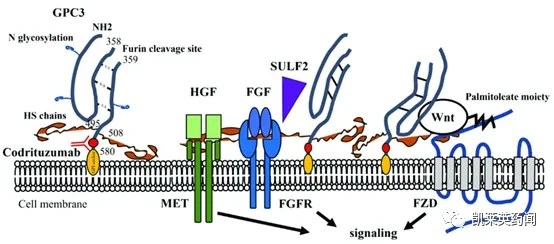
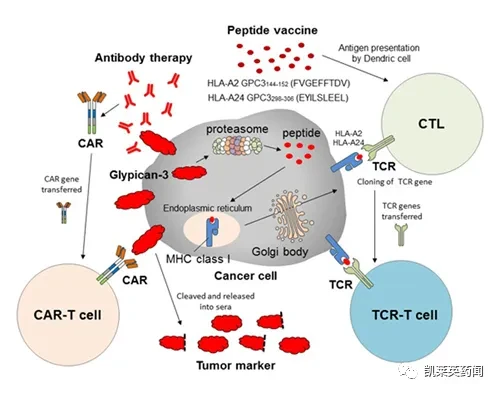
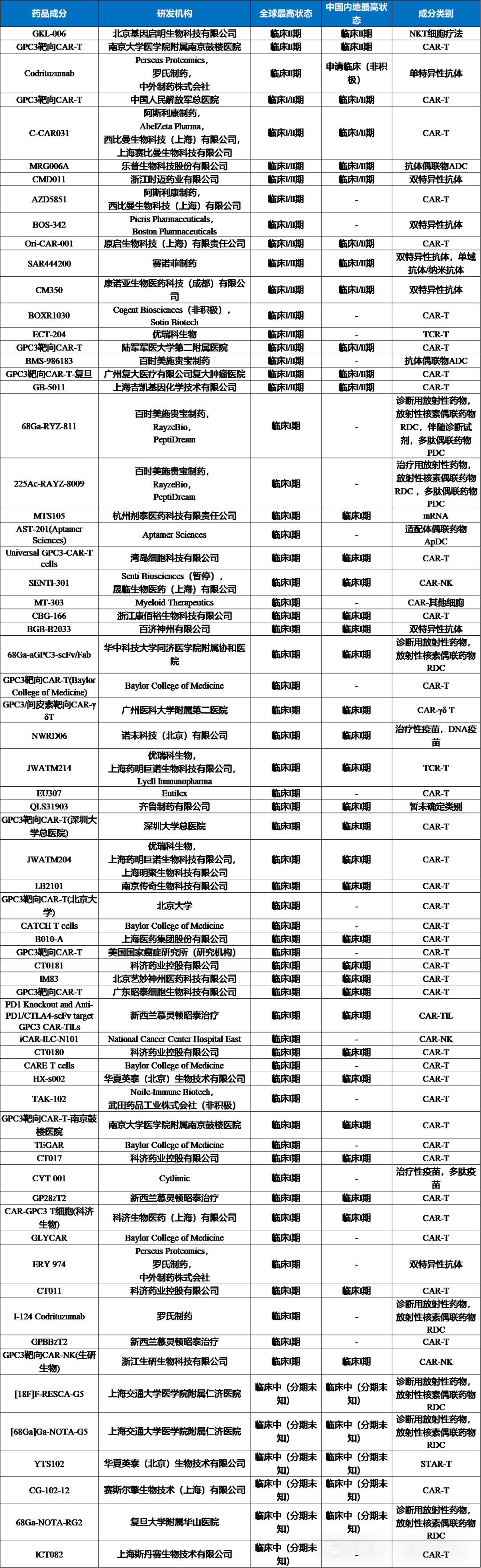
Studies have shown that GPC3 is a reliable marker for HCC, which can assist in confirming the nature of lesions in the early stage of HCC and significantly improve the accuracy of diagnosis. Currently,Therapeutic strategies based on the GPC3 target mainly focus on antibody drugs, nuclear medicine, cell therapy, and vaccines.According to incomplete statistics, there are approximately a hundred drugs under research, and the products in the clinical stage are summarized as follows:
About Hepatocellular Carcinoma
Heterogeneity is considered the main reason why tumors cannot be cured, and liver cancer is one of the malignant tumors with the strongest heterogeneity. The high degree of heterogeneity in liver cancer has so far prevented the discovery of related "oncogene dependencies," resulting in minimal efficacy of molecular targeted therapies. Among them, HCC accounts for about 90% of all liver cancers.
According to statistics from Frost & Sullivan, the number of HCC patients worldwide reached 776,000 in 2019 and is expected to increase to 876,600 by 2024 and to 1 million by 2030, with a compound annual growth rate (CAGR) of 2.3% from 2024 to 2030. China is a country with a high incidence of liver cancer, with over 45% of HCC cases originating from China. The number of HCC patients in China reached 369,400 in 2019 and is expected to grow to 416,500 by 2024 and to 473,400 by 2030, with a compound annual growth rate (CAGR) of 2.2% from 2024 to 2030.
Currently, the treatment level for HCC has significantly improved, evolving from traditional chemotherapy to multikinase inhibitors and checkpoint inhibitors. However, the overall treatment options remain very limited, especially for patients with advanced liver cancer, where only a few second-line and subsequent treatment options are available. Therefore, there remains a significant unmet clinical need for patients with advanced HCC.
About Radiopharmaceuticals
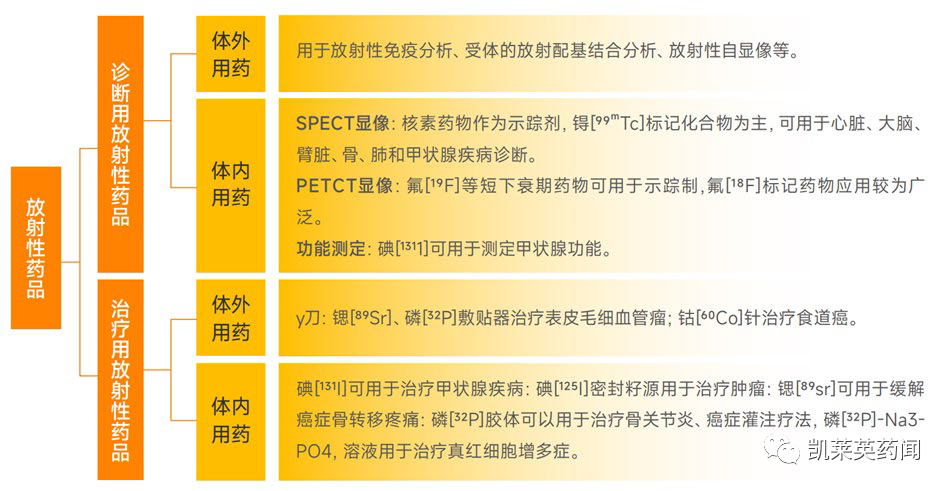
Radiopharmaceuticals, also known as nuclear medicines, refer to radioactive isotope preparations or their labeled compounds containing radionuclides used in nuclear medicine for clinical diagnosis or treatment. They are now widely applied in tumor diagnosis and treatment, myocardial imaging, early detection of neurodegenerative diseases, and inflammation tissue imaging diagnosis. Radiopharmaceuticals can utilize the biological characteristics of their labeled carriers to reflect genetic, molecular, metabolic, and functional states of lesions, enabling earlier and more specific insights into disease-related information at the molecular level. Additionally, they can leverage the radiation energy of radionuclides to accurately target and destroy tumors, making them a powerful tool for early disease diagnosis and precision treatment. Radiopharmaceuticals are generally categorized by use into diagnostic radiopharmaceuticals (including in vitro radioimmunoassay drugs) and therapeutic radiopharmaceuticals, and by radionuclide type into γ nuclide, β nuclide, and α nuclide-labeled drugs.
Classification of Nuclear Medicine
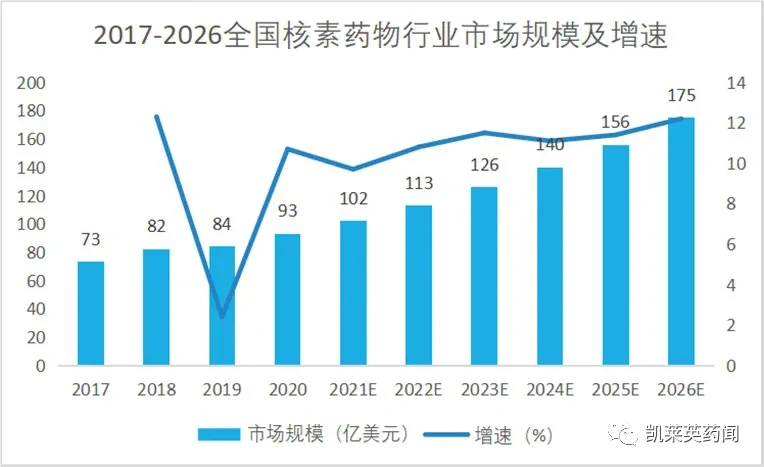
According to BBC Research data, the global nuclear medicine market size was approximately USD 9.3 billion in 2020, with diagnostic nuclear medicines occupying the main market share at 83.4%, and 99mTc-labeled drugs accounting for over 50%. Although diagnostic nuclear medicines currently dominate, future optimization of the approval process for therapeutic nuclear medicines, along with the continuous expansion of clinical applications and the successive approval and market entry of therapeutic nuclear medicines, is expected to drive a compound annual growth rate (CAGR) of 11.6% for the global nuclear medicine market from 2022 to 2026. The market size is projected to reach USD 17.5 billion by 2026.
Global Nuclear Medicine Market Size
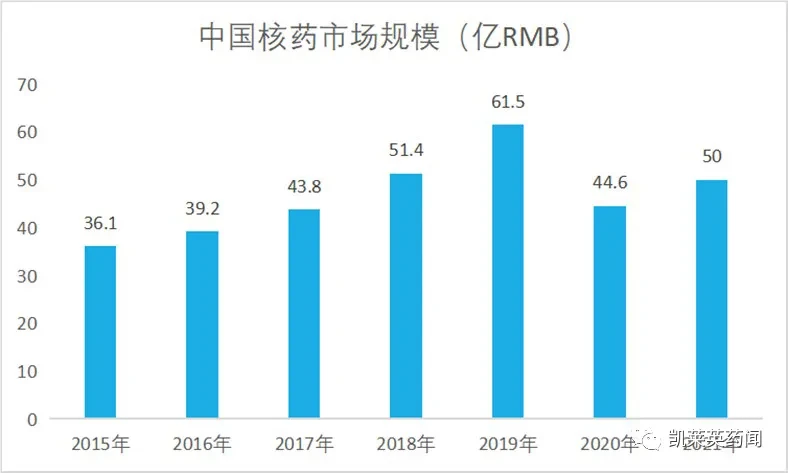
According to Peptide Research Society data, the scale of China's nuclear medicine market reached 6.15 billion yuan in 2019, increasing by 70% compared to 2015. The market scale declined somewhat in 2020 and 2021 due to the impact of the pandemic. However, given China's large population base and the fact that the penetration rate of nuclear medicine diagnosis and treatment in China is much lower than in mature markets such as the United States, with the rapid growth of clinical demand, China's nuclear medicine market is expected to maintain rapid growth in the future.
China Nuclear Medicine Market Size
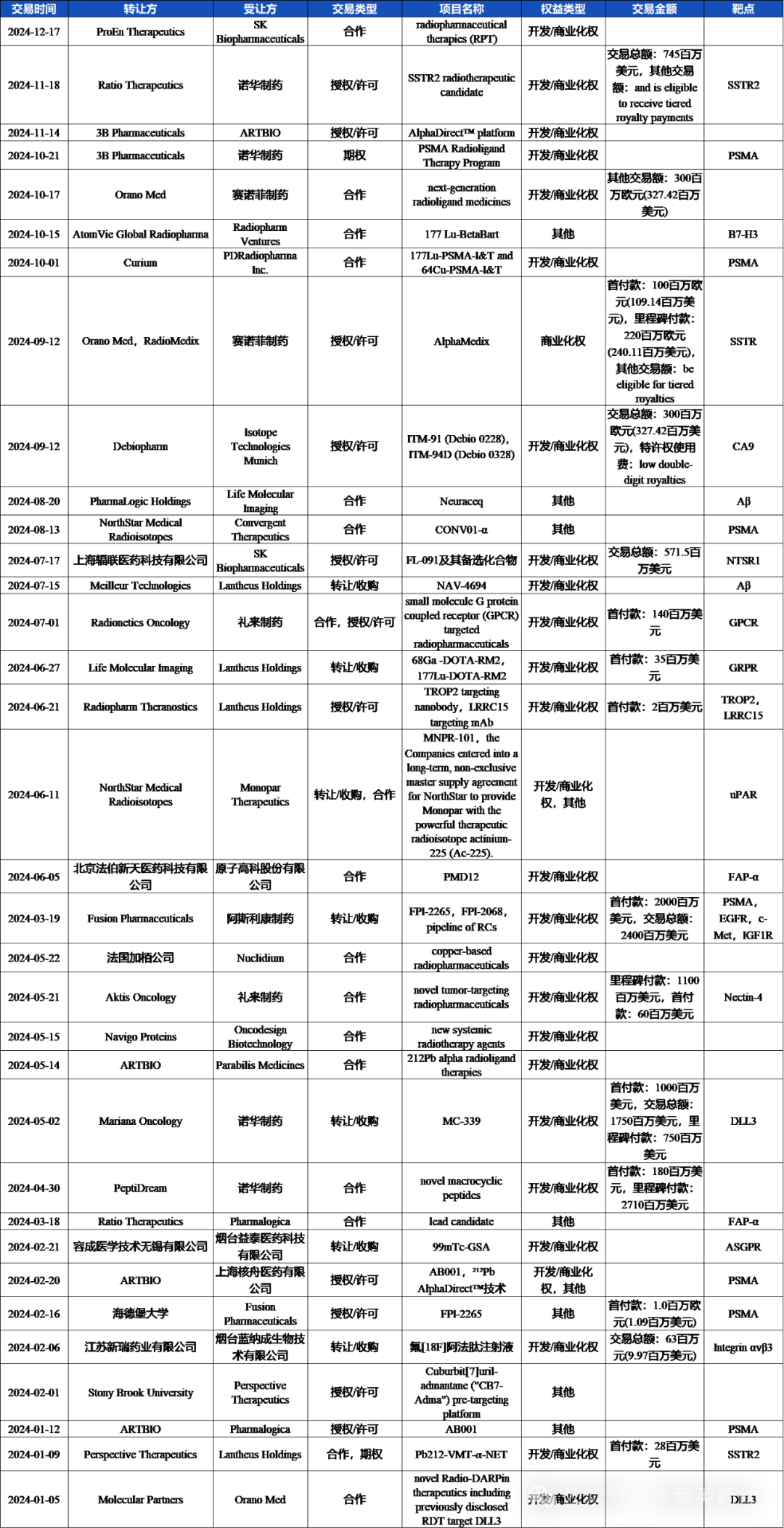
In recent years,Pharmaceutical companies, including MNCs, are actively investing in nuclear medicine, with transaction amounts showing an increasing trend year by year.
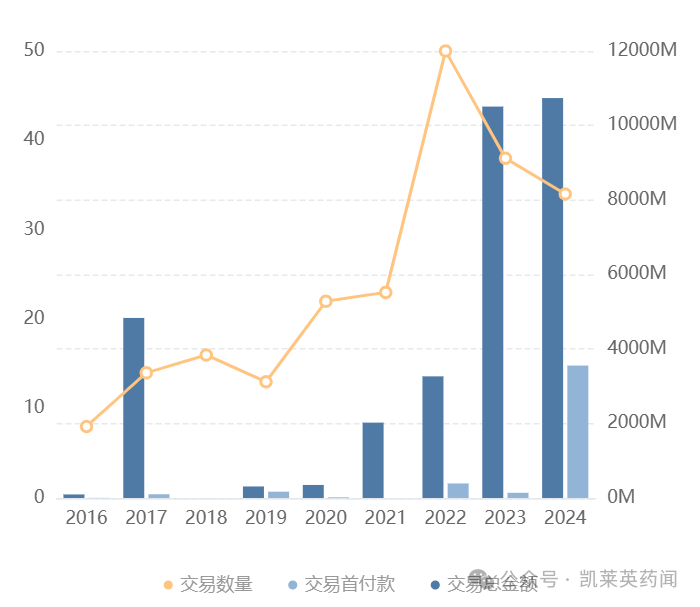
Image Source: Insight Database
As of 2024, there have been a total of 34 nuclear medicine transactions.
References
1. Company Official Website
2. Fat Cat's Life Science Notes, PharmaCube


"Under Observation"Click once