

Medtronic Acquires Fortimedix Surgical to Enhance Robotic-Assisted Laparoscopy with FDA-Approved Flexible Instrumentation Technology

Fortimedix
Medical Device Company

Medtronic
Medical Device Manufacturer
At the end of November 2024, Fortimedix Surgical (hereinafter referred to as "Fortimedix") announced that it had been successfully acquired by Medtronic, with the acquisition amount yet to be disclosed.
Fortimedix, founded in 2012 by a Dutch doctor, is a minimally invasive surgical medical device company. In 2016, Fortimedix raised €11 million (approximately 83 million RMB) in Series A funding led by Chemelot Ventures, with participation from MKB Leningenfonds and Rijksdienst voor Ondernemend Nederland. The funds were later used to promote its core product, FMX314.
Laparoscope is an endoscope used for examination and treatment within the abdominal cavity. It can be applied to surgical patients in a completely painless manner, allowing direct and clear observation of the patient's abdominal conditions, understanding the causative factors, and simultaneously performing surgical treatment for any abnormalities.
Compared with traditional surgery, laparoscopic surgery has many advantages, such as less surgical trauma, faster recovery, less pain, and smaller postoperative scars, and its role in the treatment of surgical diseases has increasingly attracted attention.
On the other hand, laparoscopic surgery still faces some challenges.In the operational space,Compared with traditional open surgery, laparoscopic surgery has a relatively narrow operating space. Laparoscopic surgery usually relies on a laparoscope (endoscope) to provide visibility, but surgeons can only operate through video images, which limits their direct perception of the tissue and increases the difficulty of the surgery.In terms of operational skills,The operation of laparoscopic equipment is relatively complex, requiring systematic training and imposing higher technical demands on surgeons.
According to the number of abdominal wall incisions, it can be roughly divided into single-port surgery and multi-port surgery. Compared with multi-port laparoscopic surgery, single-port laparoscopic surgery can further reduce abdominal wall trauma and improve cosmetic results.
In 2015, Fortimedix developed the FMX314 product.Becoming the world's first single-port surgical solution compatible with standard 15mm trocars, it received FDA approval in the United States the same year.This is another innovation in minimally invasive laparoscopy, attracting worldwide attention.
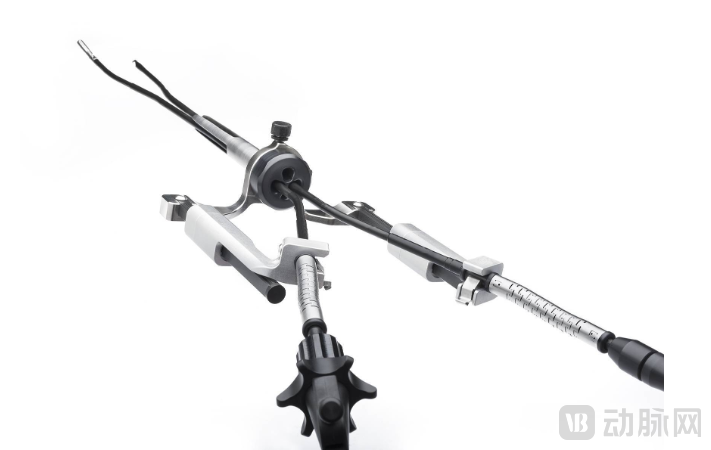
(FMX314 product, source: Fortimedix official website)
Compared with traditional multi-port laparoscopic surgery, FMX314 is expected to reduce port-site complications, lessen postoperative pain, achieve faster recovery, and cause relatively less skin trauma.
One of the highlights of this product is its "flexible technology." The so-called "flexible joint" technology refers to the product's use of full laser cutting technology to create a multi-layer nested and welded structure. When a metal tube is transformed into a flexible articulating shaft with hundreds of moving parts and complex functions in the assembled state, it forms the "flexible joint."
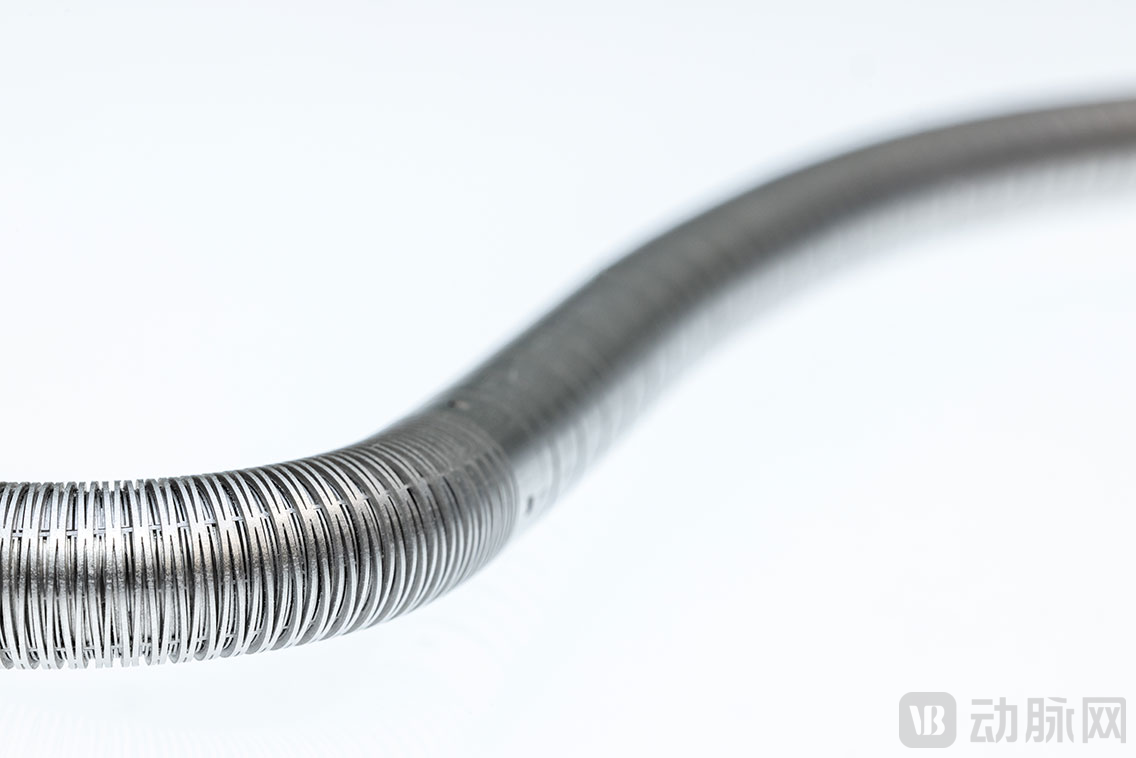
("Flexible Joint" product technology, source: Fortimedix official website)
The product has a fixed proximal end and a flexible distal end. Control wires are set inside the tube, separated from the tube through a specially designed slotted structure to control the deflection of the distal end. The control wires can move longitudinally along the tube, driving the distal end to adjust direction flexibly.
The tube has a flexible section composed of interconnected links, similar to a joint structure, which allows the distal end to bend freely while maintaining overall strength. This articulated technology can be used in both robotic and non-robotic applications, with treatment areas including laparoscopic and cardiovascular surgeries.
FMX314 Product Clinically Proven: In June 2015, Fortimedix completed the phase II clinical trial of this product. The trial recruited 27 patients (23 females) with an average age of 41.7 years and a BMI of 26.6 kg/m². The incision length did not exceed 15mm, with no intraoperative complications; operating room time decreased from 91 minutes to 56 minutes; the average hospital stay was 7.8 hours, with pain control not exceeding 7 days; all patients were followed up for 5 months, and Phase I patients were followed up for 1 year, with no adverse events or umbilical hernias reported. The conclusion showed that the product is feasible, safe, and reproducible for single-incision cholecystectomy in a larger population.
Medtronic is one of the largest medical device companies globally, with its traditional business primarily covering four segments: cardiovascular, medical surgery, neuroscience, and diabetes. In recent years, Medtronic has taken the lead in the surgical robotics field, achieving a series of successes.
As early as 2018, Medtronic acquired Mazor Robotics, an Israeli surgical robotics company, for $1.64 billion (approximately RMB 11.2 billion), thereby gaining the Mazor X surgical platform. The system has been approved for spinal surgeries in Canada, Europe, and the United States. In February 2020, Medtronic acquired Digital Surgery, obtaining its Touch Surgery mobile application, which was integrated into the next-generation Hugo. In June 2022, Medtronic led the B+ round of funding for Surgerical Robotics, entering the field of laparoscopic surgical robots.
Through the acquisition of Fortimedix, Medtronic can gain access to new "flexible joint" technology and integrate its expertise into existing operations, effectively expanding its coverage and capabilities across multiple medical fields.
Taking Medtronic's soft tissue surgical robot Hugo as an example, Hugo provides an advanced visualization laparoscopic solution. This solution integrates advanced technologies from traditional laparoscopic and open surgeries, including Storz endoscopes, Valleylab electrosurgical systems, etc., and can be applied in various surgical environments, offering doctors more options.
After Medtronic introduced the "flexible joint" technology, it can reduce the learning curve of new technologies and consolidate its market leadership in the surgical robotics field.
Flexible joint technology also enhances Medtronic's LigaSure vessel sealing system. LigaSure is a large vessel sealing device from Medtronic. Its working principle is to intelligently combine pressure and pulsed energy, altering the properties of collagenous tissue between the jaws through pressure and energy, resulting in permanent tissue fusion.
"LigaSure Retractable L-Hook Laparoscopic Device" operates by pressing the lever on the handle to deploy the L-shaped hook; to switch back to the Maryland jaw, simply press the lever again to retract the L-shaped hook. The "flexible joint" technology allows the "retractable" function to perform like a soft robot, offering greater flexibility and maneuverability when contacting target tissues.
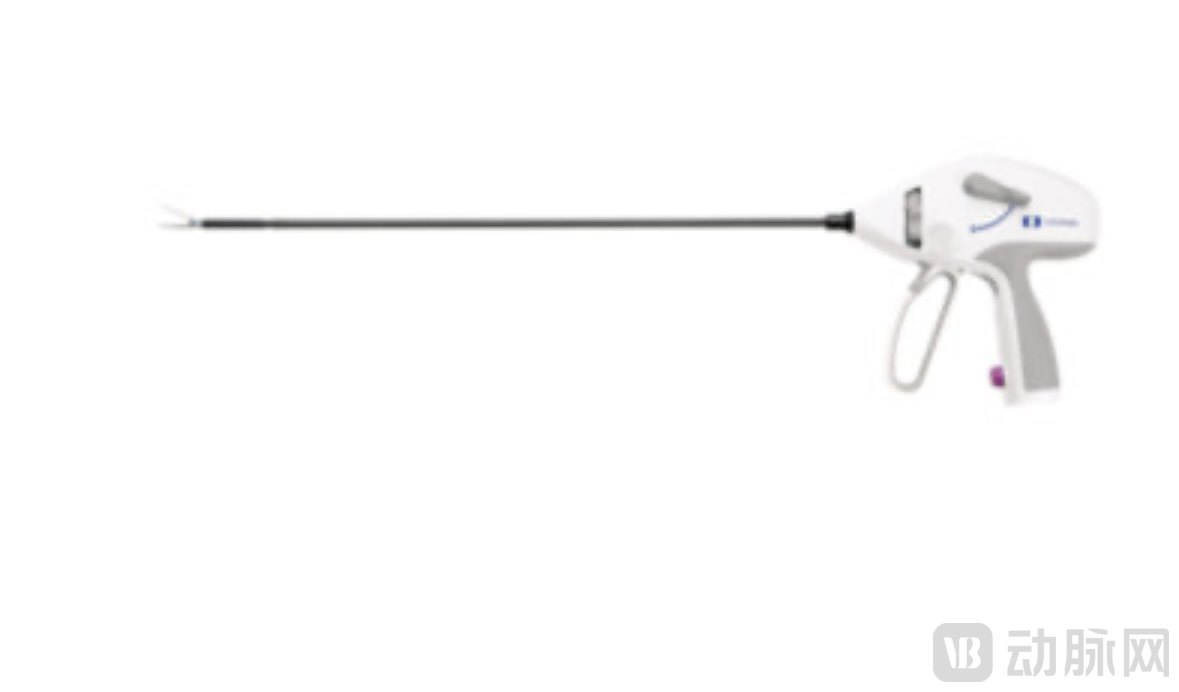
(LigaSure Retractable L-shaped Hook Laparoscopic Device, Source: Medtronic Official Website)
Driven by the combined effects of policy, technology, and market demand, domestically produced laparoscopic surgical robots are on the rise.
According to Frost & Sullivan, the market size of China's laparoscopic surgical robot market grew from 7.0 billion yuan in 2017 to 32.4 billion yuan in 2021, with a compound annual growth rate of 46.7%. During this period, the market share was largely dominated by da Vinci.
The number of Chinese companies entering the field of laparoscopic surgical robots is increasing, and the market is showing a thriving trend. According to statistics, as of the end of September 2024, the number of domestic中标 (bid wins) for laparoscopic surgical robots has exceeded last year's total of 57 bid wins.
Currently, companies such as MicroPort Robotics, JF Medical, Beijing Surui, and Sizhe Rui have increased their R&D investment and made breakthrough progress, leading to the emergence of several innovative products that have contributed to the development of China's endoscopic surgical robot market.
We believe that, with the continuous breakthrough of patents and technical barriers, domestically produced endoscopic surgical robots will gradually achieve import substitution of high-end medical devices and become an important force in the international market.