

Key Medical Device Industry Events in 2024: Medtronic Insulin Pump Recall, Cochlear Implant National Volume-Based Procurement, and Nationwide Implementation of Medical Consumables Traceability Codes

Medtronic
Medical Device Manufacturer

Tencent
Internet Comprehensive Service Provider
In the healthcare field, the development of medical devices has always been an important force driving industry progress.In 2024, the medical device industry witnessed a series of remarkable hot events. From the application of innovative technologies to policy adjustments, from capital market dynamics to changes in the industry ecosystem, this article will review the hot events in the medical device industry in 2024, capturing the pulse of the industry in this year.
Cochlear Implants Included in National Centralized Procurement
On November 29, 2024, the Joint Procurement Office for High-Value Medical Consumables of the National Organization released the "Centralized Volume-Based Procurement Document for Cochlear Implants and Peripheral Vascular Stents," clarifying that the centralized procurement of cochlear implant medical consumables and peripheral vascular stent medical consumables will be carried out. Companies are required to submit application materials on December 19, with the bids to be opened on-site.。

China Has the World's Largest Number of People with Hearing Disabilities, Reaching 27.8 Million, of Which 7.4 Million Are Suitable for Cochlear Implantation. However, the Market Penetration Rate in China is Only 10%, Much Lower than in Developed Countries, with High Costs Being the Main Reason Why Cochlear Implants Are Not Accessible to Millions of Patients. Currently, Imported Cochlear Implants on the Market Are Generally Priced Between 200,000 and 300,000 Yuan, While Domestically Produced Cochlear Implants Are Slightly Cheaper, Approximately Ranging from 50,000 to 150,000 Yuan. The Implementation of Centralized Procurement Is Expected to Significantly Reduce the Financial Burden on Patients by an Estimated 30% to 50%.
The procurement cycle for this centralized procurement is 3 years, involving a total of 27 bidding enterprises. A total of 456 medical institutions in China reported procurement needs for cochlear implant-related consumables, with an annual demand for 11,239 implantable bodies and a demand for 10,943 speech processors.
Medtronic Insulin Pump Recall Controversy
October 4, 2024U.S. Food and Drug Administration (FDA Announces Class I Recall of Medtronic's MiniMed 600 and 700 Series Insulin Pump Battery Issues, Warning of Potential Serious Injury or Death. According to the FDA’s device recall database, approximately 785,000 system products were involved in Medtronic's Class I recall event in October.
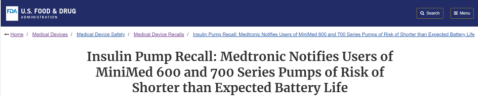
Medtronic has long been aware of the issue regarding the battery life of insulin pumps. From January 2023 to September 2024, the company received 170 reports of hyperglycemia (blood glucose levels exceeding 400 mg/dL) and 11 reports of diabetic ketoacidosis in the United States, which may be related to battery issues.
In response, Medtronic sent two safety warning letters to customers in July and October 2024, reminding customers of its diabetes devices to pay attention to the built-in alarms and battery status of the pump, and informing customers to contact Medtronic immediately if they observe any changes in battery life.
This incident provides an important lesson for the medical device industry. While insulin pumps, as a key tool in diabetes management, have brought great convenience to patients through improvements in design and functionality, the potential risks caused by battery issues also remind manufacturers and regulatory agencies of the critical importance of continuous monitoring and improvement of medical devices.
Tencent's Layout in Early Cancer Detection
October 2024,Hong Kong Genomics Testing CompanyPrenetics Announces that Chinese Tech Giant Tencent Has Invested $30 Million (Approx. 213 Million RMB) in Its Early Cancer Detection Joint Venture, Insighta, Pushing the Company's Valuation to $200 Million.
Insighta is a joint venture established with a $200 million investment by Prenetics and Professor Dennis Lo, a researcher at the Chinese University of Hong Kong, focusing on early cancer detection using non-invasive prenatal testing technology. After the transaction, Prenetics' stake in Insighta will decrease from 50% to 35%, while Insighta's co-founder will retain a 50% share. Prenetics stated that the funds will be used to enhance the company’s cash and other short-term liquid assets, with an expected increase of over $90 million.
Insighta's Early Cancer Detection Platform Based on Its Proprietary FRAGMA Technology
The combination of Tencent's expertise in the AI field with Insighta's FRAGMA technology will greatly advance the development of early cancer diagnostic techniques, significantly improving patient prognoses worldwide.
Multiple Provinces in China Include Assisted Reproductive Technology in Medical Insurance
On October 28, 2024, the General Office of the State Council issued the "Notice on Several Measures to Accelerate the Improvement of the Birth Support Policy System and Promote the Construction of a Birth-Friendly Society," proposing to strengthen birth service support, enhance the guarantee of birth-related medical expenses, and guide regions to include appropriate labor pain relief and assisted reproductive technology projects within the scope of medical insurance reimbursement.Since 2024, the National Healthcare Security Administration has continued to guide regions across China to include appropriate assisted reproductive technologies within the scope of medical insurance reimbursement.
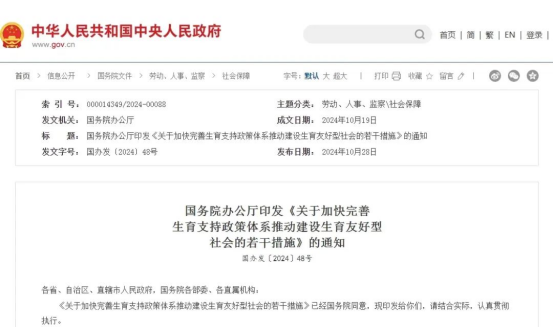
Promote the inclusion of assisted reproductive services in medical insurance payments to effectively reduce fertility costs. In June 2023, the National Healthcare Security Administration issued the "Guidelines for the Establishment of Medical Service Price Items for Assisted Reproduction (Trial)," which unified and integrated assisted reproductive projects into 12 items such as oocyte retrieval and embryo culture, standardizing the establishment of assisted reproductive projects. Local governments are guided to comprehensively consider factors such as fund affordability and the standardization of assisted reproductive technologies, and to gradually include appropriate therapeutic assisted reproductive service projects in the scope of medical insurance payments according to procedures. This aims to alleviate the financial burden of family fertility medical expenses and address the concerns of families with fertility intentions who face issues of "unable to have children, or dare not have children."
As of December 14, 2024, 29 provinces in China and the Xinjiang Production and Construction Corps have included assisted reproductive technology services in medical insurance coverage, benefiting over one million people since 2024.
New Progress in Brain-Computer Interface Chips
In 2024, the brain-computer interface (BCI) technology field witnessed a series of remarkable advancements.
In January 2024, Neuralink completed the first human implant surgery, inserting a brain-computer interface chip into a patient who had been paralyzed for eight years. Soon after the surgery, the patient was able to control a computer mouse with their mind, type, send emails, and even livestream while playing games. In August 2024, the second participant, Alex, successfully received the implant and has already been able to use the brain-computer interface to play CS2 games, with potential for expansion into more applications in the future.
Meanwhile, clinical trials of brain-computer interface products made in China are also proceeding steadily. In November 2024, NEO, a brain-computer interface product jointly developed by BrainLink Medical Technology (Shanghai) Co., Ltd. and Professor Hong Bo's team from the Department of Biomedical Engineering at Tsinghua University, completed the third clinical trial implantation surgery in China and the first in Shanghai at Huashan Hospital affiliated with Fudan University. This further verified the safety and effectiveness of brain-computer interface technology made in China. The surgery brought new hope to a patient who suffered a spinal cord injury due to a car accident. Professor Hong Bo stated that next year, the NEO brain-computer interface device will undergo clinical trials involving 30 to 50 cases across approximately 10 centers in China, further advancing the clinical application and industrialization process of this technology.
Orthopedic Leader Declares Bankruptcy
On October 29, 2024, Exactech (Exactech Medical), a leader in orthopedic implants, announced that it would initiate a court-supervised voluntary restructuring process (i.e., filing for bankruptcy) in collaboration with its existing group of investors, aiming to sell assets and clear legal liabilities.
Due to the use of defective packaging, since 2021, Exactech has recalled more than 650,000 knee, hip, and ankle implant liners and devices in batches. The affected products can be traced back to 2004, covering nearly all of the company's product models. Currently, over 2,000 patients who received these problematic products have filed lawsuits against Exactech.
Exactech Spent $20 Million in the Past Year on Lawsuits and Recalls
As part of the restructuring plan, Exactech has reached a comprehensive agreement with an investor group, which will acquire nearly all of the company's assets as the "lead bidder" and provide approximately $85 million in additional financing to ensure uninterrupted company operations.
Johnson & Johnson Completes Largest Medical Device Acquisition of the Year
Following the announcement in January 2024 by Mindray Medical, China's leading medical device company, of its acquisition of a 21.12% stake in Huitai Medical for 6.652 billion yuan, on May 31, Johnson & Johnson announced the completion of its acquisition of Shockwave Medical in a deal valued at approximately $13.1 billion (equivalent to about 94.864 billion yuan), marking the largest medical device merger and acquisition globally.

Shockwave Medical is the world's first company to offer Intravascular Lithotripsy (IVL) for coronary arteries, and its addition will strengthen Johnson & Johnson's leadership position in the cardiovascular intervention field. This acquisition is expected to drive revenue growth for Johnson & Johnson MedTech and has the potential to become a priority platform with annual sales of at least $1 billion.
Prior to this acquisition, Johnson & Johnson had already carried out a series of acquisitions in the cardiovascular field. These included the $16.6 billion acquisition of Abiomed in 2022 and the $400 million acquisition of Laminar in November 2023. The addition of Shockwave's marketed intravascular lithotripsy platform will complement Johnson & Johnson's Abiomed heart recovery and Biosense Webster electrophysiology technologies.
China Launches Nationwide Medical Device Renewal Initiative
With the advancement of medical technology and the increasing demand for high-quality medical services from patients, multiple provinces and cities in China actively responded to national policies in 2024 by issuing and implementing action plans for medical device updates. These aim to enhance the level of medical services, optimize the allocation of medical equipment, and promote the modernization and upgrading of medical devices.
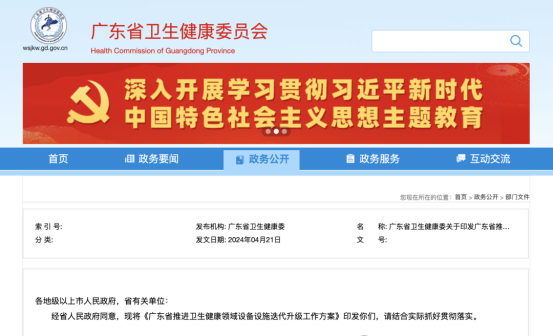
On April 21, 2024, the Guangdong Provincial Health Commission released the "Guangdong Province Work Plan for Promoting the Iterative Upgrade of Equipment and Facilities in the Health Sector," becoming the first province in China to issue a special plan for medical equipment updates. The plan clearly states that by 2027, the scale of equipment investment in the health sector across the province will increase by more than 25% compared to 2023, with priority given to purchasing domestically produced equipment. At the same time, the plan proposes a unified equipment update directory, supporting centralized procurement, which is expected to reduce procurement costs and improve procurement efficiency.
As of June 2024, all 31 provinces, autonomous regions, and municipalities in China have issued local policies on medical device updates. These policies mainly focus on improving the configuration level of medical imaging equipment in county-level areas, promoting the extension of telemedicine to rural villages, and advancing the upgrading and digital transformation of urban medical devices.
The Accelerated Promotion of Centralized Procurement of Medical Consumables
In 2024, significant progress has been made in the centralized procurement (CP) of medical consumables in China, with three major highlights particularly noteworthy:A significant drop in prices, industry innovation-driven growth, and the accelerated advancement of domestically produced alternatives.
On December 11, the Hefei Medical Insurance Bureau of Anhui Province announced the "Proposed Winning Results of the Centralized Volume-based Procurement of Medical Devices for Single-use Sphincterotomes and Single-use Invasive Pressure Sensors in Anhui Province." The highest valid bidding prices for these two types of devices were 1,832 yuan and 199 yuan, respectively, with guaranteed minimum price reductions of 40% and 50%, respectively.
The work of centralized procurement of medical consumables in Jiangxi Province has also been remarkably effective. Since the launch of the centralized procurement program, the average reduction in the price of selected medical consumables has reached 77%, with the highest reduction reaching 94%.
Through centralized procurement, not only has there been a significant reduction in the price of medical consumables, easing the financial burden on patients, but it has also promoted innovation and high-quality development in the medical consumables industry. At the same time, the accelerated promotion of domestically produced alternatives has provided ample space for the development of domestic enterprises.
Consumable Traceability Codes to Be Rolled Out Nationwide in China
The collection of traceability information for medical insurance drugs and consumables across China has entered the comprehensive promotion stage.
On October 29, 2024, the National Healthcare Security Administration organized an event to release and interpret the collection and application of traceability information for medical insurance drugs and consumables in China.
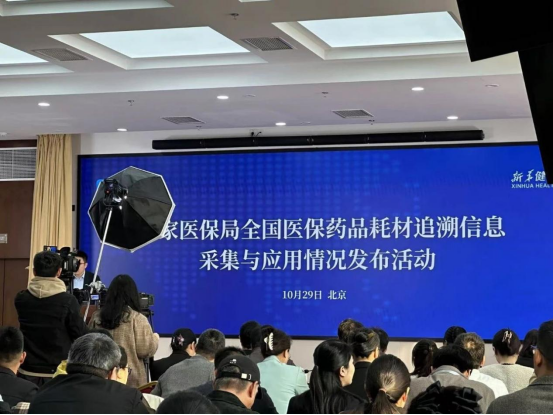
Since the pilot program for collecting traceability code information of medical insurance drugs and consumables was launched in April 2024, the National Healthcare Security Administration (NHSA) has achieved significant results nationwide. To date, all 32 provincial healthcare security information platforms in China have fully implemented the collection of traceability codes for drugs and consumables, accumulating a total of 3.127 billion pieces of data. This data covers 296,800 designated medical institutions and 497,200 designated retail pharmacies, with over 60% of medical institutions and more than 99% of pharmacies participating in the traceability code collection efforts.
At the local level, the practice in Xiamen City is particularly noteworthy. The city has achieved five-code linkage: drug traceability code, product code, material code, charge code, and medical insurance code. For consumables, UDI (Unique Device Identification) has been linked with material code, charge code, and medical insurance code, significantly improving the level of refined management.
The next step for the National Healthcare Security Administration is to fully establish a mapping database that integrates three codes: traceability codes, healthcare security codes, and product codes. Additionally, they will create traceability mapping databases for large, medium, and small packaging of pharmaceuticals and consumables, as well as recognition databases for various traceability codes. These databases will be freely accessible to designated medical institutions and production and distribution enterprises, aiming to enhance the efficiency and convenience of scanning codes for inventory management and further optimize the supply chain management of pharmaceuticals and consumables.
Editor: Wanwan


www.yyjjb.com.cn
Insight into Industry Trends

"Pharmaceutical Economy Herald"
Academic Official Account
Focusing on the Frontier of Oncology Academia

Terminal Official Account