Domestic siRNA Therapeutics Targeting AGT Surge into Hypertension Market with Six Candidates in Clinical Trials
Argo
RNAi Drug Developer

SANEGENEBIO
Small Nucleic Acid Drug Developer

Innovent
High-end Biologics Developer
Leaderna
Nucleic Acid Drug Developer
CSPC
Developer of finished drugs and active pharmaceutical ingredients

The Renin-Angiotensin-Aldosterone System (RAAS) is a complex cascade of hormones and biochemical pathways that regulate blood pressure, fluid balance, and electrolyte homeostasis.When the kidneys release renin in response to decreased sodium concentration or reduced blood pressure, this system is activated. Angiotensinogen (AGT) is cleaved by renin to produce angiotensin I (Ang I), which is subsequently converted to angiotensin II (Ang II) through the angiotensin-converting enzyme (ACE). Ang II is a vasoconstrictor that stimulates the release of aldosterone from the adrenal glands. Aldosterone promotes sodium and water retention in the kidneys, leading to increased blood volume and blood pressure. In hypertension, the RAAS becomes overactive, resulting in elevated levels of Ang II and aldosterone.
Components of the RAAS can serve as therapeutic targets. Common angiotensin-converting enzyme inhibitors (ACEi) or angiotensin receptor blockers (ARB) that inhibit the RAAS pathway are among the effective methods, but they have three limitations: 1) A higher risk of targeted toxicity such as hyperkalemia and renal dysfunction, leading to lower drug dosages which restrict optimal dosing and clinical benefits; 2) RAS escape occurs, where downstream inhibition of the RAAS pathway triggers upstream compensatory mechanisms, further limiting therapeutic efficacy. Generally, long-term use of renin-angiotensin system (RAS) drugs like ACEi or ARB leads to a compensatory increase in renin due to reduced blood pressure and loss of Ang II-mediated negative feedback. The increase in renin, along with the high physiological concentration of angiotensinogen, results in the restoration of Ang II levels; 3) Patients need to take medication daily, leading to poor compliance.
AGT is the most upstream precursor in the RAAS., a glycoprotein secreted by hepatocytes. AGT is the rate-limiting factor for Ang II generation. Studies have shown that AGT and Ang II are associated with hypertension. The more copies of the AGT gene, the higher the blood pressure. Therefore, inhibiting AGT is a promising method to target the RAAS pathway for lowering blood pressure.Three Potential Advantages of Silencing Hepatic AGT Gene via RNA Therapy:
1) Better safety, inhibiting the production of AGT in the liver, allowing renal homeostasis and tubuloglomerular feedback to remain intact, alleviating the increase in potassium, and reducing renal dysfunction;
2) Minimize the escape mechanism of AngII transmission`, more fully suppress Ang II, which is beneficial for the treatment of RHTN.`
3) Better compliance。
According to incomplete statistics,Currently, there are about 20 small nucleic acid drugs targeting AGT under research.,The most advanced Zilebesiran was introduced by Roche for $2.8 billion from Alnylam.. Published inJAMATheKARDIA-1The results of the Phase 2 trial showed that, in mild toAdult patients with moderate hypertension (defined as daytime average dynamic systolic blood pressure of 135 mmHg to 160 mmHg after discontinuation of antihypertensive medication)Zilebesiran administration on a quarterly or semi-annual basis can serve as an effective antihypertensive treatment, with reductions in ambulatory systolic blood pressure ranging from 7.3 mmHg to 10.0 mmHg.Alnylam expects,The peak sales potential of Zilebesiran may far exceed 4 billion US dollars.
There are 6 products that have entered clinical trials in China:
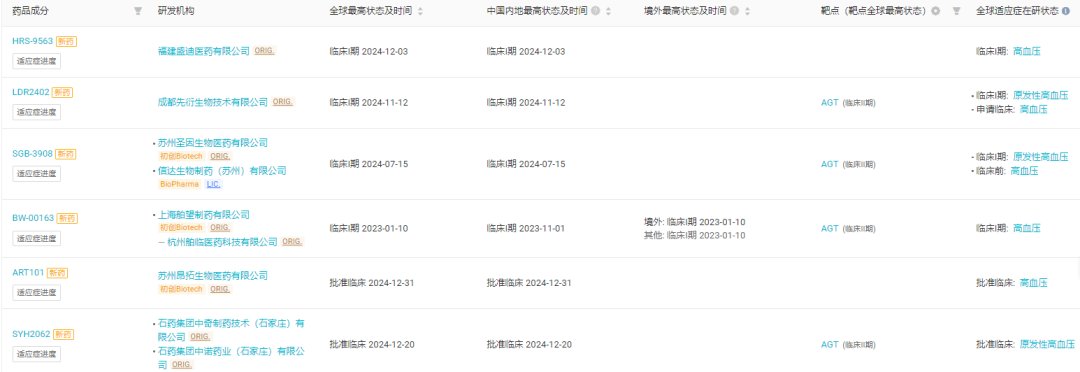
Argo's BW-00163In Phase 1 clinical trials, it is a chemically synthesized double-stranded siRNA molecule that efficiently degrades AGT gene mRNA through siRNA, reducing the production of angiotensin from the source to exert a long-acting blood pressure-lowering effect. September 2023Month, the therapy was approved for clinical use in China to treat hypertension. According to publicly available patents, preclinical monkey efficacy experiments showed excellent results, with a significant reduction of 28 mmHg in SBP (from a baseline of 147 mmHg to 119 mmHg) on the 35th day after administration.
SANEGENEBIO/Innovent Bio's SGB-3908SGB-3908 Receives Clinical Approval in China in July 2024 for the Treatment of Primary Hypertension. This drug, developed by SANEGENEBIO using its proprietary small nucleic acid drug development platform LEAD™, is an siRNA drug targeting AGT. It inhibits AGT synthesis through RNAi, demonstrating superior activity and prolonged efficacy with good safety and tolerability. Preclinical trial data show that SGB-3908 significantly reduces AGT protein and related biomarkers (ANG I, ANG II) in the serum of hypertensive cynomolgus monkeys, achieving a pronounced and sustained blood pressure-lowering effect without observed safety issues such as hypotension.
HRS-9563 Injection from SUNCADIA, a subsidiary of Hengrui MedicineApproved for clinical use in China in October 2024, intended for the treatment of hypertension. HRS-9563 injection effectively inhibits the expression of key proteins that cause blood pressure elevation by precisely targeting specific gene sequences, with the potential to overcome the aforementioned limitations of current therapeutic drugs.
LDR2402 Injection by Leaderna Therapeutics Ltd.In November 2024Approved for clinical use in ChinaThis drug utilizes RNA interference technology. After being linked with N-acetylgalactosamine (GalNAc), it precisely targets the liver cell membrane receptor to enter the liver cells, degrading AGT mRNA, thereby lowering blood pressure. In preclinical animal experiments, a single dose maintained stable efficacy for over six months with good safety. In clinical treatment, extending the dosing interval (once every quarter or every six months) may improve patient compliance and potentially reduce blood pressure variability (BPV) by maintaining 24-hour blood pressure control, offering cardiovascular benefits to patients with hypertension. Therefore, LDR2402 has the potential to break traditional hypertension treatment models and become a new generation of hypertension therapy. This means that in the future, patients may only need one injection every quarter or every six months, significantly improving medication adherence while reducing blood pressure fluctuations and providing cardiovascular benefits.
CSPC Pharmaceutical Group Limited's SYH2062 InjectionIn December 2024Approved for clinical use in China。This product is an siRNA drug delivered through conjugated N-acetylgalactosamine (GalNAc), capable of targeting and inhibiting angiotensinogen (AGT), and is applicable for the treatment of hypertension. By optimizing sequence and chemical modification strategies, the product achieves a more prolonged gene silencing effect and is expected to become a stable blood pressure control drug administered once every six months. Preclinical studies show that the drug’s activity duration is significantly longer than similar siRNA products, with anticipated advantages such as long-lasting effects, good safety, and high patient compliance, demonstrating substantial clinical development value.
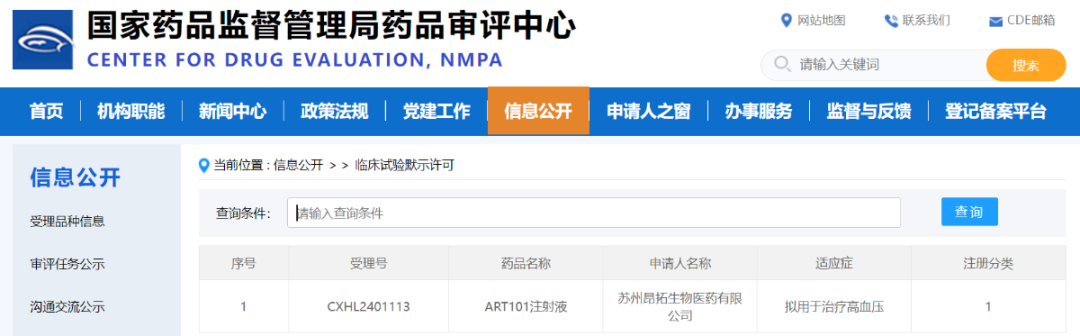
Antorna Bio's ART101 InjectionIn January 2025Approved for clinical use in China。ART101 Injection, as a siRNA drug independently developed by OncTop Bio, achieves a blood pressure-lowering effect by targeting and inhibiting the expression of liver AGT mRNA, thereby reducing AGT protein production.

Disclaimer
1. All information provided by the "Drug Hunter Club" is for reference only and should not be used as a basis for any commercial transactions or medical services. If any deviation occurs from the independent use of the content from the "Drug Hunter Club," our company assumes no responsibility, including but not limited to legal liability or compensation.
2. "Drug Hunter Club" is committed to providing reasonable, accurate, and complete information, but does not guarantee the reasonableness, accuracy, or completeness of the information, and shall not be liable for any loss or damage caused by unreasonable, inaccurate, or omitted information.
3. Some article information in the "Drug Hunter Club" is sourced from online reprints and is intended solely for the purpose of sharing more information, without implying endorsement or verification of the accuracy of its content. If you have any questions regarding the content, please contact our company promptly.
4. For issues not covered in this statement, please refer to relevant national laws and regulations. In case of any conflict between this statement and national laws and regulations, the latter shall prevail.