

Stryker Acquires Inari Medical in $4.9B Deal, Marking 2025’s First Mega-M&A in Healthcare
Inari Medical
Cardiovascular Disease Treatment Device Developer
Stryker
Orthopedic Product Developer
At the start of 2025, global orthopedic giant Stryker initiated the first major acquisition in the medical field exceeding $1 billion!
On January 6, Stryker announced that it had reached a definitive agreement with Inari Medical, a company in the peripheral intervention field: to acquire all issued and outstanding shares of Inari Medical's common stock at $80 per share in cash, with a total equity value of approximately $4.9 billion (RMB 36 billion) on a fully diluted basis.
As a global orthopedic giant, Stryker's every move attracts significant attention from industry practitioners, especially after completing seven acquisitions in just one year. According to Stryker’s Q3 financial results for the fiscal year 2024, these seven acquisitions cost approximately $1.6 billion.
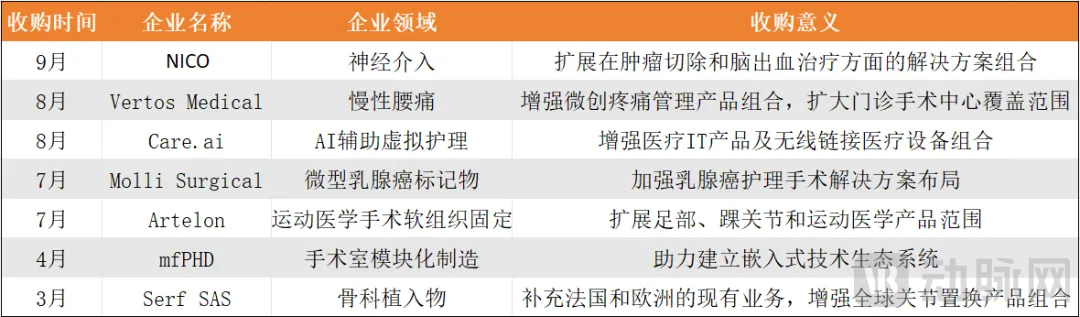
(2024 Stryker M&A Case Review)
In China, policies such as volume-based procurement, the two-invoice system, the "medical insurance catalog" for high-value medical consumables, and "DRGs-based medical insurance cost control" have driven profound changes in the orthopedic market. As a result, some overseas companies have exited the Chinese market with their orthopedic businesses. Therefore, domestic orthopedic professionals are paying close attention to the moves of Stryker, the global leader in orthopedics.
Currently, it appears that Stryker has no intention of "stubbornly defending" the orthopedic market. Instead, the company is expanding into more high-growth innovative fields, exploring new frontiers, and identifying future growth opportunities.。
The acquisition of Inari Medical marks Stryker's first foray into the peripheral intervention field.。
In the market, vascular intervention can be divided into cardiovascular intervention, neurointervention, and peripheral intervention according to different anatomical locations. The main scope of cardiovascular intervention includes the coronary arteries and veins closely related to the heart; neurointervention mainly involves intracranial vessels associated with brain function; peripheral vascular intervention primarily covers arterial and venous vessels in the periphery, including those in the trunk and limbs of the body outside the heart and brain.
Stryker stated, "After the acquisition is completed, Inari Medical's peripheral intervention products will complement Stryker's neurovascular business products, providing patients with a richer portfolio of products and solutions."
Why Does Stryker Value the Peripheral Intervention Market?
First, the large number of patients with peripheral vascular diseases indicates a vast market space. Taking China as an example, the base number of patients with lower extremity arterial disease exceeds 45.3 million, and nearly 100 million people suffer from lower extremity venous diseases. The number of patients far surpasses that of cardiovascular and cerebrovascular diseases. Based on the large patient population and market demand, the peripheral intervention market is considered another blue ocean following cardiovascular intervention and neurointervention.
Data released by research institution QYResearch shows that: The global peripheral intervention products market size was approximately USD 9.625 billion in 2023, and is expected to reach USD 16.228 billion by 2030, with a compound annual growth rate (CAGR) of 7.75%.
Secondly, the penetration rate of peripheral interventions is low, indicating significant development potential. Currently, the penetration rate of peripheral interventions remains at a relatively low level. This is mainly due to the short development time of the peripheral intervention market, the mild early symptoms and lower mortality rates of peripheral diseases, and patients' weak willingness to undergo surgical treatment.
It should be noted that the early mortality rate of peripheral diseases is not high, but if not treated in time, it may cause intermittent claudication, limb swelling, chronic pain, and gangrene, which can lead to amputation and death in severe cases.
A lower penetration rate means that peripheral intervention has a higher development potential. With the promotion by major peripheral intervention companies, patients’ awareness of diseases is increasing, and the penetration rate of peripheral intervention is accelerating.
Finally, peripheral intervention is a blue ocean market with a rich product portfolio, multiple niche tracks, and high entry barriers. The platform-based and scaled Stryker has a competitive advantage in this field.。
Specifically, peripheral intervention encompasses numerous细分 tracks, with a very rich product portfolio. For example, the peripheral intervention field covers多段 vascular diseases such as the aorta, lower limb arteries, carotid arteries, and venous system, involving products like drug-coated balloons, stents, thrombectomy catheters, mechanical thrombectomy systems, rotational atherectomy devices, radiofrequency ablation systems, and peripheral guidewires.
Unlike the cardiovascular intervention field, where a single product (cardiac stent) achieves millions of surgeries, the peripheral intervention field has relatively limited surgeries for any single product due to the characteristics of diseases and the specificity of affected blood vessels. For instance, China performs about 1.2 million cardiac stent implantation surgeries annually, whereas there are only 200,000 to 300,000 peripheral vascular stent implantation surgeries. These surgeries include three types of products: lower limb arterial stents, non-lower limb arterial stents, and venous stents.
Obviously, a single product in the peripheral intervention field is difficult to support the revenue scale of related enterprises.Therefore, large-scale platform enterprises are more likely to build a rich product portfolio and have a more competitive advantage in the peripheral intervention field.
In addition, the peripheral intervention field has broad innovation space, and market demand has yet to be met. For instance, at this stage, there is an urgent clinical need for products or technologies such as vascular calcification treatment, thrombus management, treatment options for below-the-knee arterial diseases, and intravascular imaging devices. This also indicates that the peripheral intervention field still holds tremendous innovation potential.
Given the characteristics and current stage of the peripheral interventional field, Stryker, as one of the global TOP5 medical device giants, entering this blue ocean market seems to be a perfect match.
Perhaps it is less known in the Chinese market, but the company being acquired in this transaction, Inari Medical, is no stranger to the industry.
Data shows that Inari Medical was founded in 2011.Is a leading enterprise in the field of peripheral intervention.,Ranked 88th in the 2024 Global Top 100 Medical Device Companies (2024 Medtech Big 100).Currently, Inari Medical mainly focuses on peripheral interventional products for the treatment of pulmonary embolism, deep vein thrombosis, venous stent thrombosis and other diseases, providing systematic nursing services for patients with venous thromboembolism (VTE).
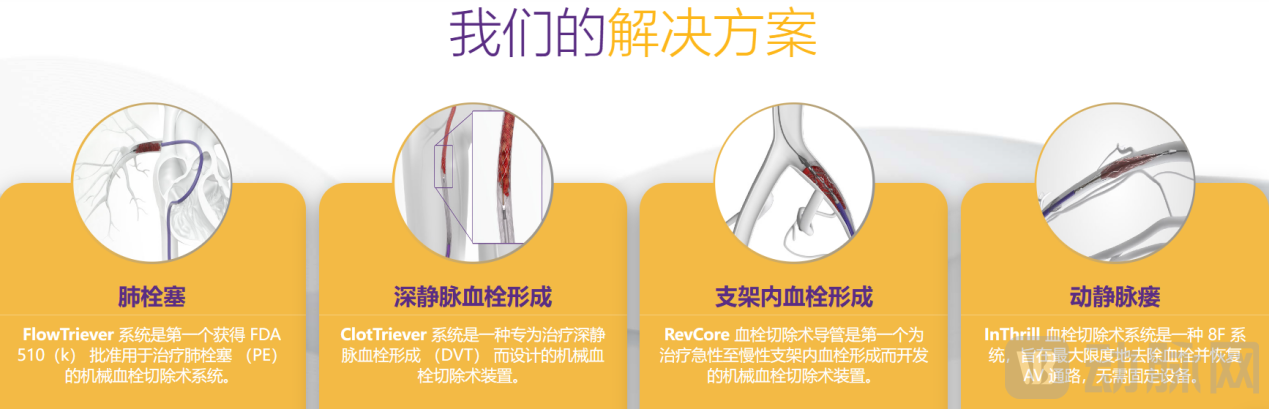
(Main business of Inari Medical, image from the company's official website)
Among them, the FlowTriever system launched by Inari Medical isThe first mechanical thrombectomy system approved by the U.S. FDA for the treatment of pulmonary embolism, aiming to quickly remove blood clots and immediately alleviate symptoms in patients with acute pulmonary embolism. Pulmonary embolism is a disease caused by detached blood clots or other substances blocking the pulmonary artery or its branches, with a high mortality rate. Public data shows that the global annual incidence of pulmonary embolism is about 1/1000, and nearly 20% of patients die within 90 days of onset.
It is reported that the FlowTriever system consists of two core components: the Triever aspiration catheter and the FlowTriever catheter. It removes thrombi through two mechanisms: mechanical resection and aspiration. There are generally two concepts in thrombectomy: mechanical thrombectomy and aspiration thrombectomy. The FlowTriever combines both concepts. For simple pulmonary thrombi, the Triever catheter directly aspirates the thrombus; for more complex thrombi, the FlowTriever catheter performs mechanical thrombectomy.
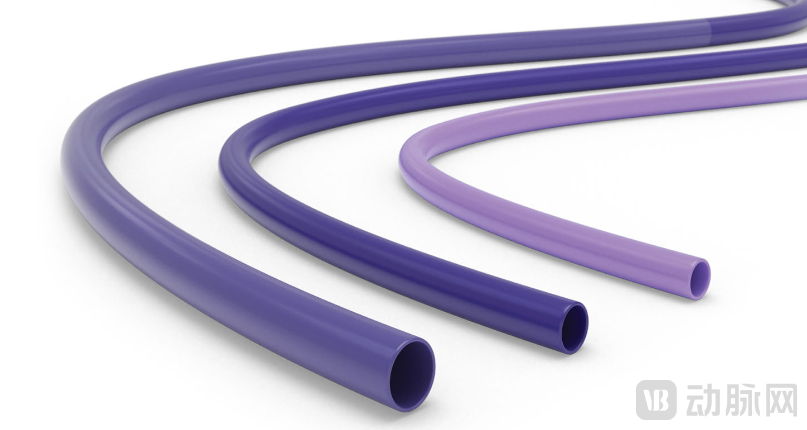
(Triever Aspiration Catheter)
Among them, the Trieve aspiration catheter has a large lumen and can be used with a large-diameter syringe to quickly aspirate a large amount of thrombus, reducing blood loss. The FlowTriever catheter is a triple self-expanding nitinol mesh disk catheter designed to lyse thrombus and deliver it to the Triever catheter.
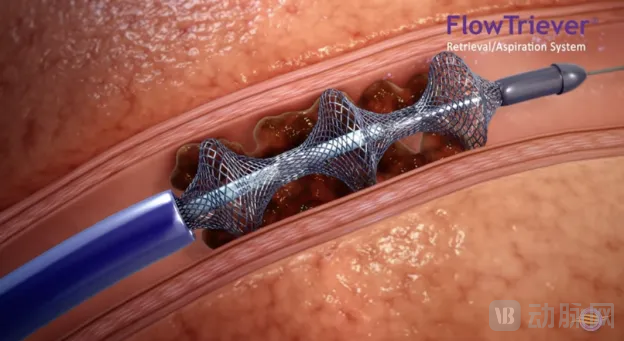
According to data from a randomized controlled trial of FlowTriever versus catheter-directed thrombolysis presented by Inari Medical at the TCT 2024 conference: compared with the control group, the experimental group using the FlowTriever system showed faster recovery of clinical symptoms and hemodynamics, shorter hospital stays, and lower 30-day readmission rates. This indicates that FlowTriever can reduce the need for clinical deterioration and repeat interventions through more effective early thrombus removal.FlowTriever is safe, effective, and superior to catheter-directed thrombolysis.。
In addition to the FlowTriever system, Inari Medical has also launched the ClotTriever system for the treatment of deep vein thrombosis.It is reported that in the early stage of deep vein thrombosis, it may lead to the fatal disease pulmonary embolism. In the middle stage, chronic deep vein thrombosis syndrome may occur, and in the later stage, the probability of pulmonary embolism greatly increases.
ClotTriever System is a percutaneous mechanical thrombectomy device composed of an expandable nitinol collection bag that is dragged along the venous wall to separate and capture thrombus, collecting it into a retrieval sheath. The ClotTriever system can be used to treat venous thrombosis, including even subacute and chronic thrombus, without the need for thrombolysis and with no potential bleeding-related complications.
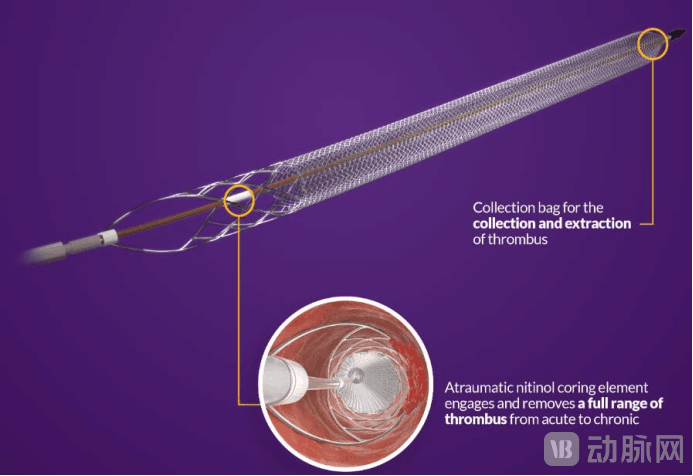
(ClotTriever catheter, image source: Inari Medical official website)
Clinical data show that, with the use of the ClotTriever system, the proportion of complete or near-complete thrombus removal was 91.2%, the incidence of serious adverse events related to thrombosis at 30 days was 5.0%, and the rate at 6 months was 8.4%. Device-related serious adverse events were only 0.2%. Compared with other products or treatment methods, the ClotTriever system achieves effective and long-lasting improvement in treating deep vein thrombosis. Data indicate that two years post-surgery, patients treated with the ClotTriever system continued to experience improvements in clinical symptoms and quality of life.
Despite achieving phased results, Inari Medical remains unsatisfied and continues to intensify its research and development efforts. Subsequently, the company has consistently launched innovative products such as the RevCore thrombolytic catheter, Triever16 Curve catheter, and the Artix peripheral arterial integrated thrombectomy system to address challenges like thrombus removal within venous stents, pulmonary embolism, and acute limb ischemia.
With these innovative products in the field of peripheral interventions, Inari Medical successfully went public on NASDAQ. Supported by the first-mover advantage and performance superiority of its products, the company achieved a revenue of $493.6 million in 2023, representing a year-on-year increase of 28.73%.Overall, Inari Medical has taken a leading position in the global peripheral intervention market based on its first-mover advantage and product superiority.。
Regarding this transaction, Kevin Lobo, Chairman and CEO of Stryker, stated: "The acquisition of Inari Medical will expand Stryker's product portfolio, providing life-saving solutions for patients with peripheral vascular diseases. These innovations will elevate the standard of care for patients with venous thromboembolism and accelerate Stryker's influence in the field of endovascular surgery."
Let's take a look at the acquirer in this transaction, Stryker.
In recent years, Stryker has repeatedly surprised in the competition for the top 10 global medical device companies. From 2021 to 2023, Stryker's revenue increased year-on-year by 19%, 8%, and 11%, respectively. This continuous significant revenue growth propelled Stryker from seventh place to fifth. Achieving this is quite remarkable. It should be noted that among the top 10 global medical device companies, the rankings are usually extremely stable, making each step forward very challenging.
What Exactly Did Stryker Do to Become the Fifth Largest Medical Device Giant in the World?
From Stryker's financial report, the revenue in the third quarter of 2024 was $5.494 billion, a year-on-year increase of 11.9%. According to forecasts, if this growth rate continues into the fourth quarter, Stryker will once again become the world's largest orthopedic company in 2024, surpassing its position as the second-largest in 2023.
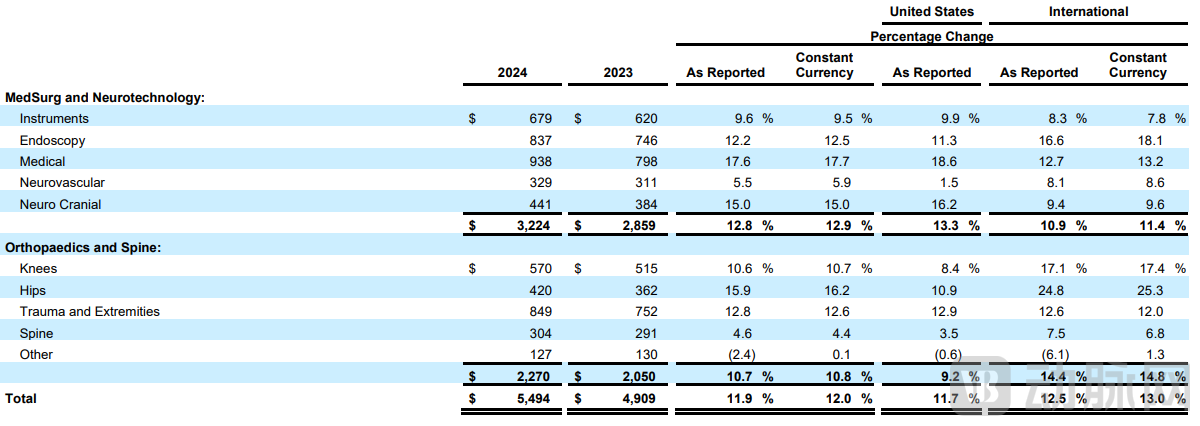
(Stryker Q3 2024 Report)
By different business segments, Stryker's Orthopaedics and Spine division reported net sales of $2.3 billion in the third quarter, representing a year-over-year increase of 10.7%. The hip product line grew by 15.9%, the knee product line increased by 10.6%, and the trauma and extremities product line rose by 12.8%. The growth was primarily driven by increased sales volume, with some contribution from higher average selling prices.
Stryker's Medical Surgical and Neurotechnology Segments Achieve $3.22 Billion in Net Sales in Q3, Up 12.8% Year-over-Year
Notably, Stryker's joint surgery robot, Mako, achieved a record number of installations and high utilization rates in the third quarter. Taking the Chinese market as an example, since its introduction to China in 2018, the total number of surgeries performed by the Mako joint robot in the first three years was only 1,000. However, in the first 11 months of 2024, the Mako joint robot conducted over 10,000 surgeries in the Chinese market.
Stryker expects the momentum of installing and using Mako joint surgery robots to remain on the rise, continuously driving the growth of its hip and knee businesses.
Macroscopically, Stryker maintains a steady pace of advancement and innovation in its established departments such as orthopedics, spine, medical surgery, and neurotechnology. Future revenue growth is primarily expected to be driven by acquisitions. Stryker's CEO, Kevin Lobo, stated: "M&A is at the core of Stryker's growth strategy, and it will be the primary use of the company's future cash.”
In 2024, Stryker completed 7 M&A transactions, a significant increase from the 1-3 transactions publicly reported in previous years.

At the same time, among the seven M&A transactions in 2024, Stryker did not focus on acquiring orthopedic and neurosurgery companies as in previous years. Instead, it simultaneously acquired companies in fields such as chronic pain management, artificial intelligence assistance, and soft tissue fixation to explore emerging growth markets.
For example, in April 2024, Stryker completed the acquisition of mfPHD. mfPHD is a supplier of modular stainless steel wall systems for hospitals and outpatient surgery centers. Its modular wall system can shorten construction time, help hospitals use operating rooms earlier, and accelerate room repairs or adjustments in the event of disruptive incidents.This collaboration will enhance Stryker's capabilities in operating room environment design.。
In July 2024, Stryker completed the acquisition of Molli Surgical. Molli Surgical is a private company specializing in the development of wireless soft tissue localization technology for breast-conserving surgery.This acquisition will strengthen Stryker's layout in surgical solutions for breast cancer care.。
In August 2024, Stryker announced the acquisitionAI-Assisted Virtual Care CompanyCare.ai. This acquisition will enhance Stryker's healthcare IT offerings and portfolio of wirelessly connected medical devices.
Through the acquisition, Stryker will expand its presence in areas such as breast cancer care, virtual care, and chronic pain management.
In fact, in the past two years, several global medical device giants have been increasing their acquisition efforts to explore high-growth potential markets. For example, Johnson & Johnson acquired Abiomed, Laminar, Shockwave, and V-Wave, with a total transaction value exceeding $31.8 billion; Boston Scientific acquired Axonics, Silk Road, Cortex, and Intera Oncology, with a total transaction value approaching $5.3 billion...Perhaps, the valuation of medical enterprises is currently in a trough period over the past two years, and this is also a good opportunity for giant enterprises to carry out mergers and acquisitions and expand aggressively.