Source: Heart Future; Editor: Sophia
Reprint Requirements: If the source of the article is indicated at the beginning of the text, it can be reprinted directly.
Recently,Medtronic (NYSE: MDT)Announced that itsHarmony Transcatheter Pulmonary Valve (TPV) System Receives CE Mark, This product is used to treat congenital heart disease and is specifically designed for severe pulmonary valve regurgitation (blood leaking back into the right lower chamber of the heart), providingPatients with congenital heart disease having primary or surgically repaired right ventricular outflow tract (RVOT)Provides a minimally invasive alternative to open-heart surgery.The Harmony TPV system was approved for marketing by the U.S. FDA in March 2021, asThe World's FirstSelf-expanding pulmonary valve,Once designated as a "Breakthrough Device" by the FDA, this product replaced the previous balloon-expandable mechanism with a self-expanding release mechanism, causing a significant splash in the cardiovascular market.But in April 2022,Harmony Recalled by FDA as Class I Recall Due to Catheter Delivery Issues。Medtronic relaunched the system in February 2023.Currently, about 2,200 people have been implanted with the Harmony valve.The CE Mark approval in the European Union will further advance its commercialization in Europe.。
# A Tortuous Path to CommercializationThe Harmony Transcatheter Pulmonary Valve (TPV) is the world's first self-expanding pulmonary valve. Previously marketed TPVR products were mainly balloon-expandable valves, such as Medtronic's Melody and Edwards' Sapien.The balloon-expandable valve model is smaller and not suitable for the anatomical characteristics of RVOT aneurysmal dilation caused by long-term PR., which further restricted the use of TPVR.Harmony has been approved, not only solving the problem of the ballExpandValveThe issue of smaller model sizes also affects Medtronic.Achieved in the field of TPVREdward's Leadership。Unfortunately, the good times didn't last long.Medtronic Received Six Complaints About Its Delivery Catheter Breaking During Use Just One Year After Its Market Launch。On March 2, 2022, Medtronic initiated a recall of the Harmony catheter delivery system.,The reason isDuring the placement of TPV, the adhesive securing the capsule to the end of the delivery catheter may break.Fracture may cause surgical delay or require additional surgery. If a fracture occurs during the procedure, it may cause serious harm to the patient. These risks include: blockage of blood flow and/or complete obstruction (embolism or occlusion), tearing and/or splitting (perforation or dissection), or other types of damage to the patient’s blood vessels.This recall has been classified as a Class I by the FDA, indicating that it could lead to serious death or injury. This situation inevitably brings to mind Medtronic's TPVR product Melody from the same series, which was approved 15 years ago and also faced criticism due to stent fracture issues.
Consecutive Commercial Setbacks for Melody and Harmony: Medtronic's Glorious Chapter in the TPVR Field Comes to a Temporary End。However, on February 22, 2023, the U.S. FDA announcedMedtronic Re-launches Harmony Transcatheter Pulmonary Valve System, and announced the results of the two-year trial. The research results show,0% of vascular injuries require intervention, 99% of people do not have severe stent fractures, and 99% of people have no/minor PR within 2 years.。
"Making a comeback" is not difficult to understand, as Edwards, Boston Scientific, Abbott and others have entered the market, leading to overcrowding, oversupply, and involution, which have become a true portrayal of the TAVR market. In this field, Medtronic's global market share is even less than half of Edwards'.Finding new breakthroughs is the top priority.。
According to Frost & Sullivan analysis, globally, primarily driven by the increase in the number of patients with Tetralogy of Fallot (ToF) and other RVOTDs, the number of TPVR-eligible patients increased from 62,500 in 2014 to 76,100 in 2018.It is expected to increase to 127,700 people by 2025.。
Against this background,Harmony TPV is considered another flagship product of the company.In fact, TPVR is the first transcatheter valve replacement technology mastered by humans. Compared with TAVR, the clinical application of TPVR was already two years earlier.Compared with the previous balloon-expandable valves Melody, Sapien XT, and Sapien 3, the Medtronic Harmony TPV adoptsSelf-expanding valves have a larger diameter range, do not require balloon assistance, are easier to operate, and involve lower surgical costs.,is expected to become the mainstream design for subsequent TPVR.
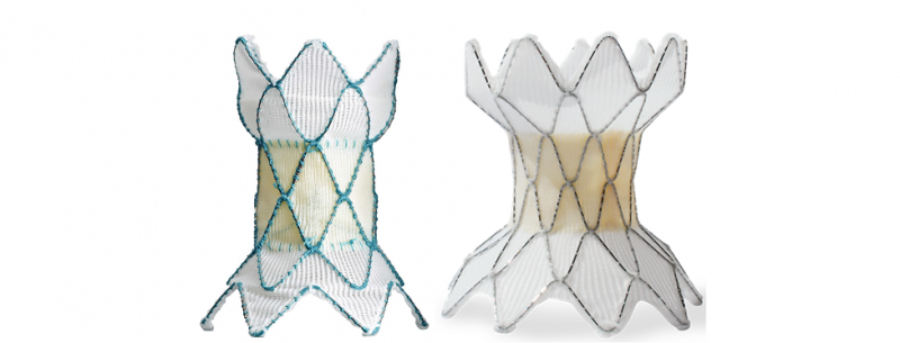
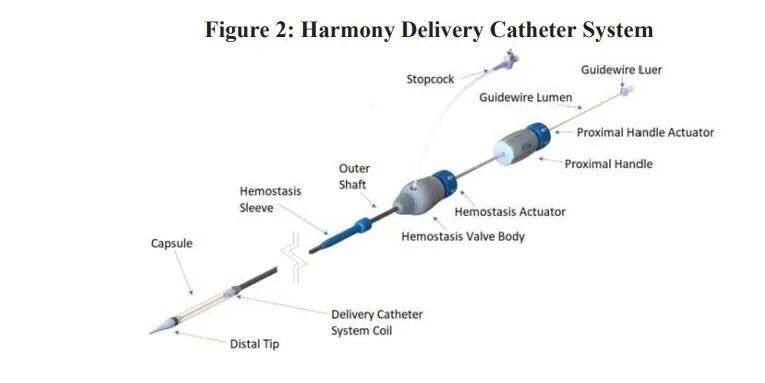
# Harmony Transcatheter Pulmonary ValveHarmony™ TPV is suitable for treating patients withSevere Pulmonary Valve Regurgitation(i.e., severe pulmonary regurgitation determined by echocardiography and/or pulmonary regurgitation fraction ≥ 30% determined by cardiac magnetic resonance) in pediatric and adult patients with native or surgically repaired right ventricular outflow tract (RVOT), and clinicallyApplicable to surgical pulmonary valve replacement。 Harmony TPV comes in two sizes (TPV 22 and TPV 25).,Consists of self-expanding nitinol metal wire struts (the frame is composed of individual wire struts designed to conform to the native RVOT anatomy), knitted polyester fabric, and a porcine pericardial tissue valve.It is sutured using polytetrafluoroethylene (PTFE)-impregnated polyester sutures (TPV 22) or ultra-high molecular weight polyethylene (UHMWPE) sutures (TPV 25).Porcine pericardial tissue valves utilize proprietary α-amino oleic acid (AOA) anti-calcification treatment.。Harmony DCS is a single-use, intravascular, inline delivery catheter that includes a loading system. The DCS has a 25 Fr crossing profile and is compatible with commercially available 0.035-inch intravascular guidewires.
The DCS delivery system is compatible with two valve sizes: TPV22 and TPV25.The full-sheath delivery system offers high trackability through the vascular system.。
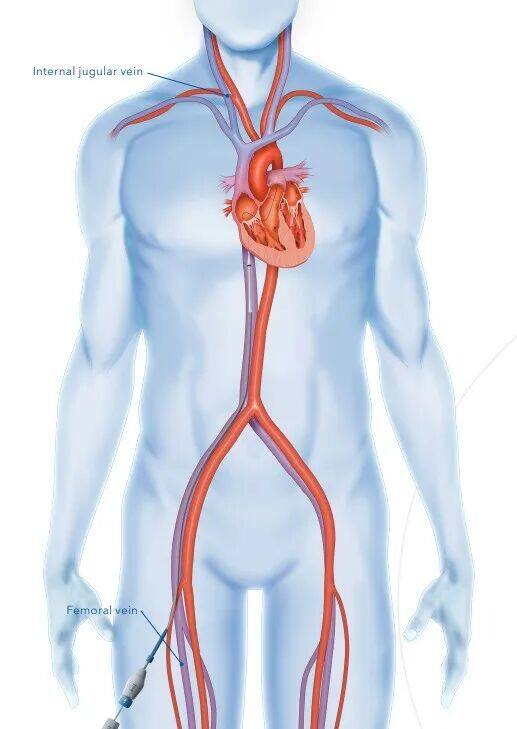
The loading system helps simplify the valve loading process, while the ergonomic handle facilitates the retraction and release of the valve during final deployment.During the Harmony transcatheter pulmonary valve implantation procedure, a thin hollow tube (catheter) with the folded product at its tip is inserted through a vein in the groin or neck into the right side of the heart, and then the valve is released from the catheter.The product can self-expand and target anchoring to the right ventricular outflow tract., after the heart is installed in place, it will open and close like a door, allowing blood to flow in the correct direction.
# Results of Multicenter Study
Results of a multicenter study published in May 2024, covering patients who underwent TPVR at 11 centers in the United States as of April 30, 2022. The primary composite endpoint included hemodynamic dysfunction (pulmonary regurgitation greater than mild and RVOT mean pressure gradient >30 mm Hg) and reintervention for RVOT.
A total of 243 patients undergoing transcatheter pulmonary valve replacement (TPVR) were enrolled cumulatively., 71% of patients had Tetralogy of Fallot and 21% had valvular pulmonary stenosis (21%).
Results:
The immediate success rate of the surgery reached 99.6%.The incidence of severe adverse events was only 4%, with no occurrence of device embolism or death.
86% of patients had a hospital stay of no more than 1 day after surgery., 19% of patients experienced ventricular arrhythmias requiring treatment.
During the median follow-up period of 13 months,98% of Patients Have Good Hemodynamic FunctionThe rate of no composite endpoint events at 1 year and 2 years was 99% and 96%, respectively.
A total of 5 patients died, including 1 case of COVID-19, 2 cases of unknown causes, and 2 cases of bacterial infection.
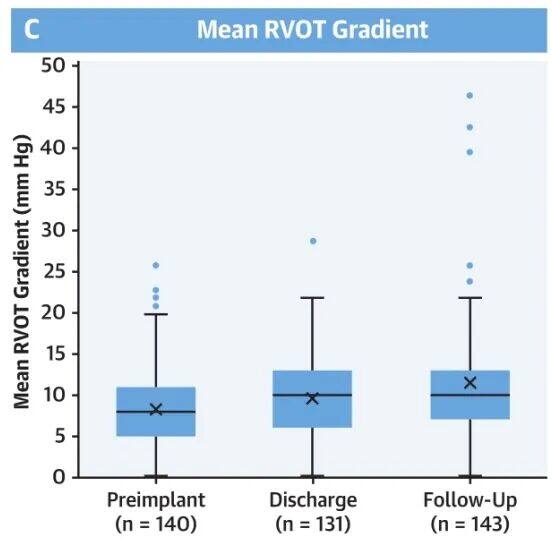
After the surgery, pulmonary valve regurgitation and paravalvular leakage were significantly reduced, and the pressure gradient in the right ventricular outflow tract was effectively controlled.
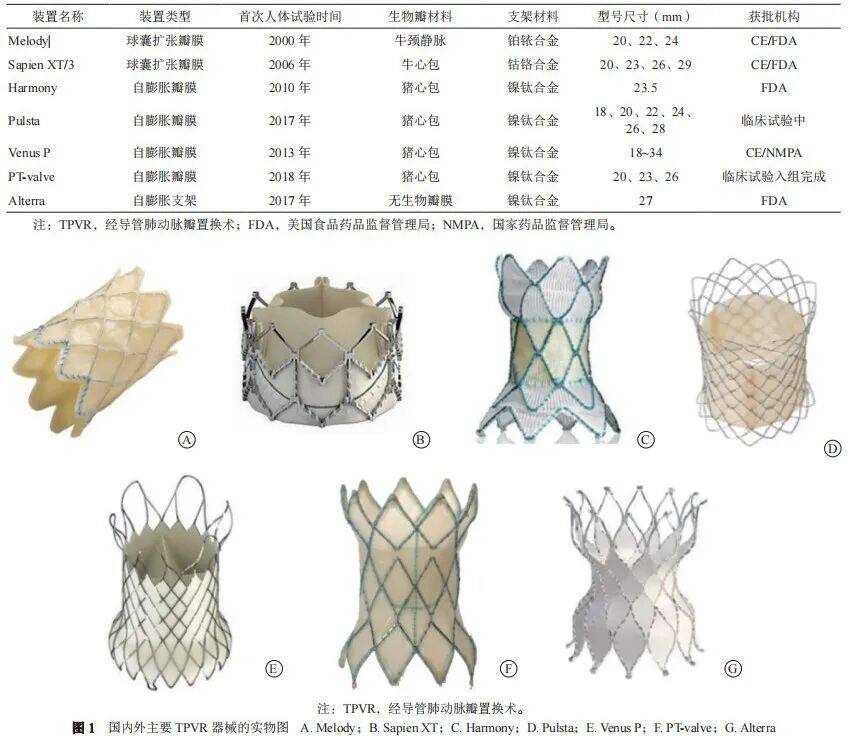
TPVR devices can be divided into balloon-expandable valves and self-expanding valves according to their principles.Currently, there are 5 TPVR devices approved for marketing globally.:Melody, SAPIEN XT, Harmony, Sapien 3 with Alterra, VenusP-Valve。Balloon-expandable valves include Medtronic's Melody valve and Edwards' Sapien series.(Sapien XT and Sapien 3), the latter of which was initially used for transcatheter aortic valve replacement (TAVR) and later proven to also be suitable for transcatheter pulmonary valve replacement (TPVR). These two valves are currently the most widely used, and both have obtained EU CE certification and U.S. FDA approval.Self-expanding valves abroad mainly include the Harmony valve from Medtronic in the United States and the Pulsta valve from South Korea.The former has already obtained FDA certification, and the latter has completed clinical trials in Europe, awaiting EU CE certification approval.Valves produced in China include Venus-P and PT-Valve.Among them, Venus-P has obtained EU CE certification and the certification from the National Medical Products Administration for market launch, while PT-Valve has completed patient enrollment for pre-market clinical trials in China.However,Melody valve stents are prone to stent fractures.A meta-analysis showed that the incidence of stent fracture was 12.4%. After the adoption of the pre-stent fixation technique, the incidence of this complication significantly decreased. The study also indicated that the long-term reintervention rate and the incidence of infective endocarditis for the Melody valve were both higher than those for the Sapien series valves.The clinical adverse event rates of the Harmony and Sapien series have also drawn attention.The safety and efficacy data disclosed by the FDA show that the arrhythmia rates of these two valves are very high. Among them, 60 patients received the 29mm model implanted with the Alterra stent.Sapien Among patients with 3 valves, 20 patients developed arrhythmia 6 months after surgery.The rate of arrhythmia is as high as 33.3%.; whereas, among the 71 patients implanted with the Harmony valve, 21 developed arrhythmia six months post-surgery.Arrhythmia rate reached 23.9%Experts speculate that the stent morphology of these two valves (both outward-expanding types) may be one of the reasons for inducing arrhythmia.In fact, there are significant differences in TPVR between China and foreign countries.Many patients in China have the unique anatomical characteristic of aneurysmal dilation of the right ventricular outflow tract. Balloon-expandable valves, represented by the Melody and Sapien series, are often unsuitable for Chinese patients, especially those with excessively large right ventricular outflow tracts.Therefore, compared with the overseas trend of developing balloon-expandable valves first and then self-expanding valves,China first embarked on the development of self-expanding valves.。According to Frost & Sullivan, it is expected that during the period from 2020 to 2025, the number of TPVR patients in China will increase to 41,000, and the penetration rate will increase from 1.7% to 10.8%.The market will increase from USD 12.1 million to USD 118.5 million, with a compound annual growth rate of 57.8%.。Venus Medtech'sVenusP-Valve is the first domestically produced transcatheter pulmonary valve replacement (TPVR) device in China., alsoGlobalThe First China-Made Artificial Heart Valve Approved by FDA for Clinical ResearchIt is expected to be approved for marketing in the United States and Japan simultaneously by 2026. An 8-year follow-up showed that the primary endpoint achievement rate of VenusP-Valve was 97.7%. Patients' right ventricular function and hemodynamic performance significantly improved, once again confirming the long-term safety and effectiveness of VenusP-Valve.Medtronic'sPT-Valve is the second domestically-produced self-expanding transcatheter pulmonary valve in China.A multicenter formal clinical trial is currently underway (with over 10 cases completed). It features a symmetrical nitinol frame, with soft ends and a small, rigid central valve position. The outflow end and the middle are semi-discontinuous, with radiopaque markers and deployment anchors. It is fully covered with porcine pericardium, including porcine pericardial leaflets and sealing membranes, delivered via a 21F-12F delivery system.With the increasing clinical application and evidence of TPVR, it has gradually become the preferred treatment for anatomically suitable patients. Chinese patients have the unique anatomical characteristic of aneurysmal dilation of the right ventricular outflow tract. The self-expanding valve independently developed in China, with its unique design, is more suitable for such patients, and the preliminary clinical trials have achieved good results in terms of safety and efficacy. However,There is a certain incidence of long-term valve dysfunction. TPV-in-TPV can provide more durable relief for recurrent right ventricular outflow tract obstruction and pulmonary valve regurgitation, and may currently be the preferred option for reintervention in TPVR.。