Top 10 Highlights in the Bispecific Antibody Field of 2024: A Comprehensive Review
Akeso
Innovative Antibody Drug Developer

Amgen
Developer of Treatment Drugs for Serious Diseases

Johnson & Johnson
Medical Device R&D and Manufacturer

1. Marketed Bispecific Antibody Products
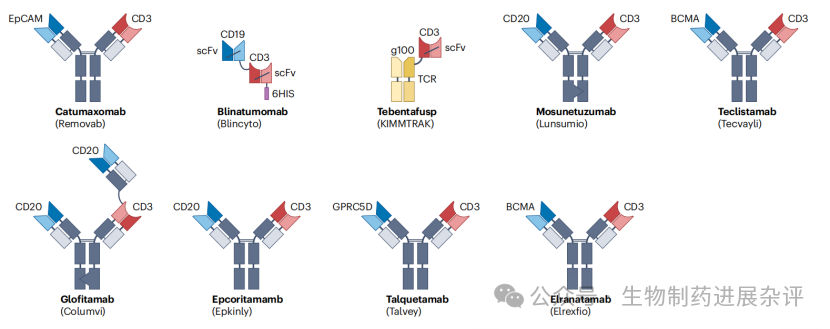
As of 2024, 16 bispecific antibody products have been launched globally, 3 products are in the application stage for marketing, and 27 products are in Phase III.
As of 2024, eight bispecific antibody products have been launched in China, with five additional products in the application stage for market approval.
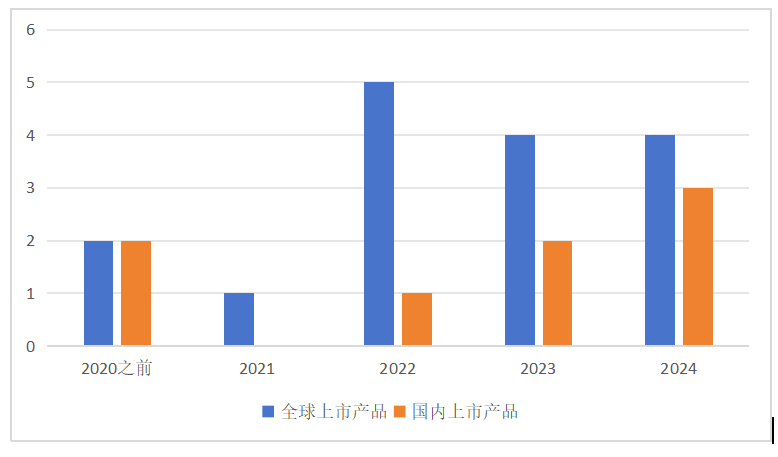
2. The most popular is TCE.: Among the 16 marketed products, nine TCE (T Cell Engager, TCE) products have gained significant attention this year.Chinese companies have reached 19 out-licensing cooperation deals in the bispecific/multi-specific antibody field, including 8 deals in the TCE field.But going global is not easy. With relatively mature technology, technological innovation is difficult, and the certainty of clinical efficacy will become a hard indicator.Transaction List Visible on Knowledge Planet (End of Article)
3. The best-selling isRoche's non-oncology products: Faricimab for ophthalmology and Emicizumab for hemophilia: Vabysmo (Faricimab) achieved total sales of 2.826 billion Swiss francs in the first three quarters, with a growth rate of 79%; Emicizumab...Sales in the first three quarters of 2024 reached 3.28 billion Swiss francs, growing by 10%.
4. The Strongest in China:Akeso, with two marketed products, namely: Ivonescimab (VEGF/PD-1) and Cadonilimab (CTLA-4/PD-1). The excellent data of Ivonescimab directly led to theThe Collaboration Between Merck and Lixing (On November 14, 2024, Merck announced the acquisition of global rights to LM-299, a PD-1/VEGF bispecific antibody from Limin Pharmaceuticals, which will receive an upfront payment of $588 million and up to $2.7 billion in technology transfer, development, regulatory, and commercialization milestone payments.)。
5. The Most Generous MNC:Merck & Co., with a total of 3 transactions purchasing bispecific antibody products in China, paying an upfront fee of $1.3255 billion, and the total amount exceeding $4.5 billion. Merck, holding the "K" cash cow, has both the capability and urgency to quickly improve its production.Product Layout.
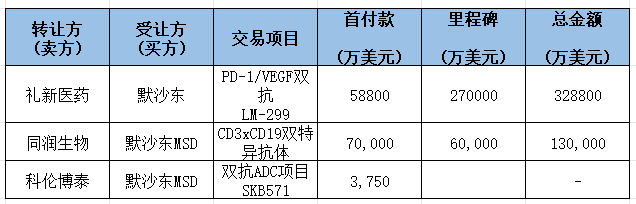
The Competitive Landscape of the $700 Million CD3XCD19 Molecule
6、The New Overseas Model That Tugs at the Heartstrings of Biotech:NewCo,Apart from MNC, most other collaborations are carried out in the NewCo mode, which is considered the hottest model this year. When there is no technological innovation or critical clinical data, this may be the best way to expand overseas. However, what the final outcome will be still needs time to verify.
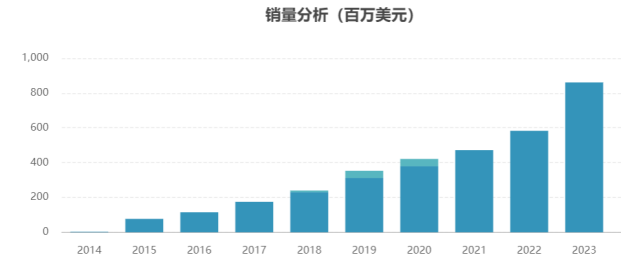
7、The Most ResilientProduct:Amgen's Blinatumomab, launched in 2014, is the second product to enter the market and has become the longest-surviving product. Despite its short half-life and inconvenient usage being persistent drawbacks, and although it has never been able to break the $1 billion threshold, it has nonetheless achieved a decade of continuous growth, gradually approaching the threshold of becoming a blockbuster product.
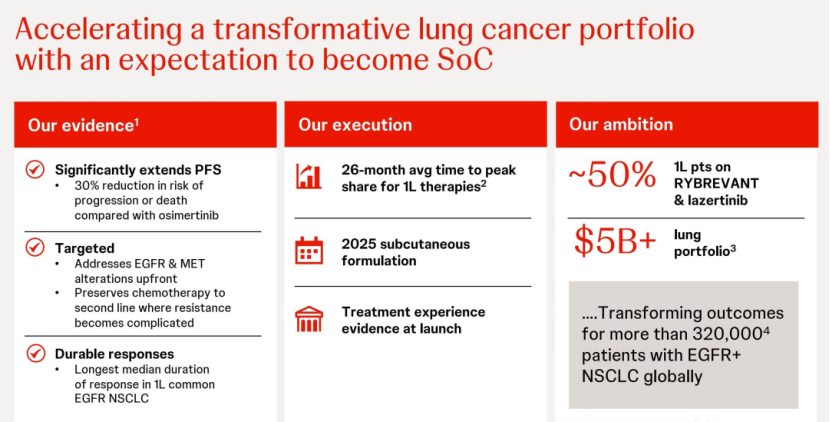
8、The Most Anticipated Product:Both products are in the field of solid tumors. Amivantamab, a c-Met/EGFR bispecific antibody, despite the repeated failures of cMET monoclonal antibodies at the time, still directly applied for marketing authorization based on stunning Phase I clinical data. Johnson & Johnson confidently predicted $5 billion in sales from its lung cancer combination therapy, with this product being the source of that confidence.
The second product is Akeso's AK-112. After all, the fact that it prompted MSD to swiftly purchase a similar product to hedge its risks speaks volumes about the power of AK-112.
9、The Most Pursued Hotspot in the Future:Dual-Target ADC,The integrated innovation of bispecific antibodies and ADC technology has opened up "new" possibilities.Autoimmune FieldThe expansion of bispecific antibodies in the autoimmune field mainly focuses on the strategy of eliminating B cells. It remains uncertain whether they can directly compete with CAR-T in the future, but it may be worth looking forward to their potential to outperform the current array of monoclonal antibodies targeting cytokines.
10. What MNCs Value Most:New technologies and confirmed clinical efficacy data can be seen from Merck's move. It is now rare to see new technologies in bispecific antibodies, so innovative integrations like bispecific ADCs have the opportunity to attract multinational corporations (MNCs). When technological attractiveness is lacking, confirmed clinical efficacy data becomes the sole and essential hard benchmark. Emerging biotech companies no longer have shortcuts to rely on.
11. Final Warning: Always overestimate the progress of technology and underestimate the value of technology. The advancement in computing power has made antibody engineering increasingly easier, and improvements in production technology have turned seemingly problematic structures into something effortless. What one might consider a secret manual for invincibility will soon be in everyone's hands. So, cash out early—why wait to get burned?
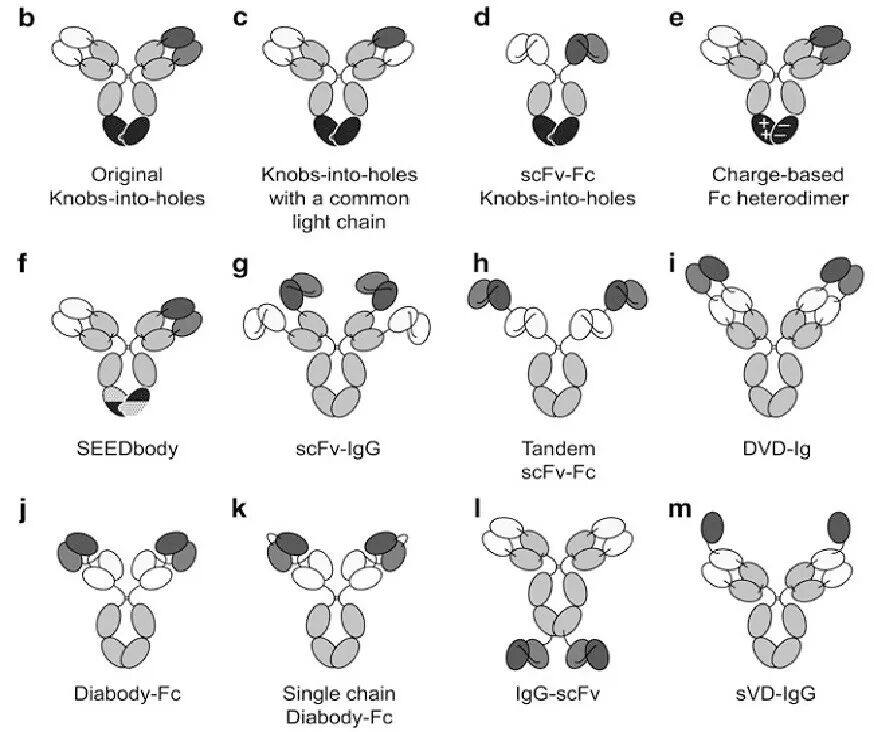
Guess when the structure I below (the structure adopted by Akeso, also widely used in China) was disclosed? At least a decade ago, it was still considered a problematic structure, but now it's highly sought after~ The B structure was once the dream of many, and they rushed to imitate it~~~ Later, various structures like efc emerged, showcasing all kinds of advanced techniques~ They are still good now, but not the only option.



Junshi PD-1 Toripalimab's "Glorious Transformation": From "Conditional Approval" to "Full Approval"
First in China! Male HPV Vaccine Officially Approved, Merck Sharp & Dohme Stirs Market Dynamics