On January 13, 2025, Medtronic announced that its BrainSense™ Adaptive Deep Brain Stimulation (aDBS) system and BrainSense™ Electrode Identifier received CE certification in the EU and UK.This marks the advent of the world's first approved closed-loop Deep Brain Stimulation (DBS) system, heralding a significant breakthrough in the treatment of Parkinson’s Disease.
# Product Approval Details:
Approval Date: January 13, 2025
Approval Scope: EU and UK markets
Approved Products:
BrainSense™ Adaptive Deep Brain Stimulation (aDBS) System
BrainSense™ Electrode Identifier
Brief Description of Technical Features:
Real-time Self-regulating Brain Stimulation
Closed-loop System Design
Personalized Treatment Based on Patients' Unique Brain Activity
Time to Market: It is expected to be launched in the European market in early 2025. (Note: Siyu MedTech reports on global advancements; currently, this product has not been approved in China.)
# Product Technical FeaturesDeep Brain Stimulation (DBS) is a treatment method that involves implanting electrodes in the brain and delivering electrical signals to modulate brain activity. It is primarily used to treat Parkinson's disease, severe depression, and other movement disorders, particularly showing significant improvement in symptoms such as tremors, muscle rigidity, and bradykinesia in patients with Parkinson's disease.Traditional DBS systems intervene in brain activity through continuous electrical stimulation but cannot respond to a patient's real-time brain activity, meaning treatment effects sometimes require frequent adjustments. This also implies that patients may need to visit doctors multiple times to ensure the optimal setting of treatment parameters.
Features of Medtronic BrainSense™ Adaptive Deep Brain Stimulation System:
Medtronic's BrainSense™ Adaptive Deep Brain Stimulation (aDBS) system represents a significant innovation in both treatment principles and outcomes compared to traditional DBS systems.The biggest highlight of this system is itsClosed-loop DesignThat is, the system can monitor patients' brain activity in real time and automatically adjust brain stimulation parameters. This real-time adjustment capability makes the treatment more personalized and able to automatically adapt to changes in the patient's condition, reducing the limitations of frequent manual intervention required in traditional DBS therapy.This technology can not only enhance the effectiveness of treatment but also improve the quality of life for patients, particularly in terms of adaptability in daily living and clinical environments.
The Auxiliary Role of the BrainSense™ Electrode Identifier
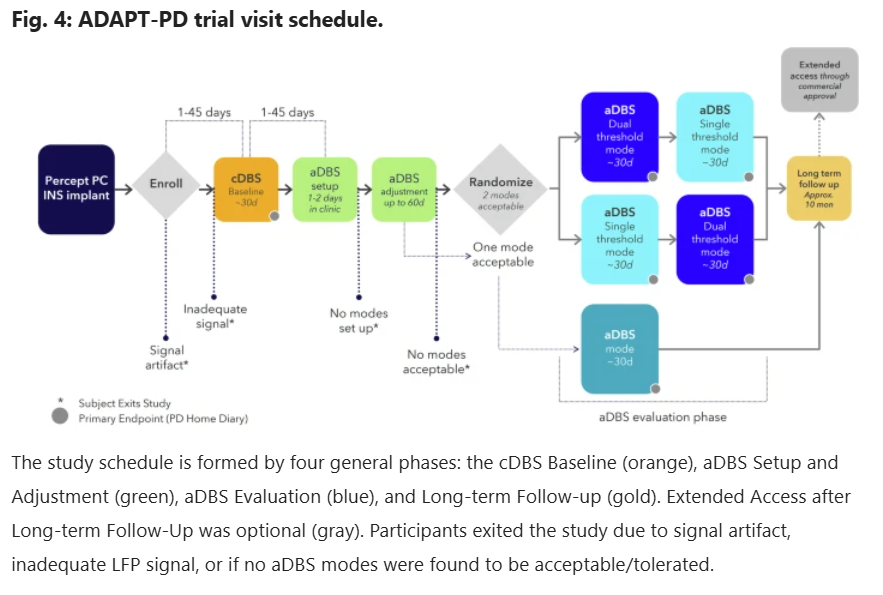
In addition to the adaptive deep brain stimulation system, Medtronic has also launchedBrainSense™ Electrode Identifier, this tool will help improve the efficiency of DBS programming. The electrode identifier can ensure the selection of the optimal initial electrode contact point during the DBS implantation process, thereby speeding up the programming and reducing the adjustment time when initiating treatment. # Clinical Basis of the Product:At the end of 2024,Medtronic Launches the World's First Clinical Study on Adaptive Deep Brain Stimulation (aDBS) for Personalized Treatment of Parkinson’s Disease (referred to as the ADAPT-PD Study)Published an article titled "..." in the authoritative journal npj Parkinson's Disease.Sensing Data and Methodology from the Adaptive DBS Algorithm for Personalized Therapy in Parkinson’s Disease (ADAPT-PD) Clinical Trial》,SIYU excerpted the main content for industry reference.Experimental Design:ADAPT-PD Trial is a global, multicenter, prospective, single-blind randomized crossover study designed to evaluate the safety and efficacy of adaptive deep brain stimulation (aDBS) technology in treating Parkinson's disease (PD). The trial enrolled 68 patients, with 51 receiving subthalamic nucleus (STN) DBS treatment and 17 receiving globus pallidus internus (GPi) DBS treatment. All patients were implanted with the Medtronic Percept™ PC neurostimulator, a device capable of delivering deep brain stimulation while simultaneously sensing local field potential (LFP) signals to provide real-time feedback on brain activity for aDBS.
LFP Signal Detection:
Signal Detection Rate:
In the medication-on state, LFP signals could be detected in 84.8% of patients, with bilateral signals detectable in 65% of patients.
In the drug-off state, LFP signals could be detected in 92% of patients, with bilateral signals detectable in 78% of patients.
Signal Characteristics:
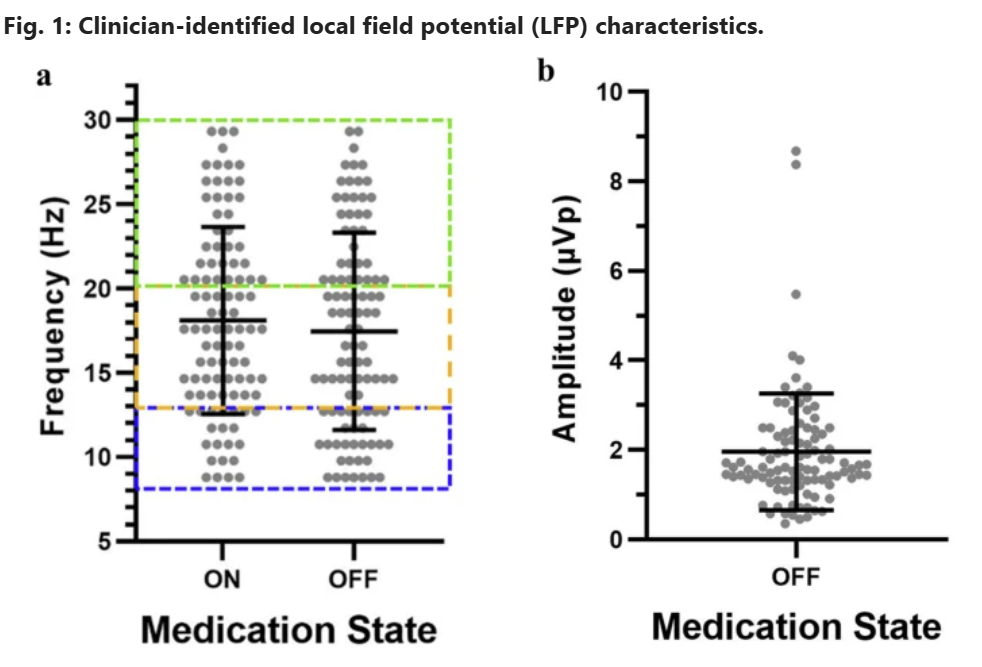
Frequency Range:8-30 Hz
Signal Intensity:≥1.2 μVp
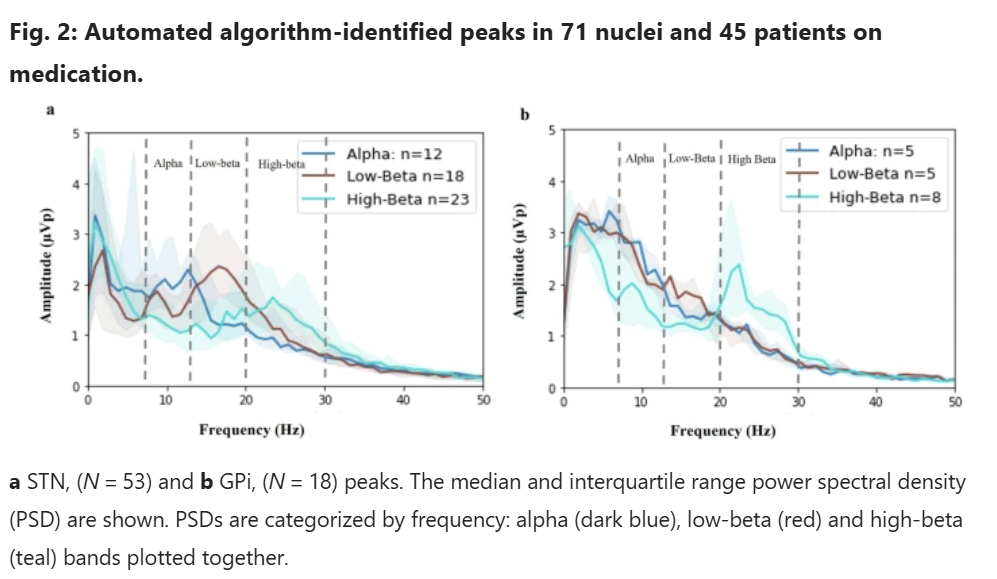
Frequency Band Distribution: Low β band (32.4%), high β band (43.7%), α band (23.9%)
aDBS Algorithm:
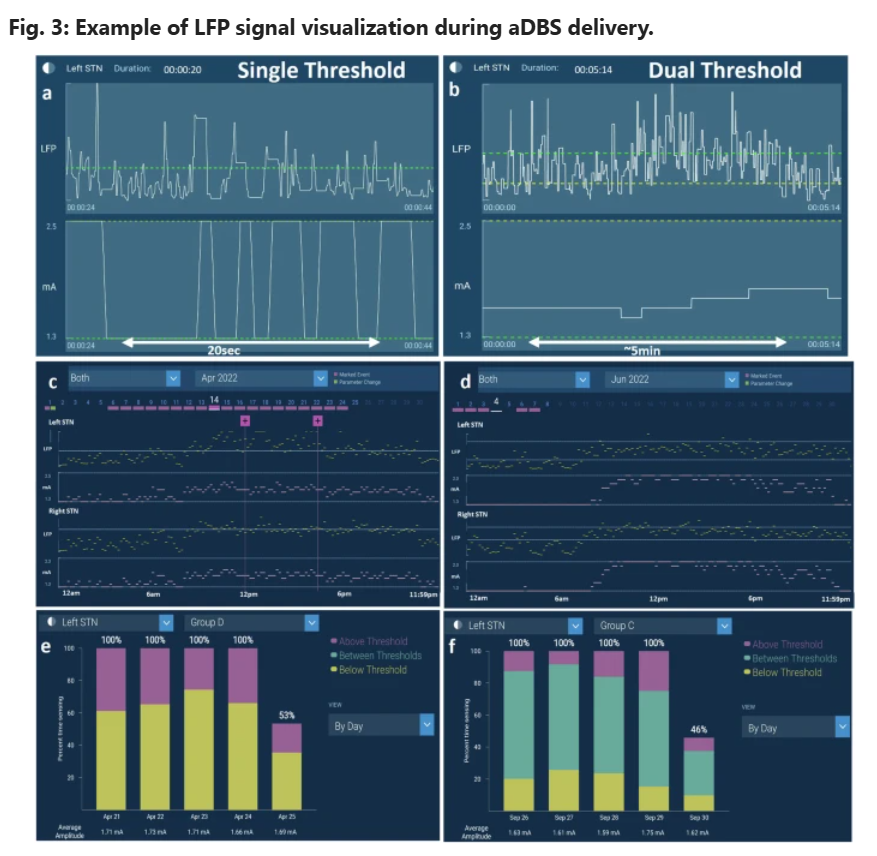
Single Threshold Mode: Stimulation amplitude can be adjusted quickly, rising or falling within 250 milliseconds.
Dual Threshold Mode: The stimulus amplitude was adjusted slowly, increasing over 2.5 minutes and decreasing over 5 minutes.
Personalized Settings: Customize algorithms based on the most troubling motor symptoms of the patient, while taking into account the main symptoms of the opposite motor states, to provide personalized treatment plans.
Clinical Significance:
First Defined the aDBS Algorithm and Programming Method in a Large Clinical Cohort, providing a technical basis for future treatment.
It has been validated that regardless of the phenotype of Parkinson's diseaseThe patient has sufficient LFP signals to support the aDBS algorithm both on and off medication.
First Evaluation of the Effectiveness of Combining Directional Stimulation and aDBS in Treating Parkinson's Disease, which provides a scientific basis for further optimization of the treatment plan.
Provides strong support for the application of aDBS technology in the treatment of Parkinson's disease.This technology is expected to advance deep brain stimulation treatment towards a more intelligent and personalized direction.
# The Value of Treating Parkinson's Disease

Parkinson's disease is a neurodegenerative disorder that affects more than 10 million people worldwide, often accompanied by symptoms such as tremors, muscle stiffness, and bradykinesia, severely impacting patients' daily lives. With the aging population, the number of patients with Parkinson's disease continues to grow, making it particularly urgent to find more precise and personalized treatment options.Medtronic's BrainSense™ Adaptive Deep Brain Stimulation System and Electrode Identifier Receive CE Mark, Offering New Treatment Options for Parkinson’s Disease Patients. With the technology's rollout in the European market, Siyu MedTech believes it will drive the global advancement of deep brain stimulation technology, delivering broader societal and healthcare benefits. Reference article: https://www.nature.com/articles/s41531-024-00772-5 More Medtronic-related articles:Medtronic Article Collection (Siyu MedTech)