Medtronic Locks in Next Acquisition Target with Contego Medical IPO Filing

Medtronic
Medical Device Manufacturer
Pioneer in Medical Device Media Reports
Share Professional Medical Device Knowledge
January 13, 2025Global medical technology giant Medtronic (NYSE: MDT) announced that it has reached an exclusive distribution agreement in the United States with Contego Medical.In addition,Medtronic's additional investment in Contego and the option to acquire the company are also key components of this agreement.
According to the agreement signed with Contego Medical, Medtronic will become the sole distributor of Contego's existing commercial product portfolio in the U.S. market.Contego Medical Focuses on Providing Innovative Revascularization Treatment Solutions for Carotid and Peripheral Vascular Diseases. Its Product Portfolio Has Gained Wide Recognition in the Medical Community for Its Unique Technology and Clinical Efficacy.
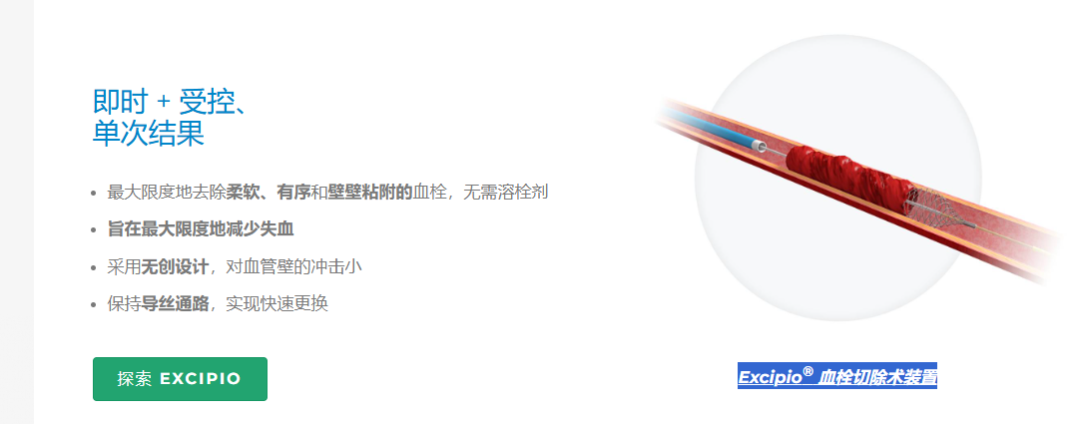
This agreement specifically covers Contego's recently FDA-approved Neuroguard IEP 3-in-1 carotid stent system. The system integrates a high-performance stent, post-dilation balloon, and embolic protection (IEP) filter, offering a safer and more effective treatment option for patients with carotid artery disease. Additionally, Contego provides the Excipio peripheral thrombectomy device and is developing the next-generation Neuroguard IEP system for direct transcarotid access and protection.
Medtronic's additional investment in Contego and the option to acquire the company are also key components of this agreement.Since 2020, Medtronic has held a minority stake in Contego,This additional investment further demonstrates Medtronic's recognition of Contego's innovative capabilities and market prospects.
Dr. Ravish Sachar, founder and CEO of Contego Medical, expressed high expectations for this collaboration: "This strategic agreement represents a significant milestone for both Contego Medical and Medtronic. By combining our innovative product portfolio with Medtronic's extensive market reach and clinical leadership, we have the potential to revolutionize revascularization therapies in the fields of carotid and peripheral vascular diseases. This partnership not only enhances our ability to deliver cutting-edge solutions to patients but also reinforces our commitment to expanding treatment accessibility across the United States."
David Moeller, Senior Vice President and President of Medtronic's Peripheral Vascular Health Division, expressed strong confidence in the partnership: "Contego is transforming the treatment of carotid artery disease with its innovative products backed by robust data, complementing Medtronic’s peripheral and stroke protection portfolio. This strategic agreement with Contego Medical not only expands our commitment to this rapidly growing carotid market but also underscores Medtronic’s unwavering dedication to driving innovation and enhancing patient care."
It is reported that Medtronic plans to use its Peripheral Vascular and Neurovascular commercial teams to begin distributing Contego's products this spring. This collaboration is expected to bring more innovative treatment options to patients with carotid and peripheral vascular diseases in the U.S. market, further improving patients' quality of life and treatment outcomes.
Contego Medical is an innovative medical device company focused on providing innovative revascularization treatment solutions for carotid and peripheral vascular diseases. It has two product lines: carotid and peripheral products.
Contego Medical's star product for carotid arteries is the Neuroguard IEP® System, which received Pre-Market Approval (PMA) from the U.S. Food and Drug Administration (FDA) in October 2024.This agreement with Medtronic also specifically covers this product.
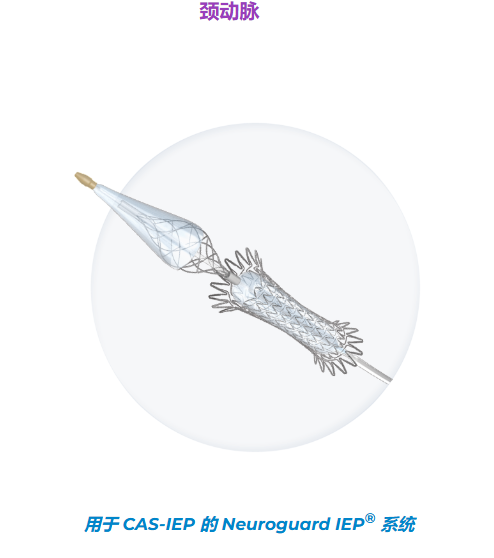
The Neuroguard IEP® System is a "three-in-one" innovative therapy that integrates a carotid artery stent (with a closed-loop design), a post-dilation balloon, and the IEP system filter. This design not only simplifies the procedural steps of the surgical treatment but also maintains effective protection against both large emboli and micro-emboli, thereby enhancing the safety and efficacy of the procedure.
The IEP filter, as a key component of the Neuroguard IEP® system, is ingeniously designed. The filter consists of a 6F delivery catheter and a 40μm pore-sized embolic filter, offering several significant application advantages.
First, compared with traditional filters, the pore size of the IEP system's filter has been reduced by 3 to 4 times. This improvement enables the filter to capture emboli more effectively, thereby significantly enhancing protection against stroke and cognitive impairment. This is of great significance for reducing surgical complications and improving patients' quality of life.
Secondly, the IEP filter offers excellent conformity. Operators can flexibly adjust the size of the filter according to the specific needs of the patient, ensuring precise alignment with the patient’s anatomical structure. This personalized adjustment not only enhances the accuracy of the surgery but also guarantees the stability and effectiveness of the filter.
In addition, the IEP filter demonstrates both short-term and long-term stability and durability. During its use, no thrombosis or target lesion revascularization occurred, and the restenosis rate within one year was extremely low. These data fully confirm the safety and reliability of the IEP filter, providing clinicians with a more effective treatment tool.
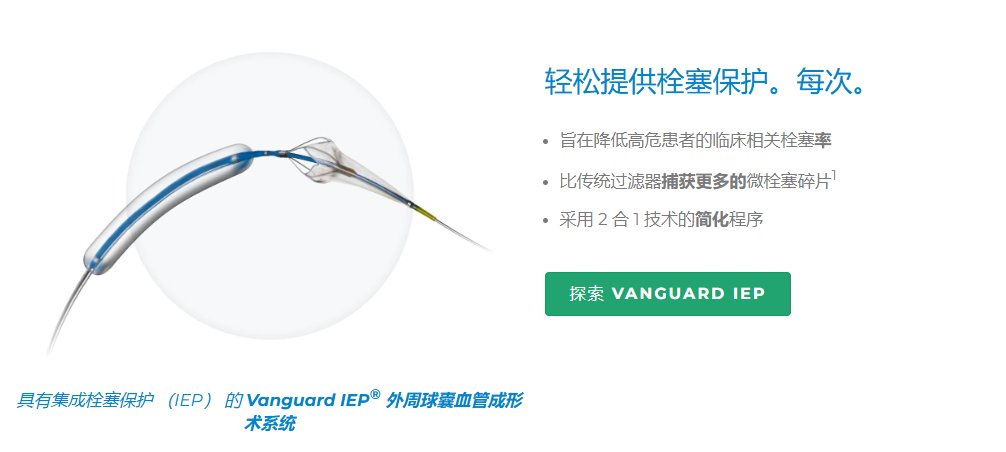
The company's peripheral products include: Vanguard System andExcipio® Thrombectomy Device
In the medical device industry, Medtronic secures its leading position with an outstanding culture of innovation, an excellent management team, and a successful history of acquisitions.Especially its series of important acquisitions over the past 25 years, which not only made Medtronic a leader in the device field but also solidified its position as the dominant force in the global medical device market.However, acquisitions are not easy, even for "the number one player" Medtronic, which has had failed cases.

The following are 12 historic acquisitions by Medtronic:
In 1998, Medtronic acquired Physio-Control, a manufacturer of external defibrillator monitors, for $538 million. This acquisition strengthened Medtronic's position in the defibrillator monitor market, but it didn't last long. In 2006, Medtronic chose to spin off Physio-Control, which eventually became part of Stryker.
In the same year, Medtronic also acquired stent manufacturer Arterial Vascular Engineering for $3.7 billion, making Medtronic the largest stent manufacturer in the world at that time.
In 1999, Medtronic acquired Sofamor Danek Group, a spinal product manufacturer, for $3.6 billion. This acquisition significantly expanded Medtronic's market share in the spinal sector, establishing it as a leader in the field of spinal disease treatment. Despite paying $1.35 billion in settlement fees in 2005 due to intellectual property issues related to Sofamor Danek Group, the acquisition still held great significance in enhancing Medtronic’s position in the musculoskeletal field.
In 2001, Medtronic acquired MiniMed, an insulin pump manufacturer, for $3.7 billion, successfully entering the diabetes treatment field and quickly becoming a leader in this area. Since then, Medtronic's continuous innovation and development in the diabetes treatment sector have all been attributed to this successful acquisition.
In the spinal field, Medtronic also made a significant acquisition. In 2007, Medtronic acquired Kyphon, another spinal product manufacturer, for $3.9 billion. This acquisition solidified Medtronic's position in minimally invasive spinal surgery solutions, complemented its existing spinal product portfolio, and drove growth in high-value, rapidly evolving market segments.
In the same year, Medtronic also acquired CoreValve, a TAVR product manufacturer, for $1 billion. Through this acquisition, Medtronic became a leader in the interventional valve field. Today, with the upgraded TAVR product—Evolut—Medtronic is poised to take the top position in the global TAVR market.
In 2012, Medtronic acquired Kanghui, a leading domestic manufacturer of orthopedic products in China, for $816 million. This acquisition expanded Medtronic's influence in China, the world's second-largest medical device market, particularly in the orthopedic sector.
In 2015, Medtronic made an unprecedented acquisition in the history of the medical device industry by purchasing Covidien, one of the top ten global medical device companies, for a staggering $42.9 billion. This acquisition allowed Medtronic to overthrow Johnson & Johnson's dominance in the medical device field, making Medtronic the leading company in the industry, a position it has maintained ever since.
However, acquisitions do not always go smoothly. In 2016, Medtronic acquired HeartWare, a manufacturer of left ventricular assist devices, for $1.1 billion, but this acquisition became one of the biggest failures in Medtronic's acquisition history. HeartWare’s products have since exited the market, and Medtronic has also withdrawn from the left ventricular assist device market, not only wasting $1.1 billion but also facing enormous compensation claims.
In the spinal field, Medtronic also made a significant acquisition. In 2018, Medtronic acquired Mazor Robotics for $1.64 billion. Through this acquisition, Medtronic combined surgical robotics with existing surgical technologies, further strengthening its absolute leadership in the spinal field.
In recent years, Medtronic has also made an important acquisition in the electrophysiology field. In 2022, Medtronic acquired Affera for $925 million. This acquisition not only gave Medtronic advanced radiofrequency ablation and PFA technology but also the highly coveted three-dimensional mapping technology. This enables Medtronic to challenge Johnson & Johnson and potentially become the leading player in electrophysiology in the future.
In the same year, Medtronic also acquired Intersect ENT, a supplier of chronic rhinosinusitis treatment technology, for $1.1 billion. Through this acquisition, Medtronic expanded its ENT surgery product portfolio and completed its chronic rhinosinusitis treatment solutions. This enables Medtronic to provide comprehensive solutions for patients with chronic rhinosinusitis, including radiofrequency ablation, sinus irrigation systems, sleep-disordered breathing products, and targeted drug therapy, further solidifying its leadership position in the field of chronic rhinosinusitis.
Summarizing Medtronic's acquisition strategy over the past 30 years, its objectives are clear and mainly include four aspects:
Acquire new technologies as a technical reserve or to eliminate potential competitors.By acquiring companies with advanced technologies or innovative products, Medtronic can quickly obtain new technologies, strengthen its own technical reserves, and to a certain extent, eliminate potential competitors. For example, Medtronic entered the insulin pump market by acquiring MiniMed and rapidly became a leader in this field. This not only brought advanced technology to Medtronic but also eliminated the threat from other potential competitors.
Consolidate and strengthen existing businesses, and expand market share.Medtronic has further consolidated and strengthened its position in existing business areas and successfully expanded its market share through the acquisition of companies related to its own operations. For example, after acquiring Kyphon, Medtronic increased its market share in the spinal products sector and solidified its leadership role in the field of spinal disease treatment.
Expand product offerings and enter new markets.Medtronic has entered new business areas through mergers and acquisitions, achieving product diversification and market diversification. By acquiring Covidien, Medtronic has entered multiple new fields such as surgery and neurointervention at one stroke, greatly enriching its product lines and expanding its market coverage.
Functional integration to achieve strategic transformation.Through mergers and acquisitions, Medtronic not only gained access to new technologies and products but also achieved functional integration, driving the company's strategic transformation. For instance, by acquiring Arterial Vascular Engineering, Medtronic became the world's largest stent manufacturer at the time, successfully transitioning from a single pacemaker manufacturer to a leader in the cardiovascular interventional device field.
Through external mergers and acquisitions, Medtronic has found new growth drivers at different stages, achieving continuous growth. Moreover, its post-merger integration is more synergistic. This synergy is not only reflected in the integration of product lines and technologies but also in sales models, market expansion, customer service, and other aspects.
This strategic agreement with Contego Medical secures Medtronic's position in the rapidly growing carotid market. As for when and how Medtronic will act next, DeviceChina will continue to monitor the situation.
More exciting content
Welcome to follow WeChat Video Channel


Xinhua Medical, Sold Again
Win the bid, 70 million RMB each
Conorth Medical Completes Over 500 Million RMB Financing
Philips, Selling "The Only One in Europe"
First Chinese-Made, 7T MRI Installed at Nanshan Hospital
United Imaging Healthcare Makes Major Moves in North America
Chinese Surgical Robot Unicorn Restarts IPO
Just now, Philips announced: Major personnel appointment
A-share listed device company, change of legal representative
Following Johnson & Johnson, Boston Scientific Enters This Field
BusinessBusiness cooperation email: qxzj@landianyiliao.com