Five Key FDA Decisions to Watch in Q1 2025: Pipeline Highlights and Clinical Implications
Biogen
New Drug Developer
Eisai
Pharmaceutical Product R&D and Manufacturer

AstraZeneca
Biopharmaceutical Manufacturer

Daiichi-Sankyo
Pharmaceutical R&D Developer
Vertex
Breakthrough Small Molecule Drug Developer
Alnylam Pharmaceuticals
RNA Interference (RNAi) Innovative Drug Developer

Sanofi
Pharmaceutical R&D Developer

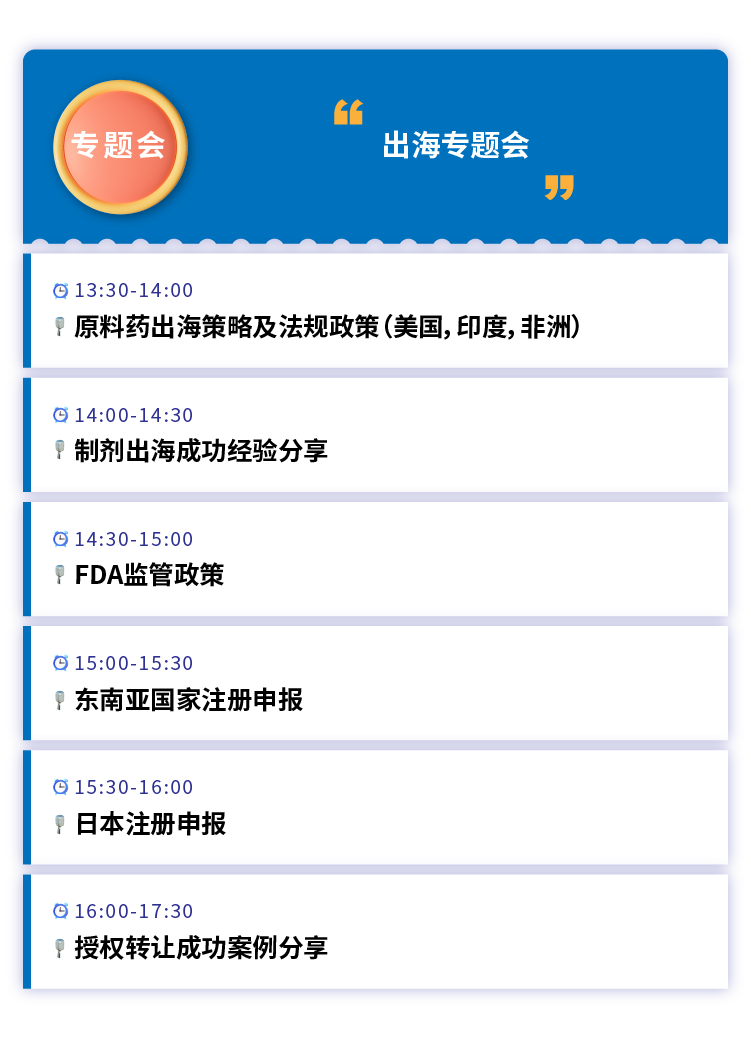
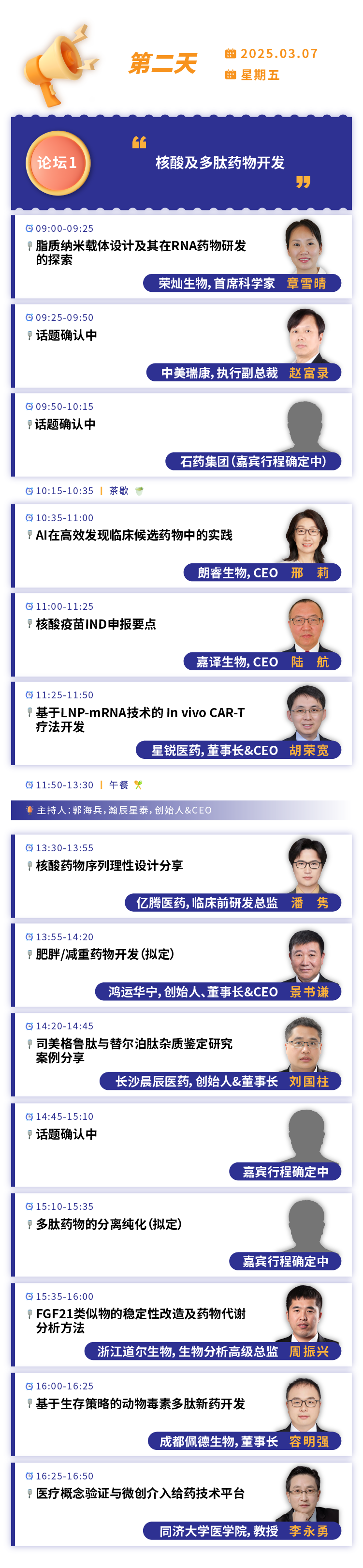
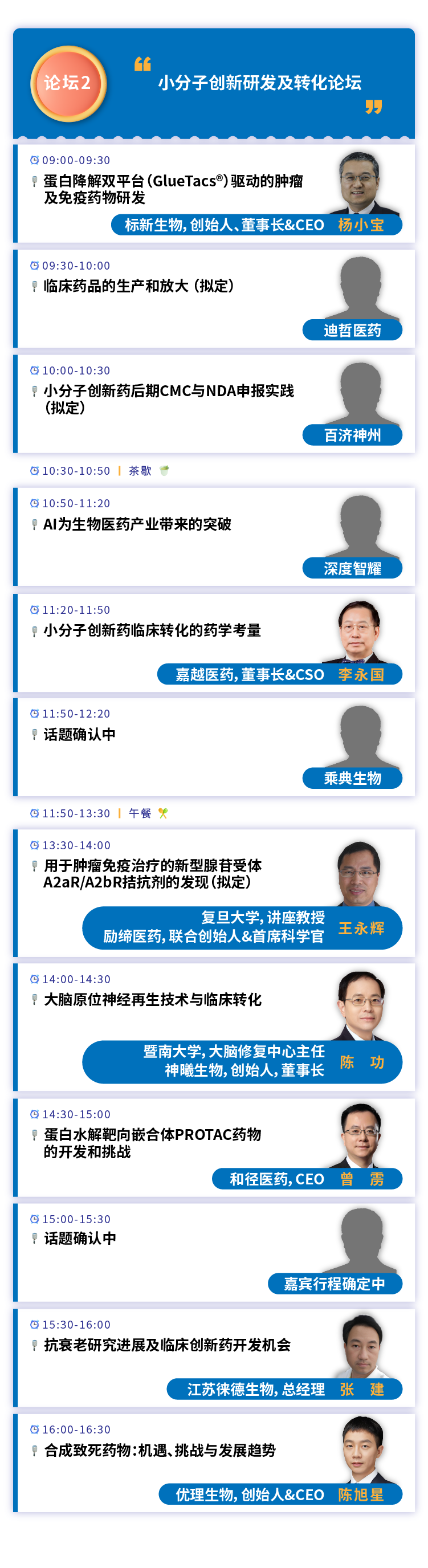
▲March 6-7Yangtze River Delta New Drug Innovators Summit
Scan for FreeRegistration
Note:This article does not constitute any investment opinions or suggestions., subject to official/company announcements; this article only introduces drugs related to medical health, not a recommendation of treatment plans (if involved), and does not represent the platform's position.Any article reprinted needs to be authorized.
FDA Concludes a Fruitful 2024 with 55 New Drug Approvals. The list of new approvals includes several drugs with novel mechanisms, such as: Bristol-Myers Squibb's Cobenfy, the first new mechanism drug for schizophrenia in over thirty years; and Sanofi and Regeneron's blockbuster therapy Dupixent, the first biologic approved for chronic obstructive pulmonary disease.
In addition, the FDA also approved the first-ever treatment for metabolic dysfunction-associated steatohepatitis, Rezdiffra from Madrigal Pharmaceuticals, and Kisunla from Eli Lilly, a much-needed alternative to anti-amyloid treatments for Alzheimer's disease.
The gene therapy field also saw significant progress in 2024, including Pfizer's Beqvez for hemophilia B and PTC Therapeutics' Kebilidi, the first gene therapy administered directly to the brain for the treatment of L-amino acid decarboxylase deficiency.
Looking ahead, the FDA will continue to make several important regulatory decisions that could have a profound impact on the industry and clinical practice. Below are the five most anticipated regulatory decisions in the first quarter of 2025, as summarized by BioSpace.
1.Leqembi
R&D Companies: Biogen and Eisai
Indications: Intravenous maintenance for early Alzheimer's disease
PDUFA: January 25
Biogen and Eisai are waiting for FDA approval of their Alzheimer's disease treatment drug Leqembi (lecanemab) for a monthly intravenous maintenance regimen.
Leqembi is the first anti-amyloid antibody Alzheimer's treatment to receive FDA approval, currently administered intravenously every two weeks with an infusion time of approximately one hour. According to Biogen and Eisai, for patients who complete the initial biweekly initiation phase, a monthly regimen can extend the dosing interval of Leqembi to one month. The monthly regimen aims to help maintain the dose level of Leqembi in the body to inhibit toxic protofibrils, which could otherwise cause nerve and brain damage after the clearance of β-amyloid plaques.
The two companies are using data from Phase IIb Study 201, Phase III clinical trial ClarityAD, and its associated open-label extension study to support their application.
In addition, Biogen and Eisai are also advancing the subcutaneous injection formulation of Leqembi. In August 2024, Eisai initiated a rolling Biologics License Application for injectable Leqembi, with approval expected by March 2026.
In the latest quarterly report released in November 2024, Eisai revised its full-year sales forecast for Leqembi from approximately $370 million to $280 million. Analysts from multiple firms stated that so far, the launch of Leqembi in the U.S. has been disappointing and fraught with various infrastructure challenges. Nonetheless, Biogen and Eisai claim that demand for Leqembi is strong and growing, with around 6,000 patients awaiting initiation of anti-amyloid treatment. This could translate into future growth as long as the two companies address the infrastructure and administrative challenges.
2.Dato-DXd
R&D Enterprises: AstraZeneca and Daiichi Sankyo
Indications: Metastatic, HR-positive, HER2-negative breast cancer
PDUFA: January 29
On January 29, the FDA is expected to issue a decision on the Biologics License Application (BLA) for datopotamab deruxtecan (Dato-DXd), an antibody-drug conjugate (ADC) developed by AstraZeneca and Daiichi Sankyo. Dato-DXd is an ADC designed to target the TROP2 protein, which is highly expressed in various types of cancer. This binding affinity enables Dato-DXd to directly deliver its exatecan derivative payload to the target cells, triggering tumor cell death. Currently, the drug is being proposed for the treatment of breast cancer.
Dato-DXd Yields Mixed Clinical Results. According to data from October 2023, in the Phase III TROPION-Breast01 study, the ADC reduced the risk of death or disease progression by 37% compared to chemotherapy chosen by investigators. At that time, AstraZeneca and Daiichi Sankyo described the effect as "statistically significant and clinically meaningful."
However, subsequent data in September 2024 indicated that Dato-DXd could not significantly improve the overall survival of the study.
In terms of safety, the TROPION-Breast01 trial found that Dato-DXd was generally well-tolerated, with a better adverse event profile compared to chemotherapy. The most common grade 3 or higher side effects included neutropenia, fatigue, and anemia.
Besides breast cancer, AstraZeneca and Daiichi Sankyo are also testing Dato-DXd in non-small cell lung cancer, but the ADC failed to show significant improvement in overall survival in September 2024 as well.
3.Suzetrigine
R&D Company: Vertex
Indications: Moderate to Severe Acute Pain
PDUFA: January 30
Vertex Pharmaceuticals is advancing a non-opioid analgesic named suzetrigine for the treatment of moderate to severe acute pain.
Suzetrigine is an oral pain signal inhibitor that selectively targets the NaV1.8 voltage-gated sodium channel, a validated pain target commonly found on peripheral neurons. NaV1.8 is believed to play a role in sensing pain and transmitting signals back to the central nervous system. Compared to opioids, Suzetrigine may offer better pain relief while avoiding side effects such as addiction.
Data Show That in Phase 3 Clinical Trials of Patients Undergoing Abdominoplasty, Suzetrigine Achieved the Primary Endpoint. Compared with Placebo, the Time-Weighted Sum of Pain Intensity Differences (SPID48) Within 48 Hours for Patients in the Drug Group Was Significantly Reduced, with an Average Difference in SPID48 of 48.4. Additionally, Patients' Numerical Pain Rating Scale (NPRS) Scores Were Also Significantly Reduced Compared to Baseline at 48 Hours Post-Surgery. In Patients Undergoing Bunionectomy, the Therapy Also Reached the Primary Endpoint, with an Average SPID48 Difference of 29.3.
Vertex stated that if approved, suzetrigine will become the first new class of drug for treating acute pain in over two decades.
4.Amvuttra
R&D Company: Alnylam Pharmaceuticals
Indications: Transthyretin Amyloid Cardiomyopathy
PDUFA: March 23
Amvuttra is currently indicated for the treatment of polyneuropathy caused by hereditary transthyretin-mediated amyloidosis. It is an RNA interference therapy that works by reducing both mutant and wild-type transthyretin (TTR) mRNA. Amvuttra degrades mutant and wild-type TTR mRNA through RNA interference, thereby decreasing serum TTR protein and tissue TTR protein deposition. Through this mechanism, Amvuttra can also reduce TTR deposition in various organs, including the heart, alleviating symptoms associated with cardiomyopathy, such as cardiac wall stiffening.
To support its transthyretin amyloidosis cardiomyopathy (ATTR-CM) application, Alnylam conducted the Phase III HELIOS-B study, which found that Amvuttra had favorable effects on survival, cardiovascular events, cardiac function, and quality of life in patients with ATTR-CM. Treatment with Amvuttra reduced the composite outcome of all-cause mortality and recurrent cardiovascular events by 28%.
The FDA is expected to issue its decision on March 23. If approved, Amvuttra will become the first RNA interference therapeutic for ATTR-CM.
5.Fitusiran
R&D Company: Sanofi
Indications: Hemophilia A or B
PDUFA: March 28
Fitusiran is a targeted antithrombin therapy jointly developed by Sanofi and Alnylam Pharmaceuticals.siRNA, by binding to RNA that expresses antithrombin, reduces the production of antithrombin, thereby restoring the balance between coagulation factors and anticoagulant factors, achieving the effect of reducing bleeding events in hemophilia patients. This innovative therapy only requires subcutaneous injection once a month, providing much convenience for patients in controlling bleeding risks compared to conventional preventive coagulation factor injections.
In the three completed Phase III clinical trials of fitusiran for adults and adolescents aged ≥12 yearsIn China, patients enrolled in ALN-AT3SC-003 are those who produce inhibitors and require bypassing agents to manage bleeding; ALN-AT3SC-004 includes patients who do not produce inhibitors and are managed with clotting factor concentrates for bleeding; ALN-AT3SC-009 targets all patients, including both those who produce inhibitors and those who do not. The treatment dose for each group is 80mg per month.
Studies Show: Fitusiran Demonstrates Strong Activity and Statistically Significant Efficacy in Reducing Bleeding; in the ALN-AT3SC-003 Trial, Patients Using Fitusiran Showed an Approximately 89.2% Reduction in Annual Bleeding Rate Compared to Those Requiring Bypassing Agents; in the ALN-AT3SC-004 Trial, Patients Using Fitusiran Showed an Approximately 89.9% Reduction in Annual Bleeding Rate Compared to Those Requiring Factor Concentrates. Results from Both Trials Indicate a Median Annual Bleeding Rate of Zero in Subgroups Treated with Fitusiran.
If approved, fitusiran will introduce a new treatment approach to the field, which has seen increasing gene therapy research in recent years. BioMarin's Roctavian became the first FDA-approved gene therapy for hemophilia A in June 2023. In February 2024, Pfizer received FDA approval for its hemophilia B gene therapy, Beqvez. Additionally, Pfizer is taking a similar approach with hemophilia A, and data released in July showed that the candidate drug giroctocogene fitelparvovec performed excellently in Phase III trials, with 84% of treated patients maintaining more than 5% Factor VIII clotting protein activity at 15 months.
References;
https://www.biospace.com/fda/5-fda-decisions-to-watch-in-q1
Copyright statement: This article is reproduced from PharmaDJ,Media or individuals who do not wish to be reproduced can contact us, and we will delete it immediately.


Scroll up and down to view the specific agenda