Ozida Official AccountmedicaldeviceCROFollow and StarEnsure you receive push notifications on time.
Comprehensive Medical Information
1. The State Council Issues Document to Standardize Administrative Inspections Involving Enterprises
Recently, the General Office of the State Council officially announced the "Opinions on Strictly Regulating Administrative Inspections Involving Enterprises." Multiple inspections, repeated inspections, arbitrary inspections, and campaign-style inspections have been standardized and prohibited. The nine implementation measures mentioned in the "Opinions" are: 1. Clarify the subject of administrative inspections, strictly prohibiting organizations without the proper qualifications from conducting administrative inspections; 2. Clean up and publish administrative inspection items to curb disorderly inspections at the source; 3. Reasonably determine administrative inspection methods to minimize the frequency of enterprise inspections; 4. Enforce strict standards and procedures for administrative inspections to eliminate arbitrary inspections; 5. Strictly control special inspections to avoid "going through the motions" and campaign-style inspections; 6. Standardize administrative inspection behaviors to prevent profit-driven and arbitrary inspections; 7. Strengthen standardized management responsibilities and enhance law enforcement supervision of administrative inspections; 8. Empower with digital technology to ensure precise and efficient law enforcement supervision; 9. Enforce accountability seriously and increase the investigation and punishment of disorderly inspections. (First Pharmacy Financial Intelligence)
2. China's Cross-Border Medical Regional Procurement Platform Officially Launched
Recently, the launch ceremony of the China-ASEAN Medical Regional Centralized Procurement Platform was held in Fangchenggang City, Guangxi. It is reported that this platform, under the guidance of the National Healthcare Security Administration, is a cross-border medical regional centralized procurement platform built by local authorities. The establishment of the platform will empower the high-level opening and development of the Fangchenggang International Medical Open Pilot Zone and promote the "going-out" of Chinese pharmaceuticals. The China-ASEAN Medical Regional Centralized Procurement Platform is an information service platform that supports domestic and international medical procurement operations, achieving full-process management from procurement to settlement for medicines and medical consumables. According to reports, relying on the China-ASEAN Medical Regional Centralized Procurement Platform, Guangxi will actively promote domestically produced medicines and medical consumables into ASEAN countries while innovatively establishing convenient service channels for purchasing medicines both domestically and internationally. This will gradually meet the real-time online medicine purchasing needs of insured individuals within Guangxi, those seeking medical treatment outside the region, and cross-border medical groups from ASEAN countries. (Beijing Daily)
3. The Number of Mutual Recognition Projects Among Medical Institutions in the Beijing-Tianjin-Hebei Region Reaches Ninety
Recently, it was learned from the Hebei Provincial Health Commission that, to date, the number of mutual recognition items among medical institutions in the Beijing-Tianjin-Hebei region has reached 90. Among these, 474 medical institutions in Hebei Province have achieved mutual recognition of 60 test results with 440 medical institutions in Beijing and Tianjin. Additionally, 295 medical institutions in Hebei have realized the sharing of 30 medical imaging examination materials with 208 medical institutions in Beijing and Tianjin. The "Guiding Opinions on Further Promoting the Mutual Recognition of Inspection Results among Medical Institutions," issued by seven departments including the National Health Commission, the National Development and Reform Commission, and the Ministry of Finance, explicitly states that by the end of 2027, the number of mutual recognition items among medical institutions in regions such as Beijing-Tianjin-Hebei, the Yangtze River Delta, and Chengdu-Chongqing will exceed 200. (Great Wall Network)
4. Hainan Hospital Launches New Non-Invasive Diagnostic Technology for Heart Diseases
Recently, the Department of Radiology at Hainan Hospital of PLA General Hospital, in collaboration with the Cardiology and General Medicine Departments, successfully conducted Regadenoson (Lexiscan) stress CT myocardial perfusion imaging. This provided substantial evidence for diagnosing various heart conditions such as myocardial microcirculatory dysfunction caused by diabetes, borderline coronary artery lesions, ischemia with non-obstructive coronary artery disease, and offered a strong basis for accurate clinical intervention in patients. Stress CT myocardial perfusion imaging is an advanced non-invasive diagnostic method. By injecting specific drugs into the patient’s body, it maximizes coronary blood flow under drug influence, followed by CT scanning to observe myocardial perfusion. This technology clearly displays the state of myocardial blood perfusion, assisting doctors in accurately determining whether there is myocardial ischemia or microcirculatory dysfunction. (PLA General Hospital)
5. Brain-computer interface technology is expected to be introduced into the elderly care field
Recently, the Central Committee of the Communist Party of China and the State Council issued the "Opinions on Deepening the Reform and Development of Elderly Care Services," explicitly stating that a national key science and technology project related to elderly care services will be studied and established. This will focus on promoting the research, development, and application of technologies such as Brain-Computer Interface (BCI). The introduction of this policy not only injects technological momentum into the elderly care service industry but also opens broad prospects for the application of BCI technology in the field of elderly care. BCI technology can help disabled or semi-disabled elderly individuals regain partial physical functions. For instance, through BCI-controlled smart prosthetics or exoskeleton devices, paralyzed elderly people can regain mobility, significantly improving their quality of life. This technology can also be used for rehabilitation training in patients with cognitive impairments. By combining BCI with AI algorithms, real-time monitoring of patients' EEG changes can be achieved, and personalized rehabilitation plans can be formulated to effectively delay cognitive decline. (Brain-Computer Interface Community)
6. FDA Drafts Guidelines for Weight Loss Drug Development
Recently, the FDA drafted a guidance document titled *Obesity and Overweight: Developing Drugs and Biological Products for Weight Reduction*. This 21-page document covers four core topics, including clinical background, evaluation of weight loss drugs for adult and pediatric patients, and statistical considerations, providing detailed recommendations for designing studies from early research to Phase III clinical trials. The draft discusses study designs and endpoints regarding whether BMI effectively maintains weight loss outcomes but does not reach a definitive conclusion, instead further refining BMI criteria for overweight and obesity in adults and children. In adult patients, individuals with a BMI ≥30 kg/m² or those with a BMI ≥27 kg/m² accompanied by at least one comorbidity will be included in Phase II trials, while Phase III trials add a cohort with severe obesity (BMI >40 kg/m²). For pediatric patients, corresponding BMI standards are also proposed in the draft, which encourages initiating related research as early as possible. (PharmaTimes)
7. R&D Design Services Accelerate the Clinical Transformation of Medical Scientific Research Achievements
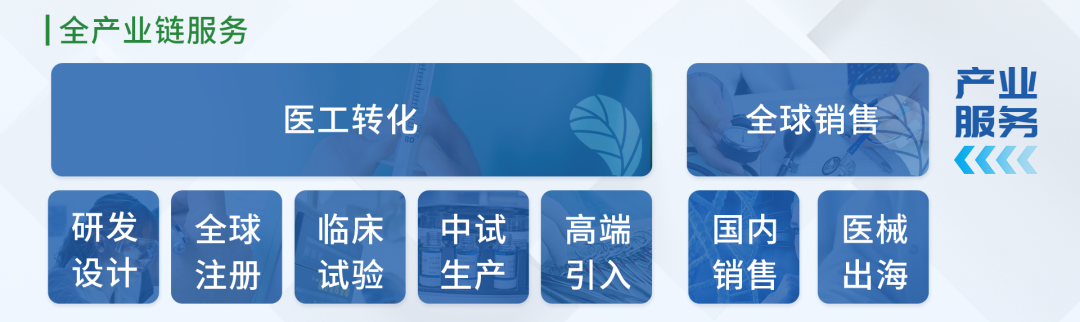
The R&D of medical devices is a complex and rigorous process, involving multiple aspects such as technology, regulations, and clinical practices. Orschda boasts a 20,000㎡ Science and Innovation Center and has established a Medical Device Research Institute dedicated to the clinical transformation of medical research achievements. It possesses a high-level, international multidisciplinary professional team proficient in the entire process of R&D, regulations, clinical trials, registration, and production, capable of developing and producing various complex innovative products. With extensive project experience and industry resources, it has built a standardized, regulated, and digitalized full-process service system. It provides one-stop services ranging from preliminary market research, product concept generation, product design and development, to prototype production and testing. To date, Orschda has had over 200 projects enter the review stage, more than 100 projects under development, with a 100% success rate in transformation. (Orschda compilation)
8. Stryker Acquires Inari Medical for Over $1 Billion
Recently, Stryker announced that it has reached a definitive agreement with Inari Medical, a company in the peripheral intervention field: to acquire all issued and outstanding common shares of Inari Medical for $80 per share in cash, with a total equity value of approximately $4.9 billion (RMB 36 billion) on a fully diluted basis. In the market, vascular intervention can be divided into cardiovascular intervention, neurointervention, and peripheral intervention according to different body parts. The main scope of cardiovascular intervention is closely related to the coronary arteries and veins of the heart; neurointervention mainly includes intracranial vessels related to brain function; peripheral vascular intervention mainly involves arterial and venous vessels in the peripheral vasculature, including the trunk and limb vessels outside the heart and brain blood vessels. After the acquisition is completed, Inari Medical's peripheral intervention products will complement Stryker’s neurovascular business products, providing patients with a richer portfolio of products and solutions. (China Venture)