Weekly Medical Device Industry News Roundup (January 13–19, 2026): Regulatory Updates, Funding, and Product Approvals

MGI
Gene Sequencing Instruments and Related Reagent & Consumables R&D Manufacturer

Johnson & Johnson
Medical Device R&D and Manufacturer


01
49 Chinese IVD Companies Receive Financing in 2024
Recently, according to data statistics from CACLP and the ZaiBoPian APP, a total of 53 financing events occurred in China's in vitro diagnostics (IVD) industry in 2024, involving 49 domestic IVD enterprises, with a total financing amount exceeding 3 billion yuan. The financing rounds covered all stages from angel round to D round. There were 14 early-stage financing events (angel round, Pre-A round), 26 mid-stage financing events (A/A+ round, pro-B/B+ round), 7 mid-to-late stage financing events (C/C+/C++ round, D/D+ round), and 5 strategic financing events. Financing mainly concentrated in the A and B rounds. The IVD industry saw both early-stage financing for startups, such as Hopesun, Insight Technology, 91360 Medical, and Shanben Bio completing angel rounds, as well as expansion financing for mature companies, such as Jinzhun Bio’s C round, Saif Decoding’s C+ round, Jieyi Bio’s C+ round, Ruixun Bio’s C2 round, Meidong Huicheng’s C++ round, Tongshu Gene’s D round, and Weiyuan Gene’s D+ round. Overall, the financing ecosystem was relatively diverse.
02
Medical Device DeveloperZeto Completes $31 Million Financing
Recently, Zeto completed a $31 million financing round to support its AI-driven EEG brain monitoring technology. The funding was led by MindWorks Global (MWG). Zeto plans to use the funds to expand its commercial and operational teams, drive growth, and enhance R&D efforts. One of the features is a user-friendly headset equipped with 21 soft-tip electrodes positioned according to the standard 10-20 EEG system. The headset includes intuitive LED feedback for easy adjustment. This technology requires minimal training for healthcare professionals to operate effectively. The portable recording device captures patient video and audio, offering display and recording controls. It also provides real-time, AI-supported notifications of seizure activity, which can be critical in emergency situations.

03
"Self-luminous" Sequencer Approved
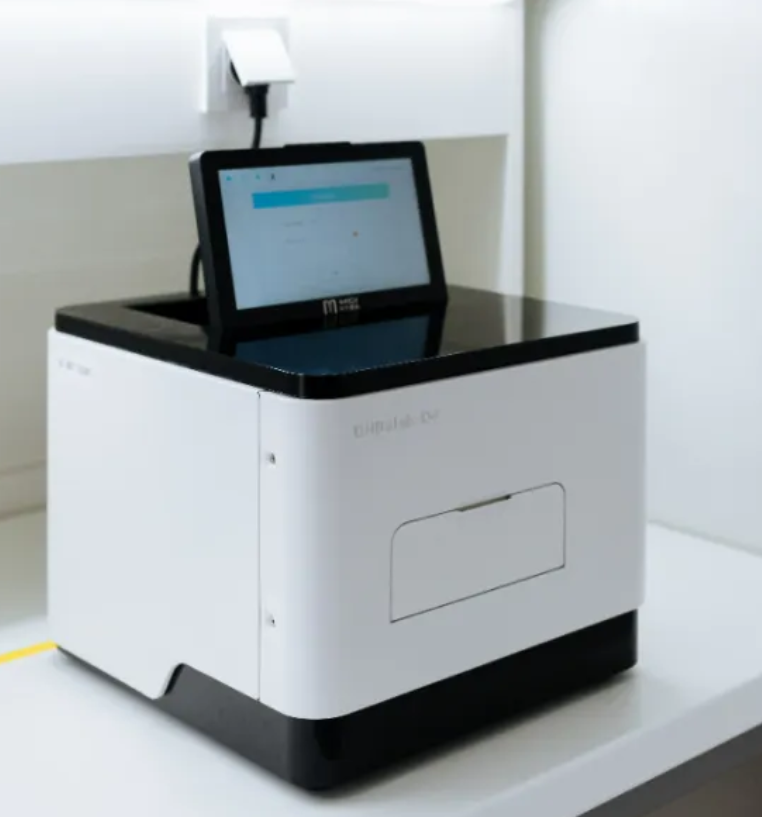
Recently, the gene sequencer based on the self-luminescence sequencing biochemical principle – MGI's DNBSEQ-E25 – has been approved by the National Medical Products Administration (NMPA) for medical device registration and is permitted for clinical use in the Chinese market. This means that MGI’s DNBSEQ series of gene sequencers have achieved coverage in clinical scenarios for both "excitation light" and "self-luminescence" technologies, expanding the number of DNBSEQ gene sequencers available for clinical testing in China to 23 models. Following this NMPA approval, the E25 will be able to fully leverage its advantage of “anytime, anywhere” sequencing and play a significant role in clinical applications. The E25 offers high cost-effectiveness in small-scale sequencing scenarios and is an ideal tool for small and medium-sized hospitals, disease control centers at all levels, customs offices, and small to medium-sized laboratories to easily establish sequencing capabilities. It can contribute to the construction of a Healthy China and meet the growing health needs of the population.
04
Johnson & Johnson Halts Sales of a Heart Ablation Device
Recently, Johnson & Johnson Medical Technologies announced on its official website the suspension of clinical use of Varipulse, a PFA product that was recently launched in the U.S. The company stated it is investigating the cause of four reported stroke incidents following patient treatments during external evaluations, and it remains unclear when product promotion will resume. PFA represents cutting-edge technology in the field of cardiac electrophysiology and is one of the key competitive arenas for major cardiovascular medical device giants this year. Following Johnson & Johnson's announcement, its stock price plummeted nearly 3%, while competitor Boston Scientific and Medtronic saw their stock prices rise by 4.3% and 3.5%, respectively. In the Chinese market, Varipulse has not yet been approved. However, Johnson & Johnson has already submitted an application for the product’s market approval. It is currently unclear whether the adverse events in the U.S. will impact the product’s approval process in China.

05
Johnson & Johnson Announces Approval of Dual-Energy Catheter for Radiofrequency and Pulsed FieldCE
Recently, Johnson & Johnson Medical Technologies announced that its Dual Energy ThermoCool SmartTouch™ SF catheter has received European CE certification for the treatment of cardiac arrhythmias such as atrial fibrillation. The Dual Energy ThermoCool SmartTouch™ SF catheter, with its dual-energy capability, can switch between radiofrequency (RF) energy and pulsed field (PF) energy, allowing electrophysiologists to customize treatment plans based on the patient's specific anatomy and clinical needs. The core innovation of the Dual Energy ThermoCool SmartTouch™ SF catheter lies in its dual-energy treatment functionality. The catheter not only supports radiofrequency energy (RF) but also enables ablation treatment through pulsed field (PF) energy, greatly enhancing the flexibility and personalization of the treatment.
06
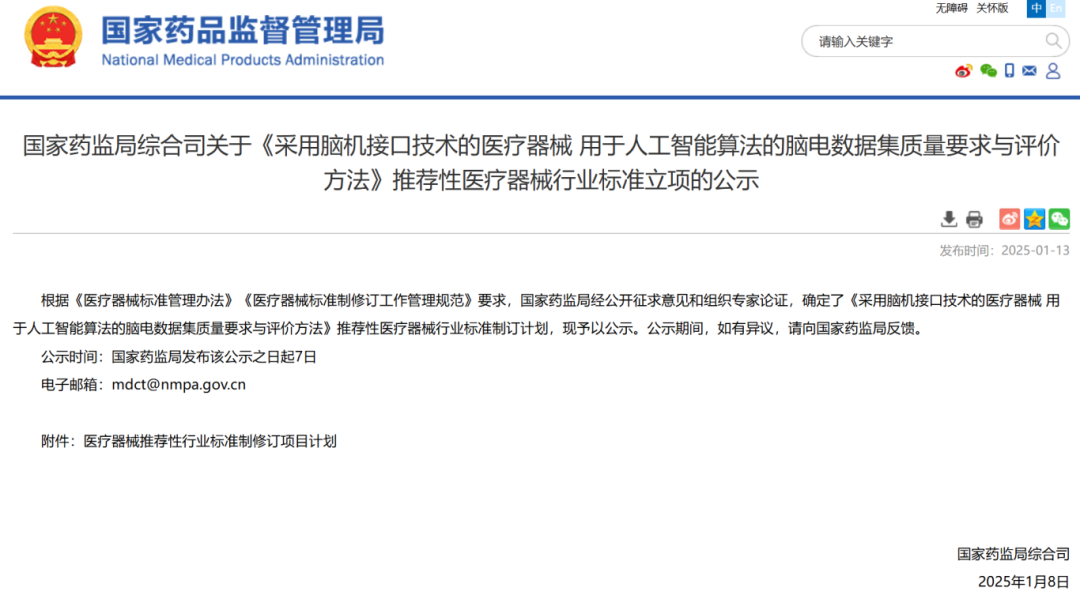
NMPA Publishes "Quality Requirements and Evaluation Methods for EEG Datasets Used in Artificial Intelligence Algorithms in Medical Devices Using Brain-Computer Interface Technology"
On January 13, the National Medical Products Administration (NMPA) announced a draft plan for the development of recommended industry standards regarding the quality requirements and evaluation methods for EEG datasets used in AI algorithms in medical devices employing brain-computer interface technology, and solicited public opinions.
07
Notice from the General Office of the National Medical Products Administration on Promoting and Implementing Relevant Reform Pilot Experiences
Recently, the General Office of the National Medical Products Administration issued a notice regarding the promotion and implementation of relevant reform pilot experiences (No. 37 [2025] of the NMPA Legal Affairs Department). The notification is as follows: Starting from January 20, 2025, the following three approval items will be canceled: "Approval for the Establishment of Pharmaceutical Wholesale Enterprises," "Approval for the Establishment of Pharmaceutical Retail Enterprises," and "Permit for Medical Institutions to Use Radiopharmaceuticals (Class I and II)." The "Approval for Internet Information Services of Pharmaceuticals and Medical Devices" will be changed to a filing management system. Drug regulatory authorities will no longer implement approval management for these administrative licensing matters, and any ongoing applications will be legally terminated. For entities that obtained the "Internet Pharmaceutical Information Service Qualification Certificate" before the cancellation of the approval, if they wish to continue providing internet information services for pharmaceuticals and medical devices after the certificate's expiration, they must follow the procedures for filing.
08
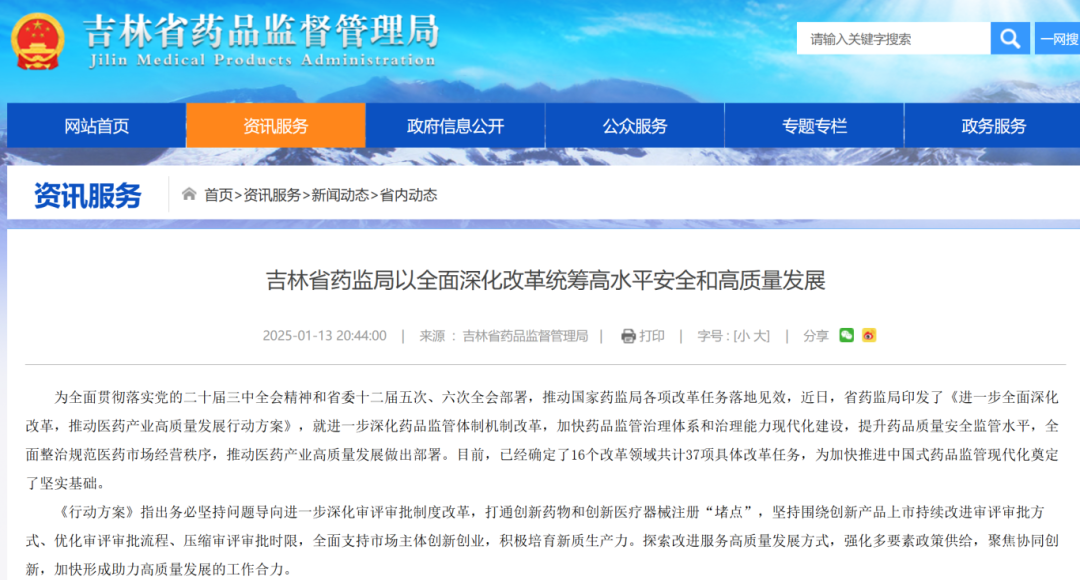
Jilin Provincial Drug Administration Issues Plan to Further Comprehensively Deepen Reform and Promote High-Quality Development of the Pharmaceutical Industry
Recently, the Jilin Provincial Drug Administration issued the "Action Plan for Further Comprehensive Deepening of Reforms to Promote High-Quality Development of the Pharmaceutical Industry," specifying 37 specific reform tasks across 16 reform areas. The plan emphasizes the need to improve mechanisms supporting innovation-driven development, deepen reforms in the review and approval systems, explore the implementation of an efficiency evaluation system covering the entire review and approval process, and reduce the timeframes for technical reviews and the registration cycle for Class II medical devices. Efforts will be made to establish a collaborative mechanism linking the research and review of innovative drugs and medical devices, strengthen technical guidance and policy communication during the innovation research phase, and enhance original innovation capabilities. Cooperation with local governments will focus on jointly building special zones for government services and cultivating professional talent teams for technical reviews. Plans also include studying the establishment of a pharmaceutical innovation engineering center to implement high-level industry development reforms; creating comprehensive platforms for government-industry-academia-research-application collaboration in areas such as pharmaceutical technology transfer, product license resource transfers, intellectual property rights transactions, and innovative achievements applications.
09
Four Departments Promote High-Quality Development of the Data Annotation Industry
Recently, the National Development and Reform Commission and other departments issued the "Implementation Opinions on Promoting the High-Quality Development of the Data Annotation Industry." The Implementation Opinions propose that by 2027, the data annotation industry's specialization, intelligence, and scientific and technological innovation capabilities will significantly improve, with a substantial increase in industrial scale and an average annual compound growth rate exceeding 20%. A group of influential technology-driven data annotation enterprises will be cultivated. Support will be provided for data elements to empower industrial transformation and upgrading, while deeply exploring data annotation needs across the entire process of enterprise production management. The "State-Owned Enterprises Data Efficiency Enhancement Initiative" will be implemented to increase the development and utilization of enterprise data, unleashing enterprise data annotation demands. Strengthen data annotation in key industries such as transportation, healthcare, finance, science, manufacturing, and agriculture, building high-quality industry datasets to support AI applications in these sectors. Focusing on scenarios such as healthcare, human resources, digital trade, autonomous driving, and low-altitude economy, business innovation will drive data annotation needs.
10
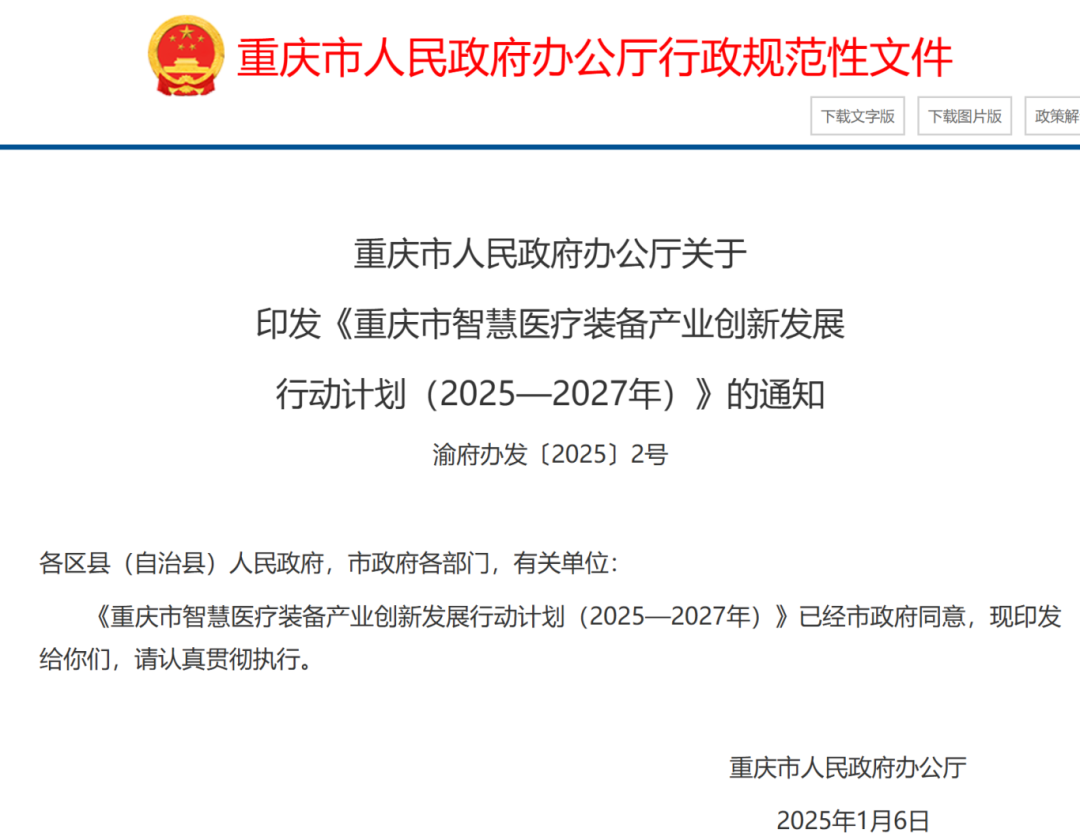
Chongqing Releases Action Plan for Innovation and Development of Intelligent Medical Equipment Industry
Recently, the General Office of the Chongqing Municipal Government issued the "Chongqing Intelligent Medical Equipment Industry Innovation and Development Action Plan (2025-2027)." The Action Plan focuses on key areas such as high-end medical devices, high-value medical consumables, efficient in vitro diagnostics, and artificial intelligence medical devices. The overall goal is to create a group of leading companies with international influence and core technologies, along with flagship products. The annual growth rate of the city's intelligent medical equipment manufacturing industry output value will exceed 60%, with an expected output value surpassing 10 billion yuan by 2025 and 30 billion yuan by 2027. In terms of R&D support, the Chongqing Science and Technology Bureau will provide up to 10 million yuan per project, while the Chongqing Health Commission’s joint medical research projects will offer a maximum of 8 million yuan. Regarding evaluation and approval, the Chongqing Drug Administration will reduce product testing time by an average of 15 to 30 days and shorten the review period for Class II medical devices by an average of 20 days.
11
China's State Administration for Market Regulation Releases "Compliance Guidelines for Pharmaceutical Enterprises to Prevent Commercial Bribery Risks"
Recently, the State Administration for Market Regulation officially released the "Compliance Guidelines for Pharmaceutical Enterprises to Prevent Commercial Bribery Risks." The Guidelines consist of four chapters and 49 articles. The chapters are General Provisions, Establishment of Compliance Management Systems for Preventing Commercial Bribery Risks in Pharmaceutical Enterprises, Identification and Prevention of Commercial Bribery Risks in Pharmaceutical Enterprises, and Handling of Commercial Bribery Risks in Pharmaceutical Enterprises. These guidelines closely align with the actual conditions of the pharmaceutical industry, focusing on concrete descriptions and practical guidance. They summarize and organize commercial bribery risk points across nine specific scenarios: academic visits and exchanges, business receptions, consulting services, outsourcing services, discounts and commissions, donations and sponsorships, free placement of medical equipment, clinical research, and retail terminal sales, covering the entire business process in the pharmaceutical procurement and sales field. Each scenario's risk factors are individually assessed, clearly categorized by risk level, and presented with positive and negative reference "lists."
12
Jiangxi Releases Action Plan for the Cultivation and Development of Future Industries
Recently, the General Office of the Communist Party of China Jiangxi Provincial Committee and the General Office of the Jiangxi Provincial People's Government issued the "Action Plan for the Cultivation and Development of Jiangxi Province's Future Industries (2024–2026)." The plan mentions accelerating the development of core technologies such as synthetic biology, gene editing, brain science, regenerative medicine, blood products, stem cells, biomass processing, and intelligent micro/nano continuous manufacturing, with a focus on Nanchang, Ganzhou, and Fuzhou. It also emphasizes developing new business models and modes such as intelligent diagnosis, intelligent treatment, intelligent elderly care, and intelligent health services, with an emphasis on Nanchang, Shangrao, and Ganjiang New Area. The plan encourages the development of "Internet + Health," promoting the construction of internet hospitals and "smart hospitals." It supports the application of AR/VR/MR and computer visualization technologies in treatment planning, surgical operations, minimally invasive interventions, and biopsy procedures. It also aims to actively and steadily promote the application of nuclear technology in civilian fields such as healthcare, focusing on building an advanced and comprehensive nuclear medical industry system.
13
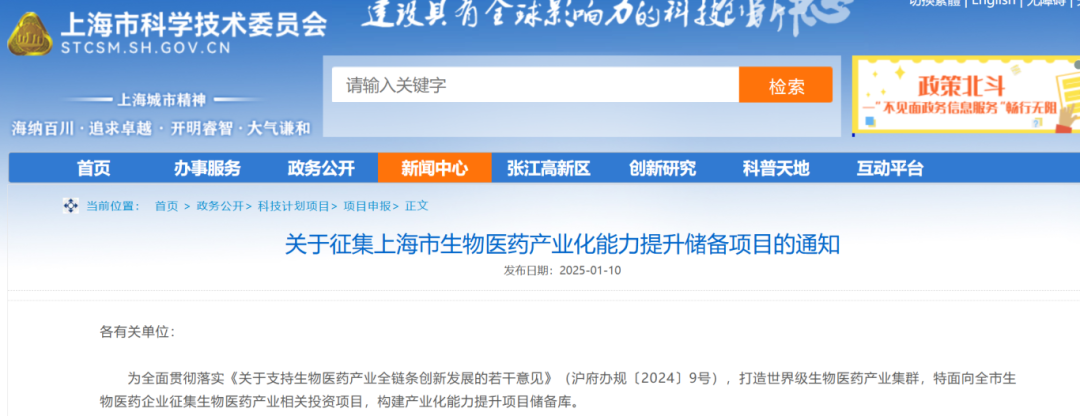
Shanghai Calls for Reserve Projects to Enhance the Industrialization Capacity of Biopharmaceuticals
Recently, in order to fully implement the "Several Opinions on Supporting the Whole-chain Innovative Development of the Biomedical Industry," and to build a world-class biomedical industry cluster, Shanghai has launched a city-wide call for investment projects related to the biomedical industry among all biomedical enterprises. This aims to establish a project reserve pool for enhancing industrialization capabilities. The key focus areas for medical device process development projects are: conducting critical process development for the manufacturing of Class I products within key sub-sectors such as implantable/interventional devices, medical imaging, and in vitro diagnostic equipment and reagents. Substantial progress should be achieved in quality improvement, cost reduction, and efficiency enhancement. The research outcomes will be applied to the production of relevant medical device products through the construction or upgrading of production lines. The key focus areas for medical device production projects are: constructing (upgrading) industrial bases or production lines for proprietary medical device products, forming corresponding production capacity, and ultimately obtaining a Medical Device Manufacturing License issued by drug regulatory authorities.
14
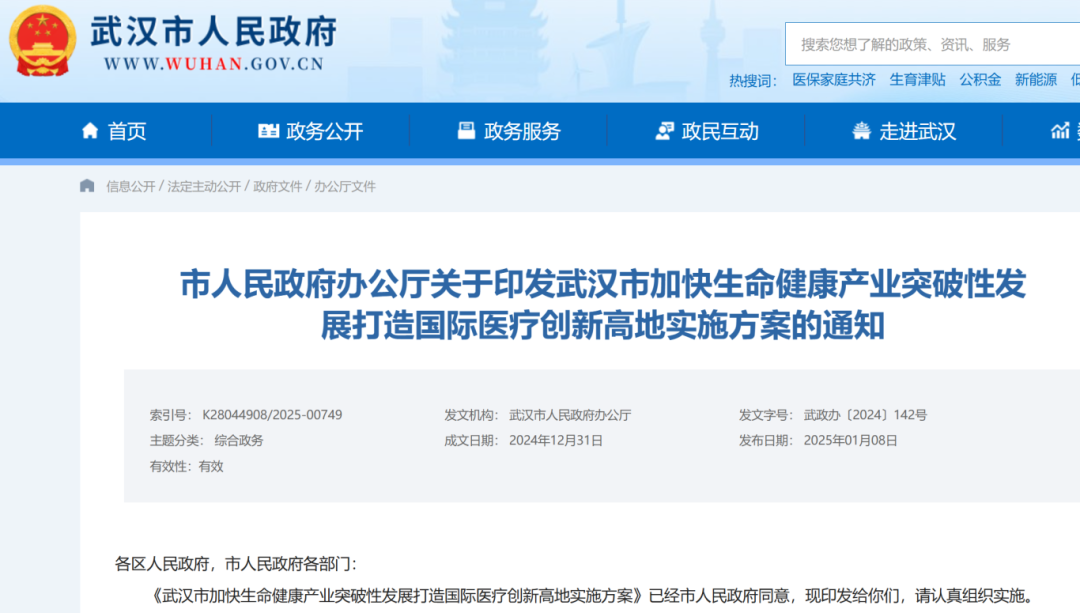
Wuhan Proposes Development Goals for the Life and Health Industry
Recently, the "Wuhan Implementation Plan for Accelerating Breakthrough Development of the Life Health Industry and Building an International Medical Innovation High Ground," published on the Wuhan municipal government website, shows that by 2027, the scale of Wuhan's life health industry will strive to exceed 800 billion yuan. The plan aims to attract more than six multinational pharmaceutical companies to establish operations in Wuhan, cultivate over ten leading enterprises with influence across China, create more than three internationally renowned hospitals, and develop over five world-class specialized departments. It also seeks to preliminarily build an international medical innovation high ground. The plan proposes that Wuhan will support the export of innovative life health technologies, encourage companies to register trademarks and patents in major overseas markets, and actively integrate into the global innovation network. Additionally, it will increase support for cutting-edge biotechnologies such as cell and gene therapy and brain-computer interfaces, promoting the integration and application of medical information technology.
15
China CDC Promotes the Popularization of Mass Spectrometry Instruments
Recently, the National Disease Control and Prevention Administration released a draft proposal for the construction of laboratory testing capabilities for provincial, prefectural, and county-level disease control institutions. It is reported that the standard covers multiple aspects including laboratory classification and responsibilities, laboratory management requirements, and testing capability requirements. Among these, the testing capability requirements are one of the key focuses of this draft proposal. This section provides detailed requirements for various testing projects such as viral diseases, bacterial and fungal diseases, parasitic diseases, vector-borne disease monitoring, endemic disease monitoring, nutrition and food hygiene, environmental hygiene, radiological health, occupational health, and school hygiene. Notably, in the directory of bacterial and fungal disease testing projects, it explicitly requires provincial disease control institutions to have the capability for pathogenic microorganism mass spectrometry identification, while prefectural-level institutions may conduct this project based on actual conditions.
16
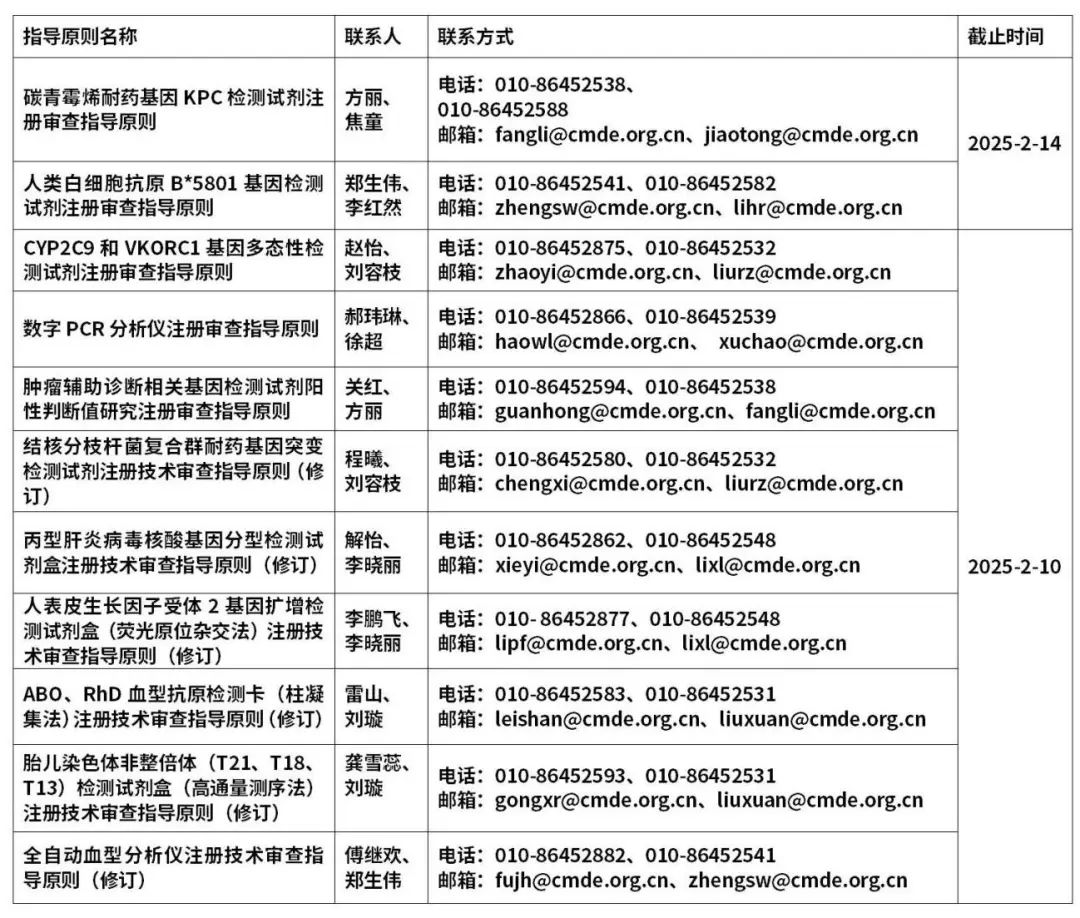
Call for Participation in the "Carbapenem Resistance GenesNotice on the Information of Enterprises and Institutions Related to the Formulation of Two Guiding Principles, Including the "Guiding Principles for the Registration Review of KPC Detection Reagents"
According to the 2025 Annual Guideline Development Plan, the Medical Device Review Center has now initiated the development of 11 guidelines, including the "Guideline for the Registration Review of Carbapenem Resistance Gene KPC Detection Reagents." We are currently soliciting participating organizations for the development work and invite domestic and overseas manufacturers, research institutions, clinical organizations, etc., with relevant experience to actively participate.
Note: The information in this article is compiled based on online news.

END