Professor Gao Jiabao's Team Showcases 'Seamless' Application of DKutting® LL Peripheral Scoring Balloon

DK Medtech
Vascular Interventional Balloon Product Developer

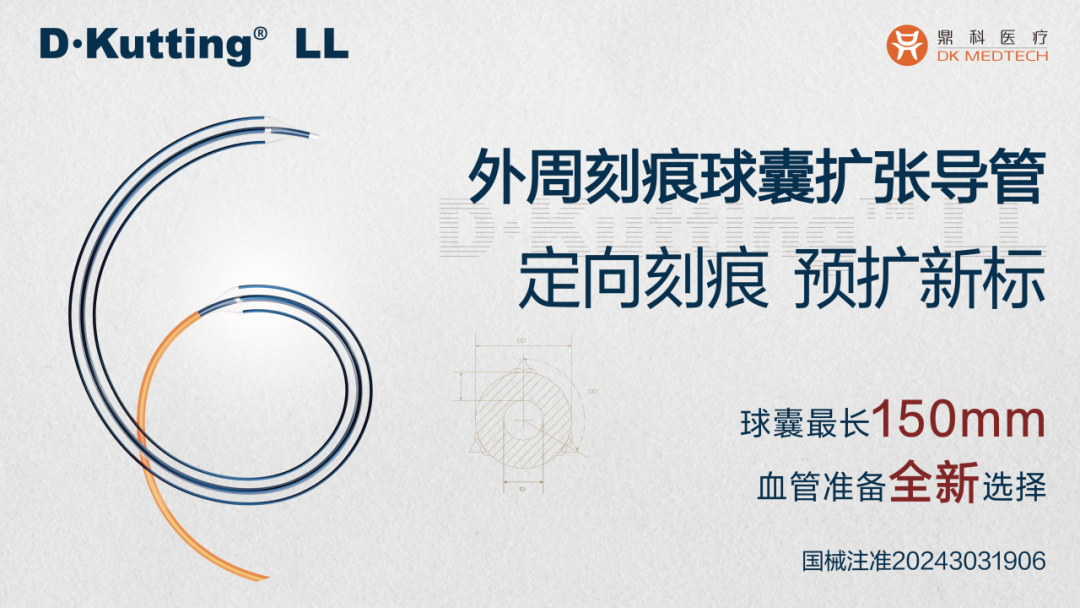
DKutting®LL continues to use DK Medtech's unique patented triangular nitinol coil technology, combined with the actual clinical needs of lower limb arteries, significantly increasing the length of the scoring element (up to 150mm). It also developed a new fully coaxial balloon delivery system compatible with 0.014"/0.018" guidewires, and enriched the selection of balloon diameters with 0.5mm increments.
DK Medtech's unique directional scoring balloon boasts comprehensive performance with robust radial expansion and flexible axial bending. Its clinical performance has been widely recognized in both the coronary and hemodialysis access fields. The latest development is the DKutting.®LL Scoring Balloon is specifically designed for lower limb arterial intervention, demonstrating significant clinical advantages in directional dilation mechanisms and setting a new standard for peripheral vascular pre-dilation.
DK Medtech Special Release[Professor Gao Jiabao's Team: DKutting®Case Presentation of "Scarless" Application of LL Peripheral Scoring Balloon, demonstrating the meticulous operation of each case and the clinical application of advanced equipment and instruments. From the formulation of treatment strategies for different cases, standardized intraoperative procedures and technical applications, complication prevention, perioperative management, etc., the aim is to promote the standardization of diagnosis and treatment for vascular stenosis and occlusive diseases, strengthen technical exchanges and experience sharing among doctors, with the hope of providing new ideas and methods for future diagnosis and treatment, benefiting more clinical patients.
DKutting®LL Peripheral Scoring Balloon "Traceless" Application
Gao Jiabao, Zhang Ling from Jiangxi Provincial People's Hospital
Patient Information
Basic Information:80-Year-Old Male.
Chief Complaint:Pain and discomfort in the right lower limb after activity for over 1 year, aggravated for more than 1 month.
History of Present Illness:More than a year ago, the patient experienced pain and discomfort in both lower limbs after activity, with decreased skin temperature and a claudication distance of about 1000m. Over the past six months, the skin temperature of both lower limbs decreased further, and the pain and discomfort after activity worsened, with the claudication distance gradually shortening to 100m. The patient underwent left lower limb femoral artery stent implantation in our department six months ago and was admitted for surgery on the right lower limb.
Past Medical History:History of hypertension for 10 years, smoking for 50 years, 1 pack/day.
Physical Examination:The shape of both lower limbs is normal. The color of the right foot is pale, with no obvious ulcers or gangrene. The pulse of the left femoral artery and dorsalis pedis artery is palpable, but the pulse of the right dorsalis pedis artery cannot be felt. The skin temperature is lower than the opposite side, and the sensation and movement of both lower limbs are acceptable.
Admission Diagnosis:
Lower Extremity Arteriosclerosis Obliterans;
Hypertension.
Previous interventional treatment
Time | Main Treatment Process |
2024-5-7 | Angiography of the Left Lower Limb Artery + Balloon Dilation + Stent Implantation |
Preoperative Analysis
Preoperative Analysis:The patient is an elderly male with symptoms of right lower limb ischemia. The course of the disease has been long-standing. He previously underwent stent implantation in the left lower limb and drug-coated balloon angioplasty. A completed CTA indicated that blood flow within the stent in the left lower limb was unobstructed, while there was occlusion near the popliteal artery at the distal end of the superficial femoral artery in the right lower limb. The diagnosis of lower extremity arteriosclerosis obliterans is clear, and surgical treatment is planned. The vascular occlusive lesion involves the P1 segment of the popliteal artery.Therefore, special equipment is required to fully dilate the lesion, achieve maximum lumen gain, and reduce intimal injury while avoiding stent implantation. Hence, the DK Medtech scoring balloon will be attempted to achieve better dilation results, minimize intimal injury, and avoid stent placement.
Surgical Objective:
Main Objectives:Open the superficial femoral artery to improve blood circulation in the affected limb;
Secondary Objective:The patient's financial situation is poor, so the superficial femoral artery was opened, and the number of stent implants was reduced.
Surgical Strategy/Plan:
Surgical Procedure Name:Angiography of the Right Lower Limb Artery + Balloon Dilation (with Stent Implantation);
Solution:Retrograde puncture of the left common femoral artery, crossover sheath introduced to the right iliac and femoral arteries, angiography to clarify the lesion condition, and interventional treatment according to the lesion condition. Balloon dilation is performed first, trying to avoid repeated stent implantation in the proximal superficial femoral artery and popliteal artery.
Preoperative Imaging
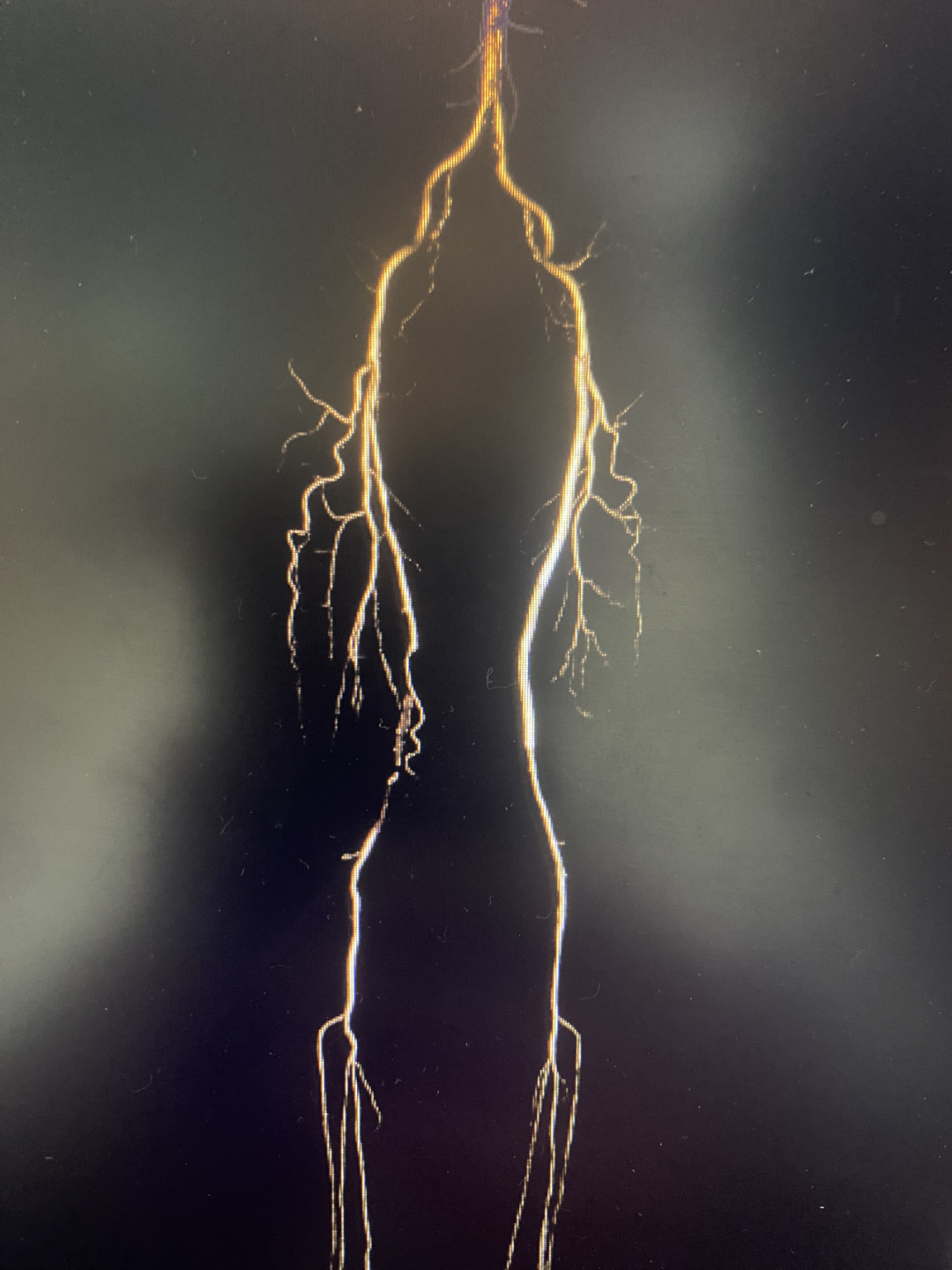
Occlusion of the middle and lower segments of the right superficial femoral artery and the proximal popliteal artery after stent implantation in the upper and middle segments of the left femoral artery.
Surgical Procedure
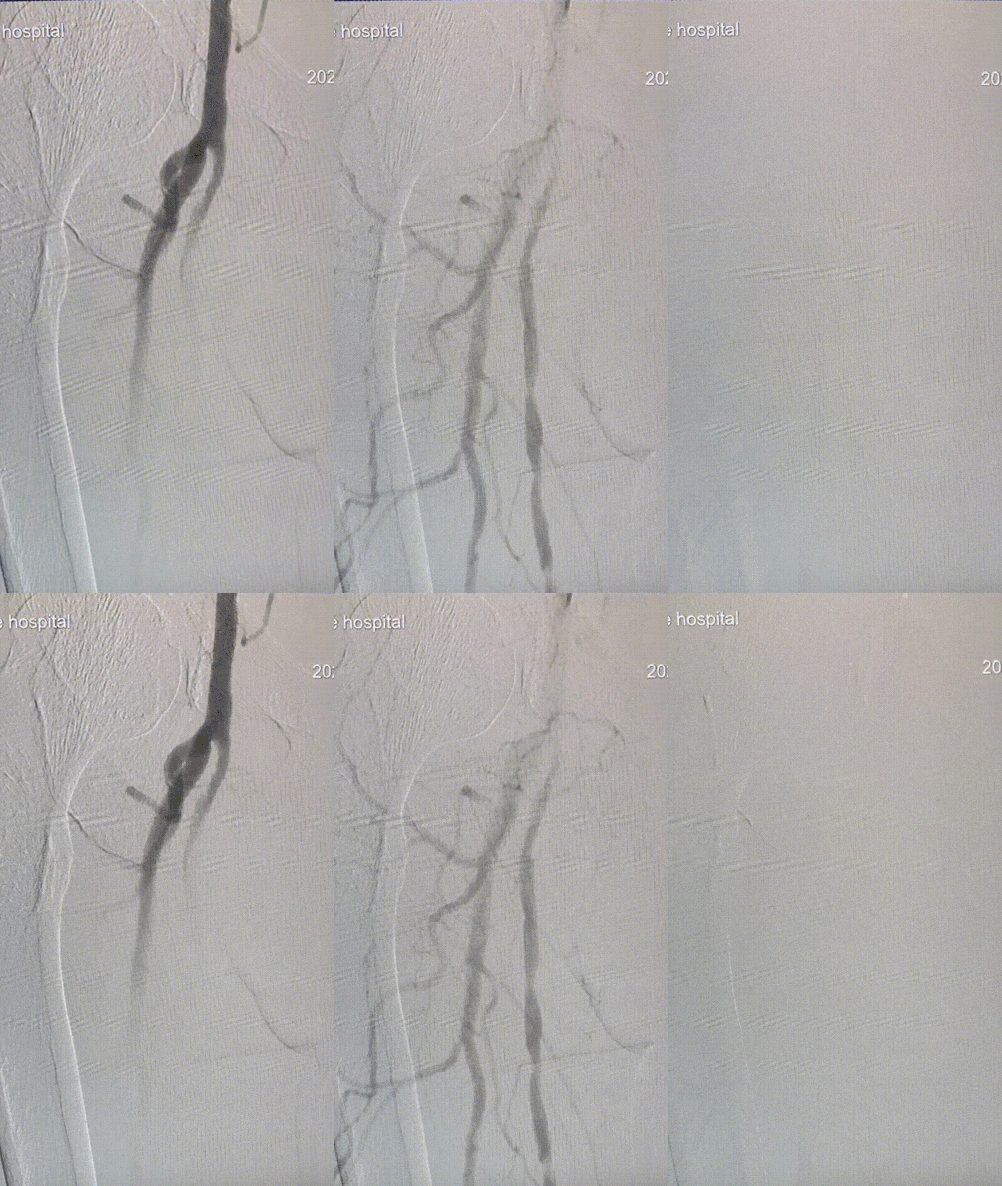


Angiography confirmed: Occlusion of the middle and lower segments of the right superficial femoral artery, with the remaining vascular lumen being patent.
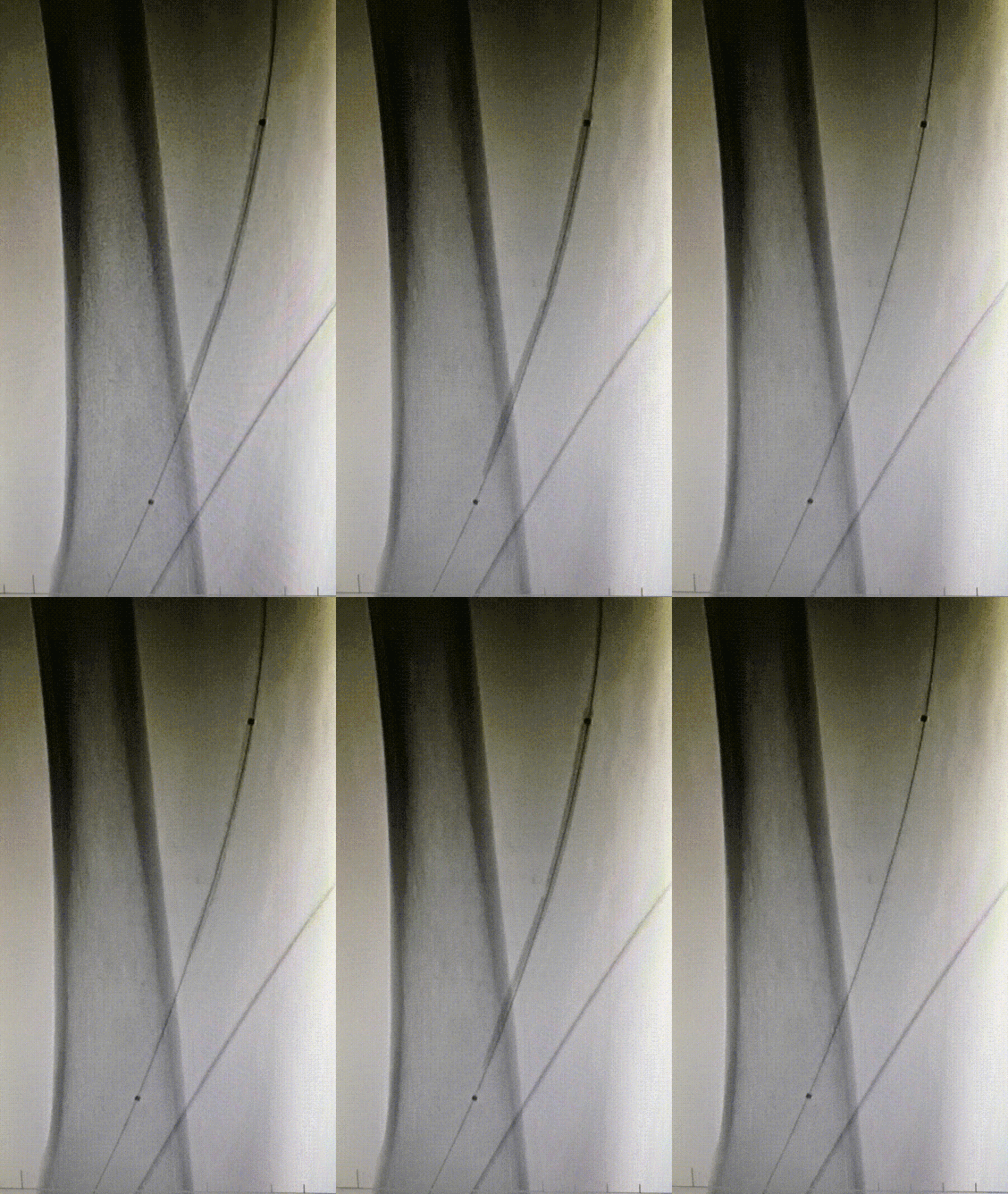
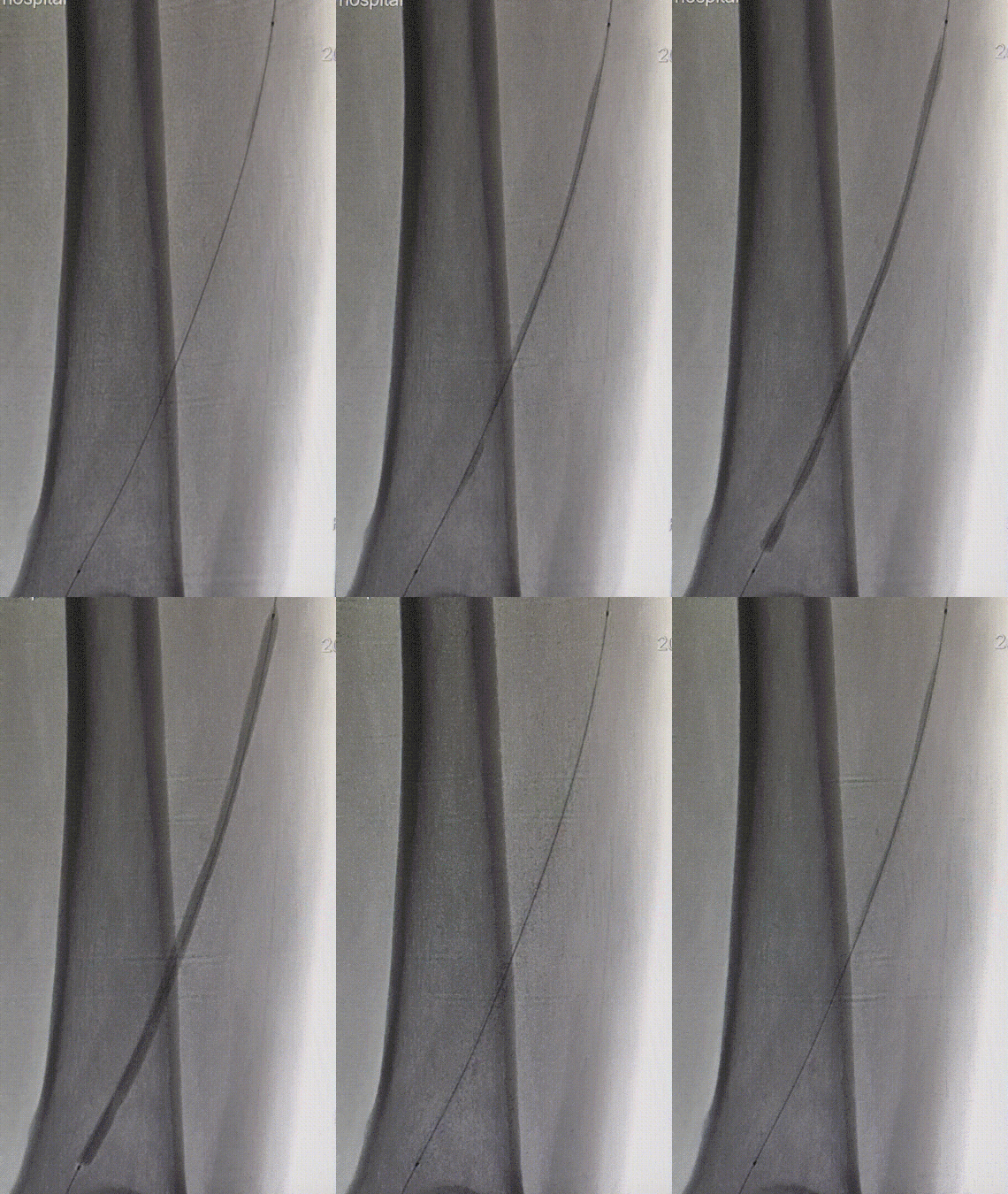

Pre-dilation performed with a 3*100mm DK Medtech balloon, followed by a 4*150mm.DKutting®LL Scoring BalloonAdequate and slow expansion of occlusive lesions in the superficial femoral artery, angiography showsNo obvious intimal injury or dissection in the lumen, with good blood flow.
Follow-up
Discharge Status:The patient's lower limb pain was relieved, with good foot skin temperature and good dorsalis pedis artery pulsation. There was no significant pain or discomfort after activity, and no obvious abnormalities were observed at the puncture site. The patient was discharged after 2 days of observation and was instructed to regularly take oral antiplatelet and statin medications, with routine outpatient follow-up.
Case Summary
Case Characteristics:
Elderly male, lesions in the middle and lower segments of the superficial femoral artery and P1 segment of the popliteal artery.
Occlusion of the superficial femoral artery and proximal popliteal artery; a scoring balloon can perfectly achieve dilation of the lesion site, avoid dissection and elastic recoil, better modify luminal lesions, and avoid stent implantation. Stent placement here is close to the knee joint, with a relatively low long-term patency rate.
Preoperative Assessment Key Points:Nature of the lesion, length of the lesion, and previous treatment response.
Surgical Strategy/Technical Key Points:
Guidewire passage;
Select a scored balloon diameter with a 1:1 ratio to the reference vessel diameter, and ensure the length fully covers the lesion;
Low-pressure slow expansion.
Device Features/Usage Tips:The balloon length fully covers the lesion, with slow pressure dilation gradually increasing pressure at 2, 4, 6, and 8 atm to avoid intimal tearing. The dilation time should be more than 3 minutes, followed by a careful assessment of the lesion post-dilation.

Expert Introduction


Professor Gao Jiabao
Surgeon of This Case
Deputy Chief Physician of Vascular Surgery, Jiangxi Provincial People's Hospital;Vice Chairman of the Vascular Surgery Branch of the Jiangxi Association of Integrative Medicine;Vice President of the Vascular Surgery Branch of the Jiangxi Province Medical Association;Deputy Group Leader of the Carotid Artery Group, Vascular Surgery Branch, Jiangxi Medical Association;Standing Committee Member of the Jiangxi Anti-Cancer Association's Tumor Intervention Committee.

Professor Zhang Ling
Surgeon of This Case
Jiangxi Provincial People's Hospital,Vascular Surgery, Attending Physician;Member of the Youth Committee of the Vascular Surgery Branch of Jiangxi Medical Association;Member of the Vascular Surgery Group, Surgery Branch, Jiangxi Province Integrated Medical Association;Member of the First Committee of the Jiangxi Medical Association's Interventional Medicine Branch.

Department Introduction

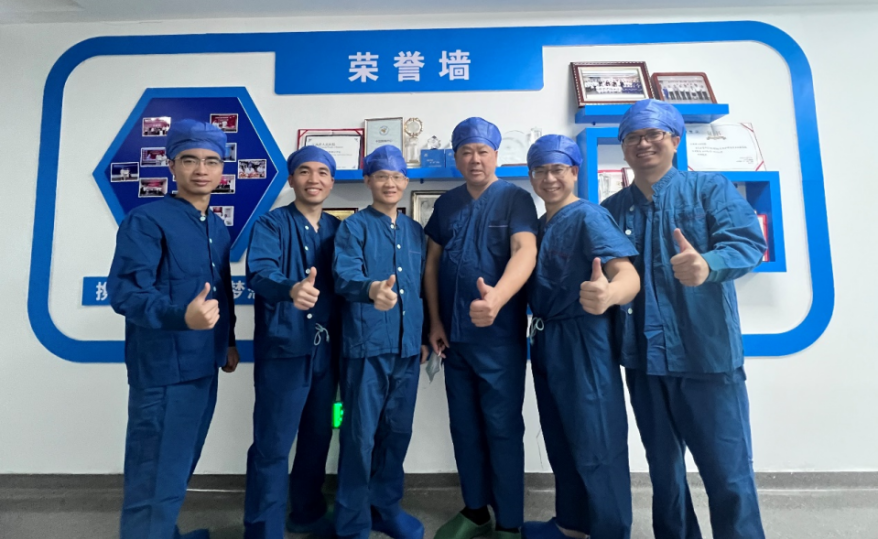
The Vascular Surgery Department of Jiangxi Provincial People's Hospital boasts a strong technical team, including well-known senior experts renowned in the province and outstanding young and middle-aged technical backbone, laying a solid foundation for rapid and sustainable development in the future. The department can independently diagnose, treat, and rescue critical conditions such as aortic dissection and abdominal aortic aneurysm. It has established routine diagnostic and treatment processes for common conditions like lower limb arteriosclerosis obliterans, deep vein thrombosis, and varicose veins. It is also capable of diagnosing and treating vascular malformations and ischemic or hemorrhagic lesions caused by vascular injuries. In addition, the department’s services cover areas such as tumor intervention and hemodialysis access maintenance, enabling better cross-disciplinary application and laying a good foundation for solving clinical problems, thereby improving the success rate of treating complex lesions. In its future development, the vascular surgery department will aim to enhance the diagnosis and treatment technologies of related diseases, with the goal of comprehensively improving diagnostic and treatment standards, especially for critical illnesses, to better serve a wide range of patients.
Copyright Statement: This platform aims to help medical and health professionals better understand the latest developments in related disease areas. The information content published on this platform does not imply agreement with its descriptions or viewpoints, but is merely for providing more information. If there are any copyright issues, we kindly request the rights holders to contact us, and we will handle it as soon as possible. This information is solely for medical and health professionals to stay informed, and such information cannot replace professional medical guidance in any way, nor should it be regarded as diagnostic or therapeutic advice. If such information is used for purposes other than staying informed, this platform and the author shall not bear any related responsibilities.Contact Email for Cooperation:vascular@edoctor.work。