Xingyuan Intelligence Files for IPO: Delivering an Integrated Closed-Loop Neuromodulation Solution for Depression with Clinically Validated AI Diagnostic Accuracy
BRAINTHINK
Developer of Auxiliary Diagnosis and Screening Products for Mental Disorders
According to the World Health Organization (WHO) statistics from 2021, it is estimated that 350 million people worldwide suffer from depression. Data from The Lancet shows that in 2021, the number of people in China with depressive symptoms exceeded 95 million, with an average of 1 in every 11 individuals affected, making it one of the "severely impacted areas" for mental health issues.
Currently, the National Health Commission has newly established the Division of Mental Health and Psychiatric Health within the Department of Medical Administration to strengthen the functions of professional planning, coordination, and guidance. This division organizes healthcare institutions to fully play their professional roles in providing the public with accessible and diversified mental health services.
In today's society, where employment competition is intense, information is overwhelming, and trends are becoming increasingly "involutionary," public mental health issues are gaining attention at the national strategic level. The importance of raising public awareness and prioritization of mental health, as well as promoting mental well-being, has become more prominent.
In recent years, the increasingly popular brain-computer interface technology (BCI) has provided new solutions for the diagnosis and treatment of mental illnesses. It shows many advantages in obtaining objective data, identifying early signs, precise intervention, long-term monitoring, and personalized adjustments. In the era of precision medicine, it is expected to provide quantifiable innovative intervention and treatment methods for the precise diagnosis and treatment of mental illnesses, as well as quantifiable evaluation schemes for intervention effects.
Among them, Hangzhou Xingyuan Intelligent Biotechnology Co., Ltd. (hereinafter referred to as "BRAINTHINK"BRAINTHINK, Official Account: BRAINTHINK) is a company dedicated to empowering precise diagnosis and treatment of brain diseases through BCI, aiming to break the gap in the large-scale application of medical-grade brain-computer interfaces in China.Founded in 2021, the company focuses on brain health, delves into the auxiliary diagnosis and treatment of mental illnesses, and researches and develops high-end intelligent medical device equipment. With the mission of "protecting human brain health," it is committed to becoming a precision diagnosis and treatment platform for mental illnesses serving the globe.
1Development of Dozens of AI-Assisted Diagnostic Models to Explore and Promote Precision Diagnosis and Treatment of Mental Illness
Wang Zhuozheng, Founder and Chairman of BRAINTHINKAssociate Professor at Beijing University of Technology, Visiting Scholar at Michigan State University, Director of the Institute of Applied Psychology, and Ph.D. in Circuits and Systems from Beijing University of Technology. Professor Wang specializes in intelligent signal processing and brain-computer interfaces, leading over ten national and provincial-level scientific research projects as well as enterprise technology transfer initiatives, while also serving as a guest editor/reviewer for several international SCI journals.
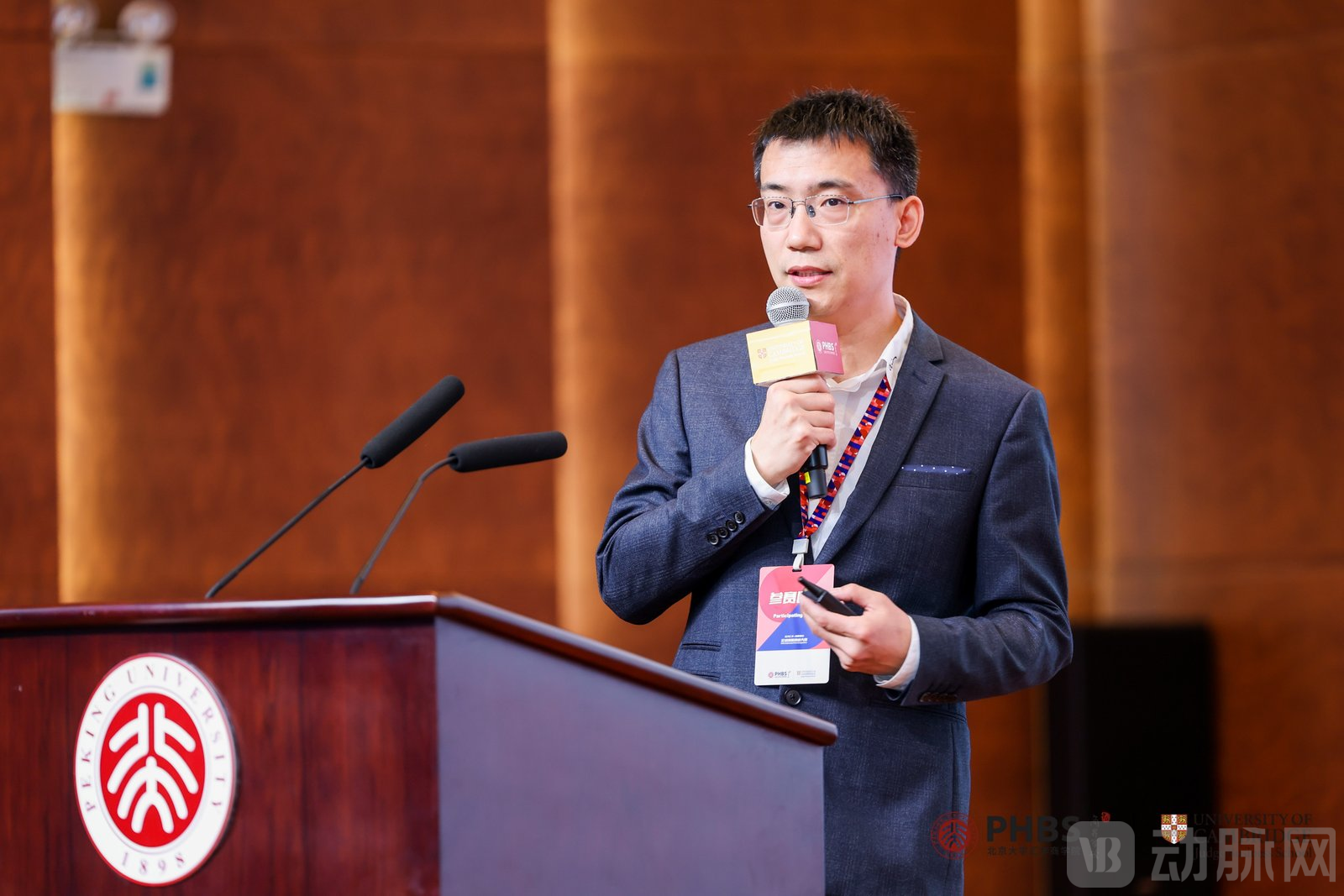
BRAINTHINK Founder Wang Zhuozheng Participates in the Finals of the Peking University HSBC-Cambridge Judge Global Innovation and Entrepreneurship Competition and Wins Third Prize
Talking about the opportunity to establish BRAINTHINK, Professor Wang Zhuozheng said that before 2020, he had been engaged in academic research on brain-computer interface (BCI) and artificial intelligence cutting-edge technology in universities. 2020 was a key turning point when he started to have the idea of entrepreneurship. At that time, the outbreak of the COVID-19 pandemic left many people in a state of confusion and anxiety. Professor Wang Zhuozheng hoped to use the frontier technology in the BCI field to help people solve psychological problems and planned to apply depression as the first application scenario for BCI implementation.
"In the era of precision medicine, psychiatric disorders still cannot be precisely diagnosed and treated with quantifiable indicators, and existing diagnostic methods all have certain limitations," Professor Wang Zhuozheng introduced to VCBeat.
At present, the "questionnaire + scale" is one of the internationally recognized common methods, but it has subjectivity, deception, lack of specific quantitative indicators, and objective evaluation methods for measuring brain function (biomarkers). Moreover, patients are prone to stigma, which leads to inaccurate diagnostic results. Psychiatric examinations mainly rely on the subjective experience of doctors, with poor robustness. Laboratory testing methods are complex and diverse, with low sensitivity. In addition, in the field of psychiatric diagnosis and treatment, clinical resources in China are severely insufficient, there are few specialized doctors, and the psychological counseling industry is not yet mature.
Overall, the existing therapies for mental health diagnosis and treatment face issues such as long confirmation cycles, strong subjectivity, and the inability to quantify diagnosis, treatment, and medication guidance. Against this backdrop, the field urgently needs a faster and more accurate method of diagnosis and treatment.
To address the aforementioned clinical pain points, BRAINTHINK was established in April 2021.The core members of the company include senior scientists, medical experts, co-founders of listed companies, high-level talents from the National University of Singapore and Nanyang Technological University, as well as leading principal investigators (PIs) from renowned hospitals, ensuring that the company's understanding across all dimensions of development remains at the forefront of the industry., providing a solid guarantee for the company's sustainable and healthy development.
In addition, BRAINTHINK has close cooperation with many top-tier tertiary hospitals such as Beijing Anding Hospital affiliated to Capital Medical University, China Rehabilitation Research Center, and Xuanwu Hospital, providing strong support for the clinical validation of the company's products and technologies.
2Build Three Core Technology Platforms to Create a Portable Integrated Solution for Depression Diagnosis and Treatment Based on Closed-Loop Neuromodulation
BRAINTHINK's EEG AI Emotion Assessment System adopts a non-invasive, wearable data collection method, combined with a self-developed multimodal physiological index large model, to accurately measure mental stress and identify potential mental health issues. The system primarily focuses on clinical validation for typical conditions such as depression, Alzheimer's disease (AD), attention deficit hyperactivity disorder (ADHD), and sleep disorders, with an accuracy rate exceeding 85% on real-world clinical data.
This is inseparable from the advanced core technology support of BRAINTHINK. Currently, BRAINTHINK has built three major core technology platforms, achieving industry-leading signal acquisition and processing hardware infrastructure along with software algorithms:
Self-developed medical-grade base supporting high-throughput signals, adopting high-precision bandpass filtering technology, has overcome the technical challenges of output signal noise and interference suppression in high-density multi-channel neural recording circuits, enabling a more comprehensive and detailed capture of neural activity signals from different regions of the brain.
"At present, considering the accessibility of application scenarios, we mainly focus on the development of non-invasive brain-computer interfaces. However, non-invasive brain-computer interfaces have an inherent defect: their signal-to-noise ratio is relatively low, which causes difficulties in signal recognition and decoding and leads to relatively lower stability and reliability. But by reducing noise to a sufficiently low level, we can improve the accuracy of signal acquisition at a controllable cost, further expanding more application scenarios," explained Professor Wang Zhuozheng.BRAINTHINK's signal acquisition end offers a solution comparable to semi-invasive/invasive signal noise.. It is reported that,BRAINTHINK's deep inspection report on brain-computer interface shows that the signal reconstruction accuracy and noise test results exceed national and industry standards.
Building High-Robustness Vertical Domain Multimodal Models, which can achieve the collection of multi-modal information such as scalp EEG signals, heart rate variability (HRV), and visual facial signals. The biggest highlight of this model isCapable of achieving high robustness and high-precision recognition detection with a small sample size of EEG signal acquisition, and with low computational cost."Generally speaking, if you want to accurately understand a person's EEG activity, it requires about 2,500 hours of EEG data collection, which is almost impossible in real life," introduced Professor Wang Zhuozheng. However, the brain-computer interface product from BRAINTHINK is based on innovative design and optimization using AI models.High-precision diagnosis results can be obtained in just 3 minutes., After the medical device registration certificate is approved, it fully meets the needs of assisting clinical doctors in diagnosis and treatment.. Its result accuracy has been verified on both public datasets and clinical datasets, demonstrating high robustness.
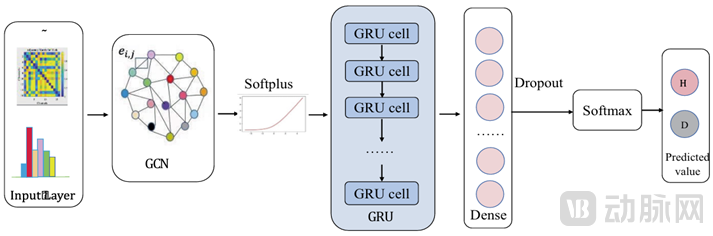
Schematic Diagram of Neural Network
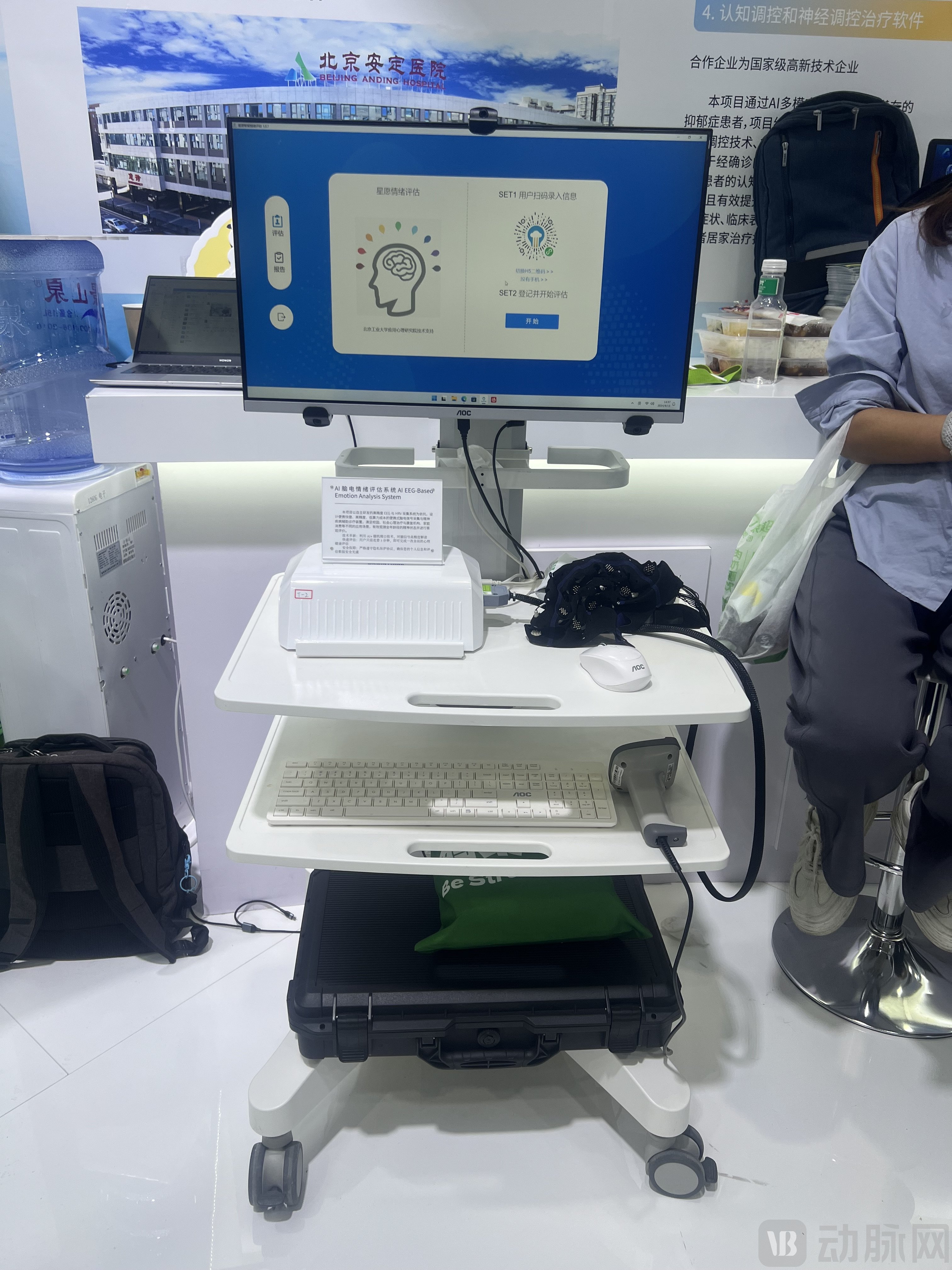
Only 3 Minutes, BRAINTHINK Brain-AI Mood Assessment Screening
Multimodal Non-Contact IndicatorsBRAINTHINK adopts 77GHz millimeter-wave radar signal transmission, acquisition, and analysis processing technology, as well as vision-based signal technology, to obtain patients' psychological states in non-contact short-range situations combined with AI models.
Based on the existing technical accumulation,BRAINTHINK is developing a portable integrated solution for depression diagnosis and treatment based on closed-loop neuromodulation.。
From a clinical medical perspective, there is currently no single, highly prominent biomarker in the field of psychiatric diagnosis and treatment. The lack of a unified diagnostic standard poses challenges for subsequent neuromodulation.BRAINTHINK has discovered digital biomarkers with higher robustness, capable of rapidly and sensitively identifying and diagnosing mental illnesses. After multiple third-party and clinical validations, it enables the timely detection of conditions.。
On this basis, the system can automatically adjust interventions in real time according to changes in digital biomarkers through data processing algorithms—recording feedback after intervention, using the feedback to adjust the next intervention parameter and trigger it, thereby establishing a feedback and stimulation loop.Achieving Automated Precision Control with Simultaneous Monitoring and Intervention。
"By leveraging non-contact, contact, and multi-modal vertical models, combined with our precise signal acquisition technology, we can build a diagnostic platform that supports various application scenarios and accommodates different application devices. This platform provides doctors with better references for the diagnosis and treatment of mental illnesses and offers families better methods for early screening and intervention," explained Professor Wang Zhuozheng.
3EEG Machines Achieve Full Production in China, Aiming to Redefine Standards for Psychiatric Diagnoses
Currently,BRAINTHINK's EEG machine hardware has completed registration trials and entered the administrative approval stage.It is expected to obtain certification and enter the hospital around the end of the first quarter. This product, combined with AI technology and neuromodulation technology, can achieve brain electrophysiological decoding, such as motor intention recognition and mental state monitoring, and can also realize closed-loop neuromodulation, assisting in the rehabilitation of patients with movement disorders, hearing impairments, and vision impairments. The product has the advantages of accurate acquisition and accurate interpretation, capable of addressing the closed-loop neuromodulation issue for integrated diagnosis and treatment, ultimately leading to better intervention outcomes.
Previously, the hardware equipment for BRAINTHINK's brain-computer products was mainly purchased from well-known foreign enterprises, with prices as high as hundreds of thousands or even millions of yuan. Now, BRAINTHINK has established the capability to fully independently complete tasks from circuit construction, chip algorithm development to AI model development, significantly reducing product costs.Currently, BRAINTHINK's intelligent EEG machine has full independent intellectual property rights, achieved complete production in China, with an accuracy of up to 90%.。
Another core product of the company, depression recognition and diagnosis software, is currently in the late stage of development. It has completed hundreds of clinical validations, with an accuracy rate of up to 97% in public dataset validations and over 85% in clinical validations. To date,BRAINTHINK has developed dozens of AI models, created a product matrix centered on brain health, and accumulated millions of samples.
Besides,BRAINTHINK has also developed a product pipeline for rehabilitation medical devices.The company is currently advancing a major special project of the 2024 Beijing Natural Science Foundation — "Key Technology Research on Recognizing Fine Motor Intentions of Fingers Based on Cortical Brain-Computer Interfaces." It is researching and aiming to develop a new type of brain-computer interface applicable to rehabilitation systems for patients with hemiplegia and unilateral upper limb weakness. This technology would replace the function of the damaged peripheral nerves and muscle pathways in patients, enabling the recognition of independent motor intentions for each finger. According to Professor Wang Zhuozheng,Currently, the industry average for the accuracy of finger-level motion intention recognition is around 50%, while BRAINTHINK has achieved 75%.
AI and brain-computer interface technology are strategic industries strongly supported at the national policy level, with multiple national and local policies introduced over the years. At the same time, mental health disorders, particularly among adolescents, are a field that has garnered significant attention from the Ministry of Education and the National Health Commission. "Therefore, whether viewed from the perspective of national strategic importance or from the rapidly developing industry trends in precision diagnosis and treatment and digital therapeutics, brain-computer interfaces will undoubtedly have immense potential and impact," said Professor Wang Zhuozheng, who firmly believes in the promising future of brain-computer interfaces.
In the short term, BRAINTHINK will focus on addressing the diagnosis and treatment of mental illnesses in the To B market. In the long term, BRAINTHINK plans to expand its market presence into the To C sector. "In the future, I hope that BRAINTHINK can redefine the diagnostic standards for mental illnesses and develop products that can enter millions of households, safeguarding the psychological and mental health of the Chinese people," said Professor Wang Zhuozheng at the end of the interview, expressing this vision for BRAINTHINK.
Currently, BRAINTHINK isFinancing, Supply Chain, DistributorThere are docking needs in the aspects,If you are interested in BRAINTHINK, please contact us: