Author:Ge HaqinEditor: VitaminAbbVie and BI Successively Encounter Setbacks in Schizophrenia
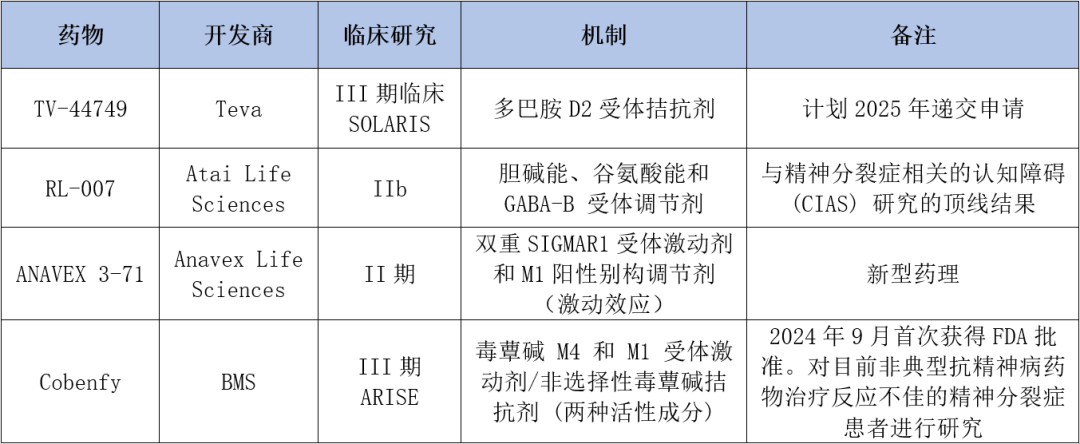
"The Road is Difficult, Full of Detours, Where Are We Now?" — The Arduous Journey of Developing Therapies for Central Nervous System DisordersInThe year 2025 began with a "dud."Boehringer Ingelheim's Potential First-in-Class Drug Iclepertin for Cognitive Impairment Associated with Schizophrenia (CIAS) Fails in Three Phase III Clinical Trials Due to Not Meeting Endpoints.As a group, patients with schizophrenia have lower IQs than the general population. The overall cognitive ability of this patient population is significantly impaired, averaging about two standard deviations lower than healthy control groups. Currently, almost all approved treatments for schizophreniaTreatmentAll drugs work by antagonizing dopamine D2 receptors, but these drugs have little effect on cognitive impairment in schizophrenia, possibly because cognitive impairment in schizophrenia is associated with different pathological processes in individuals. Globally, about 24 million people suffer from schizophrenia, and it is estimated that 80% of them have cognitive impairment associated with schizophrenia (CIAS).BI’s candidate drug Iclepertin is a Glycine Transporter 1 (GlyT1) inhibitor that modulates the activity of NMDA (N-methyl-D-aspartate) receptors, whose dysfunction is associated with schizophrenia and its cognitive symptoms. However, on January 16 this year, BI announced that the clinical study of Iclepertin failed to meet its primary endpoint, which was the change from baseline in the overall composite T-score of patients assessed by the MATRICS Consensus Cognitive Battery (MCCB). Moreover, Iclepertin also did not achieve its secondary endpoints.Iclepertin’s clinical program recruited 1,840 patients across 41 countries and has now concluded. BI has announced the discontinuation of the long-term extension trial CONNEX-X. With only a few CNS disease assets remaining in BI’s pipeline, the company has shifted its research focus to oncology with dwindling interest. However, BI has not completely abandoned its pursuit of therapies for schizophrenia and CIAS.TheIn pursuit, they obtained the license for the GPR52 (a GPCR class receptor) agonist portfolio (core asset HTL0048149) from Sosei Heptares (now Nxera) in March last year for 670 million euros, targeting the development of positive, negative, and cognitive symptoms of schizophrenia.Before BI fails,AbbVie also experienced the failure of two Phase II studies for the schizophrenia drug emraclidine.Emraclidine is an asset that AbbVie acquired for $8.7 billion in 2024 through its acquisition of Cerevel Therapeutics, which was originally spun off from Pfizer. Over the past few years, Cerevel conducted two studies to evaluate whether emraclidine could quickly alleviate symptoms of schizophrenia. AbbVie was highly optimistic about the prospects of emraclidine, but after the acquisition, it encountered failures in two Phase II studies. Once the news was announced, AbbVie's stock price plummeted by 12%, wiping out $40 billion of the company’s market value instantly.Although BI and AbbVie both failed in the development of schizophrenia-related indications, Bristol-Myers Squibb's Cobenfy received FDA approval in September last year, marking a milestone event in the development of this therapy.Because Cobenfy is different from previous dopamine D2 receptor antagonists, as it is the first cholinergic receptor (muscarinic receptor within cholinergic receptors) agonist. Analysts predict that its sales in 2030 could exceed $3 billion, and some even forecast that if Cobenfy's indications expand to include Alzheimer's disease and bipolar disorder, its peak sales may surpass $10 billion.Schizophrenia is expected to see a number of readouts this year, summarized in Table 1. Among the candidates is Atai's RL-007, an oral medication that modulates cholinergic, glutamatergic, and GABA-B receptors. Like BI's Iclepertin, RL-007 is also being specifically studied for cognitive impairment associated with schizophrenia (CIAS), with results from its Phase IIb study expected to be announced soon.Table 1. Schizophrenia Clinical Studies with Readings in 2025
EMA Open Attitude Towards "Psychedelic Therapy"
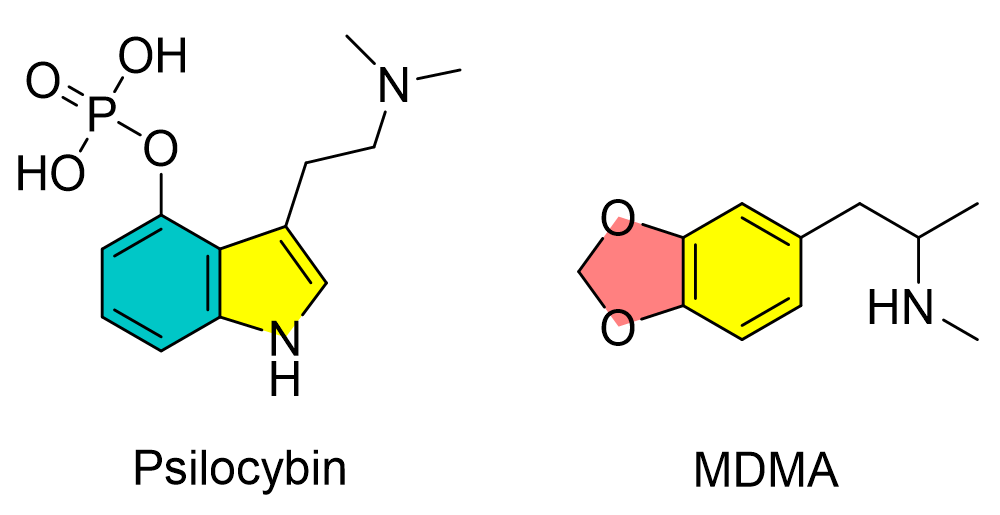
Pavel Balabanov, Director of the EMA Office for Neurological and Psychiatric Disorders Treatment, recently stated that an estimated 1.2 million people in Europe suffer from mental illnesses, but developing new therapies is challenging due to the "pathological complexity" of these conditions. Meanwhile, Balabanov has maintained a more open attitude towards psychedelic medicines.Balabanov said at a recent news conference that the failure rate in the treatment of mental illnesses is high due to the challenges of developing drugs that can effectively cross the blood-brain barrier and the complexity of designing clinical trials for these drugs. As a regulator, the EMA is trying to stimulate and support innovation, including "psychedelic drugs," which have seen increased development efforts in the United States.Figure 1. Chemical structures of Psilocybin and MDMAPsychedelic therapies, such as psilocybin found in so-called magic mushrooms, and MDMA (3,4-Methylenedioxymethamphetamine), a component of the party drug commonly known as ecstasy, have begun to emerge as potential treatments for psychiatric disorders in the United States (Figure 1). Balabanov emphasized the exciting changes in the field of psychedelic research and stated that the EMA not only welcomes regulatory agencies from around the world but also encourages patients and scientists to work together to find solutions to the most pressing issues in "psychedelic therapy" research.$14.6 Billion: The Major Deal in the CNS Field to Kick Off the Year
Although the development of therapies for central nervous system diseases has been proven to be "a long and arduous journey" by numerous ambitious yet unfulfilled projects, developers dedicated to this field continue to forge ahead.At the beginning of the New Year,Johnson & Johnson's $14.6 Billion Acquisition of Intra-Cellular Sets a "High Note" for Pharmaceutical M&A Deals in 2025, with the Core Asset Behind the Deal Being Caplyta (lumateperone), a Drug for Treating Schizophrenia and Bipolar Depression (a manifestation of bipolar disorder).Caplyta is an oral medication taken once daily that selectively and simultaneously modulates serotonin, dopamine, and glutamate. It was approved in 2019 for the treatment of schizophrenia and is currently under development for major depressive disorder (MDD). Johnson & Johnson has high expectations for this drug, predicting its peak sales to exceed $5 billion. Caplyta's sales reached $462 million in 2023, with an estimated $665 million to $685 million in sales projected for 2024.Johnson & Johnson is also confident about the prospects of Caplyta's label expansion. If Caplyta can conquer major depressive disorder, its commercial territory will be significantly expanded.Johnson & Johnson stated that if Caplyta is approved for the treatment of major depressive disorder, it will become the first drug in 15 years to be used simultaneously for treating both major depressive disorder and bipolar depression.Intra-Cellular is currently undergoing an SNDA application, having submitted Caplyta for adjunctive treatment of major depressive disorder to the FDA. The PDUFA date for this application is October 2025.In addition, Caplyta is currently in Phase III clinical trials for bipolar mania (another manifestation of bipolar disorder) and has already generated Phase III efficacy data for the prevention of schizophrenia recurrence.Johnson & Johnson believes that Caplyta has the potential to become the treatment standard for "the most common form of depression."In addition to the above-mentionedCaplytaIn addition, Johnson & Johnson's acquisition of Intra-Cellular also includes a number of pipeline assets for central nervous system diseases, including Phase II candidate drugs.ITI-1284This drug is being studied for generalized anxiety disorder as well as psychosis and agitation associated with Alzheimer's disease, and can be used as monotherapy or adjunctive therapy.Johnson & Johnson Spent a Huge Sum to Acquire Caplyta for $14.6 Billion, Nearly Three Times the Record of Pharmaceutical M&A Transactions in 2024, Namely Vertex's $4.9 Billion Acquisition of Alpine Immune (Excluding Novo Holdings' Acquisition of Catalent). This Deal Represents a 39% Premium Over Intra-Cellular's Closing Price on January 10.Interestingly, the previous acquisition of a similar scale — BMS’s $14 billion purchase of Karuna on December 2023 — was also driven by neuroscience assets. Karuna's Cobenfy bore fruit in September 2024 when it received FDA approval for the treatment of schizophrenia, marking a milestone in schizophrenia therapy with a novel mechanism and promising substantial returns on BMS’s investment. Cobenfy is also being developed for a range of new indications, including Alzheimer’s disease.Interestingly, Caplyta was originally licensed by BMS to Intra-Cellular in 2005, and after all these years, it has become a competitor for Johnson & Johnson's acquired asset, Cobenfy. In other words,BMS Sold a Potential Blockbuster to a Rival and Spent Heavily to Acquire Another, with These Two Blockbusters Now Directly Clashing in the Schizophrenia Field and Likely to Engage in Fierce Competition Across Many Other Areas in the Future.The pharmaceutical industry seems to never lack themes of "losing at one end but gaining at the other" and "a blessing in disguise."Even though the $8.7 billion acquisition of Cerevel by AbbVie, which resulted in a potential $3.5 billion loss, serves as a cautionary tale, the core of Johnson & Johnson's acquisition of Caplyta is an already marketed product, making the risk-benefit assessment more accurate and risk control more effective. More importantly, Caplyta fits perfectly with Johnson & Johnson’s existing neuroscience portfolio and aligns with the company's long-term development strategy.Although Caplyta's key patent in the U.S. is set to expire in 2034, Intra-Cellular announced on January 10 that it had reached a patent settlement agreement with Sandoz.It is possible to extend its market exclusivity period.The agreement allows Sandoz to launch its generic version in the market on July 1, 2040. However, to solidify the extended patent protection, agreements with six other ANDA applicants (Alkem, Aurobindo, Dr. Reddy's, MSN Laboratories, Hetero Drugs, and Zydus) are required. The long-term foresight demonstrated by this advance preparation is sufficient proof of the developer's optimism about the drug’s prospects.Half is seawater, half is flame
Bright Prospects for CNS Field Under New Technology
Therapy Development for Central Nervous System Diseases Exhibits Unique Attributes in Today's Pharmaceutical Field. On one hand, the field faces a significant unmet need, with patient populations and indications constantly evolving; on the other hand, the unique challenges of clinical research have resulted in a therapy development pace that lags far behind patient demand, leading to numerous high-profile failures. Nevertheless, the development of therapies for central nervous system diseases remains in a state of poised anticipation. With the approval and market entry of new mechanism therapies like Cobenfy, their catalytic impact on the entire CNS therapy landscape will gradually become evident.With the advancement of science and technology, especially breakthroughs in genomics, neuroscience, and precision medicine, the prospects for the development of CNS disease therapies are becoming increasingly promising.In recent years, innovative drugs and treatment methods, such as targeted therapy, gene therapy, stem cell therapy, and neuromodulation technology, are providing new hope for treating diseases like Alzheimer's disease, Parkinson's disease, depression, and schizophrenia. In addition, research on neuroinflammation, neuroprotection, and neuroregeneration is gradually becoming a hotspot, offering new directions for developing more effective therapies.Despite the current challenges, such as the difficulty of drugs crossing the blood-brain barrier and individual variations in treatment efficacy, with a deeper understanding of the complex mechanisms of the central nervous system and continuous innovation in technological platforms, the future treatment of CNS diseases will become more precise and personalized, bringing greater clinical outcomes and patient well-being. It is hoped that the development of CNS therapies will eventually reach the tranquil stage of "If one does not return, it is by choice; who else would vie for the serene beauty of the five lakes?"1.McCutcheon, R. A. et al. Cognitive impairment in schizophrenia: aetiology, pathophysiology, and treatment. Molecular Psychiatry volume 28, pages1902–1918 (2023)2.Boehringer Ingelheim and Sosei Heptares join forces to develop first-in-class treatments targeting all symptoms of schizophrenia. BI Press Release. 11. 03. 2024.3.Bell, J. AbbVie’s $9B bet collapses as closely watched schizophrenia drug fails studies. Biopharma dive. 11. 11. 2024.4.Feuerstein, A. FDA approves schizophrenia drug that could alter how disorder is treated. STAT. 26. 09. 2024.5.McConaghie, A. Boehringer’s Three Shots At Schizophrenia Miss The Target. Scrip. 17. 01. 2025.6.Slawther, E. EMA Pushes For Industry Collaboration On Psychiatric And Psychedelic Drug Innovations. Pink Sheet. 17. 01. 2025.7.Haas, J. J&J To Buy Intra-Cellular, Psychiatric Drug Caplyta For $14.6bn. Scrip. 13. 01. 2025.8.Intra-Cellular Therapies, Inc. Receives Exclusive License for Central Nervous System Compounds from Bristol-Myers Squibb Company. Intra-Cellular Press Release. 01. 06. 2005.Bachelor's and Master's degrees from Nankai University, Ph.D. from Bielefeld University in Germany. Expert in peptide chemistry, GMP production of peptide APIs, and Chief Scientist at a European pharmaceutical company;
Holding a Lean Six Sigma Black Belt certification;
Authored the monograph *Side Reactions in Peptide Synthesis*.
*Disclaimer: This article only introduces the research progress in the pharmaceutical and medical field, provides a brief overview of the research, or shares pharmaceutical-related information. It does not recommend any treatment or diagnostic plans, nor does it constitute any advice on related investments.If there are any omissions in the content, please feel free to communicate and point them out!