Founded in 1995, Hansoh Pharma has almost accompanied the entire development of China's modern biopharmaceutical industry. From the 1990s to the early 21st century, it started by being the first to imitate generic drugs, establishing a leading position in multiple therapeutic fields. Subsequently, it gradually transitioned to a phase of combining imitation with innovation, especially in the antibody-drug conjugate (ADC) field. Hansoh Pharma accelerated its transformation through comprehensive independent innovation and achieved a turning point in profitability driven by BD transactions. In just a few years, it has become a strong force in the ADC drug field in China and even globally. This article briefly outlines its ADC drug R&D pipeline.In January 2024, Hansoh Pharma registered a CDH17 ADC drug on the CDE Drug Clinical Trial Registration and Information Disclosure Platform website.HS-20110, initiating a Phase I clinical trial (CTR20250100) in patients with various advanced solid tumors.This is also the fifth ADC drug clinical trial initiated by the company.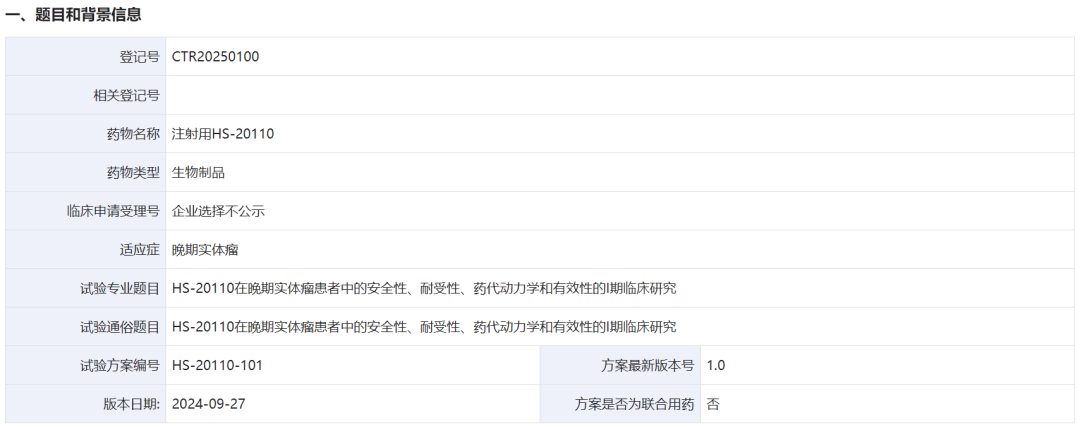 Source:Drug Clinical Trial Registry and Information Disclosure Platform (CDE Official Website)
Looking back at August 20, 2023, more than a year ago, Hansoh PharmaAn upfront payment of $85 million and is eligible to receive up to $1.485 billion in success-based milestone payments., partnered with GSK on the B7-H4 ADC new drugHS-20089, reaching an exclusive licensing agreement outside of Greater China.On December 20, 2023, a few months later, Hansoh Pharma once again$185 million upfront payment, with the potential to receive up to $1.525 billion in success milestone payments, Collaborating with GSK on the B7-H3 ADC New DrugHS-20093, once again reaching an exclusive licensing agreement outside of Greater China.Two transactionsContinuous trading has propelled Hansoh Pharma to become one of the most focused companies in China's ADC field. Currently, Hansoh Pharma’s B7-H3 ADC has rapidly advanced to Phase III clinical trials, and its B7-H4 ADC has progressed to Phase II clinical trials.At the same time, based on the preliminary success of the two projects, Hansoh seems to have obtained a certain winning formula. The upgrading development of new toxins based on semi-mature targets, as well as the concentrated breakthrough of family-based targets, has currently...Five ADC drugs have entered clinical trials, while several other ADCs are still in the preclinical stage.Hansoh Pharma ADC Drug R&D Pipeline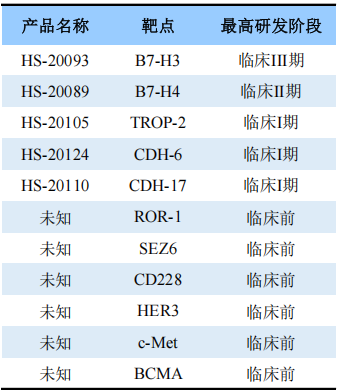
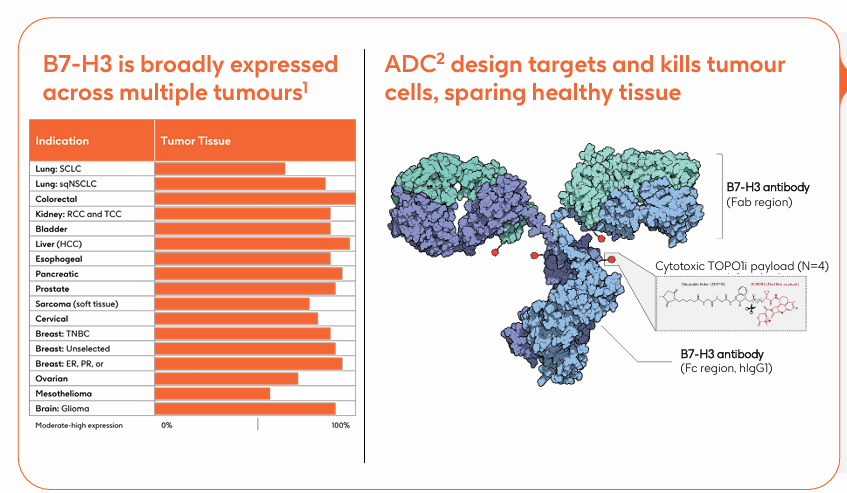
Source: CDE official website, patent summaryHS-20093The structure of Hansoh Pharma's HS-20093 is quite similar to Daiichi Sankyo's B7-H3 ADC drug DS-7300a (Ifinatamab deruxtecan, I-DXd). HS-20093 utilizes the same GGFG linker and employs a topoisomerase inhibitor toxin, SHR-9265, developed by Hansoh. A cyclopropyl group is introduced at the α position of the DXd amide to form a proprietary toxin. Both have a DAR value of 4.
 Source: GSK Official Website
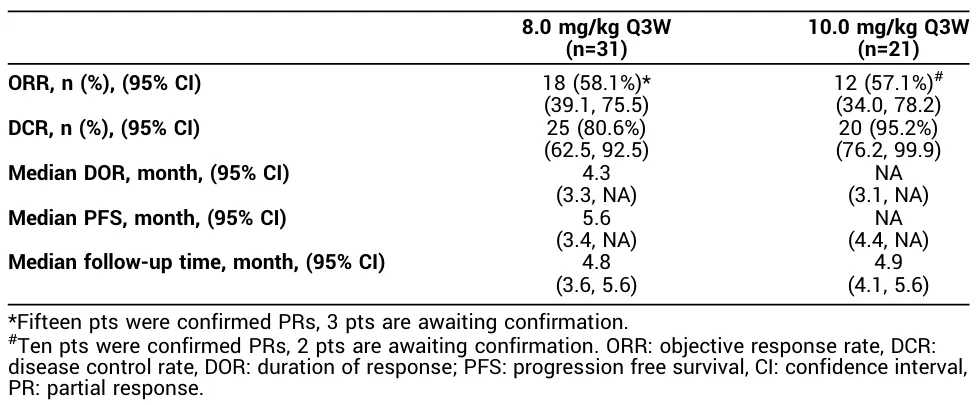
During the 2024 ASCO, Hansoh Pharma announced the latest clinical data of HS-20093 in small cell lung cancer from the ARTEMIS-001 study, which includes dose escalation (Ia) and dose expansion (Ib) phases. In the dose escalation phase, patients received HS-20093 treatment every 3 weeks at doses ranging from 1.0 to 16.0 mg/kg.As of November 30, 2023, a total of 56 patients with extensive-stage SCLC were enrolled and received HS-20093 treatment at doses of 8.0mg/kg (n=31) or 10.0mg/kg (n=25). The median number of prior treatment lines was 2.0. All patients had received platinum plus etoposide treatment, and 73.2% of the patients had undergone immunotherapy.HS-20093 ARTEMIS-001 Study Results
 Source: ASCO 2024
Among 56 patients, 52 were evaluable for efficacy (8.0mg/kg: 31 patients; 10.0mg/kg: 21 patients), with comparable response rates at 58.1% and 57.1%, respectively. The median overall survival has not yet been reached. The safety profile was consistent with previous reports. The most common grade 3 (≥10%) treatment-related adverse events were neutropenia, leukopenia, lymphopenia, thrombocytopenia, and anemia.
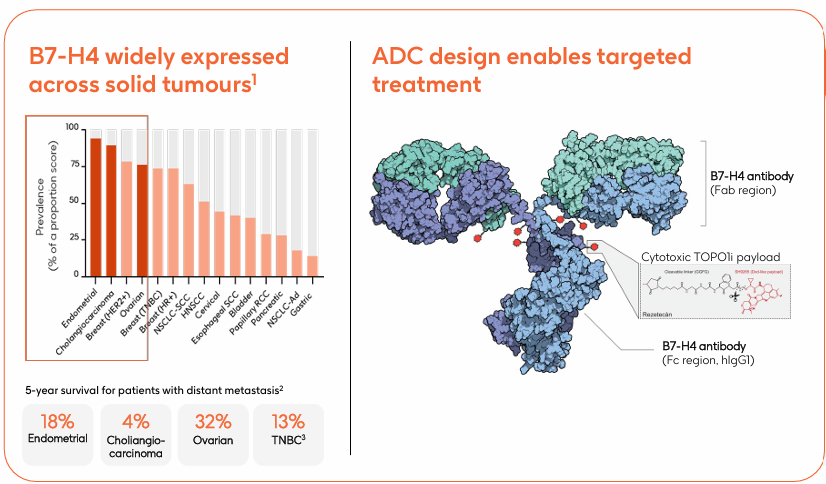
Based on the results of efficacy and safety, Hansoh Pharma almost launched the B7-H3 ADC at the same time as Daiichi Sankyo.Phase III Clinical Trials in Small Cell Lung Cancer, and selectedDifferentiated 8mg/kg Q3W DosingConducting trials, relevant clinical outcomes are worth expecting.HS-20089It is an ADC drug targeting B7-H4, adopting the same design as HS-20093, with SHR-9265 as the payload and a protease-cleavable linker. The DAR value is approximately 6.HS-20089 Structure
 Source: GSK Official Website
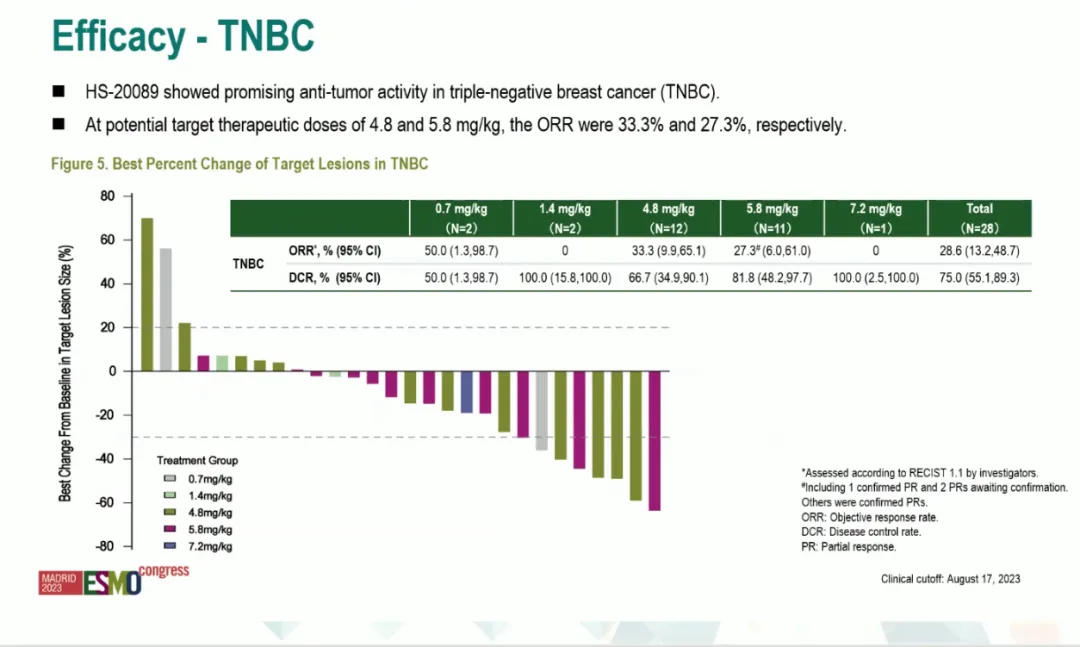
At the 2023 ESMO conference, HS-20089 (B7-H4 ADC) showed results in a multicenter, open-label Phase I first-in-human study: among 28 evaluable patients with triple-negative breast cancer, the objective response rate was 28.6%, and the disease control rate was 75.0%. At potential target therapeutic doses (4.8 and 5.8 mg/kg), the objective response rates among 23 patients with triple-negative breast cancer were 33.3% and 27.3%, respectively.Early Clinical Study Results of HS-20089
 Source: EMSO 2023
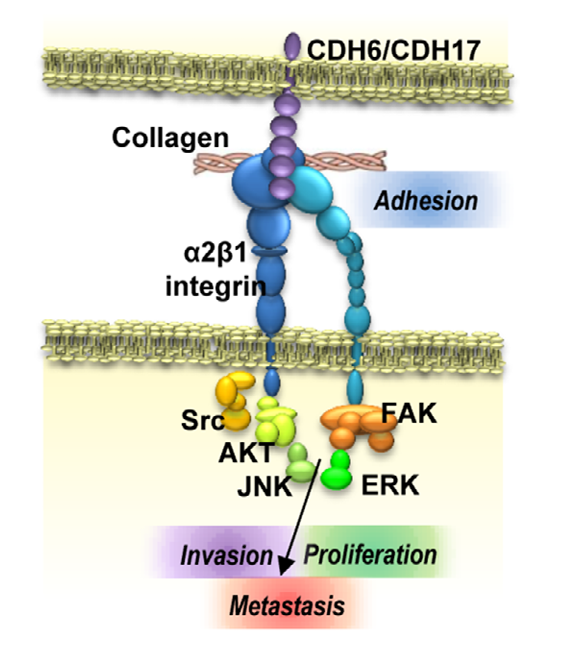
Currently, HS-20089 is taking the lead inRecurrent or Metastatic Ovarian Cancer and Endometrial CancerInitiation of Phase II Clinical Study in Patients, Along with PD-L1 AntibodyAdebrelimabThe clinical trials of combination therapy with a variety of drugs, including [drug names], have been initiated, and breakthroughs are expected in gynecological cancers and lung cancer in the future.TROP-2 ADC DrugHS-20105As the third ADC drug from Hansoh to enter the clinical stage, patent information suggests it may be the first to utilize a self-developed linker conjugated with the topoisomerase inhibitor toxin SHR-9265. In 2023, a Phase I/II clinical exploration was initiated involving 402 patients with advanced solid tumors, though no further data has been disclosed. Based on the current research and development landscape for this target, Hansoh has strategically chosen not to prioritize the development of this drug at this time.Instead, based on the concentrated breakthroughs in the B7 family targets mentioned above, Hansoh Pharma has rapidly laid out its strategy.CDH6AndCDH17Two-target drug development, both have just entered clinical trials and have the potential to enter the first-tier R&D camp in the future.CDH6/CDH17 are classical cadherins, localized to the basolateral membrane of epithelial cells and mediating calcium-dependent cell-cell adhesion. Overexpression of CDH6/CDH17 is associated with tumor growth and proliferation and can participate in cell-cell adhesion, organ development, and epithelial-mesenchymal transition.The Relationship Between CHD7/CDH17 and Tumorigenesis
 Source: 10.1002/1878-0261.12947
According to the relevant patents previously disclosed,HS-20124The toxin still uses the topoisomerase inhibitor toxin SHR-9265, and like TROP-2 ADC, it employs a proprietary linker optimized on the GGFG base to enhance hydrophilicity.In addition, patent searches show that Hansoh has also made arrangements in the preclinical stage.ROR1AndSEZ6Two targets. Regarding ROR1, Merck and CStone Pharmaceuticals have already achieved positive data in hematological tumors and solid tumors. Regarding SEZ6, ABBVIE has obtained positive data in small cell lung cancer. Based on its differentiated next-generation ADC platform, Hansoh Pharma shows promising prospects under these confirmed clinical outcomes and has the potential to join the top-tier R&D camp.The next generation of ADC drugs, driven by Daiichi Sankyo, has掀起a global wave. Hansoh Pharma, as a traditional pharmaceutical company, with its keen business acumen and scientific target layout, has quickly entered the first-tier R&D camp for certain targets. While securing BD deals, it continues to iterate its platform.At the same time, Hansoh Pharma is continuing to expand drug development for semi-mature targets and making concentrated breakthroughs in family-related targets. Based on external conditions, it strategically adjusts R&D priorities, reducing competitive threats to a certain extent while ensuring the success rate of drugs. Overall, Hansoh Pharma's development of ADC drugs can be described as a strong entry, and more product developments are expected in the future.*Disclaimer: This article only introduces the research progress in the pharmaceutical and disease fields, briefly describes the research overview, or shares pharmaceutical-related information. It does not recommend any treatment or diagnostic plans, nor does it constitute any advice on related investments.If there are any omissions in the content, please feel free to communicate and point them out!