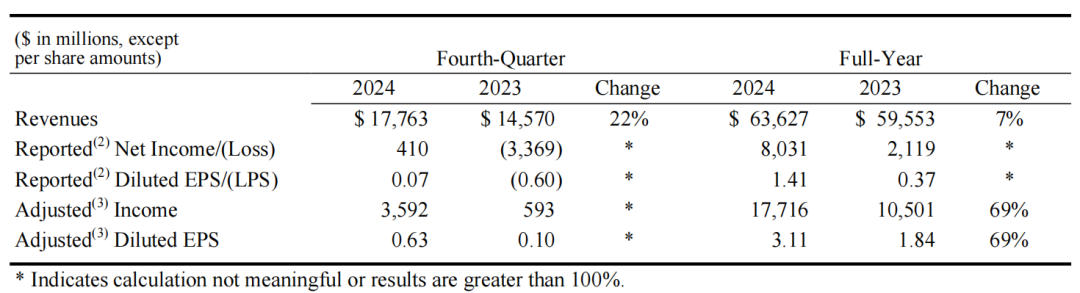
On February 4, Pfizer announced its 2024 financial results. The total annual revenue reached 63.627 billion US dollars, increasing by 7% year-on-year. Excluding the impact of the COVID-19 oral drug Paxlovid and the COVID-19 vaccine Comirnaty, the revenue growth was 12%. The revenue in the fourth quarter was 17.763 billion US dollars, increasing by 21% year-on-year.
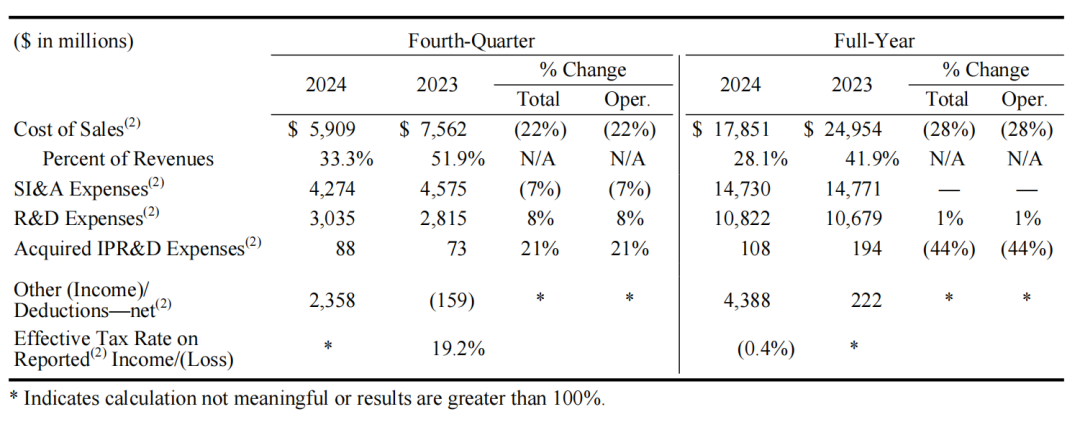
Over the past three years, affected by fluctuations in the sales of COVID-19 products, Pfizer's total revenue fell from $100.3 billion in 2022 to $58.5 billion (-41%) in 2023. Last year, it rebounded from the bottom, returning to positive growth. The total R&D investment for 2024 was $10.822 billion, a year-on-year increase of 1%. Based on its current financial situation, Pfizer reiterated its financial guidance for 2025, and the company will cut another $500 million in costs to further reduce the financial burden.Pfizer's previous heavy investment in product portfolio acquisition in2024Annual income performance is as follows.116Billion-dollar acquisitionBiohavenCompanyThe migraine drug Rimegepant (Nurtec ODT/Vydura), in2024Annual Contribution12.63Billion-dollar revenue, achieving strongGrowth (+36%), when taken orallyCGRPThe market share of such drugs is approximately49%。Pfizer’s multiple ADC products acquired through the $43 billion purchase of Seagen at the end of 2023 contributed over $3.2 billion in revenue in 2024. Among them, Padcev (enfortumab vedotin), an Nectin-4 ADC drug, generated $1.588 billion in revenue; Adcetris (brentuximab vedotin), a CD30 ADC drug, reached $1.089 billion in revenue; Tukysa (tucatinib), a HER2 ADC drug, brought in $480 million; and Tivdak, a tissue factor (TF) ADC drug, achieved $131 million in revenue.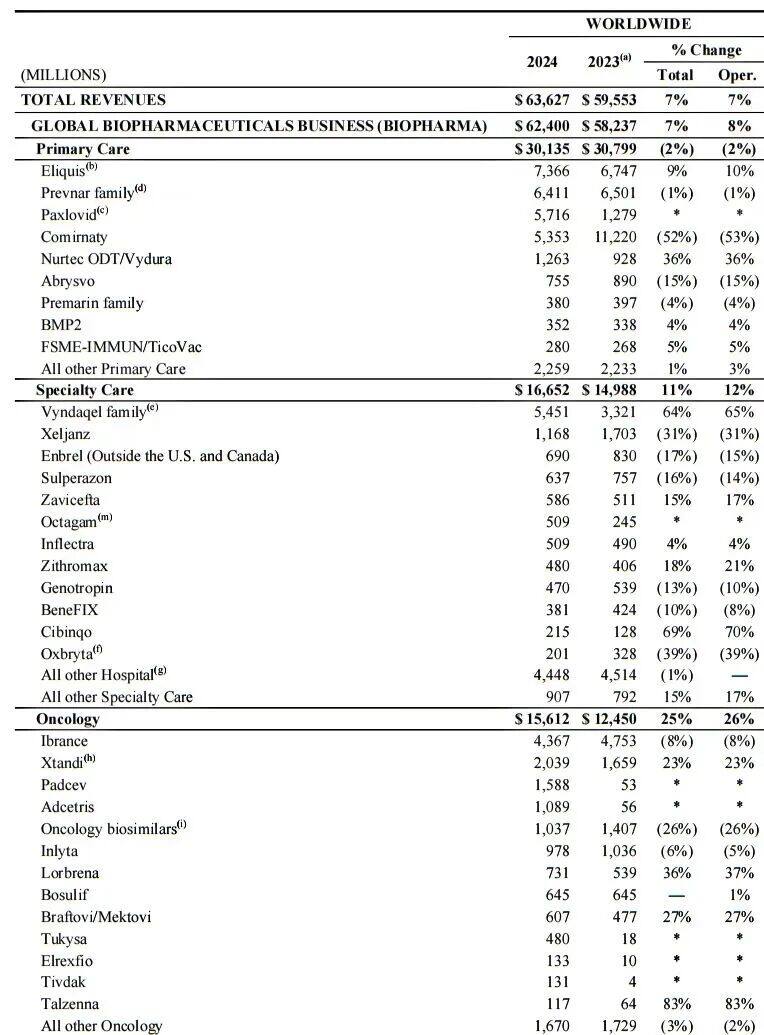
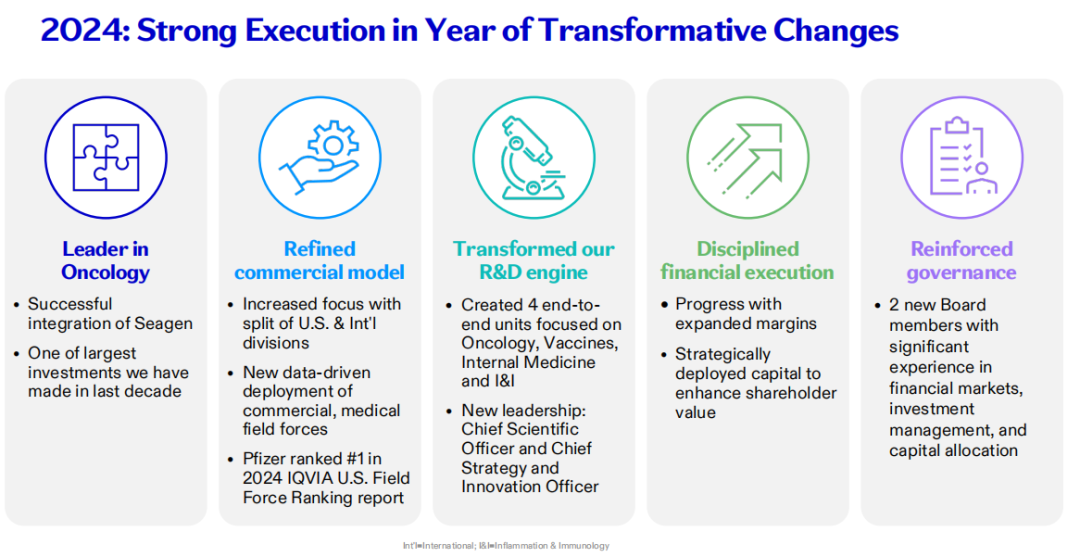
Apixaban (Eliquis), an anticoagulant, achieved annual sales of $7.366 billion, representing a 9% year-over-year increase, and continues to hold a significant position in the anticoagulant drug market. The product's revenue growth may have been partially driven by increased market share for the non-valvular atrial fibrillation indication in certain markets within the United States and Europe, which somewhat offset the impact of generic competition. The revenue growth rate showed a slight improvement compared to 2023 (+4%).Sales of the Prevnar family pneumococcal vaccines (Prevnar 20 & 13) were $6.411 billion, a year-on-year decrease of 1%. Sales of rare disease chlorbenzamide drugs (Vyndaqel, Vyndamax, Vynmac) were $5.451 billion, a year-on-year increase of 64%, mainly driven by strong market demand in the United States and internationally developed countries. These products provided strong growth momentum for Pfizer's performance in 2024.Two COVID-19 products — Paxlovid and Comirnaty — still brought Pfizer over $11 billion in sales, with revenue from the Comirnaty vaccine decreasing by 53% year-over-year. The RSV vaccine Abrysvo generated only $755 million in revenue, marking a 15% decrease year-over-year. Although Abrysvo has gradually received expanded regulatory approvals that help increase vaccination rates, the U.S. Centers for Disease Control and Prevention (CDC) Advisory Committee recommended narrowing the scope of RSV vaccination in June 2024, which has had a certain impact.AbrysvoSales volume.In 2024, Pfizer's oncology business generated revenue of $15.612 billion, a year-on-year increase of 25%. Among them, the PARP inhibitor TalzennaSales growth is rapid, year-on-year increase83%, Revenue Generation1.17Billion dollars. Androgen receptor signaling inhibitorXtandi(Enzalutamide) Revenue Increased Year-over-Year23%, Revenue Generation20.39Billion US dollars.CDK4/6InhibitorIbrance(Palbociclib) Sales43.67Billion USD, a year-on-year decrease8%, a slight expansion in the decline compared to last year.Overall, 2024 is a "year of transformation" for Pfizer. Pfizer has completed the acquisition and integration of Seagen, expanding its presence in the oncology treatment field and strengthening its R&D and product pipeline capabilities. The company has restructured its U.S. and international business units into four end-to-end business divisions, each focusing on oncology, vaccines, internal medicine, and inflammation and immunology.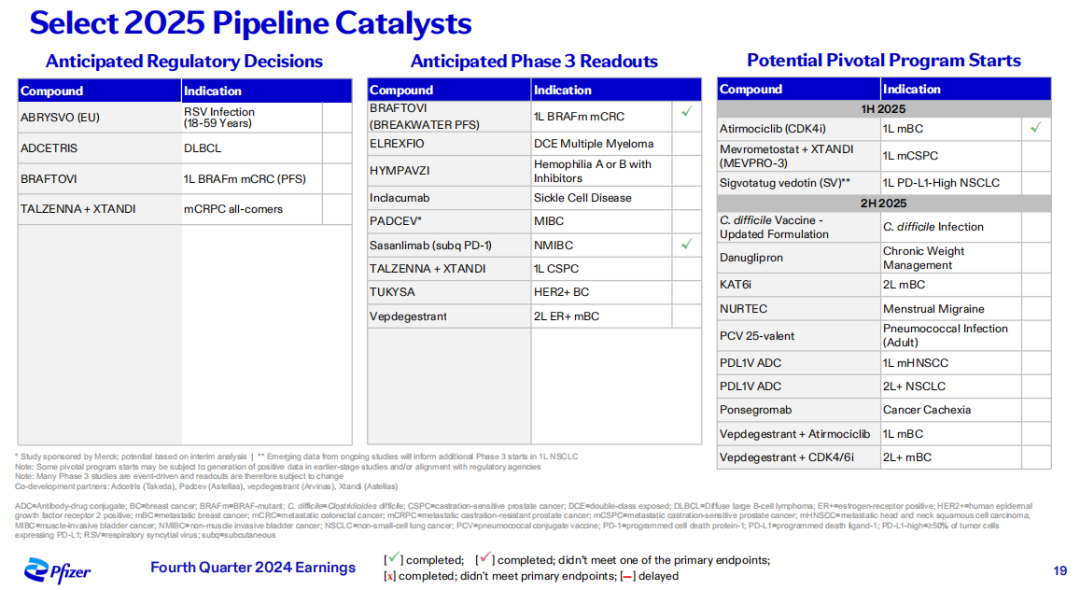 In 2025, Pfizer is expected to achieve four registration approvals, nine Phase III clinical result reads, and the launch of 13 key projects. Progress is anticipated in oncology programs such as Atirmociclib (CDK4i) and Sigvotatug vedotin (IB6). In the vaccine field, research on the PCV-25 candidate vaccine and the Clostridioides difficile vaccine candidate continues to advance. Ongoing development persists for chronic disease drugs like Danuglipron, Ponsegromab, and Ibuzatrelvir. In the inflammation and immunology area, two potential first-in-class specific tri-specific antibodies are being advanced in research.Recently, Pfizer, Inc. announced that the combination therapy consisting of Braftovi (encorafenib), cetuximab (brand name Erbitux), and the mFOLFOX6 regimen (including fluorouracil, leucovorin, and oxaliplatin) achieved positive preliminary results in the progression-free survival (PFS) analysis from the Phase III clinical trial BREAKWATER for patients with metastatic colorectal cancer (mCRC) carrying the BRAF V600E mutation; additionally, the Phase III clinical trial evaluating anti-PD-1 monoclonal antibody Sasanlimab combined with Bacillus Calmette-Guérin (BCG) induction therapy (with or without BCG maintenance therapy) for high-risk non-muscle-invasive bladder cancer (NMIBC) met its primary endpoint.
Copyright © 2025 PHARMCUBE. All Rights Reserved.
Welcome to forward, share, and reasonably cite. When citing, please clearly indicate the source of the article in a prominent position;For reprinting, please leave a message or send a message to the WeChat Official Account backend, and indicate the name and ID of the official account.
Disclaimer: The information in this WeChat article is for general reference only and should not be directly used as decision-making content. PharmaCube assumes no responsibility for any loss incurred by any party due to the use of the content herein.