Four Global Pharma Leaders Emerge from 2024 Financial Reports: Johnson & Johnson, Merck, Pfizer, and AbbVie

Johnson & Johnson
Medical Device R&D and Manufacturer

The pharmaceutical industry in 2024 is writing a new chapter amidst fierce competition and continuous innovation. As major pharmaceutical companies gradually release their financial reports, the industry landscape is becoming clearer. To select four of the most representative first-tier pharmaceutical companies, multiple dimensions must be considered, including revenue scale, profit levels, R&D investment, and product competitiveness. Now, based on publicly available financial data, let us explore the outstanding capabilities and unique advantages of these four pharmaceutical enterprises.
01 Johnson & Johnson: Diversified Business, Steady Leadership
Johnson & Johnson, as a giant in the global healthcare field, demonstrated strong capabilities and steady growth momentum in 2024. The total annual revenue reached $88.821 billion, a year-on-year increase of 4.3%; the adjusted earnings per share were $9.98, a year-on-year increase of 0.6%. The fourth-quarter sales amounted to $22.52 billion, a year-on-year increase of 5.3%, with a net profit of $3.431 billion, a year-on-year decrease of 17%, and an adjusted net profit of $4.946 billion, a year-on-year decrease of 11.1%. In the first half of the year, Johnson & Johnson's cumulative revenue was $43.83 billion, a year-on-year increase of 3.34%; the cumulative net profit was $7.941 billion, a year-on-year increase of 56.44%. Its business covers two core segments: innovative pharmaceuticals and medical technology. The annual revenue from innovative pharmaceuticals was $56.964 billion, a year-on-year increase of 4.0%, with second-quarter revenue at $14.49 billion, a year-on-year increase of 5.5%; the annual revenue from medical technology was $31.857 billion, a year-on-year increase of 4.8%, with second-quarter sales at $7.957 billion, a year-on-year increase of 2.2%. Despite certain fluctuations in revenue and net profit in the fourth quarter, the overall business maintained a stable development pace.
In terms of products, the star products under Johnson & Johnson have shone brightly. The annual revenue of Darzalex (daratumumab) reached $11.67 billion, increasing by 19.8% year-on-year; the first-quarter sales of CAR-T therapy Carvykti (cilta-cel) were $157 million, second-quarter sales were $186 million, with total first-half sales reaching $343 million, marking an 81.5% year-on-year increase. Third-quarter growth was 87.7%, with sales amounting to $286 million, including $258 million from the U.S. market, accounting for over 90% of total sales. Annual sales reached $963 million, a year-on-year increase of 92.7%, making it the fastest-growing product in Johnson & Johnson's innovative pharmaceutical business in 2024. Multiple myeloma products are Johnson & Johnson's core offerings: the CD38 monoclonal antibody DARZALEX, the BCMA/CD3 bispecific antibody TECVAYLI, the BCMA CAR-T cell therapy CARVYKTI, and the GRPC5D/CD3 bispecific antibody Talvey. These four products collectively totaled $3.199 billion in a single quarter, almost accounting for more than half of oncology drug revenues. With these products, Johnson & Johnson has become the undisputed leader in multiple myeloma treatment, with combined drug annual sales exceeding $12 billion. In the immunology field, Stelara’s total sales in Q2 2024 were $2.885 billion. Following the expiration of its core patent and the entry of biosimilars into the European market, its revenue is expected to decline. Fortunately, the next-generation IL-23 p19-targeted monoclonal antibody Tremfya has successfully taken over, generating $906 million in Q2, marking a 28.3% year-on-year increase and becoming the main driver of sales growth in Johnson & Johnson’s immunology portfolio.
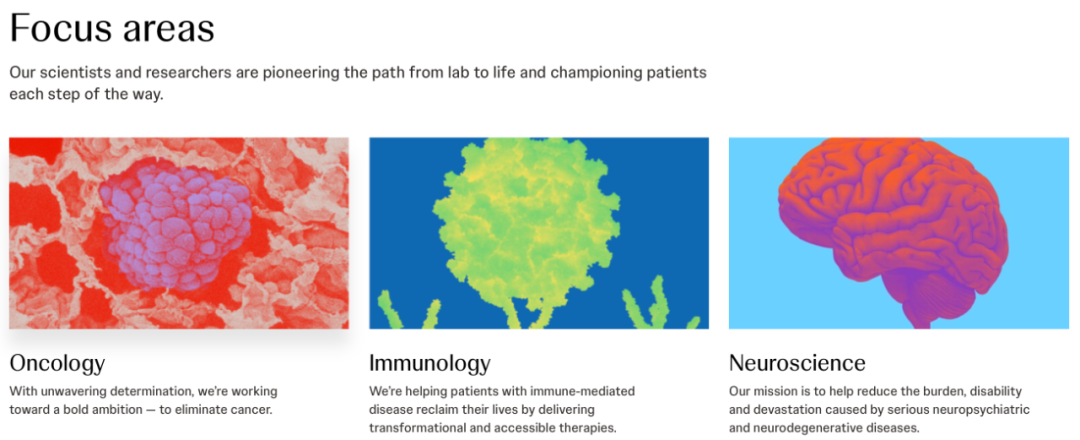
Screenshot from Johnson & Johnson's official website
Regarding future potential products, in May last year, Johnson & Johnson acquired Proteologix, a private biotechnology company focused on developing bispecific antibodies for immune-mediated diseases, for $85 million in cash. Through this acquisition, Johnson & Johnson obtained two key projects, PX128 and PX130. PX128 is a bispecific antibody targeting IL-13 and TSLP, aimed at atopic dermatitis and asthma, and is about to enter Phase 1 clinical trials. PX130 is a bispecific antibody targeting IL-13 and IL-22, also for atopic dermatitis, currently in the preclinical development stage. In addition, Johnson & Johnson acquired eight early-stage bispecific antibody projects. Shortly after, it announced the acquisition of Yellow Jersey, a subsidiary spun off from Numab Therapeutics, for $1.25 billion in cash, gaining access to NM26, a bispecific antibody targeting IL-4Rα and IL-31, which is about to enter Phase 2 clinical trials. These new products are expected to add new momentum to Johnson & Johnson's future development. As these products advance in research and development and come to market, they are expected to open up new market space for Johnson & Johnson and bring more growth opportunities.
02 MSD: K drug as the core, innovation breakthrough
Merck Also Delivered Impressive Results in 2024. Total revenue reached $64.168 billion, a year-on-year increase of 7%, with pharmaceutical business revenue at $57.400 billion, also growing by 7% year-on-year. Although R&D investment decreased by 41% year-on-year, it remained as high as $17.938 billion, staying at a relatively high level, demonstrating its continued emphasis on innovation.
Merck's star product Keytruda (Pembrolizumab), widely known as Drug K, performed particularly outstandingly in 2024. The sales in the first half of the year have reached 14.217 billion US dollars, increasing by 18% year-on-year.Total sales for the year reached $29.482 billion, increasing 18% year-on-year, accounting for approximately 46% of Merck's total annual revenue.Becoming the core driver of its performance growth, it is expected to set a sales record of $30 billion this year. The HPV vaccine (GARDASIL/GARDASIL 9), regarded as one of its flagship products, achieved total sales of $4.727 billion in the first half of the year, representing a year-on-year increase of only 7%. In the second quarter, sales reached $2.48 billion, with a year-on-year increase in the single digits. Merck stated that the main reasons for the growth of the HPV vaccine were price increases in the U.S. market, rising demand, and improvements in public sector procurement models, which led to increased sales in the U.S. market and growing demand in certain markets outside the U.S. However, compared with the same period last year, sales in the Chinese market declined due to shipment scheduling, largely offsetting the overall growth. Global first-in-class HIF-2α inhibitor Welireg achieved sales of $509 million, a year-on-year increase of 133%. New drug for pulmonary arterial hypertension, Winrevair, reached $419 million in sales within less than a year after its approval and launch in the U.S. in March 2024, demonstrating strong market potential.
Merck Continues to Explore the Path of Innovation, Future to Launch More Competitive Products with R&D Strength and Rich Product PipelineMerck continues to explore on the path of continuous innovation and will also launch more competitive products in the future by leveraging its R&D strength and rich product pipeline. It is reported that Merck is expected to introduce more than 40 new products and new indications to China in the next five years, from prevention to treatment, continuously safeguarding life and health. At the 7th China International Import Expo, Merck showcased its latest product pipeline. In addition to nearly 30 approved drugs and vaccines, it also presented multiple achievements of cooperation with local enterprises and institutions. The collaborations with Tongrun Bio, Kelun Botai, Peking University, and Zhifei Biological Products will bring more innovative treatment solutions to the Chinese market and help local innovative achievements go global. In terms of animal health, after Merck completed the acquisition of Elanco’s aquatic business, its aquaculture solutions made their debut at the CIIE. These potential new products and cooperative achievements will further enrich Merck's product portfolio, which is expected to open up new market areas in future market competition and consolidate its position in the global pharmaceuticals market.
03 Pfizer: Performance Recovery, Diversified Pipeline
Pfizer's Performance in 2024 Shines. Over the past few years, Pfizer’s performance experienced fluctuations, but it showed a clear rebound in 2024. The company reported annual revenue of $63.627 billion, representing a 7% year-on-year increase. Excluding the impact of the COVID-19 oral drug Paxlovid and the COVID-19 vaccine Comirnaty, revenue grew by 12%. In the fourth quarter, revenue reached $17.763 billion, marking a 21% year-on-year increase. For the full year, R&D investment amounted to $10.822 billion, reflecting a 1% year-on-year rise.
Pfizer has a rich and diversified product pipeline, covering multiple therapeutic areas. In the field of vaccines, Pfizer's COVID-19 vaccine has played a crucial role globally; in other therapeutic areas, it also owns numerous mature products and ongoing research projects. For instance, the anticoagulant Apixaban (Eliquis) achieved annual sales of $7.366 billion, representing a 9% year-over-year increase; the Prevnar family of pneumococcal vaccines (Prevnar 20 & 13) generated sales of $6.411 billion, marking a 1% year-over-year decrease; and the rare disease drug Transthyretin stabilizers (Vyndaqel, Vyndamax, Vynmac) reached sales of $5.451 billion, reflecting a 64% year-over-year growth.
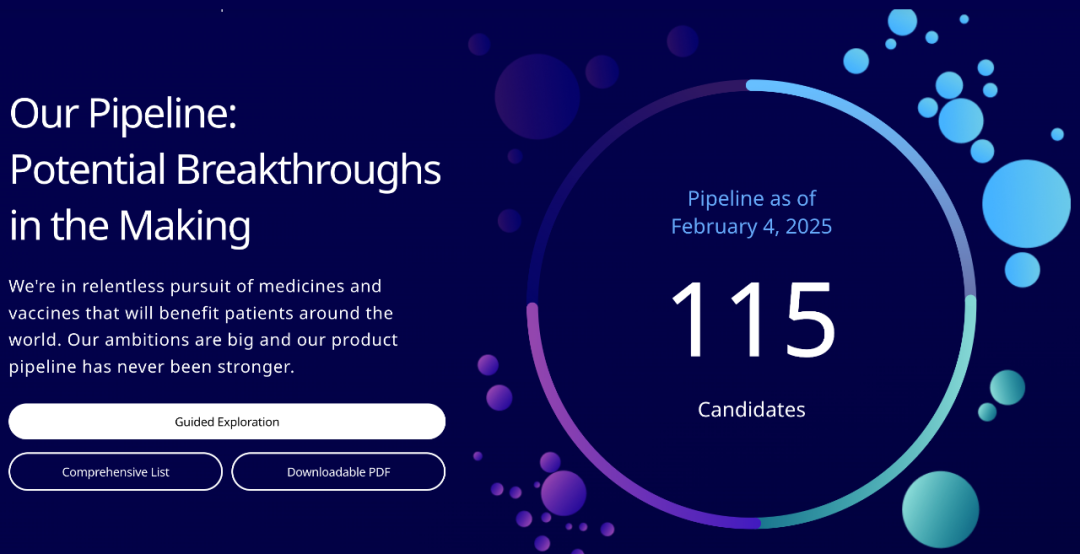
Screenshot from Pfizer's official website
In terms of future potential products, Pfizer continues to increase its investment in research and development, constantly advancing the development of new products and the optimization and upgrading of existing ones. At the 7th China International Import Expo, Pfizer showcased its achievements in scientific breakthroughs and digital innovation transformation under the theme "A New Era for Pfizer: Science Wins the Future," presenting 24 globally leading innovative products and solutions, four of which were unveiled for the first time. These include Cefnur (Aztreonam-Avibactam Sodium for Injection), the world's first β-lactam/β-lactamase inhibitor combination targeting metallo-β-lactamases (MBLs), which provides a new powerful tool to address bacterial resistance; Talazoparib Tosylate Capsules (Talzenna), a novel dual-mechanism PARP inhibitor in the field of prostate cancer, offering the potential for more effective treatment options for patients with prostate cancer; Marstacimab, a hemophilia therapy with a unique mechanism of action that transforms the traditional burden of multiple weekly intravenous infusions for patients and their families, enabling once-weekly subcutaneous administration, improving patient quality of life. Last August, China's National Medical Products Administration Center for Drug Evaluation accepted its marketing application, and in October, it was included in the pilot project of the "Patient-Centered Rare Disease Drug Development Pilot Work Plan ('Care Plan')." Additionally, there is Enadotin, a bispecific antibody targeting B-cell maturation antigen and CD3. Pfizer also introduced a digital exhibit – "3A Accelerate (Speed), Access (Availability), Associate (Connection) Full-Stage Digitalization of Patient Journey" innovative solution to enhance the efficiency and quality of medical services. Recently, Pfizer established a new R&D center in Beijing with the goal of "Triple-Speed Innovation in China." By accelerating innovative R&D, Pfizer aims to secure approval for 60 innovative drugs and new indications in China between 2021 and 2030. These efforts will inject strong momentum into Pfizer’s future development and provide new support for its performance growth. Its robust R&D capabilities and extensive market influence have solidified Pfizer’s position among top-tier pharmaceutical companies.
04 AbbVie: Outstanding in Autoimmunity, Structural Optimization
AbbVie Achieved Solid Results in 2024. The annual report shows that the total revenue for the year reached $56.334 billion, a year-on-year increase of 3.71%. By business segment, autoimmune diseases generated the highest revenue at $7.046 billion, representing a year-on-year increase of 4.8%. Despite Humira (adalimumab) experiencing a decline in sales due to biosimilar competition, Skyrizi (risankizumab) and Rinvoq (upadacitinib) showed rapid sales growth. Risankizumab generated $3.205 billion in sales, an increase of 51.5% year-on-year, while upadacitinib achieved $1.614 billion in sales, marking a 47.4% year-on-year increase, successfully offsetting part of Humira's market share. In the field of oncology, Venclexta (venetoclax) achieved $2.583 billion in sales, growing by 12.9%; Epkinly (elranatamab), a new CD3/CD20 bispecific antibody for hematological tumors, was approved by the FDA in May 2023 and generated $146 million in revenue in 2024. Elahere (mirvetuximab soravtansine), an FRα ADC drug acquired through AbbVie’s $10.1 billion acquisition of ImmunoGen, generated $479 million in revenue in 2024. In the field of neurology, Vraylar (cariprazine) for schizophrenia achieved $3.267 billion in sales throughout the year, increasing by 18.4%, while migraine drugs Ubrelvy ($1.006 billion, up 23.4%), Qulipta ($658 million, up 61.3%), and Botox ($3.283 billion, up 9.8%) maintained steady growth.
AbbVie Maintains Stable Growth in the Competitive Pharmaceutical Market by Continuously Optimizing Its Product Portfolio and Launching New Products. In recent years, AbbVie has consistently expanded its asset portfolio through acquisitions. In 2021, it acquired Neurocrine Biosciences for $30 billion, and the $8.7 billion acquisition of Cerevel, disclosed at the end of 2023, was completed in August 2024. At the end of October 2024, AbbVie further acquired Aliada for $1.4 billion in cash, gaining access to ALIA-1758, an anti-pyroglutamate amyloid-beta (3pE-Aβ) antibody used for treating Alzheimer’s disease. These new assets and products will provide more possibilities for AbbVie's future development and help it maintain a competitive edge among top pharmaceutical companies.
Summary
From the 2024 financial reports and business performance, Johnson & Johnson, Merck, Pfizer, and AbbVie have secured leading positions in the global pharmaceuticals industry by leveraging their respective strengths, making them undisputed top-tier pharmaceutical companies. Their outstanding performance in R&D innovation, product competitiveness, and market influence has not only brought substantial returns to their own enterprises but also driven the development of the entire pharmaceuticals industry. In the future, with continuous advancements in pharmaceutical technology and intensifying market competition, how these four pharmaceutical giants will sustain their leading advantages remains worth our ongoing attention.