

Johnson & Johnson's $14.6 Billion Acquisition of Intra-Cellular Therapies Secured: CNS Leader Adds Blockbuster Drug Caplyta and Robust Pipeline

Johnson & Johnson
Healthcare Product Manufacturers, Health Service Providers

Intra-Cellular Therapies
Neurological Drug Developer
The largest transaction in the past 14 months is now secured.
At the beginning of 2025, Johnson & Johnson announced that it was in negotiations to acquire Intra-Cellular Therapies, which focuses on the CNS field, for $14.6 billion. At that time, Intra-Cellular Therapies had a rapidly growing CNS drug and multiple promising R&D pipelines, with a market value close to $10 billion. Therefore, even before the deal was finalized, it had already become the most significant biotech acquisition in the past 14 months.
According to a recent filing by Johnson & Johnson with the U.S. Securities and Exchange Commission (SEC), this deal took only one month from the initial offer to its final conclusion.
Earlier, on December 13, 2024, Jennifer Taubert, Chair of Johnson & Johnson's Global Innovative Pharmaceutical Division, made an initial acquisition offer to Sharon Mates, CEO and Chair of Intra-Cellular Therapies, at $115 per share (this offer represented a 33% premium over the 30-day volume-weighted average price and a 37% premium over the closing price on December 11). However, the Intra-Cellular board rejected the offer, stating that it "significantly undervalued the company."
In the following weeks, the executive teams of both parties organized multiple rounds of negotiations. During this period, Intra-Cellular also communicated with three other potential buyers, but within less than two days, all of these buyers expressed no interest in acquiring the company.
On January 8, 2025, Johnson & Johnson raised its offer to $126.5 per share. This time, the board of Intra-Cellular Therapies still considered the offer below the expected nearly $140 per share. Eventually, Johnson & Johnson increased its bid to $132 per share and stated that this was its best and final offer.
Finally, although the finalized offer did not reach Intra-Cellular's hoped-for $140 per share, it ensured the smooth progress of the deal. At the JP Morgan Healthcare Conference in January 2025, Johnson & Johnson officially announced its plan to acquire Intra-Cellular Therapies for $14.6 billion, immediately sparking widespread market discussion.
Biotech Stars and Commercial Rising Stars
Intra-Cellular Therapies, Inc., which prompted Johnson & Johnson to increase its bid multiple times, was established in the early 21st century and focuses on developing innovative drugs for neuropsychiatric and neurodegenerative diseases. Notably, Intra-Cellular Therapies was co-founded by Nobel laureate Dr. Paul Greengard, whose groundbreaking research provided the company with a detailed understanding of intracellular signaling pathways and targets. Based on this foundation, Intra-Cellular Therapies developed the drug discovery platform CNSProfile™, and most of the company’s pipeline candidates are based on improvements from the CNSProfile™ platform.
1The Future $2 Billion Molecule
However, the most notable progress has been made with lumateperone (brand name: Caplyta), a multi-target antipsychotic drug licensed from BMS, which is the core product of Intra-Cellular Therapies.
Caplyta was approved by the FDA in December 2019 for the treatment of adults with schizophrenia. The recommended dose of Caplyta is 42mg once daily, taken with food, without the need for dose titration. Notably, Caplyta is the only FDA-approved drug that can be used as a monotherapy or as an adjunctive therapy with lithium or valproate for the treatment of depressive episodes associated with bipolar I or II disorder in adults.
Despite a black box warning (increased risk of death in elderly patients with dementia-related psychosis treated with antipsychotic drugs; thus, Caplyta is not approved for the treatment of dementia-related psychosis), Caplyta was successfully launched into the market by the end of the first quarter of 2020, which is also related to its excellent clinical outcomes.
Previously, Intra-Cellular Therapies conducted a randomized, double-blind, fixed-dose, placebo-controlled Phase III clinical trial, ITI-007-301, across 12 clinical centers in the United States, enrolling a total of 450 patients. These patients were diagnosed with schizophrenia according to DSM-5 criteria and exhibited acute exacerbation of psychotic symptoms.
In the study, patients were randomized (1:1:1) to receive Caplyta 42mg, 28mg (a non-approved dose of Caplyta), or placebo, administered once daily in the morning for 4 weeks. The pre-specified primary efficacy endpoint was the change from baseline to the end of the study (Week 4) in the centrally-rated Positive and Negative Syndrome Scale (PANSS) total score. A key secondary endpoint was the centrally-rated Clinical Global Impression-Severity of Illness Scale (CGI-S) score. Patients enrolled in the study had a mean baseline PANSS score of 89.8, indicating marked illness.
Results showed that Caplyta 42mg reached the primary endpoint, assessed by the change in PANSS total score from baseline at Week 4, demonstrating antipsychotic efficacy with a statistically significant advantage over placebo (drug-placebo difference: -4.2 points). Additionally, Caplyta 42mg also achieved a statistically significant improvement in the key secondary endpoint of CGI-S scores. The 42mg dose of Caplyta demonstrated significant antipsychotic efficacy as early as Week 1 and maintained this effect at every time point throughout the study.
The active pharmaceutical ingredient in Caplyta is lumateperone, a first-in-class small molecule that selectively and simultaneously modulates three neurotransmitter pathways involved in serious mental illnesses: serotonin, dopamine, and glutamate.
From a mechanistic perspective, lumateperone partially agonizes dopamine D1 and D2 receptors, antagonizes 5-HT2A receptors, inhibits DA and 5-HT transporters, and promotes the activation of the NR2B subunit of NMDA receptors. In vitro studies have shown that lumateperone has approximately 60 times higher affinity for 5-HT2A receptors compared to D2 receptors. Therefore, lumateperone has demonstrated therapeutic potential in various CNS diseases (such as schizophrenia, bipolar disorder, depressive disorders, and other neuropsychiatric conditions).
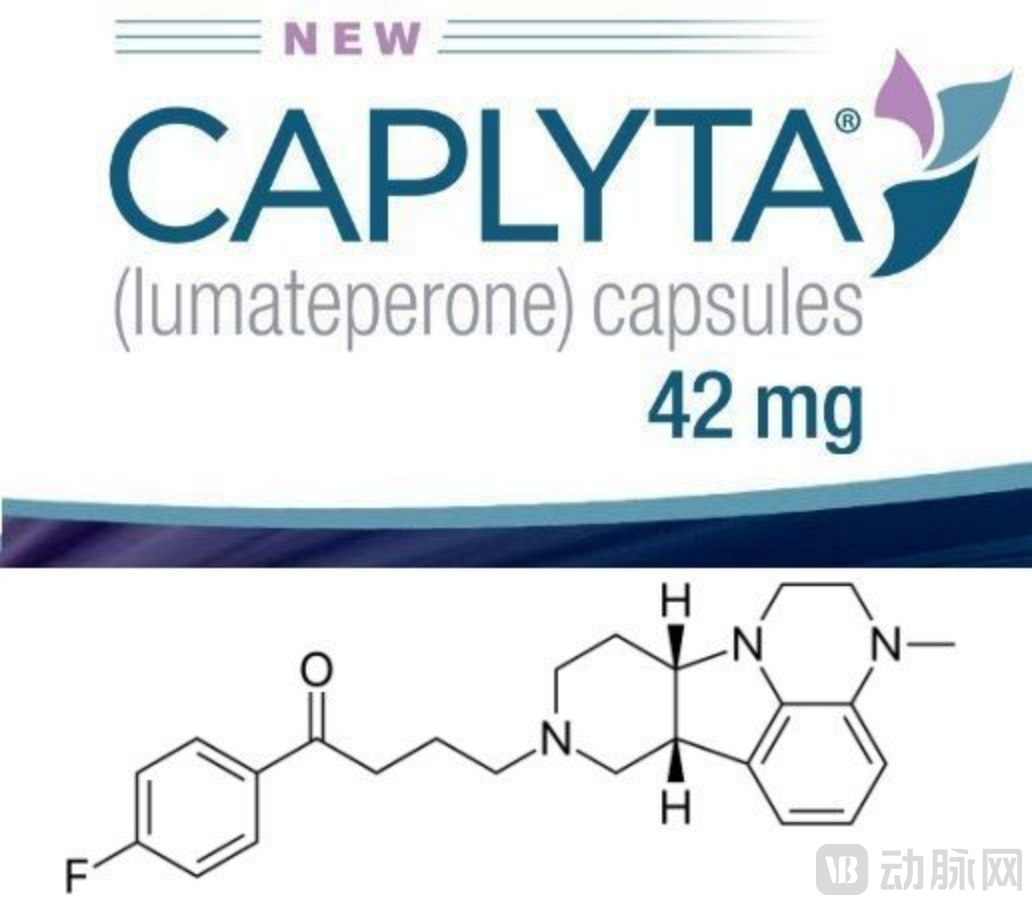
Molecular Structure of Lumateperone
Since the approval of its first drug in 2019, Intra-Cellular's stock price has continued to rise, with an increase of over 30% in the past year, showing impressive performance. In the third quarter of 2024, Caplyta's sales reached $175 million, a year-over-year increase of 39%, and are projected to reach a peak annual sales of $5 billion in the future. During the acquisition talks, Intra-Cellular also submitted an application to the FDA to expand Caplyta’s indications to include Major Depressive Disorder (MDD).
In addition, the industry is very optimistic about the prospects of Caplyta. Pharmaceutical market research firm EvaluatePharma predicts that Caplyta's sales will reach $2 billion in 2026, with half coming from schizophrenia and the other half from bipolar depression.
2Multiple R&D pipelines advancing simultaneously
In addition to Caplyta, Intra-Cellular Therapies also has a series of pipelines under research. The most notable among them is ITI-1284-ODT-SL, which is currently in Phase 2 clinical trials for generalized anxiety disorder, psychosis associated with Alzheimer's disease, and agitation in Alzheimer's disease.
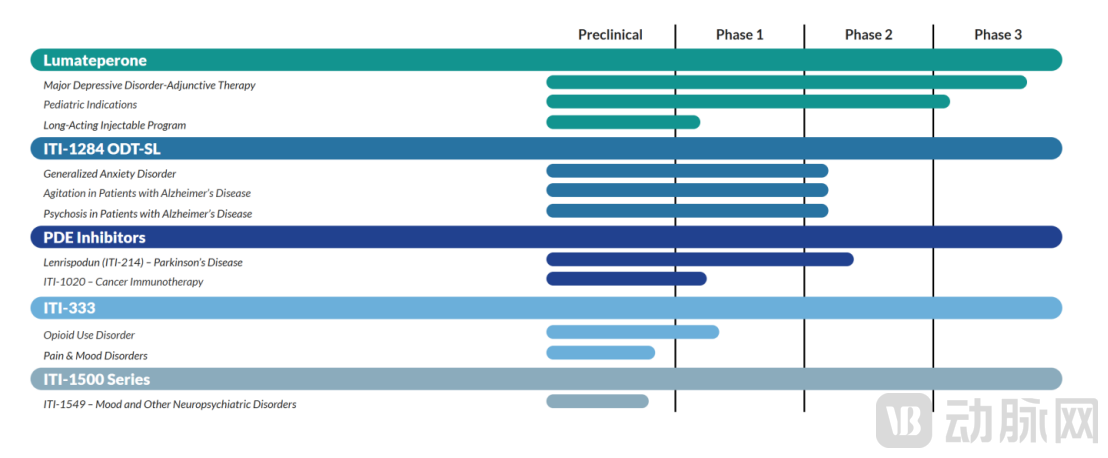
ITI-1284 is a deuterated form of lumateperone, a new molecular entity formulated as an orally disintegrating sublingual tablet. Following the completion of the Phase 1 clinical program, the company plans to develop ITI-1284 ODT-SL for the treatment of behavioral disturbances in dementia patients, dementia-related psychosis, and certain types of depression in the elderly.
ITI-1284 ODT-SL is formulated as an oral solid dosage form that dissolves almost instantly when placed under the tongue, making it easy for the elderly to use and potentially beneficial for patients who have difficulty swallowing conventional tablets. It is reported that ITI-1284 ODT-SL has reached a collaboration with Catalent for development using its proprietary Zydis® ODT (Orally Disintegrating Tablet) fast-dissolving formulation.
According to the completed Phase 1 clinical trial, ITI-1284 ODT-SL was rapidly absorbed into systemic circulation, showed metabolic stability, and achieved higher systemic exposure. The trial enrolled healthy volunteers and healthy elderly volunteers (>65 years old) to evaluate the safety, tolerability, and pharmacokinetics of ITI-1284 through single and multiple ascending doses. No serious adverse events were reported in either cohort. In the elderly population, fewer adverse events were reported, with the most common being transient mild dry mouth.
Based on these research data, the company plans to initiate a Phase 2 study evaluating ITI-1284 ODT-SL for the treatment of behavioral disturbances associated with Alzheimer's disease, dementia-related psychosis, and certain types of depression.
In addition, Intra-Cellular is advancing a series of Type I phosphodiesterase inhibitors (PDE1), including lenrispodun (ITI-214) for the treatment of Parkinson's disease and ITI-1020 for cancer immunotherapy. Furthermore, ICTI is developing ITI-333 for the treatment of opioid use disorder and pain, as well as ITI-1549, a non-hallucinogenic neuroplasticity agent for the treatment of mood disorders and anxiety.
Double Down on 70 Years of Expertise
It should be noted that FIC products in the CNS field, even at a very early stage, will attract attention. If the early data is promising, the likelihood of a deal being reached is very high.
This might explain why Caplyta, which demonstrated excellent efficacy in Phase III clinical trials, prompted Johnson & Johnson to significantly increase its investment.
Johnson & Johnson has been deeply engaged in the CNS field for nearly 70 years, with a rich product pipeline. Its core drug, Spravato, has received FDA approval as a monotherapy for major depressive disorder and achieved sales exceeding $1 billion in 2024. However, it is an acknowledged fact that CNS drug development is challenging. In Q3 of 2024, even a powerhouse like Johnson & Johnson terminated three CNS clinical research projects.
In contrast to the difficulty of R&D, the CNS field has seen a surge in transactions. According to statistics from Nature, the total cash value of M&A deals in the global CNS sector in 2023 and 2024 has surpassed that of autoimmune, making it the second-largest M&A sector after oncology.
At the same time, the industry generally believes that Johnson & Johnson's acquisition of Intra-Cellular Therapies is the largest transaction in the biotechnology industry in terms of amount in the past two years, showing that mergers and acquisitions in the healthcare industry are regaining momentum after a decline in 2024. In fact, after entering the third quarter of 2024, many multinational corporations (MNCs) have accelerated the pace of research and development of new-generation drugs and therapies, hoping to see results in the next few years. As large-scale patent cliffs threaten or have already eroded investors' expected profits, in addition to the loss of patent protection for blockbuster drugs, setbacks in some disease areas are also stimulating pharmaceutical companies to bet on new products.
For Johnson & Johnson, in addition to Caplyta, Intra-Cellular's FIC pipeline also covers areas such as depression, pain, generalized anxiety disorder, agitation and psychosis associated with Alzheimer's disease, holding immense commercial potential. This acquisition not only brings in a company with a rapidly growing commercial product but also expands its portfolio in the neuroscience field.