

Wanjie Tianyuan Secures Nearly RMB 100 Million in Series B Funding to Advance Orthopedic Minimally Invasive and Tissue Regeneration Innovations

Wanjie Medical
Orthopedic Consumables Manufacturer

Smart Medical Device Network News RecentlyBeijing Wanjie Medical Device Co., Ltd. ("Wanjie Medical") recently announced the completion of a nearly 100-million-yuan B-round financing. This round was led by a fund under Guoke Investment, with continuous investment from Yilian Capital, and MaiLin Capital serving as the exclusive financial advisor.
The funds raised will be mainly used for research and development in the fields of minimally invasive orthopedics and tissue regeneration, accelerating product commercialization, and the iterative development of mature products. To date, Wanjie Medical's cumulative financing has exceeded 200 million yuan, with a valuation surpassing 1 billion yuan.
Wanjie Medical was founded in 2006 and is committed to becoming a pioneer in the orthopedic subfield and a leader in the sports medicine field. In 2019, the company entered Beijing's top 100 science and technology innovation support list and led the development of more than 20 implantable orthopedic repair products.
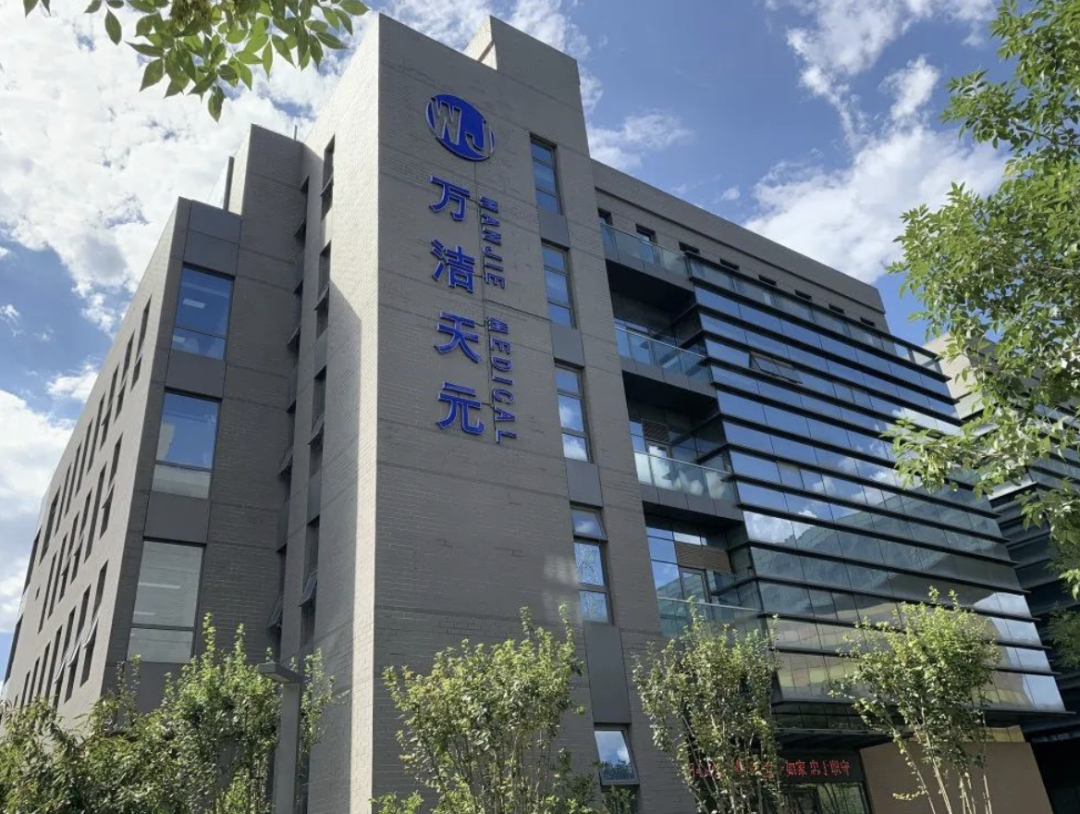
Wanjie Medical's business involves sports medicine, minimally invasive spine, joint surgery, sports rehabilitation, medical equipment, epidemic prevention and protection, etc., covering multiple fields such as sports medicine, minimally invasive spine, biomaterials, and orthopedic consumables. Products include meniscus suture systems, bone cement, anchors, 4K endoscopic systems, arthroscopes, percutaneous endoscopic discectomy systems, surgical energy systems, surgical power systems, orthopedic surgical auxiliary equipment (such as plasma preparation systems, cleaning systems, etc.), and consumables.
Its "Artificial Ligament" and "Articular Cartilage Repair Scaffold" projects have passed through the special review channel for innovative medical devices. Among them, the Articular Cartilage Repair Scaffold won the "Gold Award for Chinese Invention Patent" issued by the World Intellectual Property Organization in 2021, filling the gap in China's cartilage repair field. The "Bioactive Glass Artificial Bone" project has entered the list of the Ministry of Industry and Information Technology's biomedicine materials innovation task, contributing to China's biomedicine materials technology breakthroughs and scientific self-reliance.
Wanjie Medical's sales network covers all 32 provinces in China, reaching over 2,200 hospitals with a coverage rate of more than 80% in tertiary hospitals, and has established scientific research cooperation with multiple top medical institutions.
With the acceleration of social aging, the incidence of orthopedic diseases is also rapidly increasing. In recent years, although traditional spinal surgery has achieved better clinical outcomes, intraoperative damage to the posterior column structure of the spine and retraction of the paraspinal muscles have affected postoperative spinal stability in patients. This can easily lead to instability in adjacent segments or the formation of epidural scar tissue after surgery, resulting in the recurrence of nerve root or spinal cord compression. Consequently, patients may experience clinical symptoms such as lower back pain and radiating pain in both lower limbs, which increases the likelihood of requiring revision surgery.
Therefore, for patients with degenerative spinal diseases accompanied by bilateral neurological symptoms, the unilateral laminectomy bilateral decompression (ULBD) technique has emerged in the field of spinal surgery. This technique is mainly suitable for patients with lumbar spinal stenosis accompanied by bilateral lateral recess stenosis, with or without central canal stenosis. It effectively decompresses both the bilateral lateral recesses and the central canal through a unilateral approach, while fully preserving the posterior stabilizing structures of the lumbar spine. With advantages such as minimal trauma, delicate operation, and rapid recovery, this surgical method has gradually expanded to include degenerative diseases of the cervical and thoracic spine, becoming an important minimally invasive technique for treating degenerative spinal diseases. As surgical instruments and surgeons' skills continue to improve, ULBD technology assisted by endoscopy has been progressively utilized in treating various degenerative spinal diseases.
Wanjie Medical, as a leader in orthopedics and sports medicine and the vice-chairman unit of the China Sports Medicine Innovation Alliance, possesses an innovative R&D team led by renowned clinical experts and a doctoral and master's R&D team of "outstanding young talents." It has formed project collaborations with many doctors and experts both in China and abroad, gathering a large number of R&D talents in the fields of polymer biomaterials, tissue engineering, machinery, and automation.
Wanjie Medical has introduced dedicated equipment of international leading standards, such as machining centers, precision injection molding machines, and fiber braiding machines, and possesses Class 10,000 and Class 100,000 clean production workshops that comply with GMP requirements.
Regarding this round of financing, Ms. Zhang Mei, founder of Wanjie Medical, stated: "Against the backdrop of the current severe challenges in the medical device industry's financing environment, our company has always stayed true to its original mission and steadfastly implemented an innovation-driven development strategy. We remain focused on in-depth research in the fields of tissue repair and minimally invasive orthopedics, continuously launching groundbreaking innovative products. Throughout this process, we are especially grateful for the long-term support from our existing shareholder, Yilian Capital, and the trust placed in us by our new shareholder, Guoke Investment. Looking ahead, our company will continue to rely on its excellent R&D capabilities and innovative strength, as always, to strive for even more brilliant achievements, create greater value for shareholders, and contribute more to the development of the industry."
