Top Biotech Deals of January 2025: Major Transactions and Pipeline Highlights

Johnson & Johnson
Medical Device R&D and Manufacturer

GSK China
Pharmaceutical Manufacturer

Gilead Sciences
Innovative Drug Developer, Distributor
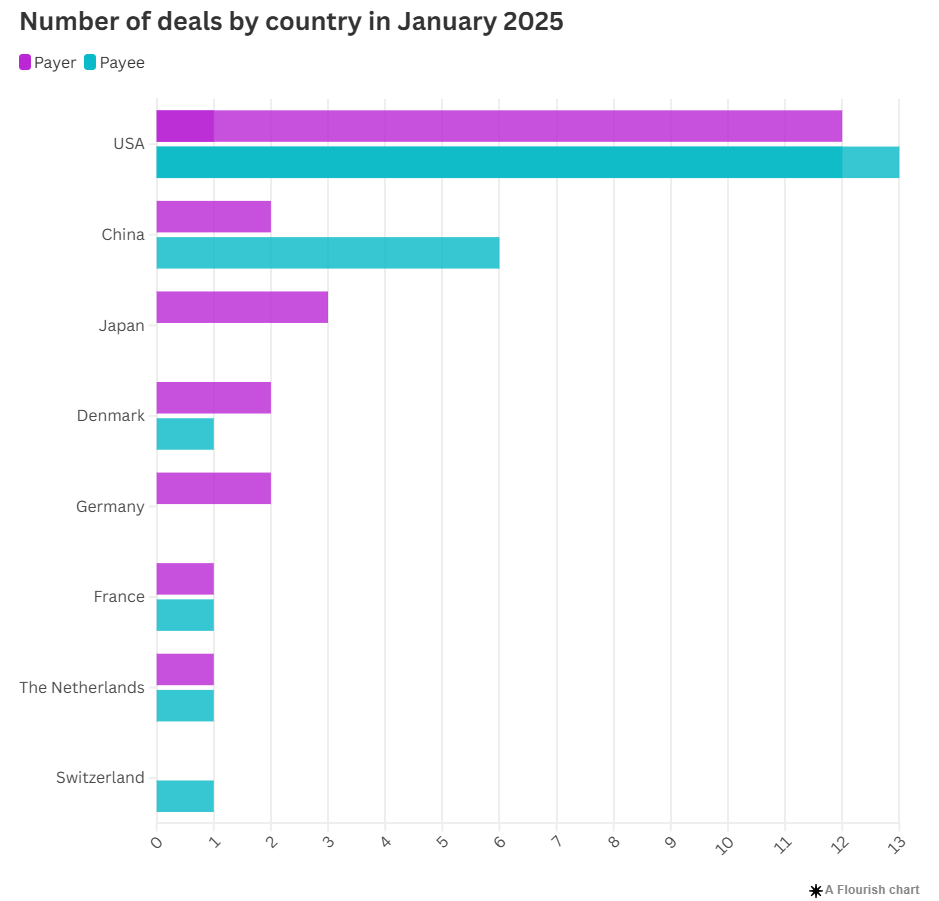
 At the beginning of 2025, the biotechnology industry has already carried out numerous deals. Companies like GSK and Eli Lilly, which frequently collaborate, are actively seeking therapeutic projects, while newly established biotech firms also shone brightly in partnerships last month. As usual, small molecule drugs, antibody-drug conjugates (ADCs), and monoclonal antibodies remain the hottest areas in the industry.
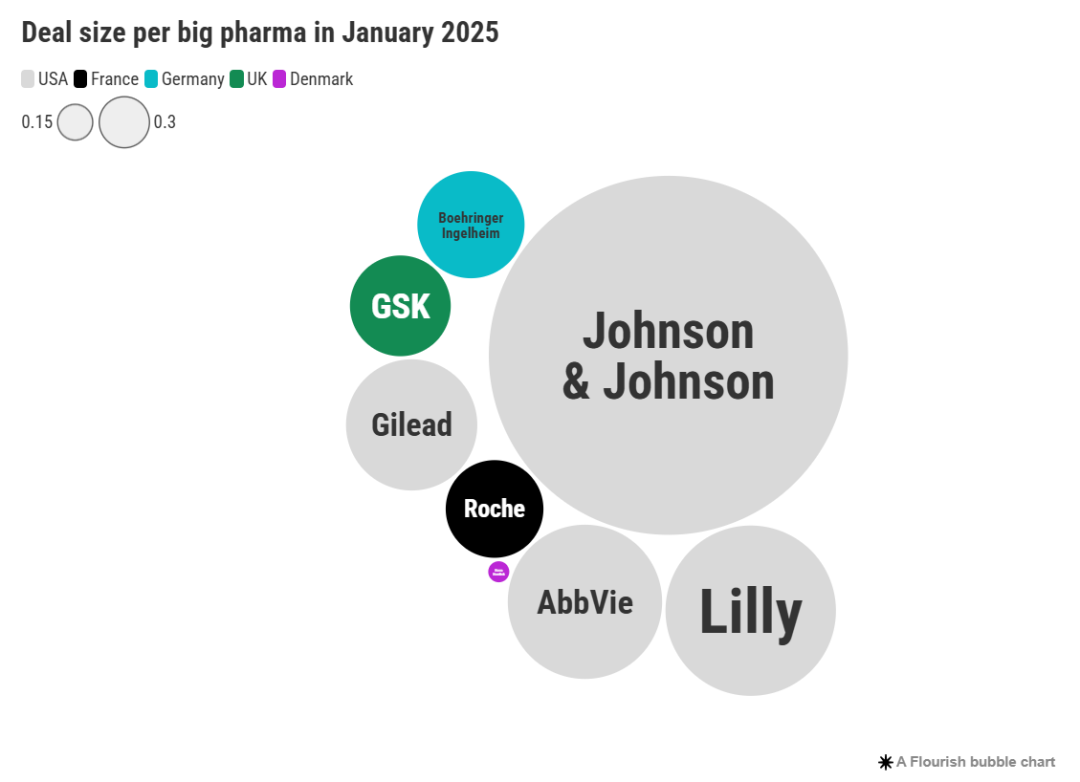
Top Biotech M&A Deals in January 2025
Johnson & Johnson, the American pharmaceutical giant, has acquired the American biotechnology company Intra-Cellular Therapies for up to $14.6 billion, drawing widespread attention. Through this deal, Johnson & Johnson has obtained the rights to Caplyta, the first and only drug approved by the U.S. Food and Drug Administration (FDA) for use as both an adjunctive and monotherapy treatment for depressive episodes in patients with bipolar I and bipolar II disorders. Additionally, Johnson & Johnson will take responsibility for the research and development of Intra-Cellular's clinical and preclinical candidates aimed at treating neurological disorders.
Eli Lilly Acquires Scorpion Therapeutics' PI3Kα Inhibitor Program for Up to $2.5 Billion in Upfront and Milestone Payments. The program primarily includes STX-478, an oral PI3Kα inhibitor taken once daily, which is currently being evaluated in Phase 1/2 clinical trials for breast cancer and other advanced solid tumors.
GSK China also made a billion-dollar acquisition last month, purchasing IDRx, a cancer treatment company. Through this deal, GSK obtained the latter’s key asset, IDRX-42, which is a KIT tyrosine kinase inhibitor used for treating gastrointestinal stromal tumors (a rare form of cancer occurring in the digestive tract).
Biotechnology Deals Classified by Technical Pathways in January 2025
Small Molecule Drugs: American giant Gilead seems to have kicked off a wave of collaborations since reaching an agreement with German company Tubulis last December to develop solid tumor drugs. Now, it has also partnered with Leo Pharma to participate in the latter’s small-molecule oral STAT6 project, which holds promise for treating patients with inflammatory diseases. According to the agreement, the Danish biotech company will receive an upfront payment of $250 million, with total payments potentially reaching up to $1.7 billion. U.S.-based 1cBio signed an agreement to acquire OC-1, a small molecule drug from Dutch company Alesta Therapeutics (expected to enter clinical trials later this year). The drug is currently undergoing GLP toxicology studies and aims to treat hypophosphatasia (a rare genetic disease affecting bone and tooth development). 1cBio will receive milestone payments, including equity investment and tiered royalties, though specific details have not been disclosed. Pharmaceutical giant Pfizer, eager to accelerate precision medicine R&D, has commissioned U.S.-based Atavistik Bio to leverage its platform to identify and validate novel allosteric modulators targeting two undisclosed cancer targets; financial terms of the deal have not been disclosed. In January 2025, French biotech company Iktos and Germany's Cube Biotech will collaborate to discover small-molecule drugs targeting the amylin receptor, which regulates appetite and satiety, making it a promising target for obesity treatment. This collaboration will combine Iktos' expertise in artificial intelligence with Cube’s protein technology; financial terms remain undisclosed. Danish multinational Novo Nordisk gained fame after launching the diabetes drug Ozempic and has now partnered with U.S.-based IMMvention Therapeutix to acquire the latter’s BACH1 inhibitor. BACH1 is considered a key regulator of cellular responses, oxidative stress, and inflammation in chronic conditions like sickle cell disease, making it a highly promising therapeutic target.
Antibody-Drug Conjugates (ADCs): The demand for ADCs is strong, with biotech companies worldwide developing these drugs for cancer treatment. Chinese biotech company Innovent Biologics has partnered with Swiss multinational Roche to advance the development of IBI3009, an ADC candidate targeting DLL3. This candidate has received Investigational New Drug (IND) clearance in Australia, China, and the United States, with the first patient dosed in December for Phase 1 studies. The collaboration aims to provide more treatment options for patients with advanced small cell lung cancer, with Innovent Biologics receiving $80 million upfront and potentially up to $1 billion in milestone payments. Another Chinese biotech company in the ADC space, DualityBio, reached an agreement in January 2025 with U.S.-based Avenzo Therapeutics, granting the latter exclusive global (excluding Greater China) development, manufacturing, and commercialization rights for AVZO-1418/DB-1418, an EGFR/HER3 ADC for solid tumors. DualityBio received a $50 million upfront payment, with potential milestone payments reaching up to $1.15 billion. Japan's Chugai Pharmaceutical and Switzerland's Araris Biotech are also targeting the ADC field. Araris will leverage its linker-conjugation platform to develop ADCs using antibodies discovered by Chugai. As part of the deal, Araris could receive approximately $780 million in milestone payments. Pharmaceutical giant Boehringer Ingelheim has partnered with Synaffix, a biotech company focused on ADC development. Using Synaffix’s licensed ADC technology, the German multinational will expand its portfolio of ADCs for cancer treatment, with Synaffix eligible to receive up to $1.3 billion in milestone payments.
Monoclonal Antibody Deals: In addition to last month's acquisition of Scorpion Therapeutics, Eli Lilly also announced a collaboration with the U.S. biotechnology company Scorpion Therapeutics. This collaboration focuses on MTX-463 (a human IgG1 antibody designed to neutralize WISP1-mediated fibrotic signaling in various debilitating diseases). The agreement will advance this candidate drug into Phase 2 clinical trials for idiopathic pulmonary fibrosis (a chronic lung disease). Mediar will receive an upfront payment and near-term milestone payments totaling $99 million, along with potential additional milestone payments of $687 million. Emerging startup Climb Bio has acquired CLYM116, an Fc-engineered anti-APRIL monoclonal antibody from Beijing MabPlex Biotechnology Co., Ltd., to expand its monoclonal antibody pipeline. This candidate drug is intended for treating IgA nephropathy (a chronic kidney disease caused by the accumulation of IgA proteins) and other B cell-mediated conditions. Climb Bio will obtain global licensing rights (excluding China) for the drug, while Beijing MabPlex will receive a $9 million upfront payment and may also earn milestone payments. Beijing MabPlex Biotechnology Co., Ltd. is not the only Chinese company focused on monoclonal antibodies; China’s Genor Biopharma Co., Ltd. and Sichuan Kelun-Biotech Biopharmaceutical Co., Ltd. have granted licensing rights outside Greater China, as well as certain Southeast Asian and West Asian countries, for their candidate drug HBM9378/SKB378 (an anti-thymic stromal lymphopoietin (TSLP) monoclonal antibody for treating immune-related diseases) to the newly established Swiss biotech company Windward Bio. These two Chinese companies could receive up to $970 million in upfront and milestone payments.
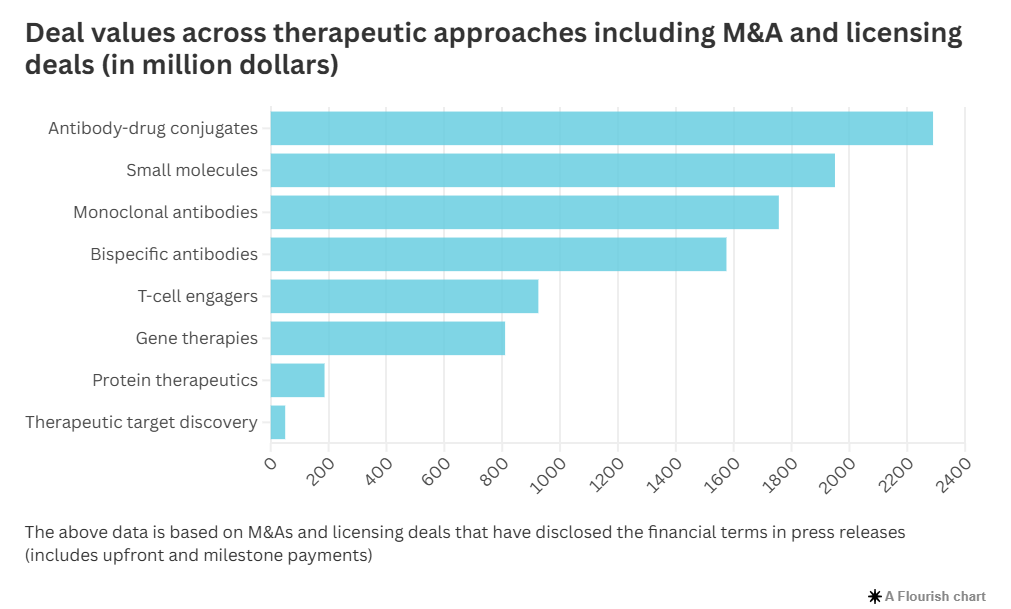
Bispecific and Trispecific Antibodies: US pharmaceutical giant AbbVie has announced that it will opt to license SIM0500, a trispecific antibody developed by Chinese biotech company Simcere Zaiming. SIM0500 is currently in Phase 1 clinical trials targeting patients with relapsed or refractory multiple myeloma, a type of bone marrow cancer. AbbVie can now develop the drug in both China and the US, with Simcere Zaiming eligible to receive up to $1.055 billion in milestone payments. Another US company eager to develop bispecific antibodies is the newly established Prolium Biosciences. It paid $520 million to Chinese biotech companies Innovent Biologics and CStone Pharmaceuticals for the development and commercialization rights to the CD20xCD3 bispecific antibody ICP-B02 (CM355), which is used to treat cancer and other indications.
Molecular Glue: AbbVie announced another collaboration agreement, this time regarding molecular glue degraders. It has reached an agreement with U.S.-based biotech company Neomorph to develop molecular glue degraders targeting multiple oncology and immunology targets, granting the latter up to $1.64 billion in option fees and milestone payments. Finnish cancer therapy developer Rappta Therapeutics has struck a deal with U.S.-based SpringWorks Therapeutics to advance the development and commercialization of Rappta’s lead asset, RPT04402, a preclinical candidate for uterine cancer. Rappta Therapeutics received a $13 million upfront payment and is eligible for additional milestone payments.
Transactions Related to Proteins, Gene Therapy, and T-Cell Engagers:The collaboration wave initiated by Candid Therapeutics last December continues, with the company recently signing a contract with China's Wuxi Biologics to license a preclinical trispecific T-cell engager discovered by Wuxi Biologics. Candid Therapeutics plans to complete the research required for an Investigational New Drug (IND) application as soon as possible and will pay Wuxi Biologics up to $925 million in upfront and milestone payments. In Japan, Nippon Shinyaku Co., Ltd. is committed to developing two gene therapy candidates licensed from U.S.-based Regenxbio. RGX-121 is for the treatment of Hunter syndrome, while RGX-111 targets Hurler syndrome, both of which are genetic disorders. Regenxbio will receive $110 million upon completion of the deal, with potential milestone payments reaching up to $700 million. Nippon Shinyaku Co., Ltd. has also secured the option and license rights in the U.S. for AB2 Bio’s recombinant interleukin-18 binding protein, aimed at treating the rare and fatal autoimmune disease hyperinflammatory syndrome. AB2 Bio could receive up to $36 million in early payments, with milestone payments potentially reaching $150 million.
Biotechnology Cooperation: Accelerating Drug Development
Novo Nordisk's second collaboration in January 2025 is with the U.S. biotech company Variant Bio, utilizing Variant's drug discovery platform to identify new targets for metabolic diseases. Variant is eligible to receive up to $50 million in upfront and milestone payments. Eli Lilly, based on the antibody discovery platform of the U.K. biotech company Alchemab Therapeutics, is committed to developing five antibodies for the treatment of the fatal neurological disease amyotrophic lateral sclerosis (ALS). The financial terms of the deal have not been disclosed.
Reference Original Text:Top biotech deals of January 2025