Weekly Medical Device Industry Highlights (March 3–9, 2026): Key Product Launches, Regulatory Updates, and Strategic Transactions

Johnson & Johnson
Medical Device R&D and Manufacturer


01
XiaomiSell IVD Giant's Shares for 330 Million
Recently, Jiuan Hong Kong and the counterparty Xiaomi Investment signed a share transfer agreement regarding the transfer of 20% equity in iHealth, a subsidiary of the company. According to the agreement, Jiuan Hong Kong will purchase Xiaomi Investment's 20% stake in iHealth for USD 45,910,455. After the completion of the equity transfer, the consolidated shareholding ratio in iHealth will increase from 80% to 100%, and it will continue to be included in the consolidated financial statements. On September 18, 2014, Xiaomi Investment injected an additional USD 25 million into iHealth. After the capital increase was completed, Xiaomi Investment held a 20% equity stake, while Jiuan Holding maintained an 80% stake. The investment funds have been fully received, and the relevant subsidiaries have completed the adjustment of the equity structure and the change of industrial and commercial registration procedures.

02
Chinese-Made Hair Transplant Robot Launched
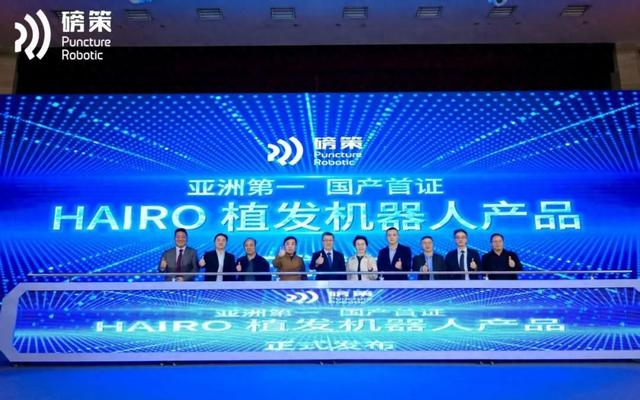
Recently, Hairo, a follicle extraction device independently developed by Songjiang-based Pangke Ce (Shanghai) Intelligent Medical Technology Co., Ltd., has officially entered the market. In the future, hair transplant robots will utilize an intelligent surgical scenario with integrated hand-eye coordination and artificial intelligence binocular recognition technology to help patients meet both aesthetic and efficacy needs in hair transplantation. High-tech R&D capabilities in China will also bring new directions for the development of the hair industry. In recent years, hair loss problems have become a concern for many consumers, and hair transplant technology is gradually becoming a "basic necessity" in the market. Targeting this pain point, in 2021, Pangce Medical, newly established at the time, initiated the development of a hair transplant robot project through technological upgrades and optimization of operational procedures. This breakthrough overcomes the limitations of traditional manual operations, encompassing the entire process of hair detection, diagnosis, treatment, and maintenance.
03
Averto Medical ColoSeal™ Intraluminal Colonic Diversion System Receives FDA Breakthrough Device Designation
Recently, Averto Medical, a clinical-stage medical device company pioneering minimally invasive gastrointestinal care, announced that the U.S. Food and Drug Administration (FDA) has granted its ColoSeal™ Intraluminal Colonic Diversion (ICD) System Breakthrough Device Designation. This designation underscores the potential of ColoSeal™ to significantly improve outcomes for patients undergoing colorectal surgery by eliminating the need for temporary ostomies. The FDA's Breakthrough Devices Program aims to expedite the development and review of medical devices that offer substantial advantages over existing alternatives in treating or diagnosing life-threatening or irreversibly debilitating diseases. The ColoSeal™ ICD is designed to provide a minimally invasive alternative to temporary ostomy procedures, aiming to facilitate patient recovery and reduce complications associated with traditional surgical approaches. By offering a new approach to gastrointestinal care, Averto Medical seeks to address unmet needs in colorectal surgery and elevate the standard of patient care.
04
Johnson & Johnson Medical New Product Launch
Recently, the ultrasonic scalpel HARMONIC® 7s, produced at the Johnson & Johnson Medical Technology Suzhou Industrial Park, has officially been launched. This "intelligent" manufacturing ultrasonic scalpel from the park integrates Johnson & Johnson's global innovative quality experience and advanced manufacturing technology, achieving localized production and supply of the Johnson & Johnson 7mm ultrasonic scalpel in China, which will bring high-quality and efficient services to the Chinese medical market. The Harmonic ultrasonic scalpel is an important product line of Johnson & Johnson. Since entering the Chinese market, it has served over ten million surgical procedures and, as a technological benchmark in the field of minimally invasive surgery, continues to lead innovation and development in China’s surgical industry. The newly launched HARMONIC® 7s ultrasonic scalpel innovatively incorporates a built-in intelligent chip and is equipped with proprietary next-generation Adaptive Tissue Technology (ATT), capable of continuously and intelligently delivering energy during surgery. The advanced hemostasis mode of this product can seal blood vessels of 7 millimeters or less, significantly improving surgical safety and providing surgeons with a more reliable surgical tool.
05
Yuwell Medical Automatic External Defibrillator (AED) Obtains EU MDR Certification
Recently, Jiangsu Yuyue Medical Equipment Co., Ltd. received a notification from TÜV SÜD Product Service GmbH that its Automated External Defibrillator (AED) has obtained the CE certification for Class III medical devices in compliance with the EU Medical Device Regulation (MDR) 2017/745. The certificate numbers are G70 109546 0015 Rev. 00 and G15 109546 0019 Rev. 00, valid from February 28, 2025, to February 27, 2030. This product is intended for use in suspected sudden cardiac arrest situations, guiding operators to initiate resuscitation procedures, among other functions. The compliance of this AED product with the EU MDR marks a result of Yuyue Medical’s efforts to promote product iteration and upgrades in the emergency care field, which will facilitate the development of its emergency care business in global markets, particularly within EU countries and other nations recognizing EU MDR certification. However, the actual future sales of related products will be influenced by various factors, and their impact on Yuyue Medical's performance remains uncertain.
06
In ChinaAI Prenatal Ultrasound Approved
Recently, Sonoscape Medical successfully obtained China's first artificial intelligence medical device certification for prenatal ultrasound. The recently approved prenatal ultrasound device, Fengyan™ S-Fetus®, features intelligent auxiliary recognition and measurement functions. This technology deeply integrates ultrasound with artificial intelligence, achieving "full-process and full-scenario intelligent prenatal screening" for the first time. This innovation allows Sonoscape ultrasound equipment to become a fully intelligent device with automatic image capture, measurement analysis, and ultrasound quality control, greatly advancing the process of intelligent transformation in prenatal ultrasound. As an essential part of prenatal examinations, prenatal ultrasound plays a critical role in monitoring fetal health. However, traditional ultrasound examinations heavily rely on the experience of sonographers. Given China’s large population base and relatively limited medical resources, it is difficult to improve the efficiency of traditional ultrasound, resulting in heavy workloads for doctors. Particularly in grassroots or less developed areas where experienced doctors are scarce, prenatal ultrasound diagnosis faces severe challenges.

07
Medical Device Giant30 Billion "Cutting Losses" to Pay Off Debt
Recently, medical device giant Solventum announced the sale of its purification and filtration business to Thermo Fisher for $4.1 billion (approximately RMB 29.8 billion). Notably, this marks a major investment restructuring. With Solventum’s current market value at approximately $12.8 billion (approximately RMB 92.9 billion), this transaction accounts for 32% of the company's total value. Additionally, the estimated $3.4 billion in net proceeds from the deal will primarily be used to repay debt, significantly improving the capital structure of this newly independent giant. Solventum was spun off from 3M and went public independently in April of last year. Its most recent annual report showed revenue exceeding $8.2 billion (approximately RMB 59.3 billion) with over 22,000 employees. In terms of positioning, the purification and filtration business being sold is one of Solventum’s four core business segments, generating approximately $1 billion (approximately RMB 7.2 billion) in revenue in 2024.
08
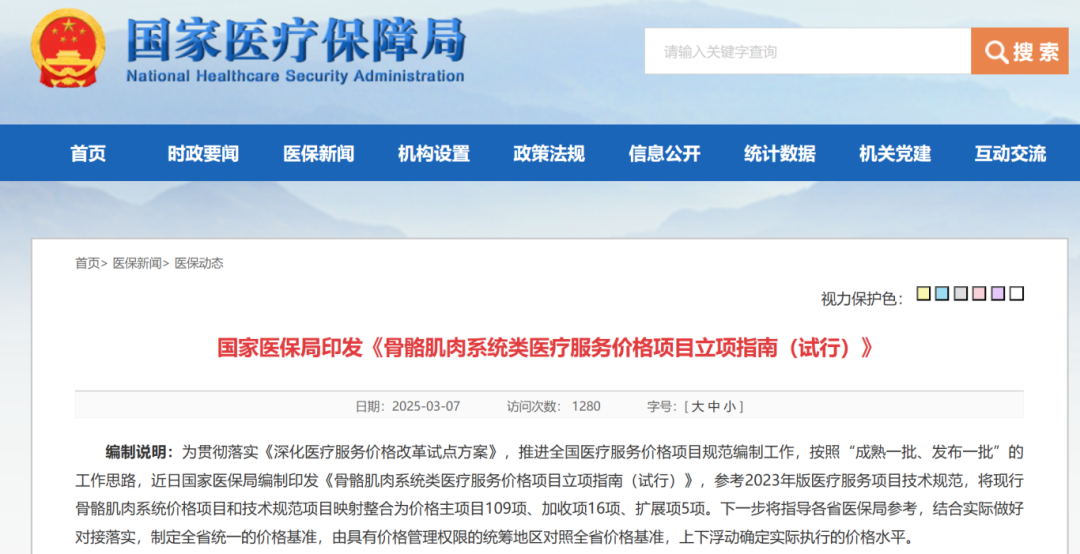
NHSA Issues the "Guidelines for the Establishment of Medical Service Price Items for Musculoskeletal System (Trial)"
Recently, to implement the "Pilot Program for Deepening the Reform of Medical Service Prices," and to advance the standardized compilation of medical service price items nationwide, following the approach of "releasing batches as they mature," the National Healthcare Security Administration has compiled and issued the "Guidelines for the Establishment of Medical Service Price Items for the Musculoskeletal System (Trial)." Referring to the 2023 edition of the technical specifications for medical service items, the current price items for the musculoskeletal system and technical specification items have been mapped and integrated into 109 main price items, 16 additional charge items, and 5 extension items. The next step will be to guide the healthcare security bureaus of each province to refer to these guidelines, align with local realities for implementation, formulate a unified provincial price benchmark, and allow regions with price management authority to determine the actual price levels by adjusting up or down relative to the provincial benchmark.
09
Beijing Pharmacies Introduce New Regulations to Encourage Chain Development of Drug Retail Enterprises
Recently, the Beijing Municipal Drug Administration issued a notice on the "Regulations for the Administration of Pharmaceutical Retail Enterprise Licensing in Beijing," further improving the management of pharmaceutical retail enterprise operation licenses. It solidifies the responsibilities of all relevant parties in pharmaceutical operations, leverages the operational advantages of pharmaceutical chain enterprises, and promotes high-quality development in pharmaceutical retail enterprise operations. To optimize the business environment and reduce the burden on enterprises, adjustments have been made to decrease the required operating area for pharmaceutical retail enterprises in rural areas below the township level, for pharmaceutical retail chain stores, for enterprises exclusively operating a single brand, and for enterprises dealing only in Category B over-the-counter drugs. The required preparation area for Chinese herbal medicines (excluding pre-packaged Chinese herbal medicines not used for clinical compounding) has also been reduced. Within the approved operating area of a pharmaceutical retail enterprise, applications can be legally made to operate related health products such as medical devices, provided that no less than 50% of the area is dedicated to pharmaceuticals.
10
PersonImplementation of the Cochlear Implant Centralized Procurement Results Begins This Month
Recently, according to CCTV News, starting this month, regions across China have successively implemented the results of the centralized procurement of cochlear implants. The price of a single set of cochlear implant medical supplies has dropped from an average of over 200,000 yuan to around 50,000 yuan. In December last year, the state organized a bulk procurement of cochlear implant medical supplies, with a total procurement volume of 11,000 sets. All three foreign-funded enterprises and two domestic enterprises participating in the procurement were selected. In addition to clinically commonly used products, the next-generation cochlear implant that supports (3.0T) MRI examinations was also selected. Cochlear implants are medical devices used to address severe sensorineural hearing loss, especially for young children with congenital sensorineural deafness, as they can effectively solve the problem of muteness caused by deafness.
11
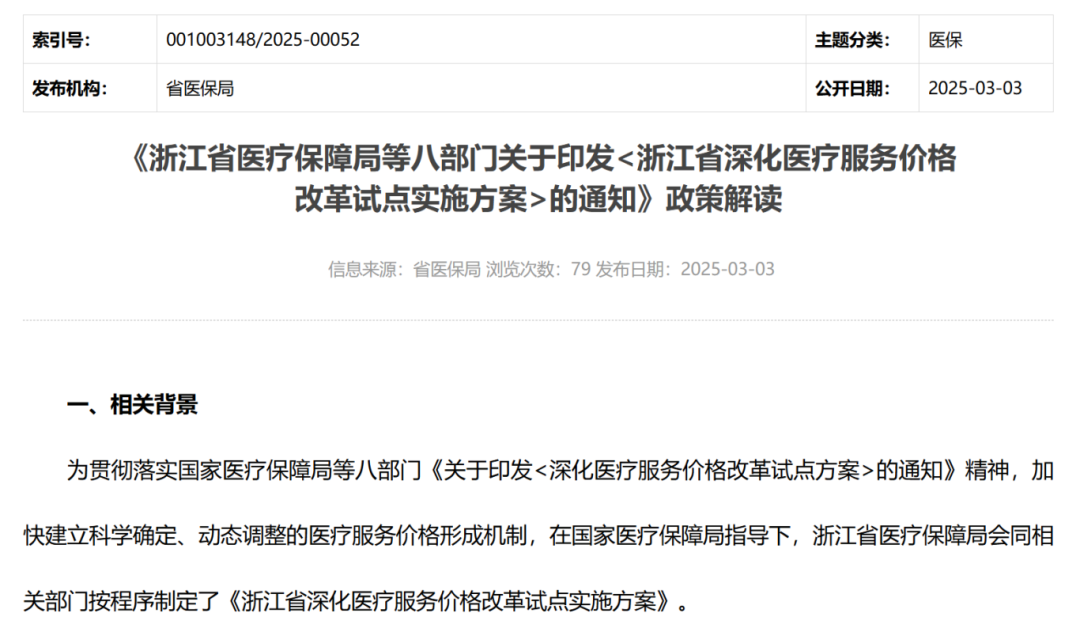
"Zhejiang's Pilot Implementation Plan for Deepening the Reform of Medical Service Prices" Officially Released
Recently, the official website of Zhejiang Provincial Medical Insurance Bureau announced the notice (Zhejiang Medical Insurance Joint Issuance [2024] No. 15) of the "Zhejiang Pilot Implementation Plan for Deepening the Reform of Medical Service Prices" jointly issued by the bureau with the Zhejiang Provincial Health Commission, Provincial Development and Reform Commission, Provincial Department of Finance, and other eight departments. The Plan points out that by the end of 2025, a mature and finalized new mechanism for medical service prices will be promoted, continuously optimizing the structure of medical service prices to form a replicable, promotable, and sustainable Zhejiang solution for medical service price reform. Explore the implementation of "separation of technical labor and consumables." In accordance with the principle of separating technical labor from material consumption, gradually separate disposable high-value medical consumables from price items, and explore the establishment of a separately chargeable consumables directory. A price formation mechanism for general medical service items will be established. Medical service price items that are widely carried out by medical institutions, have a high degree of service homogenization, and are used relatively frequently in clinical practice will be included in the list management of general medical service items.
12
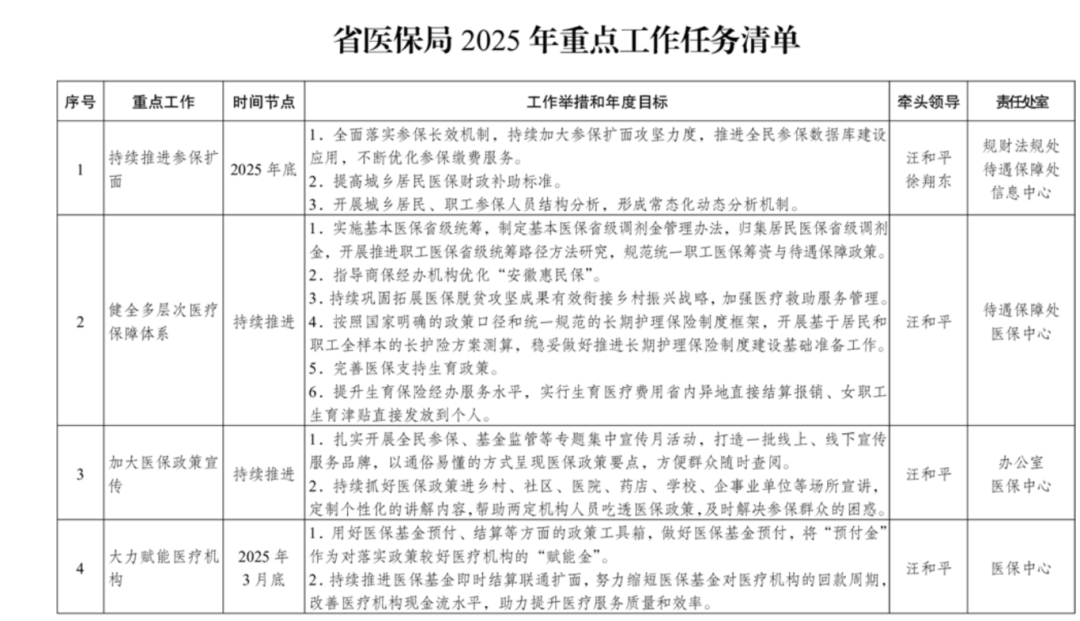
Anhui Medical Insurance Bureau ReleaseKey Tasks for 2025
Recently, the Anhui Provincial Medical Security Administration officially released the "Key Work Task List for 2025 of the Provincial Medical Insurance Bureau," clarifying the main directions and specific tasks for the year’s medical insurance work, comprising a total of 20 key measures. Among these, it was explicitly stated that there will be no fewer than one batch of provincial and inter-provincial centralized procurement of medicines and medical consumables, while also leading the national biopharmaceuticals alliance procurement. Additionally, the list emphasized empowering medical institutions, pharmaceutical enterprises, and commercial insurance companies by unleashing strong policy incentives. In terms of pharmaceutical price governance, the Anhui Medical Security Administration will promote the formation of consensus on the pricing rules for drug listings, explore in-depth the management of drug prices at designated retail pharmacies, advance price disclosure, monitoring, and governance, and develop and implement a province-wide unified drug price comparison system. Meanwhile, efforts will accelerate the implementation of traceability codes, requiring full coverage by the end of July, with the principle of "no payment without a code" clearly established.
13
Guangxi Issues Regulations on the Supervision of Automated Vending Machines for Medical Devices
Recently, the Guangxi Drug Administration issued the "Regulations on the Supervision and Management of Automated Medical Device Vending Machines in Guangxi (Trial)" to standardize the retail business activities of medical devices through automated vending machines in Guangxi. These regulations aim to stimulate innovation vitality in the operation of medical device enterprises and promote the development of new formats and models in the retail of medical devices, better meeting the public's 24-hour demand for purchasing and using medical devices. The Regulations consist of 21 articles, covering requirements for the qualifications of operating entities, management of business premises and changes, quality management system requirements, quality record requirements, setup and operational requirements of automated vending machines, and supervision and management requirements. According to the Regulations, enterprises using automated vending machines to retail Class II (excluding those exempt from filing) and Class III medical devices must have obtained the corresponding filing number or operating license, with the business type including "retail," ensuring the legality and compliance of the operating entities from the source.
14
Beijing Economic and Technological Development Zone Releases Technical Challenges and Application Scenarios for Robots in the Medical Field
Recently, at the launch event for Beijing Economic-Technological Development Area's (Beijing ETDZ) “Entire Region Artificial Intelligence City - Ten Thousand Robots Innovation Application Plan,” the Beijing ETDZ Social Affairs Bureau announced nationwide the technical challenges and application scenario needs for robots in the medical field. For pharmacy robots, seamless integration with hospital information systems is desired. Automated medication loading machines should accurately identify and precisely stock medicines, dispensing machines should quickly and accurately sort and distribute, special drug storage cabinets should manage irregularly shaped medications, and medication verification machines should use image recognition and other technologies to verify drugs from multiple dimensions, ensuring medication safety and reducing patient wait times. Robotic systems for endoscopic surgery are expected to have flexible robotic arms with precise control and be equipped with high-definition 3D imaging systems. Orthopedic surgery robots should leverage accurate modeling and real-time navigation technology to improve success rates and reduce risks in joint replacement and spinal surgeries. Cardiac surgery robots need to enable more minimally invasive operations, minimizing impact on heart function.
15
Zhejiang Provincial Government Issues "Several Measures for Full-Chain Support of High-Quality Development of Innovative Pharmaceuticals and Medical Devices in Zhejiang Province"
Recently, the Zhejiang Provincial Government issued the "Several Measures for Full-Chain Support of High-Quality Development of Innovative Pharmaceuticals and Medical Devices in Zhejiang Province," proposing 21 measures in seven aspects covering the entire process from research and development, evaluation, to application. The highlights of these measures lie in positioning medical institutions as key sources of pharmaceutical and medical device innovation, offering solutions to overcome current constraints. The Several Measures specify financial subsidies for individual hospitals and provide direct funding support and research incentives during clinical trials. The development of pharmaceuticals and medical devices requires substantial capital investment with a long return cycle. In the past, compared to other industries, financing channels for pharmaceutical and medical device innovation were limited, and the lack of funds put many innovative projects at risk of failure, restricting the innovation capabilities of medical institutions. Research subsidies and rewards for the transformation of achievements can not only alleviate the financial pressure on medical institutions but also greatly stimulate their enthusiasm to "take the lead," promoting scientific research innovation and achievement transformation at a deeper level.
16
China to Accelerate Customs Clearance for High-Tech Equipment and Other Special Goods
Recently, the General Administration of Customs and two other departments issued the "Notice on Further Promoting the Facilitation of Clearance at Aviation Ports," proposing to accelerate the clearance speed of special goods such as high-tech equipment and raw materials, specific pharmaceuticals, medical devices, biological products, urgent aviation materials, and temporarily imported goods for major international events and exhibitions. The notice encourages eligible aviation ports to establish a "green channel" for rapid release. In terms of further improving the efficiency of import and export goods clearance at aviation ports, the Notice mentioned enhancing the efficiency of special goods clearance. It proposes speeding up the clearance of special goods such as high-tech equipment and raw materials, specific pharmaceuticals, medical devices, biological products, urgent aviation materials, and temporarily imported goods for major international events and exhibitions, while encouraging eligible aviation ports to establish a "green channel" for rapid release. In response to corporate demands, targeted pilot programs for the "direct loading" of export goods and "direct pickup" of import goods on the apron will be explored at eligible aviation ports.
Note: The information in this article is compiled based on online news.

END