MicroPort-Led Consortium Submits IPO Prospectus for Fully Implantable Cochlear Implant Breakthrough

MicroPort
High-end Medical Device R&D and Manufacturer


Recently, the "14th Five-Year Plan" National Key Research and Development Program "Medical Equipment and Biomedical Materials" Key Special Project - "Research on Fully Implantable Cochlear Implant Technology Based on High-Sensitivity Subcutaneous Acoustic Sensors and Prototype Development" project (hereinafter referred to as the "Fully Implantable Cochlear Implant" project) was officially launched at MicroPort® Shanghai headquarters.
It is reported that China's first fully implantable artificial cochlea, which requires no external equipment and is completely implanted in the patient’s body, was jointly developed by Shanghai Ninth People's Hospital and Shanghai MicroPort Medical (Group) Co., Ltd. after five years of technical research. The two parties successfully overcame the high-sensitivity subcutaneous acoustic sensor technology, and the prototype made its debut at the end of last year.
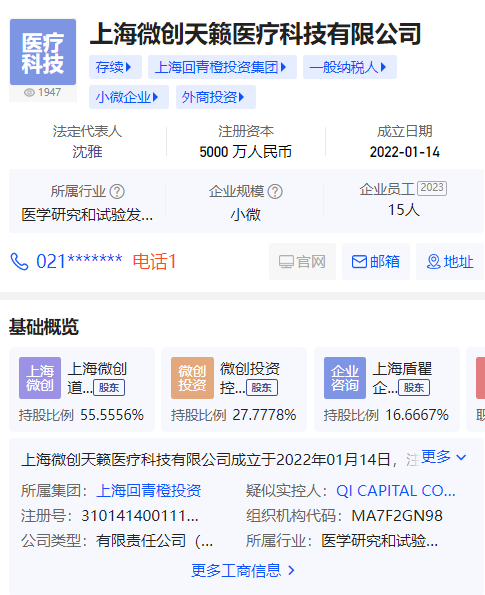
Previously, MicroPort established MicroPort Tianlai in 2022, with a registered capital of 50 million yuan, focusing on the development of the next-generation cochlear implant that leads internationally.
"The 14th Five-Year Plan" National Key Research and Development Program is one of the highest-level scientific research projects in China. The recently launched "Fully Implantable Cochlear Implant" project is led by Shanghai MicroPort Medical (Group) Co., Ltd., in collaboration with the Ninth People's Hospital affiliated with Shanghai Jiao Tong University School of Medicine, the Eye, Ear, Nose, and Throat Hospital affiliated with Fudan University, the Sixth People’s Hospital of Shanghai, and West China Hospital of Sichuan University.
Chen Dun, Deputy Director of the Biomedical Department of the Shanghai Science and Technology Commission, stated at the launch meeting: "As an important branch in the field of brain-computer interface, cochlear implant technology has been included in the key special layouts at both the national and Shanghai levels. MicroPort, as a leading enterprise in the industry and a key company in Shanghai, has the responsibility and capability to accomplish this mission, injecting strong momentum into Shanghai's efforts to build an innovative highland for the biopharmaceutical industry with global influence."
Disruptive Product Debut
China's first fully implantable cochlear implant that requires no external devices and is completely implanted in the patient’s body, hailed as a disruptive innovation in the field of artificial hearing, was successfully co-developed by Shanghai Ninth People's Hospital affiliated with Shanghai Jiao Tong University School of Medicine and Shanghai MicroPort Medical (Group) Co., Ltd. It made its first public appearance on November 10, 2024, at the "Fully Implantable Cochlear Implant Technology Symposium" jointly hosted by both parties.
Traditional cochlear implants consist of two parts: an external sound processor and an internal implant. The external sound processor converts sound signals into electrical signals and sends them to the internal implant, which directly stimulates the auditory nerve to reconstruct hearing function. Due to the external device's association with a disability label and issues such as being easily lost, users experience poor satisfaction, which can affect their daily activities and limit the popularization of cochlear implant treatments.
The biggest advantage of the fully implantable cochlear implant is that it integrates the traditional external device entirely into the internal implant, making the wearer's appearance no different from others and significantly increasing patients' acceptance of cochlear implant products.
At present, the biggest bottleneck in research and development is solving the problems of sound reception of subcutaneous acoustic sensors and noise reduction within the body. Due to the high technical barriers and difficulty of this product, it has been designated as a "Breakthrough Device" by the U.S. Food and Drug Administration (FDA), and so far, there are no similar products available on the global market.
According to Professor Wu Hao, the chief scientist of the project, after five years of technical research, Shanghai Ninth People's Hospital and Shanghai MicroPort® have successfully developed China's first fully implantable cochlear implant prototype. Relying on the MicroPort® cross-incubation platform, they overcame the high-sensitivity subcutaneous acoustic sensor technology. The fully implantable cochlear implant based on a high-sensitivity subcutaneous acoustic sensor has a wide frequency response range, large dynamic range, and high sensitivity. Combined with the self-developed artificial intelligence algorithm - SmartSonic, it can not only significantly improve noise reduction but also enhance music perception through the neural stimulation coding strategy - NeuroHarmony. It is also compatible with 3.0T magnetic resonance imaging (MRI) scanning functionality.
Professor Wu Hao emphasized that the successful development of a subcutaneous acoustic sensor with independent intellectual property rights and the successful launch of animal experiments are important milestones for domestically produced fully implantable cochlear implants to enter the clinical validation stage.
At the seminar, the R&D team demonstrated on-site the speech separation effect and sound reception performance of the fully implantable cochlear implant prototype in a noisy environment. By playing the original sound of a violin performance, they also showcased the music restoration quality of the fully implantable cochlear implant prototype after being processed by the neural stimulation coding strategy - NeuroHarmony, which won unanimous approval from the attending experts. The experts stated that China's first fully implantable cochlear implant prototype has reached an internationally advanced level, marking a "zero breakthrough" in this field for China.
"Brain Vascular and Neuromodulation Science" is one of the twelve major business clusters of Shanghai MicroPort, and as an important part of the neuromodulation sector, cochlear implants have received significant attention from the group.
In 2022, the global cochlear implant market size reached 2.1 billion USD and is expected to climb to 3.5 billion USD by 2028, with a compound annual growth rate (CAGR) of up to 8.57%~9.1% over five years. The prospects for China's cochlear implant market are very broad. According to relevant data estimates, by 2030, there will be over 50 million people in China with a strong demand for cochlear implants. However, the global cochlear implant market has long been monopolized by foreign companies such as Cochlear, Advanced Bionics, and MED-EL. Their related products have disadvantages including low cost-effectiveness, insufficient after-sales service, and lagging products in the Chinese market.
Against this background,2At the beginning of 2022, Shanghai MicroPort Tianlai Medical Technology Co., Ltd. came into being.MicroPort is currently accelerating the development of two new cochlear implant products. The first one is a traditional electronic cochlear implant; the other is a next-generation cochlear implant that uses innovative technology to better help patients restore hearing and reintegrate into normal social life.
It is understood that MicroPort Tianlai has not yet undergone external financing and is actively preparing a financing plan. The target for this round of financing is set at 80 million yuan. This funding will mainly be used for the research and development of electronic cochlear implants and the first clinical trial, as well as the research and development of the next generation of cochlear implants.
So far, there are no fully implantable cochlear implants available on the market globally, and only products from three companies (Cochlear, Envoy, MED-EL) have entered exploratory clinical validation.
Envoy Medical
On January 31, 2025, Envoy Medical announced a significant advancement: the pivotal clinical trial for its fully implantable cochlear implant, Acclaim CI, has selected seven research centers, with plans to begin the first patient recruitment in the first quarter of 2025.
Envoy Medical's fully implantable cochlear device is developed based on the company's middle ear implant (AMEI). It no longer uses an external microphone but instead employs a piezoelectric sensor to pick up vibrations from the incus. The vibrations of the incus allow the sensor to collect vibrational signals, which are then transmitted to a signal processor implanted in the temporal region for conversion. The output signal is subsequently sent to the electrode implanted in the inner ear. During the implantation process, the incudostapedial joint needs to be disconnected, part of the incus removed, and the piezoelectric sensor fixed to the severed ends of the incus and stapes.
In November 2024, the U.S. Food and Drug Administration (FDA) approved the key clinical trial application (IDE) for Acclaim CI, which had previously been granted "Breakthrough Device Designation."
MED-EL
In 2020, MED-EL, a leading manufacturer of hearing implants, performed the first implantation of its Totally Implantable Cochlear Implant (TICI) in Europe on a young individual with near-profound hearing loss.
TICI integrates all components (audio processor, microphone, and battery) into a single device implanted under the skin. This innovation represents a paradigm shift, offering cochlear implant users the ability to have continuous hearing during daily activities, including sleep and bathing, without relying on external parts.
Cochlear
Cochlear Carina is a fully implantable hearing aid. In other words, everything is under the skin, with nothing outside. This includes: a microphone, battery, transducer – the part that contacts the ossicles, a tiny motor that vibrates the ossicles, and a coil with a magnet in the middle. The patient connects an external magnetic device, which links to a battery charger that can be attached to a belt. The device requires one hour of charging per day.
The first implantation was performed in the United Kingdom in 2011.
——
According to statistics from the World Health Organization, currently about 1.5 billion people worldwide suffer from varying degrees of hearing loss, of which over 60 million have severe or profound hearing loss. In China, more than 10 million patients require cochlear implantation, but the total number of cochlear implant surgeries performed in China is only 130,000. The vast majority of hearing-impaired patients have not received intervention. As China enters an aging society, the problem of insufficient intervention for deafness has become even more prominent.
In recent years, the hearing aid sector has attracted many giants to enter the market. For instance, in 2024, Apple's hearing aid software has been approved by the FDA, allowing its compatible earphones to function as OTC hearing aids. Last year, UMEC (United Imaging Microelectronics), a subsidiary of United Imaging Group, launched its first medical-grade hearing aid product "uOrigin". Meanwhile, Tencent’s Tianlai Lab has collaborated with multiple hearing aid brands to introduce the Tianlai Inside hearing aids...
However, the aforementioned giants are all involved in the hearing aid field, while "cochlear implants" are currently recognized globally as the only solution for treating severe and above hearing loss. The technical difficulty of cochlear implants increases exponentially compared to hearing aids, and fully implantable cochlear implants are a rarely attempted technological peak, with currently almost only a few companies deeply engaged in cochlear implants venturing into this area.
Previously, cochlear implants were known as the "king of high-value consumables" due to their high cost. However, on December 19, 2024, the fifth round of China's national centralized bulk procurement for high-value medical consumables was held in Tianjin, resulting in selected bids that included two product categories: cochlear implants and peripheral vascular stents. In this round of procurement, the price of a single set of cochlear implant consumables (including the implant body and speech processor) dropped from over 200,000 yuan to around 50,000 yuan.
So, in the more advanced fully implantable field, can MicroPort achieve a successful breakthrough? We will continue to follow up.
This article is reprinted, all views belong to the original author.Platform(Device Home), Medical DeviceMedical Business ReviewDisclaimer: All viewpoints in the article are neutral and intended solely for sharing and discussion.
▼More Book Recommendations▼
In order not to miss any content, everyone remembers toMedical Device Business ReviewSet as starred? Oh,
Looking forward to meeting you at the earliest opportunity each time.