

First-in-Class Small Molecule Fabhalta and J&J’s Tremfya Receive FDA Approval for C3G and Crohn’s Disease, Respectively

Johnson & Johnson
Medical Device R&D and Manufacturer
▎WuXiEdited by Kant Content Team
First C3 Glomerulopathy Treatment Drug Approved by FDA!
Novartis recently announced that its oral small molecule therapy Fabhalta (iptacopan) has been approved by the U.S. FDA for the treatment of adult patients with C3 glomerulopathy (C3G) to reduce proteinuria.According to the press release, Fabhalta is the first drug approved for the treatment of this disease. Notably,Fabhalta was listed by the industry media Evaluate as one of the 10 products worth paying attention to.Potential Blockbuster TherapyOne of.

Currently, there are no approved treatments available forC3GPatients, this is a progressive rare kidney disease that often occurs at a young age.C3GThe prognosis for patients is poor, with about half of the patients10Progressed to renal failure within the year, requiring lifelong dialysis by that time./Or kidney transplantation.FabhaltaIs a complement alternative pathway factorBInhibitors that can selectively target mechanisms considered to be the root cause of the disease.。InFabhaltaBefore approval,C3GPatients can only rely on supportive care, broad-spectrum immunosuppression, and symptom management to cope with the disease.
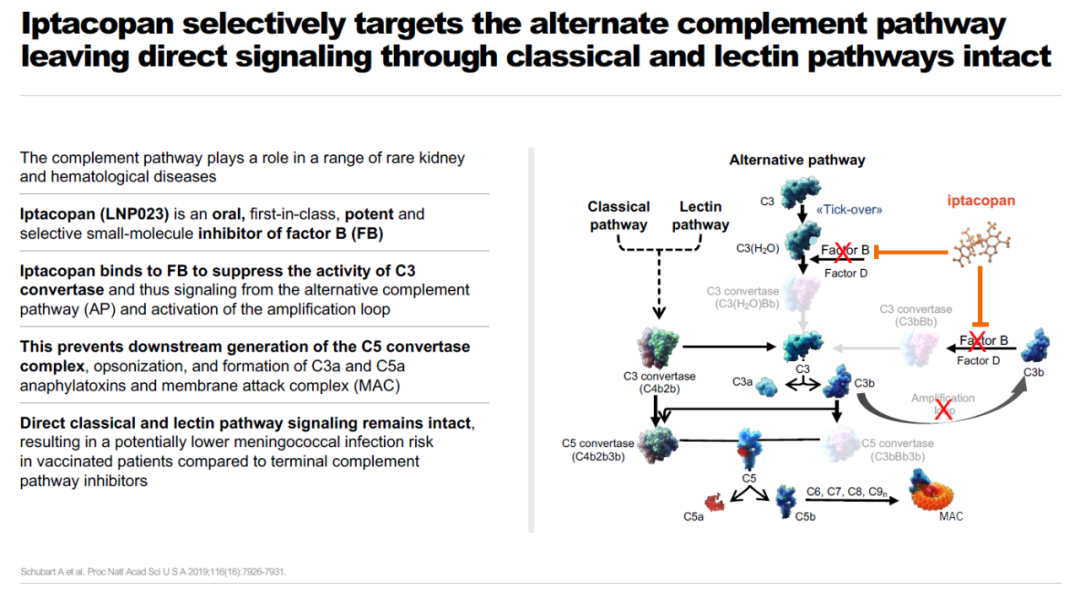
▲FabhaltaIntroduction (Image source: Novartis official website)
The FDA's approval this time is mainly based on the data from the Phase 3 clinical trial APPEAR-C3G. The study showed,Patients receiving Fabhalta and supportive care experienced a 35.1% reduction in proteinuria levels compared to the placebo group over six months, with statistically significant and clinically meaningful differences.In many kidney diseases, a reduction in proteinuria is widely regarded as an important surrogate marker for slowing the progression of renal failure. Moreover, in a long-term extension study, the initial reduction in proteinuria was maintained after more than three years of treatment with Fabhalta, while the estimated glomerular filtration rate (eGFR) also remained stable.
First Approval! Johnson & Johnson Antibody Receives Another FDA Approval in the U.S.
Johnson & Johnson recently announced that the U.S. FDA has approved its anti-IL-23 antibody Tremfya (guselkumab) for the treatment of adult patients with moderately to severely active Crohn's disease (CD).According to the press release, Tremfya is the first IL-23 inhibitor to offer subcutaneous (SC) and intravenous (IV) induction treatment options for adult patients with moderate to severe active CD.

This approval is mainly based on the results of multiple Phase 3 clinical trials, which collectively evaluated more than 1,300 patients with moderate to severe active Crohn's disease who had an inadequate response or intolerance to conventional therapies (such as glucocorticoids or immunomodulators) or biologic treatments. Among these, the GRAVITI study assessed the efficacy of Tremfya administered subcutaneously for induction and maintenance therapy compared to placebo.The patient received 400 mg at weeks 0, 4, and 8.TremfyaInductionTreatment, followed by acceptance200 mg every 4 weeksTremfya(q4w), 100 mg every 8 weeksTremfya(q8w)Or placebo as maintenance therapy.
The 48-week results of the GRAVITI study showed,Tremfya Q8W GroupClinical Remission RateThe rate was 59% in the q4w group, 65% in the q4w group, and 17% in the placebo group.In terms of endoscopic response, 39% and 48% of patients in the Tremfya q8w and q4w groups, respectively, achieved endoscopic response, compared to only 5% in the placebo group.AndIn terms of endoscopic remission, 31% and 40% of patients in the Tremfya q8w group and q4w group, respectively, achieved endoscopic remission, compared to only 6% in the placebo group. For detailed data of the related phase 3 trial, please refer to the table below.The integrated results of these Phase 3 studies show that Tremfya, whether administered subcutaneously or intravenously, demonstrated significant efficacy in achieving clinical and endoscopic endpoints.
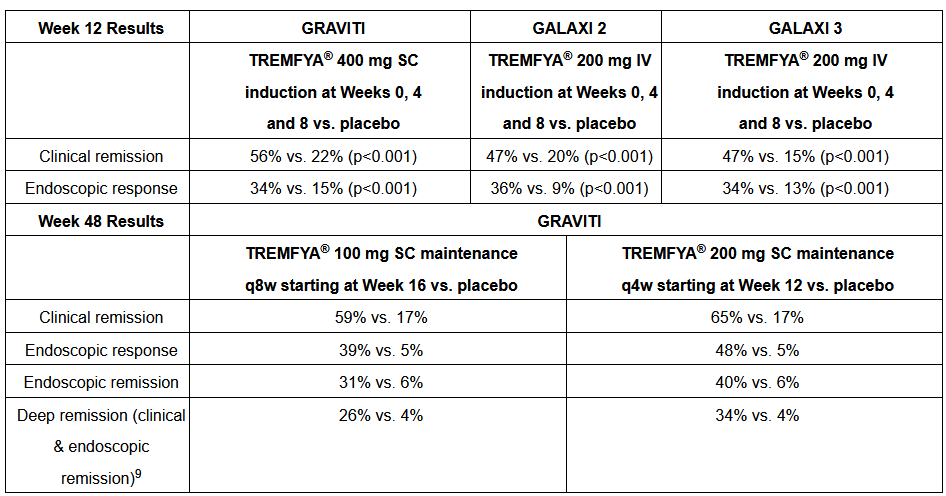
▲Tremfya Shows Significant Efficacy in Treating CD Patients (Source: Reference [2])
Tremfya is a fully human monoclonal antibody.In addition to targeting IL-23, the antibody can also bind to the receptor CD64 on cells expressing IL-23.IL-23 is a cytokine secreted by activated monocytes/macrophages and dendritic cells, and is considered a driving factor in immune-mediated diseases, including Crohn's disease.

▲To learn more about the application of cutting-edge technologies in the biopharmaceutical industry, please long-press and scan the QR code above to access "WuXi Live Studio" and watch live discussions and exciting replays on related topics.


Share,PointLike,In ProgressFocusing on Global Biomedical Health Innovation