

GSK's First-in-Class Oral Antibiotic Blujepa (Gepotidacin) Receives FDA Approval for Uncomplicated UTI, Marking the First Novel Therapy in Nearly 30 Years

GSK
Pharmaceutical R&D Manufacturer
▎WuXiEdited by the Kant Content Team
Editor's Note:GSK announced today,U.S. FDA Approves "First-in-Class" Antibiotic Blujepa (Gepotidacin) for Market Launch, for the treatment of adult and adolescent patients aged 12 years and above with uncomplicated urinary tract infections (uUTI). As an antibiotic with a novel mechanism of action,Blujepa Provides a Powerful New Tool to Overcome Antimicrobial Resistance (AMR).
AMR is one of the most serious global health challenges of the 21st century. The World Health Organization (WHO) has warned that by 2050, approximately 10 million people could die annually from AMR, surpassing the number of deaths caused by cancer and making AMR a leading cause of mortality. WuXi AppTec is committed to addressing this significant health threat through its unique CRDMO model and industry-leading infectious disease drug discovery and development platform. Around last year's "World Antimicrobial Awareness Week," the WuXi AppTec content team shared insights from several industry experts on how to tackle the global health challenge posed by AMR. This article will discuss advancements in overcoming AMR, starting with the approval of Blujepa.
The First Innovative Oral Antibiotic for the Treatment of uUTI in Nearly 30 Years
Blujepa is an oral "first-in-class" antibiotic with a unique mechanism of action. It can evenly inhibit two different type II topoisomerases, thereby exerting antibacterial activity against most target pathogens, including strains resistant to existing antibiotics.Due to its ability to evenly inhibit the activity of both enzymes, bacteria would need to develop mutations in both enzymes simultaneously to significantly reduce sensitivity to Blujepa; therefore, the likelihood of resistance developing is expected to be low.

The approval of Blujepa is mainly based on the positive results of the pivotal Phase 3 clinical trials EAGLE‑2 and EAGLE‑3. In these two trials,Blujepa is non-inferior to nitrofurantoin, one of the current standard treatments, for the treatment of adult women (≥40 kg) and adolescent patients (≥12 years, ≥40 kg) with uUTI.In the EAGLE‑2 study, the treatment success rate of Blujepa was 50.6% (162/320), compared to 47.0% (135/287) in the active control group. In the EAGLE‑3 study, Blujepa demonstrated statistically significant superiority over the active control group (one-sided p=0.0003): the treatment success rate was 58.5% (162/277) in the Blujepa group and 43.6% (115/264) in the active control group.
uUTI is the most common infection in women, with over half of women suffering from uUTI at least once in their lifetime, and about 30% of patients experiencing at least one recurrence. As the number of uUTI cases caused by drug-resistant bacteria continues to rise, treatment failure rates are increasing, leaving patients in urgent need of new therapeutic options.
The increasing number of cases caused by drug-resistant bacteria in uUTI is just one aspect of AMR as a major global health threat. The rapid growth of drug-resistant bacteria is making existing antibiotics less effective.AMR has been listed by the WHO as one of the top ten global health challenges.Without urgent action, humanity could face a future without effective medicines, and infectious diseases might once again become the most devastating global health crisis.
Multiple antibacterial drugs with innovative mechanisms are under development.
One of the important means to combat AMR is the development of antibacterial drugs with innovative mechanisms.According to WHO statistics, as of December 31, 2023, the current clinical-stage antibacterial drug development pipeline has achieved significant growth in both the number of drugs and the range of indications covered.A total of 97 novel antibacterial agents targeting WHO priority bacterial pathogens (including Mycobacterium tuberculosis, Clostridioides difficile, and Helicobacter pylori) are currently in clinical development, marking a significant increase from 80 in 2021.
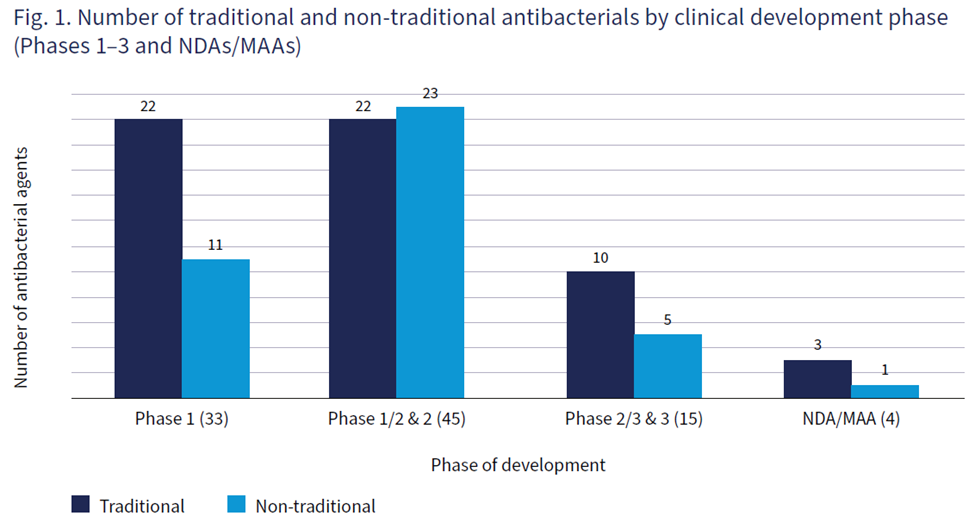
▲As of December 31, 2023, the number of traditional and non-traditional AMR drugs by clinical development stage (Image source: Reference [2])
When innovatively evaluating AMR drugs in the clinical stage, it can be found that,Among the 32 conventional antibiotics targeting WHO priority pathogens (excluding tuberculosis drugs), 12 meet at least one of the innovation criteria set by the WHO.Many of these drugs have entered the later stages of development,Blujepa, which was approved today, is one of the innovative antibiotics mentioned in the WHO report.
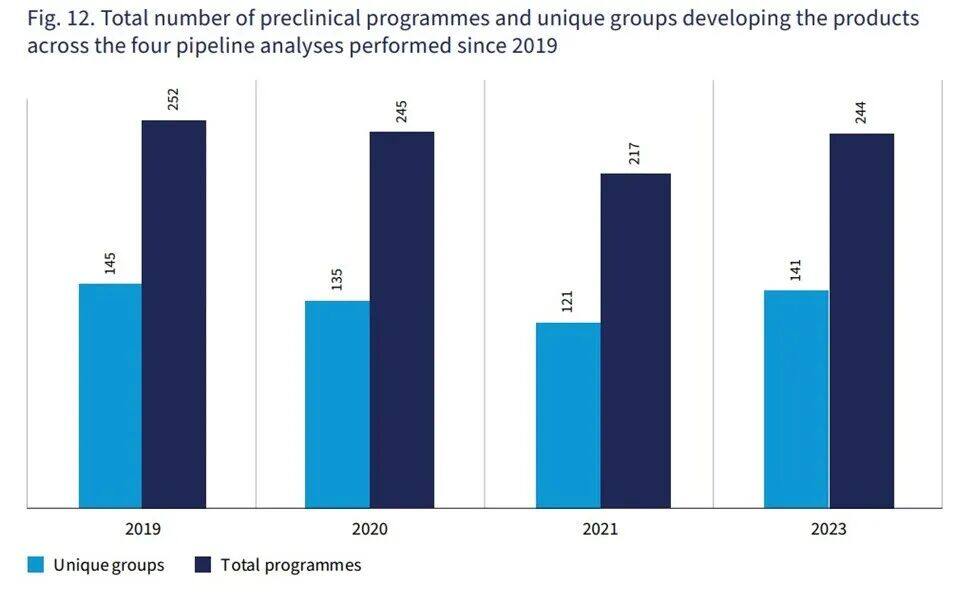
In the preclinical development stage, the WHO report statistics showed244 AMR Candidate Drugs. Among them,38% of candidate drugs adopt non-traditional treatment modalities, 68% belong to entirely new chemical classes, and 55% exhibit completely novel mechanisms of action, fully demonstrating the industry's commitment to breakthrough therapies.
Empowering the Development of Antibiotics Against AMR
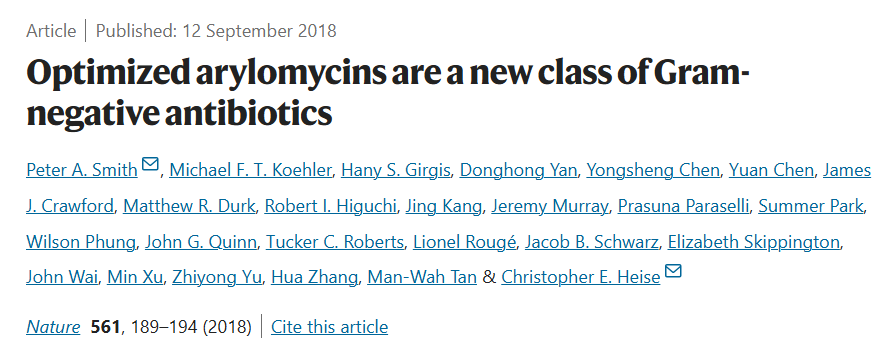
WuXi AppTec is committed to leveraging its unique CRDMO model and its industry-leading infectious disease drug discovery and development platform to assist partners in developing antibiotics with innovative mechanisms. For example,WuXi AppTec once collaborated with scientists from Genentech to empower the development of a novel compound type targeting bacterial signal peptidase (LepB), and the research findings have been published in the journal *Nature*.
Recently, Dr. Michael Lobritz, Global Head of Infectious Diseases Therapeutic Area at Roche Pharma Research and Early Development (pRED), in an interview with the content team of WuXi AppTecInterviewWhen indicating,Zosurabalpin targeting bacterial lipopolysaccharide transport proteins and a novel mechanism antibiotic targeting LepB are two representative drugs that the company has already entered into clinical trials.Dr. Lobritz emphasized that discovering new classes of compounds and further establishing a sustainable R&D pipeline based on this not only meets the current needs of antibiotic development but also lays a solid foundation for antibiotic research over the next century.
Developing antibiotics with innovative mechanisms is only one of the strategies to address the global challenge of AMR.Dr. Henry Skinner, CEO of AMR Action FundInterviewed by the WuXi AppTec Content TeamInterviewWhen indicating,In addition to supporting the development of innovative antibiotics, the rational use of antibiotics, application of advanced diagnostic tools, formulation of evidence-based treatment guidelines, and utilization of reliable epidemiological data to track resistance patterns are equally important.It is expected that through global collaboration and systematic, multi-faceted efforts, the spread of AMR will be effectively contained, protecting the future health of humanity.

▲ To learn more about the application of cutting-edge technologies in the biopharmaceutical industry, please long-press and scan the QR code above to access "WuXi Live Studio" and watch live discussions and exciting replays on related topics.

Share,PointLike,In View,Focusing on Global Biomedical Health Innovation