

AnSong Medical Breaks 20-Year Foreign Monopoly with Launch of China’s First Domestic Oxide Ceramic Femoral Head, Accelerating High-End Bio-Ceramic Localization

Arthrone
Orthopedic Instrument R&D and Manufacturer
Arthrone Co., Ltd. (hereinafter referred to as "Arthrone") announced that its developed zirconia ceramic femoral head product obtained the Innovative Certification from the National Medical Products Administration (NMPA) on November 22, 2024, with the registration certificate number: Z20243132300.
The fewer the words, the bigger the matter.
According to Arthrone, this marks that the innovative achievements of Arthrone in the field of high-end medical ceramic materials have officially gained recognition in the Chinese market. It fills the gap in the production of high-performance ceramic femoral heads in China and surpasses international competitors in multiple performance indicators.
To fully understand the significance of this approval, it is essential to place the aforementioned information in a broader context.
First, why ceramics?
This involves the material selection phase in the development of high-value medical consumables. Simply put, in the field of artificial joints, traditional metal femoral heads can lead to osteolysis, requiring consideration of revision surgery after approximately 7-10 years of implantation. In contrast, ceramics, as inorganic non-metallic materials, exhibit superior biocompatibility, do not cause complex electrochemical reactions with the human body, and offer higher safety. Additionally, ceramics are extremely hard, and after special polishing, their friction coefficient is lower, extending the product’s service life. This has made the replacement of metal with ceramics a global technological iteration trend.
However, in the global field of ceramic artificial joint supply, there is already a "hidden champion." The concept of a hidden champion was proposed by German management scholar Hermann Simon. It is defined as "a company with annual sales not exceeding 5 billion euros, ranking among the top three brands in a specific niche market worldwide." At the same time, these companies are very low-profile, often serving highly specialized markets and remaining relatively unknown to the general public.
The隐形champion of ceramic artificial joints is a German company, which is also the sole supplier of ceramic joint components for major global artificial joint enterprises such as Johnson & Johnson, Zimmer Biomet, Stryker, Wego, and Chunli. Relying on its ceramic artificial hip joint business, the company generates an annual revenue of over several hundred million euros. Due to its high penetration rate in the Chinese market, the company's presence has reached its peak as China's volume-based procurement deepens and the domestic orthopedic industry undergoes a major reshuffle.
At the same time, a wave of domestic substitution in the artificial joint field is surging. As a standout in this wave,Arthrone Co., Ltd. is precisely relying on its core product Artica®Zirconia ceramic femoral heads successfully broke the 20-year monopoly of foreign enterprises and filled the gap in China.
Embarkation: China-Made Substitutes Boost Independent Innovation
Arthrone was founded in 2017 by Mr. Zhang Jifeng, who used to be a doctor and graduated from Peking University Health Science Center. Dr. Zhang Yunlong graduated from Tsinghua University, and worked as a visiting scholar at the Japan Fine Ceramics Research Center. Later, he pursued his post-doctoral studies at Texas A&M University in the United States. As the chief scientist of Arthrone, Dr. Zhang Yunlong has extensive research experience in the field of ceramic materials. His connection with Arthrone began with an accidental conversation. In 2017, Dr. Zhang Yunlong was introduced to the founder of Arthrone, Mr. Zhang Jifeng. The two hit it off immediately. Dr. Zhang Yunlong was deeply moved by Mr. Zhang Jifeng's dedication to the research and development of high-end medical devices produced in China, and resolutely joined Arthrone.
Hou Shuqiang, on the other hand, had a different journey when joining Arthrone. He previously worked for Fortune 500 companies such as Johnson & Johnson and Stryker, where he built extensive networks and gained profound industry experience. In 2022, with the implementation of the joint procurement policy for joint implants, foreign enterprises were impacted, and Mr. Hou saw the opportunity for domestic substitution. At this time, Arthrone extended an invitation to him. Impressed by Arthrone’s product philosophy and future development direction, Mr. Hou decided to join the company to support its market promotion efforts.
Since its establishment, Arthrone has also witnessed the development of material selection trends in the European and American markets as well as the Chinese market. Zhang Yunlong told VCBeat,In the European and American markets, the application of ceramic materials in the artificial joint field has undergone multiple iterations.In the early days, metal and highly cross-linked polyethylene materials were the mainstream choices, but with technological advancements, ceramic materials have gradually gained attention due to their excellent wear resistance and biocompatibility. Currently, a certain proportion of ceramic-on-ceramic interfaces are used in the European market, while ceramic-on-polyethylene is the absolute mainstream in the U.S. market.
In China, with the advancement of the national centralized procurement policy, the prices of artificial joints have significantly decreased, and the application ratio of ceramic materials has notably increased. Currently, the usage proportion of ceramic joints in China has exceeded 95%, primarily dominated by ceramic heads. Unlike the European market, Chinese clinical practices tend to favor the ceramic-on-polyethylene (ceramic-polyethylene) interface combination. This combination not only reduces the risk of fracture but also avoids noise issues, becoming the "gold standard" in domestic clinical practice.
At the same time,Implementation of the Centralized Procurement Policy, which not only reduced the prices of imported medical devices but also accelerated the process of domestic substitution. Before the implementation of the centralized procurement policy, the market share of imported enterprises in China's joint market was close to 50%. However, due to cost pressures, some imported enterprises chose to withdraw from the Chinese market, and their market share was compressed to less than 20%; on the other hand, domestic enterprises rapidly increased their market share through technological innovation and cost control.
However, despite the broad application prospects of ceramic materials in artificial joints, itsTechnical development still faces some pain pointsFirst, the production cost of ceramic materials is relatively high, especially in the high-end ceramic field, where core technologies are still monopolized by a few foreign enterprises. Second, the processing of ceramic materials is challenging, requiring high-precision production equipment and techniques. In addition, the impact resistance and anti-aging performance of ceramic materials still need further improvement to meet complex clinical demands.
When it comes to specific products, taking hip joints as an example, the cost of ceramic components accounts for more than 50% of the total cost, and the delivery cycle for imported products can be as long as several months. Therefore, for companies in China, it is urgent to reduce product costs through independent research and development while ensuring product quality and supply efficiency.
Artica®Zirconia Ceramic Femoral Head
Artica®Approval of Zirconia Ceramic Femoral Heads Breaks 20-Year Monopoly by Imported Products
Artica®Zirconia Ceramic Femoral Heads are mainly used to treat severe hip joint diseases, such as avascular necrosis of the femoral head, developmental dysplasia of the hip, and senile osteoarthritis. Hip replacement surgery restores joint function, alleviates pain, and improves the patient's quality of life by replacing worn or diseased hip joint surfaces.
Structurally,The artificial hip joint consists of the acetabular cup, liner, femoral stem, and femoral head.After the acetabular cup and liner are implanted into the body, they integrate with the acetabular fossa. The femoral stem is inserted into the femur, and the femoral head forms a sliding friction interface with the liner, providing the possibility of movement for the patient. Among these components,The manufacturing process of the femoral head is the most difficult, and the technical threshold is also the most significant.。
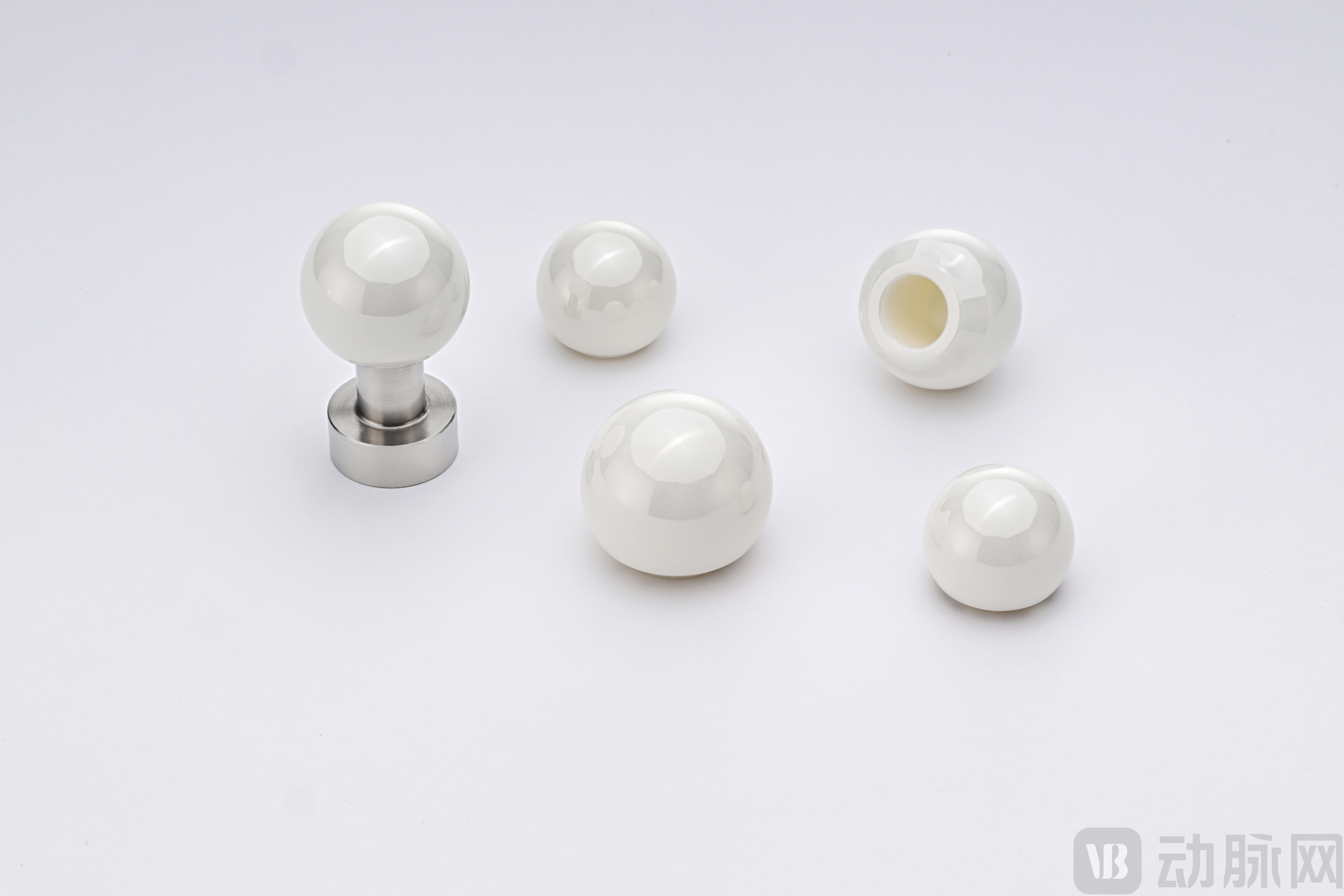
Image provided by Arthrone
Arthrone is no exception. Artica®The development of zirconia ceramic femoral heads took five years, with hundreds of material optimizations and process improvements. Ultimately, it reached an internationally leading level in key performance indicators such as resistance to static load, fracture toughness, surface roughness, friction and wear, and impact resistance.
The following are the core highlights of Artica®:
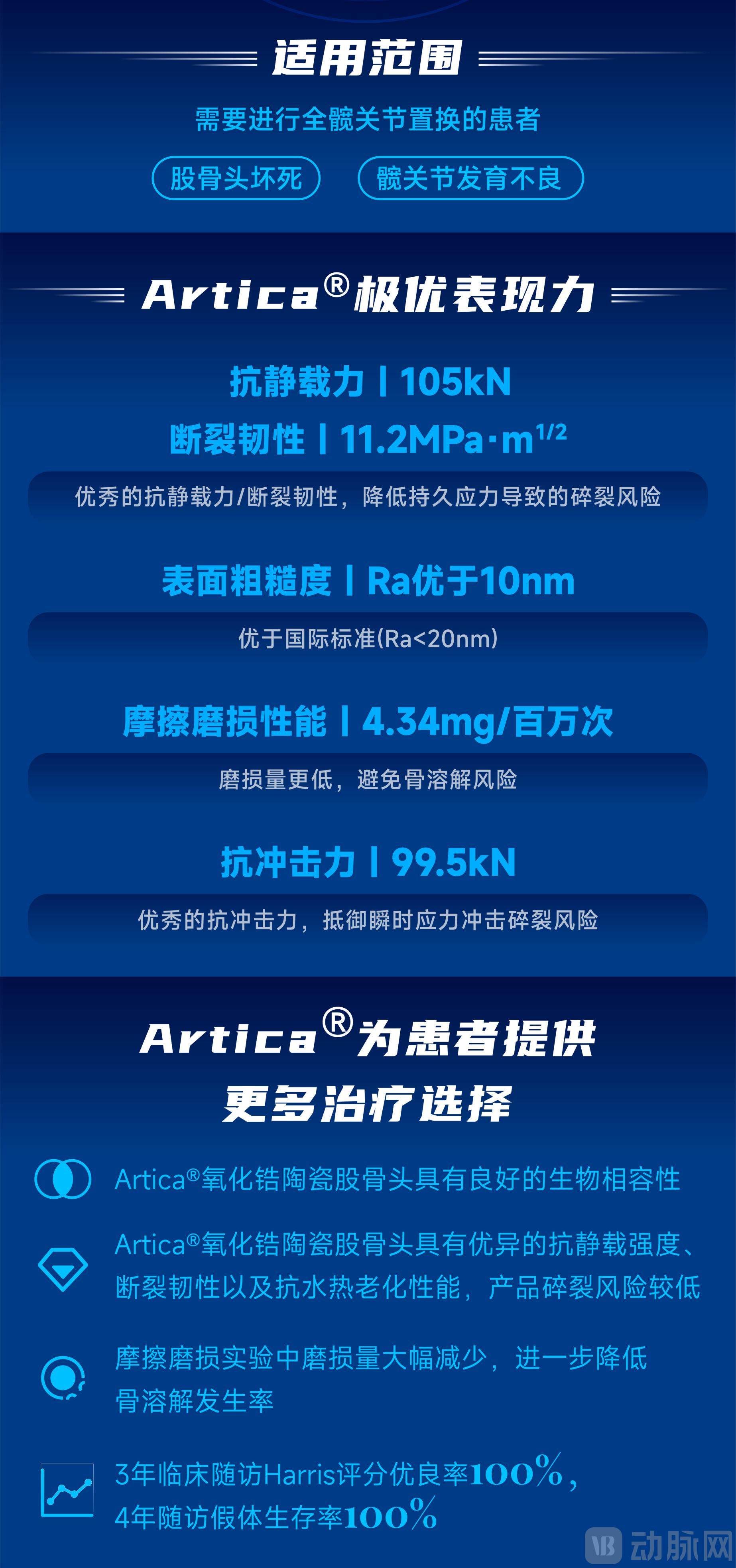
Anti-static load capacity is an important indicator for measuring the pressure-bearing capacity of ceramic joints. Artica®The static load resistance of zirconia ceramic femoral heads reaches 105 kN, far exceeding the international standard (ISO 6474) requirement of 46 kN. This data indicates that Artica®Capable of withstanding greater pressure, suitable for patients with higher body weight or activity levels, significantly reducing the risk of joint prosthesis fragmentation under extreme conditions.
The fracture toughness of ceramic joints is directly related to their service life and safety. Artica®By employing a unique material formula, molding process, and sintering technique, the fracture toughness has been increased to 11.2MPa·m¹/². This breakthrough significantly reduces the probability of ceramic joint fractures during long-term use, providing patients with enhanced safety.
Surface roughness is a key factor affecting the friction and wear performance of joints. Artica®The surface roughness (Ra value) is controlled within 0.01 micrometers, achieving a mirror-level smoothness. This ultra-smooth surface not only reduces friction with the acetabular liner but also significantly decreases the generation of wear particles, thereby extending the service life of the prosthesis.
In the friction and wear test, Arthrone®The performance is equally remarkable. Its wear rate is 4.34mg/million cycles, comparable to top international ceramic joint products. This data indicates that Artica®Able to maintain an extremely low wear rate during long-term use, reducing the risk of prosthesis loosening and revision caused by wear.
Impact resistance is an important indicator for ceramic joints to maintain stability during high-intensity activities. Artica®By optimizing the material's microstructure and processing techniques, the impact resistance reached 99.5kN after 10 hours of hydrothermal aging. This improvement enabled Artica®Better suited for high-intensity activities such as running and jumping, meeting the needs of young patients and sports enthusiasts.
From R&D, Clinical Trials to Implementation, Accelerating the Substitution with China-Produced Alternatives
Artica®The Development Path of Zirconia Ceramic Femoral Heads Has Not Been Smooth Sailing. Zhang Yunlong recalled that the team faced numerous challenges during the R&D process. First, the development of ceramic materials requires extremely high precision and stability.From the selection of powder, the optimization of forming and sintering processes, to the development of subsequent processing techniques, each step requires repeated trials and adjustments.Arthrone conducted a large number of pre-experiments in powder selection and ultimately chose the most suitable material. In terms of sintering technology, the team quickly identified the optimal process parameters through methods such as orthogonal decomposition, ensuring the high performance of the product.
As a high-performance biomaterial, the preparation process of zirconia ceramic is extremely complex, involving multiple fields such as materials science, precision machining, and biocompatibility. Arthrone has overcome several key technical challenges through independent research and development, including the preparation of high-purity zirconia powder, precision molding, and high-temperature sintering processes. In addition, the company has established a strict quality control system to ensure that every product meets international standards.
Secondly,The structural design and mechanical processing of the product are also difficult points in the R&D process.In order to meet clinical needs, Arthrone has designed 11 different models of femoral heads, covering various demands for different diameters and lengths. In terms of machining, the team independently developed three key pieces of equipment, achieving the same machining accuracy as imported equipment but at only 1/3 of the cost. This innovation not only reduces production costs but also improves production efficiency, laying the foundation for the rapid market entry of the products.
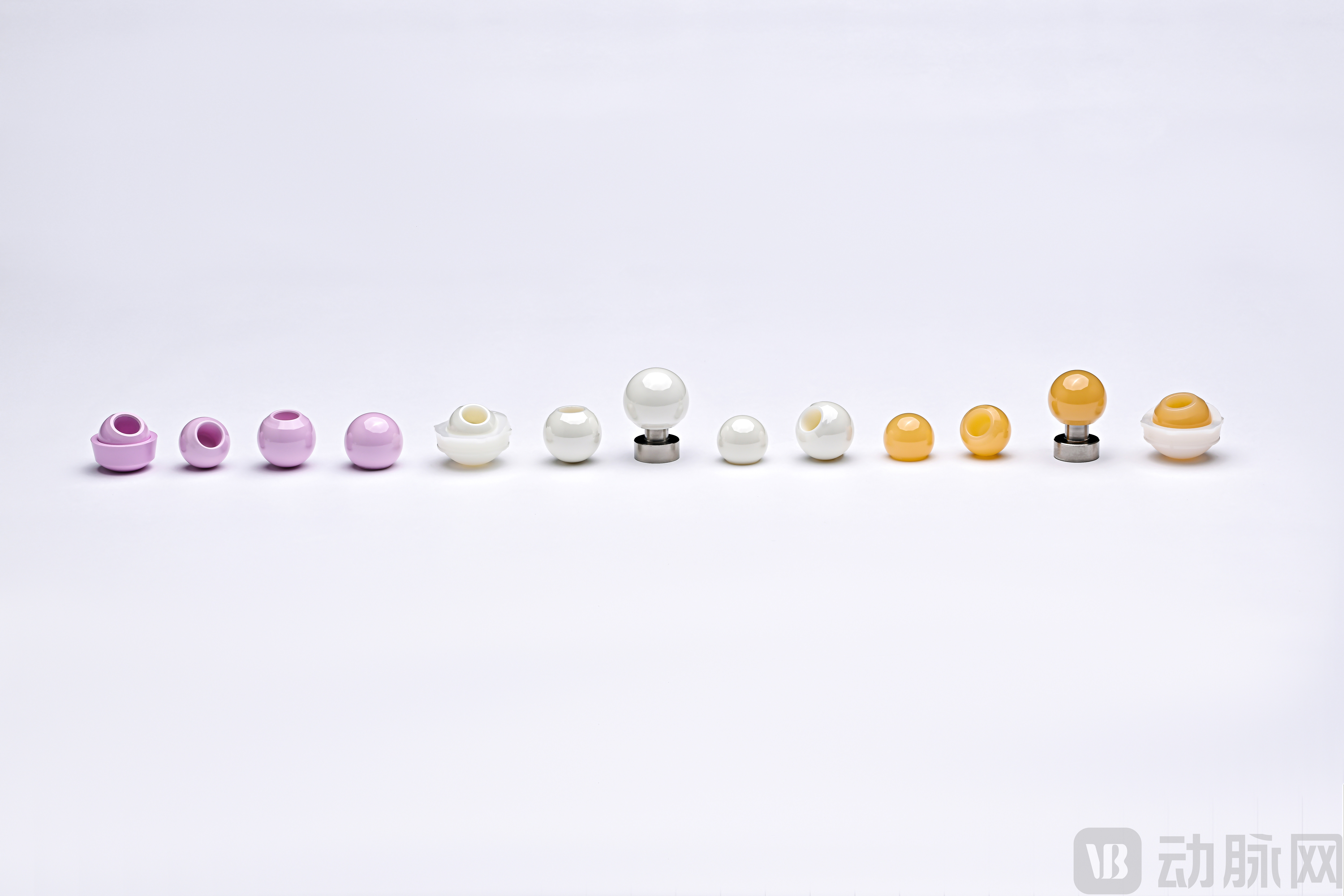
Image provided by Arthrone
During the clinical trial phase, Arthrone selected four well-known hospitals in China as clinical centers, including Drum Tower Hospital Affiliated to Nanjing University Medical School, China-Japan Union Hospital of Jilin University, Second Affiliated Hospital of Army Medical University (Xinqiao Hospital), and Luoyang Orthopedic Hospital of Henan Province (Henan Provincial Orthopedic Hospital). The trial results showed that Artica...®Zirconia Ceramic Femoral Heads Exhibit Excellent Clinical Performance, with a 100% Harris Score Excellence Rate at Three-Year Follow-Up and a 100% Implant Survival Rate at Four-Year Follow-Up. This outstanding clinical performance provides strong support for the product's approval and market launch.
Looking for the Next Breakthrough
The success of Arthrone is not accidental but stems from its persistent pursuit of technological innovation and strict control over product quality.
Each year, the company invests more than 20% of its sales revenue into research and development, forming an interdisciplinary team composed of material scientists, engineers, and clinical experts. In the future, Arthrone will continue to focus on the field of high-performance ceramic materials, expand its product line, and develop more innovative orthopedic implants.
Hou Shuqiang pointed out that market promotion is one of the important tasks for Arthrone at present. During the promotion process, Arthrone has adopted a distribution model, quickly bringing products to the market through cooperation with distributors. At the same time, the company places high importance on academic promotion, actively participating in domestic and international academic conferences to enhance the product's reputation and influence through academic exchange.
At the same time, Arthrone is also exploring its next product to be launched. The company is currently developing a ceramic knee joint, which is expected to enter the market within the next few years. The ceramic knee joint offers higher wear resistance and a longer service life, capable of meeting the needs of more patients. Arthrone plans to collaborate with well-known hospitals both domestically and internationally to carry out clinical trials on the ceramic knee joint, ensuring its safety and effectiveness.
In addition, Arthrone is actively expanding into the international market. It has already initiated the application process for EU CE certification and U.S. FDA certification, with expectations to achieve global sales within the next three years. Arthrone plans to promote Artica through collaborations with renowned hospitals and orthopedic centers abroad.®, and gradually cover the global market.