

AstraZeneca's Strategic Moves in China: Advancing Lung Health Through Innovation and Investment

AstraZeneca
Biopharmaceutical Manufacturer
On March 21, AstraZeneca announced its biggest move in China so far this year.
AstraZeneca announced a $2.5 billion investment plan to establish its sixth global strategic R&D center in Beijing, focusing on cutting-edge research and development in oncology, cardiovascular diseases, respiratory diseases, immunology, and artificial intelligence applications. The company also reached several major R&D and production collaborations, including the establishment of a joint venture with CanSino Biologics to develop, manufacture, and commercialize innovative vaccines in disease areas such as respiratory conditions.
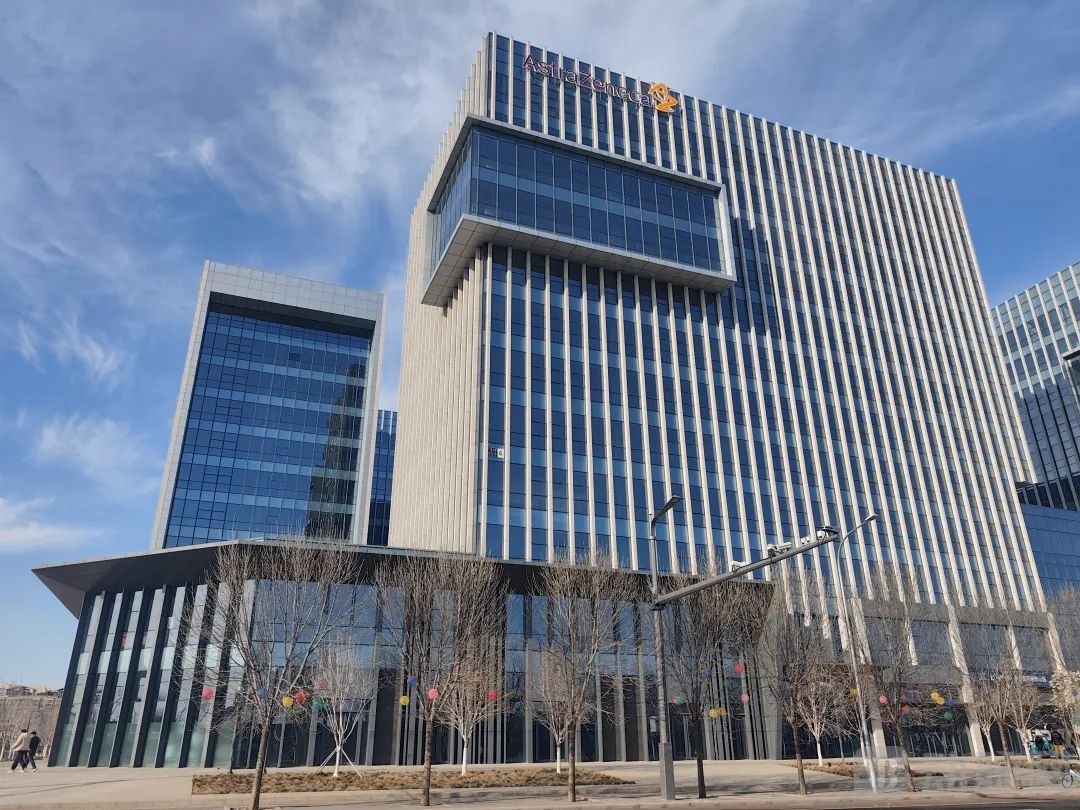 Figure丨Beijing Global Strategic R&D Center
From Molecular Concept to Clinical Breakthrough: Driving Science and Innovation
The Global Strategic R&D Center established in Beijing this time is AstraZeneca's second global strategic R&D center in China, following the establishment of the Global Strategic R&D Center in Shanghai. It will be supported by advanced artificial intelligence and data science laboratories to promote early drug research and clinical development, accelerating the transformation of innovative drugs from the laboratory to the market.
The driving force behind this is the unmet medical needs of Chinese patients. Only by addressing China's needs can it be utilized by China, allowing the vast number of Chinese patients to benefit.
Currently, the prevention and treatment of chronic respiratory diseases are key issues in building "Healthy China 2030," yet significant challenges remain. In China, there are nearly 100 million patients with chronic obstructive pulmonary disease (COPD), over 45 million asthma patients aged above 20, and lung cancer consistently ranks first in both incidence and mortality rates—behind these figures lie hundreds of millions of patients yearning for "free breathing," as well as a severe and enduring challenge faced by China's public health system.
With over 50 years of deep involvement in the respiratory field, AstraZeneca has consistently confronted severe challenges by continuously investing in research and development, and launching innovative drugs alongside comprehensive disease management solutions. The company has already introduced several classic products to the Chinese market, covering treatment areas such as asthma and chronic obstructive pulmonary disease (COPD). On March 24, Benralizumab Injection, an innovative targeted biologic for Severe Eosinophilic Asthma (SEA), was officially commercially launched in China for the maintenance treatment of adults and adolescents aged 12 years and above with severe eosinophilic asthma. This marks AstraZeneca's first biologic in the respiratory field. With this, AstraZeneca has established a complete product portfolio and solution set in China, covering mild, moderate, and severe asthma.
At the same time, the innovation in AstraZeneca's R&D pipeline is also highly anticipated: currently, the synchronization rate of R&D pipelines in China and globally has reached 100%, with plans to introduce 20 globally innovative drugs by 2030.
Not only that, but China is also leading global research and development. In AstraZeneca's global R&D system, there are nearly 20 global clinical trials led by China. By building a decentralized research network, Chinese grassroots patients are included in the clinical trial population, better aligning with the clinical needs and characteristics of Chinese patients. At the same time, AstraZeneca is actively helping to enhance the global influence of Chinese academia and innovation. Recently, the publication of the Phase III DIRECTION study results at an international academic conference marked a significant breakthrough in the treatment of severe asthma targeting the TSLP pathway. Last year, the international multicenter Phase III clinical trial for a novel aldosterone synthase inhibitor (ASI) initiated in the field of cardiovascular treatment in China was another international study based in China and aimed at Asia, showcasing the contribution of Chinese expertise in continuously advancing clinical research and treatment.
AstraZeneca's Global CEO Pascal Soriot recently told the media that China is an important part of global innovation in the biopharmaceutical field. In the past few years, AstraZeneca has made substantial investments. As the saying goes, "When collective strength is applied, there is nothing that cannot be achieved; when collective wisdom is employed, there is nothing that cannot be accomplished." One notable characteristic of AstraZeneca is that, as a multinational pharmaceutical company, it has formed increasingly close connections with China’s healthcare ecosystem in recent years, continuously expanding scientific innovation both vertically and horizontally, ultimately serving Chinese patients.
From "the First Kilometer" to "the Last Kilometer": Promoting Diagnostic and Treatment Transformation and Shared Health
If accelerating the availability of more innovative drugs for clinical benefits is the "first mile" on the road to managing respiratory diseases, then promoting the下沉 of quality medical resources to基层 healthcare, fully meeting patients' multi-level needs, and promoting共同 health is the "last mile" in this long chain.
AstraZeneca wants to ensure smooth operations for both the "first" and "last" mile.
Due to the impact of multiple factors such as population aging, environmental changes, and lifestyle, the number of patients with chronic obstructive pulmonary disease (COPD), asthma, and other conditions continues to grow. However, there remains significant room for improvement in early screening, precise diagnosis, standardized treatment, and long-term management.
Facing these "challenges," at the recently held 2025 International Forum on Respiratory Health and Airway Diseases, AstraZeneca proposed to collaborate with experts from China and abroad to jointly promote the implementation of clinical guidelines, enhance standardized diagnosis and treatment of respiratory diseases, accelerate the efficient translation of medical research into clinical practice, provide higher quality medical services, and contribute "Chinese solutions" to respiratory health.
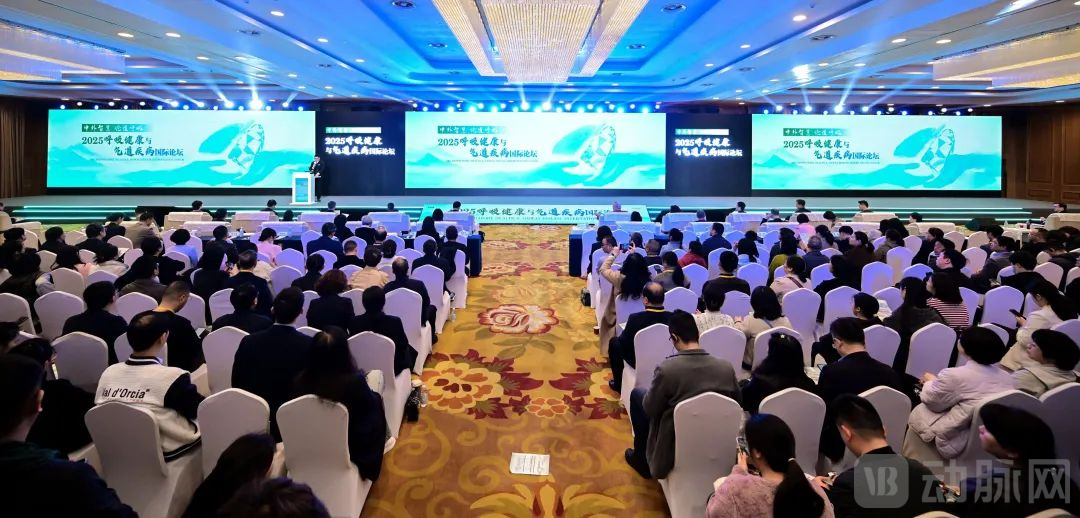
Figure丨2025 International Forum on Respiratory Health and Airway Diseases
In 2024, COPD was included in the National Basic Public Health Service Program, becoming the third chronic disease to be incorporated into the program. In this regard, Academician Wang Chen, Vice President of the Chinese Academy of Engineering, President of Peking Union Medical College, and Director of the National Center for Respiratory Medicine, emphasized the need to focus on early screening and standardized diagnosis and treatment in the "post-prevention era" following the inclusion of COPD in basic public health services. This aims to enhance overall medical standards and protect the lung health of more patients.
Community hospitals, county and township health centers, and other grassroots medical institutions are undoubtedly the front-line forces in the prevention and treatment of chronic diseases such as COPD, cardiovascular diseases, and diabetes. In recent years, the state has introduced a series of policies to enhance the early screening, diagnosis, and treatment capabilities at the grassroots level. AstraZeneca is committed to improving diagnostic and treatment services for hundreds of millions of Chinese patients with chronic diseases and reshaping their life journeys by supporting the accessibility of high-quality drugs and the enhancement of grassroots healthcare standards.
From continuous R&D investment in China, an ever-expanding "circle of friends," to transformative changes in grassroots healthcare, AstraZeneca's deep engagement in China reflects its sustained confidence in the Chinese market and its innovative R&D capabilities.
As Pascal Soriot said after this additional investment, "This $2.5 billion investment reflects AstraZeneca's strong commitment to China and will become one of the key drivers supporting our mission to bring innovative medicines to patients worldwide in the future."
In the view of Leon Lin, General Manager of AstraZeneca China and Head of AstraZeneca China's BioPharmaceuticals Business, AstraZeneca has long-term ambitions deeply aligned with and resonating strongly with the future goals of Healthy China. "Our aim is not only to treat diseases but also to drive science and innovation, promote diagnostic and therapeutic transformation, and advance shared health. We strive to make respiratory diseases shift from 'uncontrollable' to 'manageable,' and ultimately 'curable,' safeguarding lung health in China and contributing more significantly to 'Healthy China 2030.'"
Disclaimer: This material is intended for media use only and not for clinical medication guidance or any drug promotion purposes. If you have any questions, please consult healthcare professionals.
References:
1. Chronic Obstructive Pulmonary Disease Group of the Chinese Thoracic Society of Respiratory Diseases, Chronic Obstructive Pulmonary Disease Working Committee of the Chinese Association of Chest Physicians, Chen Rongchang, Kang Jian. Chinese Expert Consensus on Identification and Management of Patients at High Risk for Acute Exacerbation of Chronic Obstructive Pulmonary Disease [J]. International Journal of Respiration, 2022, 42(24): 1845-1863.
2. Kewu, Huang. Yang, et.al. Prevalence, risk factors, and management of asthma in China: a national cross-sectional study [J]. The Lancet. 2019 Aug 3;394(10196):407-418.
3. Zheng Rongshou, Chen Ru, Han Bingfeng, et al. Analysis of the prevalence of malignant tumors in China in 2022[J]. Chinese Journal of Oncology, 2024, 46(3):221-231.
4. National Medical Products Administration approval, August 2024