GSK's First-in-Class Dual-Target Oral Antibiotic Blujepa (Gepotidacin) Approved in the U.S. After 30-Year Innovation Gap

GSK
Pharmaceutical R&D Manufacturer
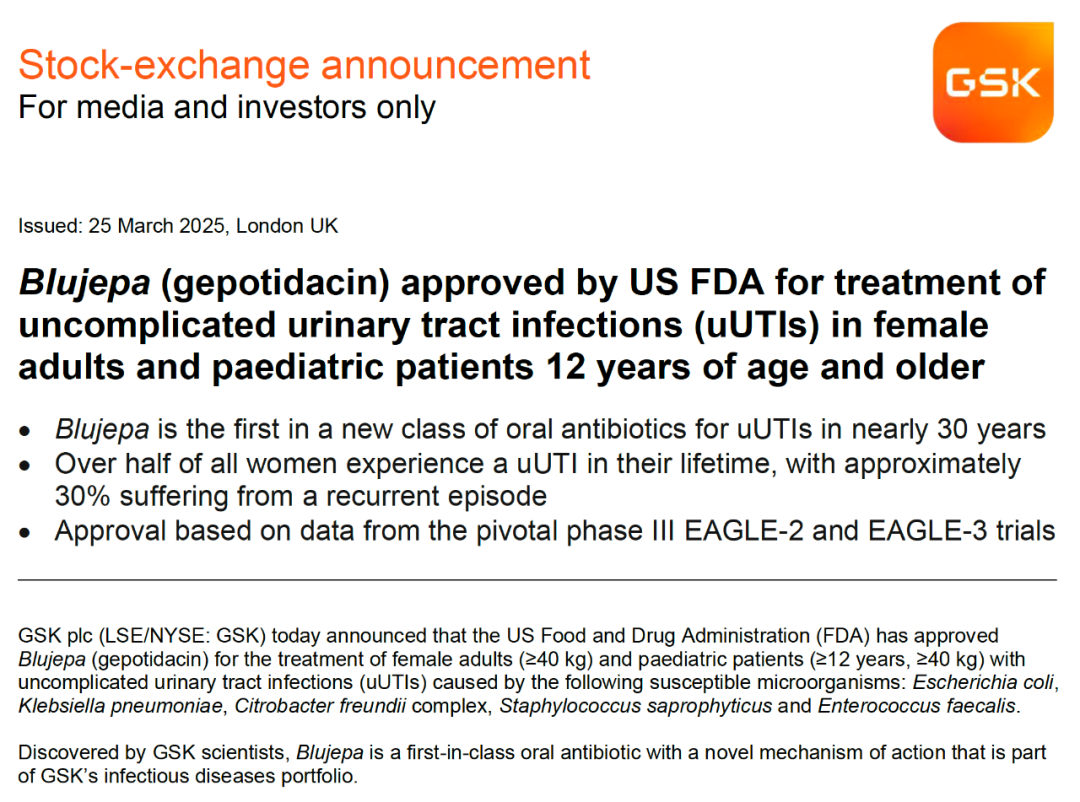
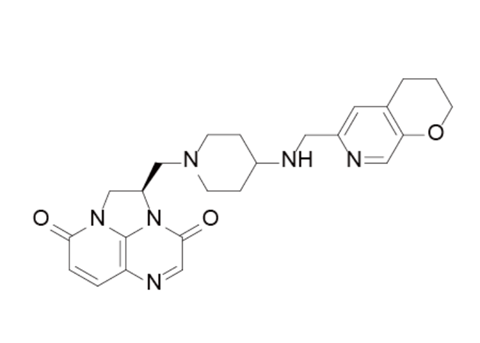
Image Source: GSK Official Website
Mechanism Revolution
Dual-Target Antibiotics Break 30-Year Silence
United StatesFDALatest ApprovedBlujepa(gepotidacin) Not only is it close to30The first new class of oral antibiotics for urinary tract infections in years, with its unique dual-target mechanism, has ushered in a new era of anti-infective treatment.As a triazacarcin-class antibiotic, this drug precisely inhibits bacteriaDNATwo different topoisomerases in replication (GyrB/ParE), Forming"Double Shackles"——This feature is a milestone in the history of antimicrobial drug development.
From the disclosed molecular mechanism, when a pathogen needs to simultaneously mutate two targets to develop resistance, this significantly raises Blujepa's resistance barrier compared to traditional antibiotics. Against the backdrop of continuously increasing resistance rates in major urinary tract infection pathogens such as E. coli and Klebsiella pneumoniae (China's 2024 CHINET data shows E. coli resistance to fluoroquinolones exceeds 50%), this "double insurance" design holds significant clinical value.
Efficacy Breakthrough
EAGLE Study Reveals Differentiated Competitiveness
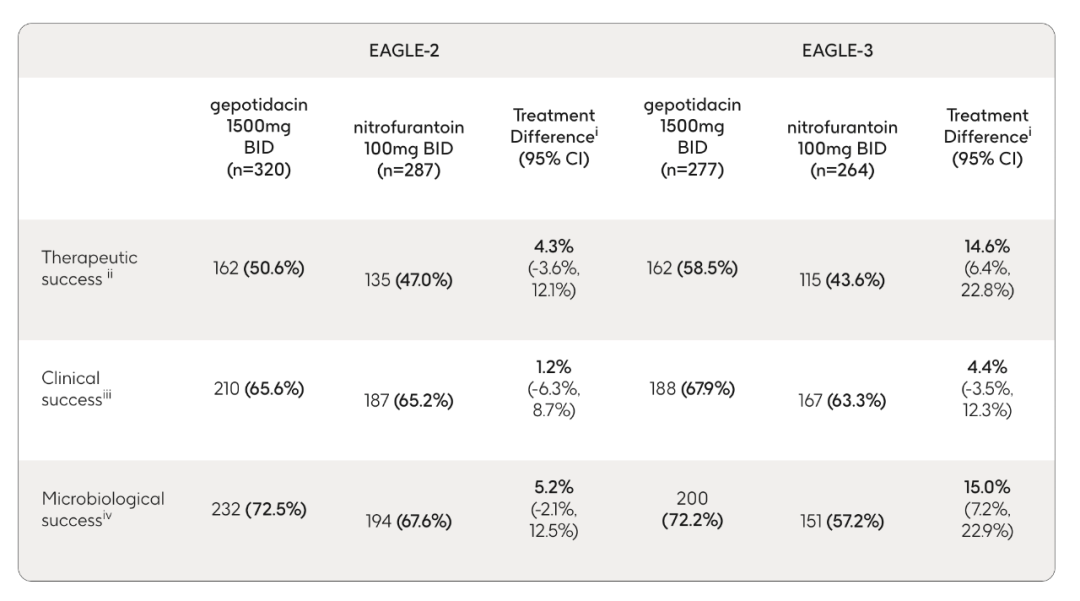
Based on the data from the two Phase III studies, EAGLE-2 and EAGLE-3, Blujepa demonstrates a dual breakthrough in efficacy:
Non-inferiority Foundation:Achieved non-inferiority against nitrofurantoin (current first-line treatment for uUTI) (EAGLE-2: 50.6% vs 47.0%)
Efficacy Breakthrough:Demonstrated statistical superiority in a more rigorous trial (EAGLE-3: 58.5% vs 43.6%, p=0.0003)
Particularly noteworthy is that in real-world scenarios involving drug-resistant strains, Blujepa’s clinical cure rate showed a 14.6 percentage point increase compared to traditional drugs. This represents a breakthrough treatment option for patients with recurrent urinary tract infections (approximately 30%) and those infected with multidrug-resistant bacteria.
Track Reconstruction
Four Dimensions Impacting the Antibiotic R&D Landscape
Technological Pathway Innovation:Unlike traditional single-target drugs such as β-lactams and fluoroquinolones, the dual-enzyme inhibition strategy provides a new paradigm for the development of antibacterial drugs against drug-resistant bacteria.
Potential for Indication Expansion:In addition to the approved uUTI, its application in fields such as gonorrhea (Phase III study completed) may change the landscape of sexually transmitted disease prevention and treatment.
Public Health Value:Receives Joint Funding from U.S. BARDA and Department of Defense, Highlighting Its Strategic Stockpile Drug Attributes
Commercial Development Insights: Precision development models targeting specific indications (such as community-acquired infections) may become a new trend in antibiotic research and development.
Insights from the Chinese Market
Innovative Solutions Urgently Needed for Drug-Resistant Bacteria Control
According to 202Data from the 4-year China Bacterial Resistance Surveillance Network shows that the resistance rate of common urinary tract infection pathogens, such as E. coli, to ciprofloxacin has reached 6.2.8%. If Blujepa receives approval from China's NMPA, it may become:
A New Option for Patients with Recurrent Urinary Tract Infections
"Firefighter" for the Treatment of Multidrug-Resistant Bacterial Infections
High-value varieties in the antibiotic classification management system
But two major practical challenges need attention:
Listing Rhythm:The U.S. commercial plan is scheduled for the second half of 2025. Referring to the recent time gap between China and the U.S. in the launch of innovative drugs (e.g., Sulopenem delayed by 3 years), there is uncertainty regarding when Chinese patients will benefit.
Payment System Adaptation:In the context of DRG/DIP reform, a pricing mechanism based on clinical value needs to be established.
R&D Race
Global R&D Pipeline Comparative Analysis
The following are the new drugs under research in the field of uUTI globally:
Venatorx/Melinta: Cefepime-Taniborbactam (Phase III)
Chinese domestic company: Jiangsu Hansoh HSK-29116 (RNA polymerase inhibitor, Phase I)
Blujepa's differentiation advantage lies in the convenience of its oral dosage form and the forward-thinking dual-target mechanism. However, compared with intravenous formulations, its application in the field of severe infections may be limited, leaving market space for other drugs under development.
The approval of Blujepa not only marks GSK's continued leadership in the field of infectious diseases but also signals a strategic shift in antibiotic development from "molecular modification" to a "mechanism revolution." Given that the clinical use of antimicrobial drugs in China remains more intensive than in Europe and the U.S., the introduction of innovative drugs like this will accelerate the upgrading of the drug-resistant bacteria prevention and treatment system. As the alarm bells of the "post-antibiotic era" continue to ring, the advent of dual-target antibiotics may well represent a crucial turning point for humanity to regain the upper hand in the war against infections.


All articles reproduced in this official account are intended to convey more information, with the source and author clearly indicated. Media or individuals who do not wish to be reprinted may contact us (cbplib@163.com), and we will immediately delete the content. All articles represent the views of the author and do not represent the position of this site.