Johnson & Johnson Launches China's First CATALYS Precision Laser System 7.0 for Cataract Surgery

Johnson & Johnson
Medical Device R&D and Manufacturer


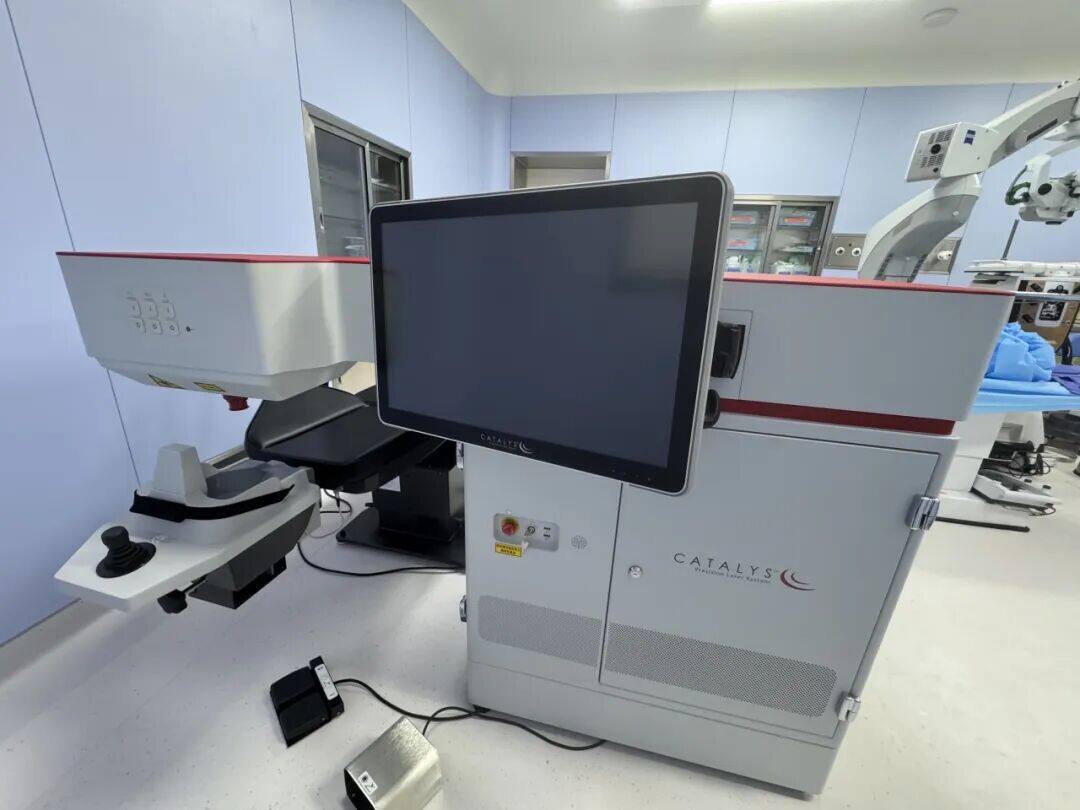
Recently, the first unit in ChinaJohnson & Johnson"White Force Seventh Generation Catalys 7.0" Navigation Femtosecond LaserPhacoemulsification SystemFormalSettled in Fudan University AffiliatedThe Pudong Campus of the Eye, Ear, Nose, and Throat Hospital marks the official entry of refractive cataract surgery in China into "Intelligent Bladeless, Precise Navigation" A New Era。
Catalys 7.0 It is an integrated scanning laser system used forCataract Surgery Lens Extraction, including anterior capsulotomy, lens fragmentation, and the creation of single-plane and multi-plane arcuate cuts or incisions in the cornea.
The system is characterized by high accuracy and high precision., which can be personalized based on the patient's individual scan data.Improving the Centration of Refractive Intraocular Lens After Implantation, avoiding intraoperative damage to the cornea and iris, as well as postoperative complications such as astigmatism and glare. In addition, Catalys 7.0 also optimizes the process of femtosecond laser-assisted cataract and presbyopia surgery.Shortened the operation time, making the entire surgery seamlessly completed.
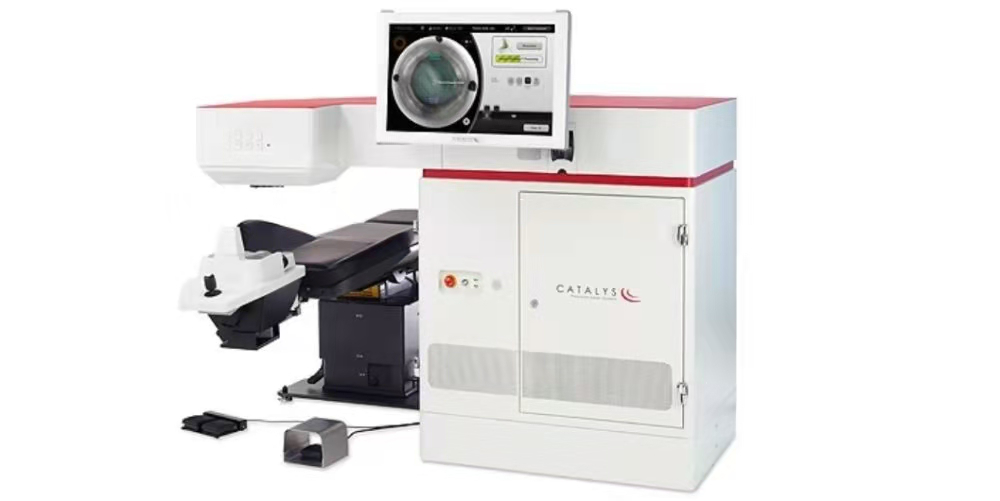
# Catalys 7.0, the Seventh Generation of Bausch + Lomb
Femtosecond laser, as an ultra-short pulse laser, has the advantages of high instantaneous power, precise focusing, strong penetration, and high precision, opening up a completely new treatment pathway in the field of cataract treatment. Compared with traditional phacoemulsification surgery,The entire femtosecond laser process is digitally controlled by a computer system.Convert several key steps in traditional cataract surgery, such as clear corneal incision, capsulotomy, and nucleus segmentation, to be automatically performed by femtosecond laser.。
The Next-Generation Femtosecond Laser Cataract Surgery Platform Launched by Johnson & Johnson Vision"White Force 7th Generation Catalys 7.0"With its unique1-Second Capsulotomy, Full-Range Nucleus Fragmentationand other features, leading femtosecond cataract surgery into the digital and intelligent era.
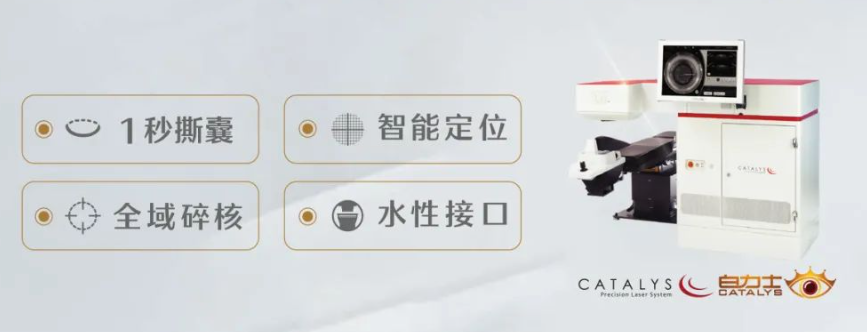
Product Features
Gentle and Knife-Free:The entire surgical procedure uses laser instead of traditional instruments, achieving one-step operations such as incision, capsulotomy, and nucleus division.No pain during the surgery, zero bleeding during the procedure., reducing the patients' suffering and postoperative recovery time.
Personalized Astigmatism Correction:BuildIris PositioningNavigation and high-definition scanning dual systems,Supports Two Personalized Astigmatism Correction Modes,Able to provide personalized astigmatism correction solutions based on the specific conditions of patients.。
ExtremelySugaoEffect:360° capsulorhexis can be completed in 1 second.,Using a semiconductor-pumped solid-state femtosecond laser specifically designed for cataract surgery, with a pulse width of less than 600 femtoseconds and a pulse frequency of up to 120kHz.To simultaneously ensure the speed of capsulotomy and the smoothness of the capsulotomy edge, while minimizing the risks of incomplete capsulotomy or capsular tear caused by patient eye movement or liquefied cortex overflow during the laser emission process.
# Clinical Application
Clinical Research Results
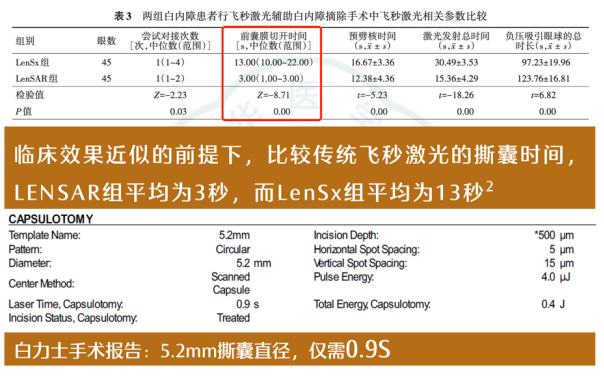
Research data on femtosecond-assisted cataract surgery shows that, under the premise of similar clinical outcomes,The average capsulotomy time for the LenSAR group (Lensar company) was 3 seconds, while for the LenSx group (Alcon) it was 13 seconds.Catalys (Johnson & Johnson) only needs0.9 seconds. InA large clinical study evaluating 1000 eyesCatalys can achieve a 99.8% complete capsulotomy.
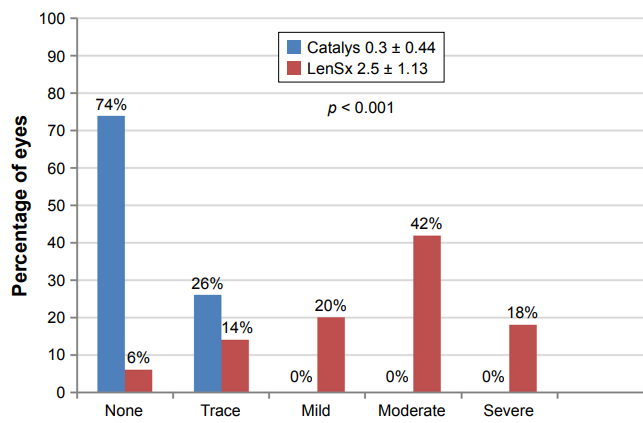
Another studyTreatment of 50 patients (mean age 69.9 ± 8.61 years) with bilateral cataracts using the Catalys or LenSx laser systems revealed no statistically significant differences between the two groups in terms of patient interface preparation time, number of docking attempts, effective phacoemulsification time, mean phacoemulsification power, total ultrasound time, and nucleus removal time. However,Compared with the Catalys group, the LenSx group showed a longer cortex removal time as well as higher levels of pressure sensation and vision loss (p<0.001).。More eyes in the Catalys group achieved complete capsulotomy (p<0.001), and cortex removal was also easier.The postoperative visual acuity, corneal curvature, endothelial cell count, and intraocular pressure were comparable between the two groups.


GOC2025 Zone


Ophthalmology Solutions Case


Ophthalmic Instruments Industry Research