

4C Medical Files for IPO: How AltaValve Is Redefining the High-Stakes TMVR Landscape

4C Medical Technologies
Cardiovascular Consumables Developer
In early March, a large financing deal shocked the entire medical device industry. 4C Medical, an innovative company in the field of transcatheter mitral valve replacement (TMVR), completed a $175 million Series D financing round. Boston Scientific and HHF Fuyuan Investment were the only two new investors participating in the joint investment, with existing shareholders also continuing to increase their investments. This is a rare ultra-large financing event in the medical device sector.
Since its establishment, 4C Medical has drawn significant attention for its bold innovations in the TMVR field, but it has also faced numerous doubts. This investment by Boston Scientific is undoubtedly a strong vote of confidence in 4C Medical's original innovations.
The TMVR track that 4C Medical Technologies, Inc. has been deeply cultivating is known as one of the major "battlegrounds" in the global medical device industry. It features enormous clinical demand and clear pain points but is also marked by high barriers and extreme difficulty, which has deterred many device companies. Even with giants like Abbott, Medtronic, and Edwards increasing their investments, and dozens of companies relentlessly pursuing advancements, no product has yet been approved by the FDA. In this context, how does 4C Medical Technologies, Inc. manage to carve out a differentiated and innovative path with no followers? Where does its courage and confidence come from?
Recently, VCBeat had the privilege of conducting an exclusive interview with JC Sun, strategic advisor of 4C Medical Technologies, to explore the innovative ideas and product technologies of 4C Medical.
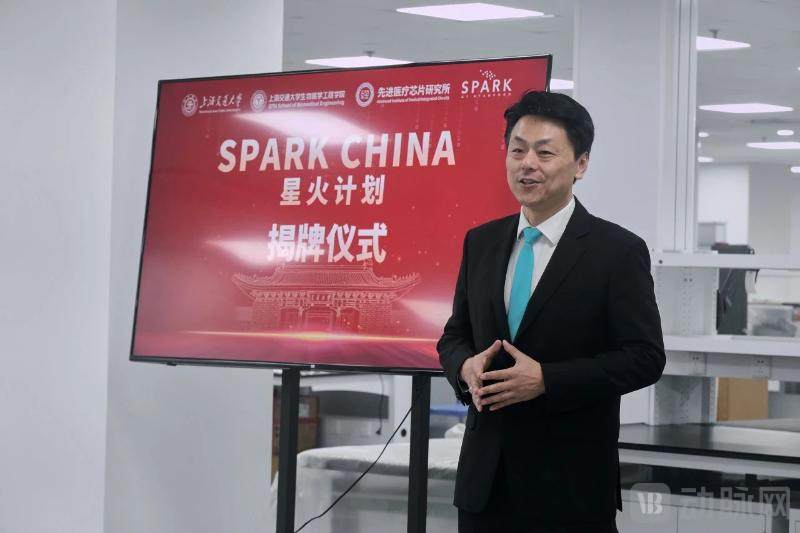
JC Sun, Strategic Advisor of 4C Medical Technologies, Inc.
JC Sun, PhD MBA, Bachelor's and Master's degrees from Shanghai Jiao Tong University, later obtained PhD and MBA in the United States. JC has extensive experience in the commercialization and capitalization of healthcare innovations, holds more than 20 patents in the medical technology field, and has led new product launches in the U.S., Europe, and Asia. He was a core team member involved in Medtronic’s $500 million acquisition and integration of Invatec in Switzerland. Additionally, he is one of the pioneers in helping globally advanced medical technology enterprises enter China's capital and clinical markets through equity financing and strategic collaborations.
Since 2003, JC has been deeply engaged in the medical technology industry, serving as a strategic advisor to dozens of companies and co-founding several medical technology firms, such as Big Sky Biomedical, Crossfire Medical, and Mavin Wear. Since 2019, JC has served as an advisor to SPARK Stanford, Stanford University's healthcare innovation and translation platform. In 2021, he co-founded FastWave Medical. In 2024, he co-founded SPARK China, the Chinese branch of Stanford University’s SPARK Global.
1Transcatheter Mitral Valve Replacement: A Potential "Fallback" Solution to the Complex MR Treatment Dilemma
Mitral Regurgitation (MR) refers to the backflow of blood from the left ventricle (LV) into the left atrium (LA) due to mitral valve dysfunction. Over time, the excessive volume load caused by the regurgitation can lead to left ventricular dilation, mitral annulus enlargement, and further exacerbation of mitral regurgitation, resulting in severe clinical symptoms such as congestive heart failure, pulmonary congestion, and pulmonary edema.[1]
Due to anatomical location, hemodynamic pressure, and various etiological factors, mitral regurgitation is currently the most common cardiac valvular disease. Based on its pathological mechanism, mitral regurgitation can be divided into primary mitral regurgitation (PMR) and secondary mitral regurgitation (SMR); the former is caused by structural lesions of the valve itself, while the latter results from lesions in the heart itself or the valve support structure.
At present, the treatment methods for mitral regurgitation mainly cover several mainstream technical routes, including drug therapy, surgical repair, surgical replacement, transcatheter repair, and transcatheter replacement.
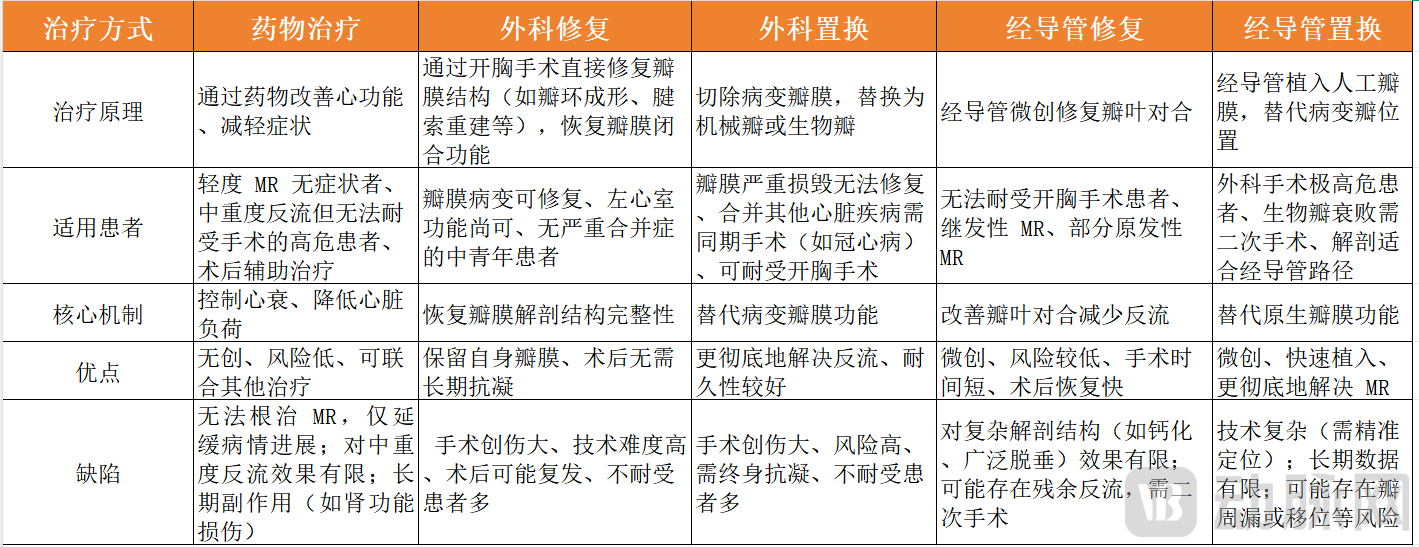 Comparison of Major Technical Routes for Mitral Regurgitation VCBeat Mapping
Medical treatment serves only as an auxiliary method and cannot reverse valvular structural lesions. Moreover, while medical treatment can delay the progression of secondary MR, there is currently insufficient evidence to suggest that it can reduce the severity of primary MR. When drug efficacy is unsatisfactory, surgery becomes the optimal choice.
However, the key pain point in MR surgical treatment is that the patient population covered by surgery is very limited due to reasons such as low patient willingness to choose surgery, intolerance to surgery, and high technical difficulty. "Based on rough estimates using current epidemiological data, there are over 100 million patients globally with moderate to severe mitral regurgitation. However, about 30% of patients are not suitable for open-heart surgery due to old age, comorbidities, and severely impaired heart function. Moreover, due to low patient willingness, the actual proportion of patients undergoing surgery is less than 1%," JC explained. It is estimated that there are 5.5 million patients in China who require intervention for severe MR, but only 0.5% of them have received surgical treatment.
MR survival patients without surgical intervention showed a significant increasing trend in heart failure hospitalization rates within five years. According to relevant literature data, the overall 1-year to 5-year mortality rate of non-surgical patients continuously increased from 20% to 50%.[2]For such patients, transcatheter mitral valve treatment becomes an ideal choice due to its advantages such as no need for thoracotomy and extracorporeal circulation, lower risk of complications, and faster postoperative recovery. Its influence in MR treatment continues to expand, and in recent years, it has been increasingly recognized by clinical guidelines.
In MR patients who meet anatomical conditions, the repair approach is usually the preferred option due to its advantages of avoiding artificial valve-related risks, being closer to physiological conditions, and eliminating the need for long-term anticoagulation. However, transcatheter repair is not suitable for a significant portion of patients due to factors such as valve thickness, calcification, and annulus size. Additionally, it has relatively limited efficacy in eliminating MR and carries a certain risk of recurrence, especially when heart disease progresses and changes in cardiac structure and valves may reduce the effectiveness of repair interventions. On the other hand, transcatheter replacement, by substituting the damaged valve, has the potential to resolve MR more thoroughly with a lower risk of recurrence.
Transcatheter Mitral Valve Replacement (TMVR) offers a new solution for patients who are unable to undergo mitral valve surgery, experience valve degeneration after surgical mitral valve replacement, or develop mitral regurgitation (MR) following mitral annuloplasty. Moreover, in terms of patient eligibility screening during the preoperative stage, theoretically, TMVR can address various lesions and become a potential "fallback solution" for MR treatment. As TMVR technology advances, the indications for repair and replacement may be further refined, with both approaches being complementary rather than mutually exclusive.
2Development of a TMVR System with Low Delivery Profile, Operational Convenience, and Anchoring Stability: 4C Medical Technologies Leads the Path in Differentiated Innovation
Currently, compared with transcatheter mitral valve repair (TMVr) represented by transcatheter edge-to-edge repair (TEER), the progress of interventional replacement has been relatively slow.
From the perspective of technical difficulties, compared with TMVr, the TMVR track lacks a mature technical solution that combines a low delivery profile, operational convenience, and anchoring stability. This is mainly due to the following aspects:
First,The anatomical structure of the mitral valve is highly complex, making stable anchoring difficult to achieve.The mitral valve annulus is saddle-shaped and has dynamic elasticity, unlike the rigid structure of the aortic valve, making it difficult for artificial valves to achieve stable anchoring, which can easily lead to paravalvular leakage or displacement. Moreover, the subvalvular structure of the mitral valve is complex, with delicate structures such as chordae tendineae and papillary muscles surrounding it. During replacement, it is necessary to avoid damaging these tissues, otherwise serious complications may occur. Additionally, the mitral valve bears high pressure during left ventricular systole, demanding higher durability and stability from the valve.
Second,Challenges of Miniaturization in Delivery SystemsCompared with TMVR technology, the TMVr system usually has a lower profile and relatively simpler operation, with a shorter learning curve for doctors and higher clinical operational feasibility, which has promoted the popularization of this technology. However, the TMVR system needs to complete valve replacement. Due to the larger overall volume of the valve, the outer diameter of the delivery system is also larger. "If the delivery profile cannot be reduced, it will not only limit the choice range of vascular access but also directly exclude some patients with complex anatomical conditions from the indications, which will greatly affect the popularization of this surgical method," JC explained.
Third,Limitations of Approach SelectionThe transapical approach is more invasive with a higher risk of complications; while the transfemoral venous-septal approach, although minimally invasive, has greater technical difficulty and requires overcoming issues such as vascular tortuosity and accurate positioning for atrial septal puncture. Moreover, the TMVR procedure is technically challenging, requiring operators to undergo extensive training to master the skills, which also limits the widespread adoption of the technology to a certain extent.
From the market landscape, in the TMVr field, Abbott, as the leading company, has conducted relatively systematic and comprehensive market education. However, the replacement track lacks a similar heavyweight pioneer to lead industry development, and most entrants are still in the exploration phase.
Abbott's MitraClip, as the only TEER product to receive triple certification from the FDA/CE/NMPA, has driven TEER devices into genuine clinical use. Building on this, companies both in and outside of China have continuously entered the market, further advancing the development of this field. In contrast, most products in the TMVR sector are still in the clinical trial stage, with only one product receiving CE certification (Abbott’s transapical Tendyne), and no products yet approved by the FDA.
The combination of these factors has made TMVR a veritable "high-risk R&D field." JC frankly admitted that the TMVR track could be described as "littered with failures," with many startups having attempted to enter the field. However, constrained by product design flaws and clinical validation hurdles, they have had to repeatedly iterate on technology and solutions, causing widespread stagnation or even complete failure in clinical translation. Even though industry giants continue to invest, the high technical barriers have led to only limited substantive breakthroughs.
So, where exactly is the viable development path? 4C Medical Technologies' differentiated innovation approach offers a new perspective for the industry. Amidst a landscape where most companies entering the market remain cautious, its disruptive innovation is indeed rare.
Among a group of companies, there are two key points that have enabled 4C Medical to stand out.:From the development path4C Medical Technologies, Inc. rejects conventional thinking, forging an original and innovative path with no followers, and persistently深耕下去;From the technical breakthroughWith its unique design, 4C Medical Technologies, Inc. has developed the world's only low-profile TMVR system that can be fully retrievable even after complete stent release, addressing technical challenges such as large delivery system profile, difficult anchoring, and complex operation.
Since its establishment, 4C Medical has been an innovative company that attracted considerable attention. With its original approach to mitral valve replacement, it has won numerous innovation awards and quickly gained widespread recognition in the industry.

JC and 4C Medical Technologies CEO Saravana Kumar and Team
"4C Medical's innovation in the TMVR field is undeniable across the industry, but it has also been controversial from the start — can such an unprecedented innovative product design really work properly inside patients?" JC admitted.
In response to doubts, 4C Medical Technologies, Inc. took action — just over a year after officially hiring employees and forming a team, the company carried out the first human clinical trial of its core product, AltaValve, on a Canadian patient in his 70s. The trial utilized a transapical approach.Three years after the implantation of AltaValve, the heart of the elderly man, who initially could not complete a sentence, recovered to the state of a fifty-year-old.JC emphasized that the trial results of this transapical case were highly significant, as they demonstrated the long-term favorable performance of the AltaValve system's implant, with its safety and efficacy preliminarily validated. Since then, there have been no changes to the design of the AltaValve implant, with subsequent innovations focusing on the delivery system. Currently, 4C Medical Technologies has launched a multicenter clinical trial program covering the United States, Japan, and Europe.
3Adhering to the R&D concept of "abandoning inertia thinking," the product has initiated multi-center clinical trials in the US, Europe, and Japan.
Jeffrey Chambers, Founder of 4C Medical Technologies, Inc.JC is a clinical cardiologist whose understanding of complex cardiac conditions far exceeds that of the average entrepreneur. This has determined that the company's innovative exploration has carried a strong underlying tone of "clinical needs first, technological tools second" from the very beginning. JC stated that one of the major insights 4C Medical Technologies, Inc. offers to the industry is that during the process of medical device development, it is crucial to be highly vigilant against "inertial thinking."
"Under the influence of inertial thinking, when encountering similar problems, people always tend to seek solutions from past experiences. In the field of medical devices, especially in innovation, this can lead to high trial-and-error costs, including both financial and time expenses." JC provided a very straightforward and vivid example to illustrate: "When people successfully fix nails with a hammer, they easily form a mental set, and whenever they encounter a nail afterward, they will think of hitting it with a hammer. However, if what they encounter is a screw, the impact of the hammer becomes ineffective, and a screwdriver that matches the thread structure is required instead."
JC frankly admitted that he believed a major important reason why some TMVR companies currently spend a lot of time and money yet achieve little is because they are constrained by inertia thinking and do not truly start from the problem itself.4C Medical, based on a full understanding and utilization of the anatomical differences of the mitral valve, has engaged in truly innovative thinking and design. I believe this is its biggest difference from other companies in terms of pathway selection.。”
JC believes that a good medical innovation, in the early stages of concept validation, should be purely based on the principle of “clinical needs as the main focus, with technological tools as support,” and should avoid interference from factors such as capital, finance, politics, or being restricted by habitual thinking. In the mid-stage of concept validation, when determining specific design plans, it is necessary to consider elements such as intellectual property, regulations, market timing, competition, medical insurance, commercialization, and capitalization. During this process, it is important to...Simple to use, cost-effective, and compliant with regulations"As an important measurement standard. 4C Medical Technologies, Inc. has adopted such an innovative approach.
First, no matter how advanced a technology is, if only a very small number of doctors worldwide can master it, then the procedure and related technologies cannot be widely adopted. 4C Medical Technologies has made no fewer than four rounds of improvements to the delivery system of AltaValve centered on the core concept of "ease of use," making it fully retrievable. Many design elements are borrowed from Abbott’s MitraClip delivery system, allowing operators to adapt more easily. In terms of "cost control," simpler products are easier to mass-produce and reduce costs quickly. For instance, although AltaValve’s spherical stent comes in several different sizes, its valves are standardized in size and specifications, making them more suitable for mass production and cost reduction. Regarding "regulatory efficiency," 4C Medical adopts the HBD pathway, conducting multi-center clinical trials simultaneously in the U.S., Europe, and Japan to synchronize the registration approval processes across these three major markets. This avoids the lengthy review cycles that could result from phased applications, thereby shortening the global time-to-market for the product.
4The world's only low-profile TMVR system that can be fully retrieved even after complete stent release, balancing technological innovation with clinical operational safety.
The stability of device anchoring has always been a major challenge for TMVR systems. Traditional TMVR systems typically anchor the valve to the mitral annulus, but issues such as annular calcification and anatomical variations often lead to fixation difficulties and can further exacerbate left ventricular outflow tract obstruction. Additionally, there are many ganglia at the base of the mitral annulus, and excessive compression by the device may cause cardiac electrophysiological disturbances. The AltaValve system, however, employs a unique atrial fixation design, effectively resolving this issue.
The AltaValve system adopts an innovative spherical stent design and is expected to become the world's first treatment solution that requires only atrial fixation to address mitral regurgitation.This design transplants the mechanical support principle of stents used in endovascular treatment to the anatomical structure of the heart. Taking into account the particularities of the atrial structure, it screens for the most common anatomical parameters through multimodal imaging analysis and adopts an appropriately oversized design to enable the spherical stent to form a stable mechanical lock within the target area.
Specifically, the AltaValve system uses a spherical nitinol stent that, after expansion, fits tightly against the roof and posterior wall of the left atrium. It self-adapts to the anatomical shape of the left atrium, evenly distributing pressure and avoiding localized stress concentrations. This design leverages the natural elasticity of atrial tissue for support without relying on mechanical anchoring at the valve annulus.
This enables AltaValve to offer a new treatment option for patients who cannot use annulus-anchored TMVR systems due to valve or annulus calcification, without considering the constraint of left ventricular outflow tract obstruction. Additionally, the stent base features a skirt design made of polymer material, which can effectively prevent paravalvular leakage. "Therefore, compared with other current TMVR systems, AltaValve has the potential to cover a broader patient population, offering a very promising market," JC added.
At the same time, the atrial fixation design of AltaValve can dynamically adapt to changes in the shape of the heart. During the cardiac remodeling process, traditional annulus or sub-valve anchoring methods cannot dynamically adapt to cardiac changes, resulting in reduced system applicability. However, AltaValve's spherical stent is soft and has excellent self-adaptive capabilities, allowing for stable anchoring even after cardiac remodeling.
Besides,A Major Highlight of AltaValve: No Need to Completely Eliminate the Native ValveGenerally speaking, the TMVR system needs to replace the patient's native valve, so the artificial valve will be subjected to full blood flow impact from the moment of implantation. However, the AltaValve system implants a spherical stent above the patient’s native valve, adopting a "valve-to-valve" design, which not only reduces dynamic load and helps lower the probability of paravalvular leakage but also improves the fatigue life of the artificial valve. It can also treat patients with failed repairs or recurrent MR after repair. "As the heart contracts during the remodeling process, the probability of long-term paravalvular leakage or displacement will be further reduced. 4C Medical Technologies is innovatively designing based on predicting the dynamic evolution of the anchoring area anatomy during the reverse remodeling process of the heart," JC explained.
This improves the durability of the TMVR system on one hand, and on the other hand, effectively reduces blood stagnation死角 during the interaction between the native valve and the artificial valve, lowering the probability of thrombosis. Moreover, by ensuring the anatomical integrity of the patient’s native valve, even if the TMVR system fails to deploy successfully, AltaValve can ensure that the patient's postoperative clinical condition is no worse than the preoperative baseline level. This advantage of reversibility breaks through the bottleneck where existing TMVR technologies struggle to achieve clinical safety assurance. Additionally, the AltaValve system uses fewer polymer materials, and the spherical stent can be endothelialized within one month of implantation in the human body, thus significantly reducing the risk of major bleeding caused by long-term anticoagulation after TMVR system implantation.
It is worth noting that,The AltaValve system is also the world's only low-profile TMVR system that can be fully retrieved even after the stent is completely released., which is closely related to its spherical stent design - if there are any barbs or hooks on the anchoring device, the system cannot achieve complete retrieval. Additionally, this is due to the unique delivery system design of AltaValve. The distal end of the AltaValve delivery system can achieve three-dimensional precision control, allowing the operator to adjust the catheter angle and position in real time according to the patient's unique mitral valve anatomy, ensuring precise matching of the device with the lesion site. This advantage is particularly evident when dealing with tortuous vessels or narrow passages.
"In this kind of complex and highly demanding surgery, doctors need to handle various uncertainties. If the system can be fully recovered, it will not only boost the doctors' confidence during the procedure, increase error tolerance, lower the operation threshold, but also significantly reduce surgical risks for patients," JC added.
In terms of access approach, AltaValve adopts the femoral vein–atrial septal puncture method, effectively reducing the higher mortality risk associated with the transapical approach. Additionally, its 24 Fr stent frame mesh provides the possibility for subsequent left atrial interventional procedures for patients.
5In Conclusion
"4C Medical provides an excellent example for professionals in medical innovation and entrepreneurship — if you truly start from clinical needs and use technological tools as assistance, it is possible to forge a highly promising path that gains recognition from both the clinical field and the capital market," JC believes. The innovative route that 4C Medical has taken in original medical device development holds more significant value for the industry, even surpassing the impact of the AltaValve product itself.
JC stated, "The clinical trials for 4C Medical are currently proceeding smoothly, and I am very much looking forward to the subsequent clinical phases and market launch being completed as soon as possible, so that this innovative technology can benefit more patients." In the future, 4C Medical will accelerate the clinical trials of AltaValve, targeting high-risk mitral regurgitation patients with severe calcification as a starting point to expand its commercial footprint and achieve broader patient coverage. As a dark horse and innovative pioneer in the TMVR field, we wait with anticipation to see what new miracles 4C Medical will create.
About SPARK China
The SPARK Medical Innovation Translation Platform originated at Stanford University in 2006. It adopts a design-thinking-based approach, emphasizing user needs and incorporating clinical requirements, regulatory demands, and financial assessments early on to ensure close alignment between academic research and industrial realities, thereby increasing the success rate of translation. The program focuses on concept validation for drug, device, and diagnostic projects, providing funding and expert guidance. Currently, the SPARK platform has been implemented in top-tier universities and institutions across more than 20 countries worldwide, achieving a translation success rate as high as 50%.
In November 2024, SPARK China officially launched in Shanghai, established through the collaboration between the Advanced Medical Chip Research Institute of Shanghai Jiao Tong University's School of Biomedical Engineering and Stanford University. As a member of SPARK GLOBAL (a non-profit organization founded in 2015 based on Stanford University’s SPARK platform, covering over 40 academic institutions worldwide), SPARK China brings together top research capabilities within China, following the classic SPARK model to discover innovative projects from universities and hospitals. It provides support such as funding and advisory services, integrates Stanford University's SPARK methodology, and leverages SPARK GLOBAL’s global network to accelerate domestic medical innovation in China and promote the transformation of academic achievements into clinical solutions.
Related Links:Helping Medical Innovation Cross the Valley of Death: Stanford SPARK Program Lands in China
Note: This article only represents the personal views of JC Sun.
References:
1.Douedi S, Douedi H. Mitral Regurgitation. In: StatPearls. Treasure Island (FL): StatPearls
Publishing; April 7, 2023.
2.Goel SS, Bajaj N, Aggarwal B, et al. Prevalence and outcomes of unoperated patients with
severe symptomatic mitral regurgitation and heart failure: comprehensive analysis to determine
the potential role of MitraClip for this unmet need. J Am Coll Cardiol. 2014;63(2):185-186.
3. VCBeat "2024 Transcatheter Mitral Valve Intervention Industry White Paper —— TEER Strength Remains Strong, China's Application Set to Enter the Fast Lane"