

HighLife Secures FDA Breakthrough Device Designation for Its Innovative TMVR System to Treat Mitral Regurgitation

HighLife
Companies Focusing on Transcatheter Mitral Valve Replacement (TMVR)
I. Milestone Breakthrough: FDA Grants HighLife TMVR System Breakthrough Device Designation
On April 9, 2025, an inspiring piece of news spread across the medical field: HighLife SAS from France proudly announced that its transseptal mitral valve replacement (TMVR) system had successfully received the Breakthrough Device Designation from the U.S. FDA. This designation is highly significant, highlighting the system's great potential for treating patients with moderate to severe mitral regurgitation (MR), injecting a "booster shot" into the global cardiovascular disease treatment arena.

Mitral regurgitation is a common and serious heart valve disease that affects numerous patients worldwide. Moderate to severe mitral regurgitation can impair heart function, causing symptoms such as shortness of breath, fatigue, and edema, significantly impacting the quality of life and life expectancy of patients. Statistics show that with the increasing aging population, the incidence of mitral regurgitation is on the rise, making the demand for effective treatment methods more urgent. Previously, traditional treatments had many limitations: surgical procedures were highly invasive and risky, making them unsuitable for many patients, especially the elderly, those in poor health, or those with multiple comorbidities; furthermore, some existing interventional therapies have proven unsatisfactory in terms of effectiveness and scope of application. Therefore, the emergence of the HighLife TMVR system is like a ray of hope, bringing new possibilities to these patients.
'%20fill='%23FFFFFF'%3E%3Crect%20x='249'%20y='126'%20width='1'%20height='1'%3E%3C/rect%3E%3C/g%3E%3C/g%3E%3C/svg%3E)
Since its launch in 2018, the FDA's Breakthrough Devices Program in the United States has been attracting significant attention from the global medical industry. The program aims to expedite the approval process for innovative devices that offer substantial improvements in the treatment or diagnosis of serious diseases and address unmet medical needs. Devices that receive this designation not only represent a major technological breakthrough but also signify their ability to deliver significant clinical benefits to patients. These devices either have no comparable alternatives on the market or demonstrate superior clinical advantages over existing technologies. The FDA invests upfront resources during the product development process, actively participating in product design and development. It provides early intervention and guidance on critical issues, including timely communication, balancing pre-market and post-market clinical usage data, flexible and effective clinical trial design, support from review teams, engagement from senior management, priority review, and accelerated inspection of the manufacturing quality system during the PMA application process. This series of "preferential policies" is designed to enable patients to access these life-saving innovative devices as soon as possible.
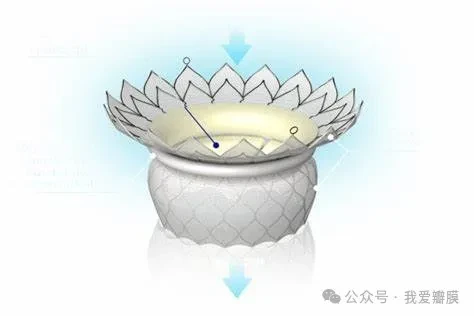
The HighLife TMVR System’s recognition as a Breakthrough Device by the FDA, standing out among numerous candidates, is no accident. Its unique "Valve-in-Ring" design is a paragon of technological innovation. This design employs a method where a fixed ring and valve stent are nested together, cleverly clamping the native leaflets to achieve active positioning and anchoring, giving the valve self-coaxial and anatomically adaptive characteristics. This innovative design theoretically significantly reduces the risks of paravalvular leakage and outflow tract obstruction, effectively addressing the pain points of traditional mitral valve replacement. Compared with other similar products, the HighLife TMVR system demonstrates clear advantages in terms of procedural ease and treatment stability. For instance, the procedure primarily utilizes DSA imaging with ultrasound as an auxiliary, facilitating wider adoption and promotion of the technology; the transseptal delivery system has an outer diameter of only 30Fr, markedly reducing the probability of vascular complications. These advantages have enabled the HighLife TMVR system to perform exceptionally well in clinical trials, earning high recognition from the FDA.
2. Technological Innovation: "Ring Valve" Design Solves Mitral Valve Replacement Challenges
The HighLife TMVR system stands out among many similar products, thanks to its unique "Valve-in-Ring" design. This innovative design concept brings a new solution to mitral valve replacement surgery, effectively solving many problems faced by traditional surgeries.
The implantation process of the HighLife TMVR system is like an exquisite "two-step dance," with each step being precise and crucial. The first step involves pre-placing the fixation ring via the aortic route. The surgical team carefully navigates through the aortic pathway to accurately position the fixation ring around the mitral valve chordae. This operation is akin to establishing a solid "anchoring fortress" within the "territory" of the mitral valve, laying a robust foundation for the stable implantation of the subsequent valve. During this procedure, the fixation ring skillfully encircles the native structure of the mitral valve, forming a stable anchoring structure that minimizes damage to the native tissue as much as possible. Like a gentle guardian, it builds a safe home for the new "resident" without disrupting the original ecosystem.
The second step involves implanting a self-expanding valve through the atrial septum. Once the fixation ring is in place, the surgery enters the critical valve implantation phase. The 30F delivery system, akin to a well-trained "courier," delivers the self-expanding valve securely to the designated location via the femoral vein approach and completes the valve deployment. Notably, this system eliminates the need for atrial septal defect closure, significantly reducing the probability of vascular complications, thereby adding an extra layer of safety for the patient. This innovative design not only simplifies the surgical procedure but also reduces surgical risks, allowing patients to endure less trauma during the operation and recover more quickly post-surgery.
This "valve-in-ring" design has demonstrated many remarkable advantages in practical applications. In terms of self-adaptive anchoring, it acts like a magical "master key," with a single valve model capable of fitting annuli ranging from 30 to 53mm, almost covering all commonly seen anatomical structures in clinical practice. Regardless of how unique the size of a patient’s mitral valve annulus may be, the HighLife TMVR system can rely on its excellent self-adaptive ability to find the optimal fit, achieving precise treatment. This advantage not only increases the success rate of surgeries but also brings hope to more patients, allowing those who were previously excluded from surgical treatment due to special anatomical structures to see the dawn of regaining their health.
In terms of complication risks, the HighLife TMVR system also performs exceptionally well. Its non-radial support design acts like a wise "risk avoider," skillfully reducing the occurrence probability of two common complications: LVOT obstruction and paravalvular leakage. LVOT obstruction and paravalvular leakage have always been "obstacles" in mitral valve replacement surgery, seriously affecting surgical outcomes and patient prognosis. However, through its innovative design concept, the HighLife TMVR system reduces these risks at their source, providing strong assurance for postoperative recovery and allowing patients to proceed more confidently on their path to rehabilitation.
From the perspective of operational convenience, the HighLife TMVR system, with its DSA image-guided surgical procedure, undoubtedly provides doctors with a "convenient scalpel." During the surgery, there is no need for complex rotational positioning, allowing doctors to focus more on the critical steps of the operation, significantly shortening the learning curve for the procedure. This means that more doctors can quickly master this technology and perform surgical treatments for more patients. At the same time, the simplified operational process reduces surgery time, lowers uncertainties during the procedure, further enhancing the safety and success rate of the surgery.
3. Global Clinical Validation: From Feasibility to Pivotal Trials
The value of a medical technology lies not only in its innovation but also in the validation of its effectiveness and safety in clinical practice. Since its inception, the HighLife TMVR system has been actively involved in global multicenter clinical research, from Europe to the Asia-Pacific region, and then to the United States, consistently demonstrating its excellent treatment outcomes with data, achieving a leap from feasibility exploration to pivotal trials.
In Europe and Australia, the feasibility trial results of the HighLife TMVR system have been remarkable. In October 2024, at the 36th Annual Transcatheter Cardiovascular Therapeutics (TCT 2024) conference in the United States, the 2-year clinical data from the European/Australian feasibility trial involving 30 patients was announced, capturing global attention from cardiovascular experts. These patients had an average age of 75.6 years, approximately 90% had secondary mitral regurgitation (MR), and all patients exhibited MR ≥ 3+, along with other comorbidities, indicating poor baseline conditions. Nevertheless, the HighLife TMVR system delivered impressive results under these challenging circumstances: a technical success rate of 90%. At the 2-year mark, the all-cause mortality rate was 37% (mainly influenced by underlying patient conditions), with no residual MR ≥ 2+, no LVOT obstruction, no valve-related thrombosis, no paravalvular leak closure, and no hemolysis events occurring. All patients maintained reduced regurgitation (MR ≤ 1+) at the 1-year follow-up, and nearly 80% of patients remained in NYHA Class I/II at 1 year. These data strongly demonstrate the safety, efficacy, and durability of MR elimination provided by the HighLife TMVR system in treating moderate to severe and severe mitral regurgitation.
In China, the HighLife TMVR system has also made solid progress. On December 22, 2021, Professor Mao Chen from West China Hospital of Sichuan University led a multidisciplinary team in performing the first clinical application of the HighLife trans-septal mitral valve replacement technology in Asia. This pioneering effort marks China's close alignment with the international forefront in the field of mitral valve replacement technology. The surgical procedure went smoothly; the Peijia HighLife trans-septal mitral valve replacement system was implanted in an ideal position, and immediately post-surgery, mitral regurgitation completely disappeared without left ventricular outflow tract obstruction. The patient recovered well, yielding encouraging results. In 2022, Professor Yan Wang, president of the Cardiovascular Hospital affiliated with Xiamen University, led his team to complete the first case enrollment at a sub-center. During the surgery, the Looping process took only about 13 minutes, and the total operation time was approximately 70 minutes, verifying the feasibility and ease of use of the HighLife TSMVR product under multimodal imaging evaluation and standardized surgical process guidance. To date, the HighLife TSMVR system has been successfully implanted in a multicenter clinical study in China. The longest follow-up time for patients has exceeded two years, further validating the safety and efficacy of the surgery. These successful cases have not only brought hope to a large number of Chinese patients suffering from mitral regurgitation but also provided valuable experience for global clinical research.
In the United States, the HighLife TMVR system has also achieved significant interim results. In June 2024, it successfully obtained Investigational Device Exemption (IDE) approval from the US FDA, paving the way for further clinical research in the United States. In 2025, the highly anticipated US Pivotal Trial is set to launch, covering 34 centers across six countries. This pivotal trial will further validate the safety and efficacy of HighLife TSMVR technology in treating mitral regurgitation, providing crucial evidence for its market approval in the United States. This large-scale global clinical trial will undoubtedly become another important milestone in the development history of the HighLife TMVR system.
4. Industry Impact and Future Outlook
HighLife TMVR System Receives FDA Breakthrough Device Designation, Undoubtedly Drops a Bombshell in the Global Cardiovascular Interventional Treatment Field, with Profound Impact. It Not Only Brings New Hope to Patients with Mitral Regurgitation but Also Injects Strong Momentum into the Development of the Entire Industry, Sparking Numerous Thoughts and Prospects among Experts, Scholars, and Industry Insiders on the Future Landscape of Mitral Regurgitation Treatment.
As an authoritative expert in the cardiovascular field, Professor Mao Chen from West China Hospital of Sichuan University gave high praise to the HighLife TMVR system. He pointed out: "The trans-septal approach and 'valve-in-ring' design of HighLife provides a more minimally invasive option for mitral valve replacement. This innovative technology breaks the limitations of traditional surgery, achieving more precise treatment with less trauma, greatly reducing the surgical risks and pain for patients. From clinical practice, this technology brings therapeutic possibilities to more patients, especially elderly and frail patients who cannot tolerate traditional open-heart surgery. I look forward to its accelerated clinical adoption, allowing more patients with mitral regurgitation to benefit and regain a healthy life." Professor Chen's words not only recognize the technical advantages of the HighLife TMVR system but also express earnest expectations for its future clinical application prospects.
HighLife CEO Stefan Pilz could hardly contain his excitement and pride when speaking about this breakthrough designation. He stated, "The breakthrough designation is a great recognition of the entire team's relentless efforts over the years. Since the project's inception, the team has worked day and night, overcoming one technical challenge after another, which has enabled the HighLife TMVR system to reach its current technological level. This designation is not only an honor but also a weighty responsibility. We will continue to increase our R&D investment, promote technological iteration and upgrades, and strive to make HighLife the new standard for mitral regurgitation treatment. In the future, we aim not only to maintain technological leadership but also to actively engage in clinical collaborations worldwide, allowing more patients to benefit from this innovative technology promptly and contributing to global cardiovascular health." Stefan Pilz’s remarks reflect HighLife’s ambition and social responsibility, instilling confidence in the future development of the HighLife TMVR system.
From a macro perspective, the current treatment status of mitral regurgitation urgently requires innovative technologies like the HighLife TMVR system. According to authoritative data, the number of patients with mitral regurgitation worldwide has exceeded 30 million and continues to rise as the population ages. Mitral regurgitation not only severely impacts patients' quality of life but also leads to serious complications such as heart failure and arrhythmia, and can even be life-threatening. However, traditional surgical treatments for mitral regurgitation involve significant trauma, slow recovery, and high risks, deterring many patients. Existing interventional techniques, such as Transcatheter Edge-to-Edge Repair (TEER), while reducing surgical trauma to a certain extent, still have limitations in terms of indications and long-term efficacy needs improvement. These limitations leave the treatment demands of a large number of mitral regurgitation patients unmet.
The emergence of the HighLife TMVR system precisely fills this gap. Its unique technical advantages give it broad market prospects in treating mitral regurgitation. By 2026, the global market size for mitral regurgitation treatment is expected to exceed $1.5 billion. In this rapidly growing market, the HighLife TMVR system, with its innovation and clinical advantages, is poised to take a significant position and lead industry trends. As technology continues to mature and clinical applications expand, the HighLife TMVR system may also drive the development of related industrial chains, promoting collaborative progress in medical device research, production, and sales, and injecting new vitality into the global healthcare industry.
V. Conclusion: Innovation Never Stops, Jointly Building a "Heart" Future
HighLife TMVR System Receives FDA Breakthrough Designation, Marking Not Only a Technological Leap but Also a Significant Milestone in the Field of Structural Heart Disease Treatment. It Demonstrates the Boundless Potential of Medical Technology, Bringing New Hope to Cardiovascular Disease Treatment Worldwide.
With the continuous advancement of global clinical research and the localization of production in China, this innovative technology will benefit more high-risk patients. We look forward to the day in the near future when the HighLife TMVR system becomes the "new paradigm" for mitral regurgitation treatment, allowing the brilliance of innovative medical technology to illuminate more lives and write a new chapter of excellence for cardiovascular health worldwide.