

GE Healthcare Announces FDA Approval and First Clinical Installation of Aurora SPECT/CT System with AI-Powered Clarify DL

GE Healthcare
Digital Solution Provider

Call for Partners: 2025 Global Surgical Robotics Conference

Equipped with simultaneouslyClarify DLIt is their new generation of deep learning-based image reconstruction technology, which, without increasing scan time or dosage,Significantly improved the spatial resolution of bone SPECT imagesClinical evaluation results show that in 98% of cases, the AI-reconstructed images were rated as "superior" by radiologists.
"Aurora and Clarify DL not only enhance image quality but also represent a significant advancement in workflow intelligence."
——Jean-Luc Procaccini, President of Molecular Imaging and CT Business at GE Healthcare
# Detailed Explanation of Technical Highlights
| SPECT/CT Integration | ||
| Revolution Ascend CT | ||
| Clarify DL (AI Image Reconstruction) | ||
| SwiftScan SPECT | ||
| ASiR-V Noise Reduction Algorithm | ||
| SnapShot Freeze 2 | ||
| SmartMar |
# Clinical Applications and Workflow
SPECT/CT is widely used in the diagnosis of tumors, cardiac, and neurological diseases, but its clinical workflow has consistently faced four major technical challenges:
Bimodal Coordination Complexity: The disjointed workflows between nuclear medicine (SPECT) and radiology (CT) result in significant challenges for scheduling, protocol setting, and imaging coordination.
Severe Patient Motion Artifact Issues: SPECT imaging takes a long time, and slight movements by the patient can cause image misalignment, interfering with CT alignment.
Protocol Adaptation Difficulties: It is urgent to minimize the CT dose while maintaining the diagnostic value of SPECT, and there is an urgent need for intelligent, individualized optimization tools;
High Pressure in Radiation Dose Management: It is necessary to balance image quality with radiation safety, especially in cases of repeated examinations or high-risk populations.
Characteristics of GE Healthcare's Solutions:
Applicable to multiple scenarios:
Oncology: Precise localization and staging of tumor lesions, combining SPECT functional metabolism with CT anatomical positioning
Cardiology: Supports advanced coronary CTA, optimizes motion control, and improves diagnostic accuracy.
Neurology: Assist in the early identification of neurodegenerative diseases such as Parkinson's disease and Alzheimer's disease
Process Optimization:
GE Healthcare has integrated the Effortless Workflow system into Aurora, fromAutomated Transition from Patient Setup to Image Post-Processing, bringing higher throughput and consistency to imaging departments.
# Hospital Installation Perspective — Clinical Evaluation from University Hospitals
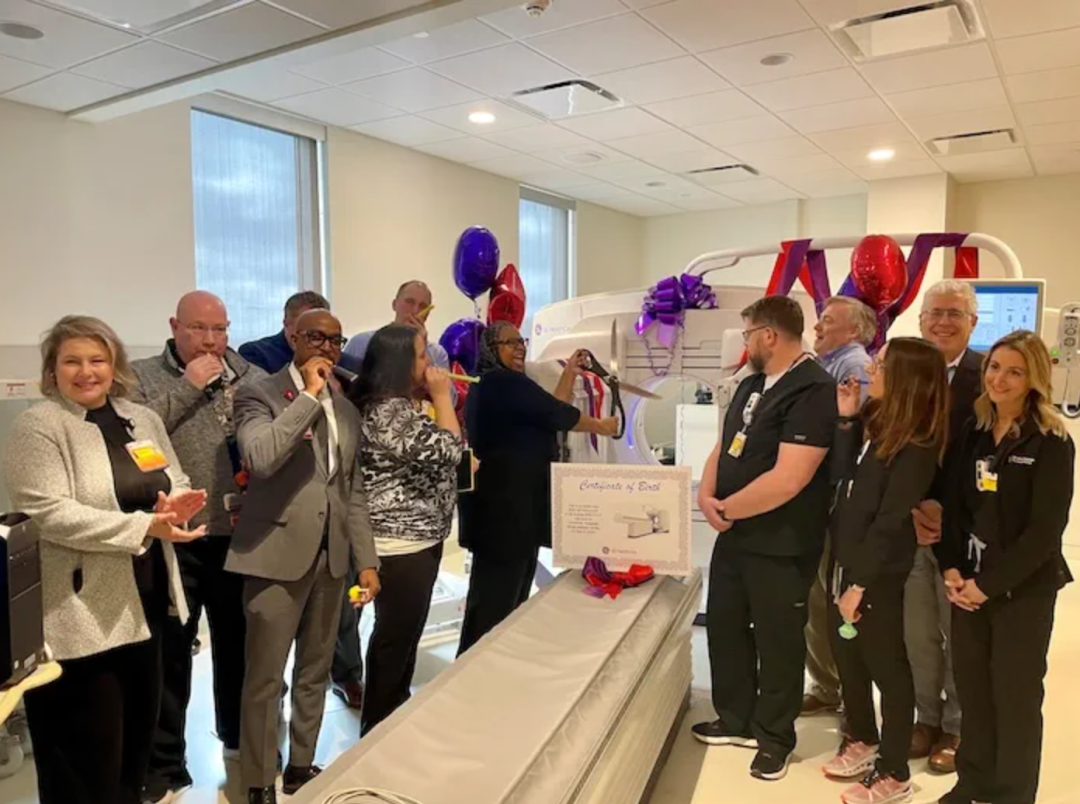
University Hospitals in Cleveland, Ohio, USA, is the first medical institution in the world to install the Aurora SPECT/CT system. Dr. Donna Plecha, Director of Radiology, stated:
"Aurora seamlessly integrates the SPECT and CT components, allowing us to perform comprehensive, high-quality diagnostic examinations in a single scan; while the Clarify DL deep learning image reconstruction technology significantly enhances image performance."
The hospital's operational level also expressed high recognition of the system. Percival Kane, Chief Operating Officer of Ahuja Medical Center, added:
"Patient flow and overall operational efficiency are crucial for us, which makes Aurora the ideal choice to meet our needs. Its Revolution Ascend CT technology is also compatible with our existing radiology department equipment."
Aurora not only enhances the diagnostic experience for radiologists but also, through the Effortless Workflow module, reduces the burden on technicians, optimizes the examination experience for high-BMI patients, and integrates MIM software solutions to introduce a more sustainable enterprise-level digital imaging platform for hospitals.
# From Precision Imaging to Precision Medicine
FDA Approval of Aurora System and Clarify DL: More Than Just a Medical Device RegistrationInterpretation of the Trend of Deep Integration of AI and Multimodal Imaging Technology. Such platforms will help hospitals transition from "diagnostic support" to "pathway management tools." Against the backdrop of hospitals currently facing strained diagnostic resources and increasing imaging demands,Improving imaging efficiency, enhancing patient experience and accuracy will be the core driving forces for the upgrading of SPECT/CT equipment.。
'%20fill='%23FFFFFF'%3E%3Crect%20x='249'%20y='126'%20width='1'%20height='1'%3E%3C/rect%3E%3C/g%3E%3C/g%3E%3C/svg%3E)