

CRISPR Therapeutics Makes First Move into siRNA with $950M Deal for Sirius Therapeutics’ Antithrombotic Candidate SRSD107
Sirius Therapeutics
Oligonucleotide Drug Developer
CRISPR Therapeutics
Gene Editing Drug Developer
On May 20, Sirius Therapeutics and CRISPR Therapeutics announced a strategic partnership to jointly advance the co-development and commercialization of siRNA therapies.
The two parties will combine their complementary capabilities in research and development and industrialization to jointly develop and commercialize SRSD107, a next-generation long-acting selective Factor XI (FXI) targeted small interfering RNA (siRNA) therapy, for the treatment of thrombotic and thromboembolic diseases.Both parties will jointly develop SRSD107 with a 50-50 cost and profit sharing mechanism. CRISPR Therapeutics will lead the commercialization in the United States, and Sirius Therapeutics will be responsible for commercialization in Greater China.
Under the terms of the agreement, CRISPR Therapeutics will pay $25 million in cash upfront and $70 million in equity investment.A total of 95 million US dollars in cash and cash equivalents as the upfront paymentSirius TherapeuticsEligible to receive upfront and milestone payments exceeding $800 million, with a potential total payment of over $895 million (approximately 6.4585 billion yuan).
In addition, CRISPR Therapeutics will have the right to nominate up to two siRNA targets for research and development, provide funding for the research, and retain the option to participate in leading clinical development and commercialization. Sirius Therapeutics will be eligible to receive milestone payments, as well as tiered royalties ranging from high single digits to low double digits.
1Twice-Yearly Subcutaneous Injection: Long-Acting siRNA Therapy Focuses on Thrombosis
The core pipeline of this collaboration transaction, SRSD107, is a long-acting siRNA therapy that specifically targets and selectively inhibits coagulation factor XI (FXI) mRNA, thereby suppressing FXI protein expression. This blocks the intrinsic coagulation pathway and promotes anticoagulant/antithrombotic effects.
In 2019, approximately 17.9 million people died from cardiovascular diseases, accounting for 32% of the global total deaths. Among them, 85% were deaths caused by heart attacks and strokes. Data shows that one in four people worldwide die from conditions triggered by thromboembolism.
Thrombosis is the common pathological basis for most myocardial infarctions, ischemic strokes, and venous thromboembolism. Therefore,SRSD107 has a wide range of potential indications,For the prevention and treatment of thromboembolic diseases, such as myocardial infarction, ischemic stroke, and venous thromboembolism, as well as tumor-associated thrombosis, end-stage renal disease patients undergoing hemodialysis, and major orthopedic surgery populations whose existing treatment options are limited due to bleeding risks.
The FXI target plays a key role in pathological thrombosis but has minimal impact on normal hemostatic function.By targeting FXI, SRSD107 is expected to reduce the occurrence of thrombotic events while significantly decreasing the risk of bleeding, demonstrating therapeutic advantages distinct from factor Xa (FXa) inhibitors.SRSD107 has the potential for twice-yearly dosing.
Preclinical trial data shows,Single Subcutaneous InjectionSRSD107 can reduce peripheral blood FXI concentration by nearly 100%, with effects lasting up to half a year, and no bleeding has been observed.SRSD107 combines potent and long-lasting effects with good safety, positioning it as a potential First-in-Class and Best-in-Class next-generation anticoagulant with enhanced safety.
In the Phase I clinical data announced at the 2024 American Society of Hematology (ASH) Annual Meeting, SRSD107 demonstrated good safety and tolerability, with significant changes observed in pharmacodynamic biomarkers compared to baseline.InAmong 40 healthy subjects,Subcutaneous AdministrationSRSD107 at the highest administered dose reduced FXI antigen and FXI activity by more than 90%.Activated Partial Thromboplastin Time (aPTT)Increase exceeding100% (i.e., aPTT ratio > 2.0).
This indicates that SRSD107 will better meet the requirements of novel anticoagulants, maintaining potent anticoagulant effects over an extended period while reducing the risk of bleeding.The pharmacodynamic effect persists and is maintained after a single dose.FXI Antigen and FXI Activity Were Inhibited by Nearly 90% for Over 16 Weeks.
Currently, SRSD107 is initiating a Phase 2 clinical trial aimed at evaluating its safety and efficacy in preventing venous thromboembolism (VTE) in patients undergoing knee replacement surgery, providing clinical scientific evidence to confirm its anticoagulant clinical benefits and guide dose selection for subsequent pivotal trials.
2CRISPR Therapeutics Enters the Small Nucleic Acid Field for the First Time, Further Betting on Cardiovascular Diseases
As a geneCRISPR Therapeutics, a pharmaceutical R&D giant, makes its first foray into small nucleic acid drugs.Sirius TherapeuticssiRNA platform. In the press release, Samarth Kulkarni, Chairman and CEO of CRISPR Therapeutics, revealed that this collaboration would expand itsThe combination of cardiovascular drugs and Sirius' siRNA platform complements our existing capabilities and expands the therapeutic toolkit, enabling us to develop a broader range of transformative gene therapies.
This means that the expansion of this drug research and development direction is partly based on the cardiovascular disease field that has been a key focus in recent years.On May 7, CRISPR Therapeutics announced positive Phase I trial data for its in vivo liver gene editing therapy CTX310. CTX310 targets the degradation of angiopoietin-like protein 3 (ANGPTL3) to treat high-risk dyslipidemia.
Phase I data indicate that CTX310 achieved dose-dependent reductions in ANGPTL3, TG, and LDL-C levels. Following a single dose, the average ANGPTL3 expression level in patients decreased by up to 75% from baseline.Triglycerides (TG)Level on Day 30Maximum decrease of 82%;Low-Density Lipoprotein Cholesterol (LDL-C) LevelOn Day 90Maximum decrease of 81%。
Based on this preliminary data, CTX-340 has the potential to become a Best-in-class drug targeting ANGPTL3. Competitors include Eli Lilly.siRNA Drug Solbinsiran(Phase II trials showed a maximum reduction of 14.3% in apolipoprotein B, a 50.3% reduction in TG, and a 12%-17% reduction in LDL-C) and Verve Therapeutics'Gene Editing Therapy(Recent studies have shown a 53% reduction in LDL-C).
In particular, CRISPR in vivo gene editing therapy is expected to provide a "one-shot cure" solution for cardiovascular patients.In addition, CRISPR Therapeutics also has CTX320 targeting lipoprotein(a)/Lp(a) and CTX-340 targeting AGT x ALAS1.
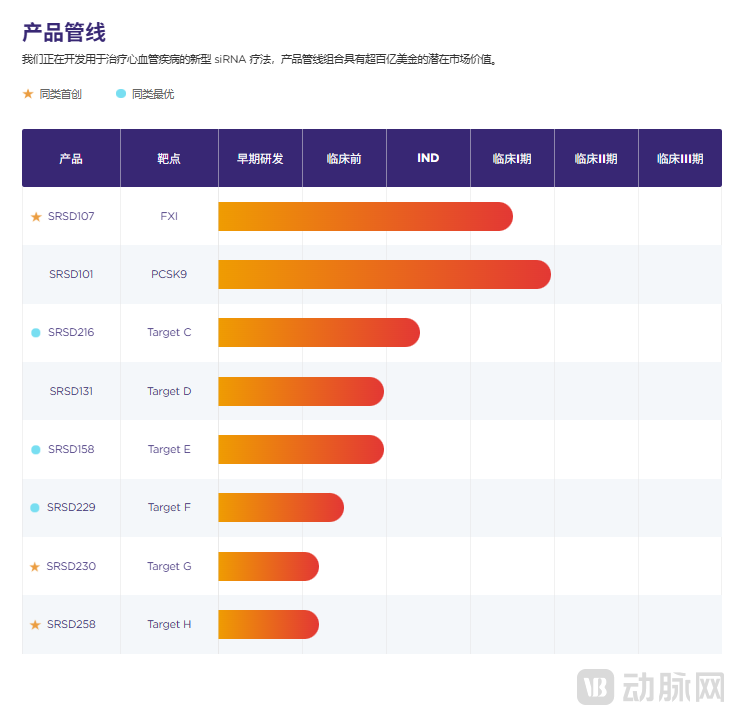
Notably, Sirius Therapeutics also has aFor the treatment of dyslipidemiaSRSD101Targeting the "star target" PCSK9 for cholesterol regulation, currently in Phase I clinical stage. Preclinical trial data shows that SRSD101 combines both.Potent and Long-lasting Lipid-lowering EfficacyAnd good safety.
As CRISPR in vivo gene editing and long-acting siRNA therapies gradually produce clinical data, longevity may become the next key indicator for innovative cardiovascular drugs.