

AusperBio Secures $160 Million in Three Rounds Amid Industry Downturn, Advances ASO Candidate AHB-137 Toward Functional Cure for Hepatitis B
AusperBio
Biological Vaccine and Nucleic Acid Drug Developer

News on May 29th, AusperBio has once again announced financing progress, completing its US$50 million Series B+ round of financing. Thus far,AusperBio has raised three rounds of financing in the past year, with a total amount of $160 million., and the investor lineup is also very impressive, including Qiming Venture Partners, CDH VGC, Genesis Capital, Origin Capital, HLC Capital, Sherpa Healthcare Partners, etc.
How did AusperBio manage to raise three rounds of financing against the backdrop of a deep industry downturn within a year and gain repeated recognition from numerous well-known investment institutions?
Screenshot source:Insight Database

Founded by former Gilead executive
Development of FIC and BIC Small Nucleic Acid Drugs
AusperBio was founded in August 2019, focusing on the research and development of First-in-class and Best-in-class targeted delivery small nucleic acid drugs for the treatment of diseases such as hepatitis B.
The co-founder, CEO, and Chairman of AusperBio isDr. Guofeng Cheng`, Co-Founder, CSO and Board Member is`Dr. Yang Chengyong. Both have worked at Gilead(Gilead)Worked and accumulated profound experience in the research and development of antiviral drugs.
'%20fill='%23FFFFFF'%3E%3Crect%20x='249'%20y='126'%20width='1'%20height='1'%3E%3C/rect%3E%3C/g%3E%3C/g%3E%3C/svg%3E)
Screenshot source: AusperBio official website
Cheng Guofeng once served as the Senior Director of Antiviral New Drug Development at Gilead Sciences, and Yang Chengyong once served as the DMPK Director at Gilead Sciences. Together, they led the development of three innovative hepatitis C cures approved by the FDA: Harvoni®, Epclusa®, and Vosevi®.
Among them, Yang Chengyong once served as the core leader in the clinical research, development, and regulatory submission of Epclusa®. Due to his significant contributions to the development of hepatitis C drugs, he was awarded by the American Chemical Society in 2015.(ACS)The "Chemical Hero Award" was presented.
During his time at Gilead, Cheng Guofeng also served as the core leader of the new drug development for hepatitis B cure. He comprehensively led the development of cccDNA inhibitors and HBsAg inhibitors, and co-led the business development efforts for Precision Bioscience's gene editing projects as well as those related to CAR-T.
Moreover, the official website of AusperBio shows that its Scientific Advisory Board includes several leading figures in the industry, such as Frank Chisari, Emeritus Professor of Virology and Immunology at Scripps Research Institute and a member of the National Academy of Sciences, Philip S. Low, Ralph C. Corley Distinguished Professor of Chemistry at Purdue University, and others.
A strong founding team, coupled with the popular research track of nucleic acids, has earned AusperBio recognition from numerous well-known investment institutions.
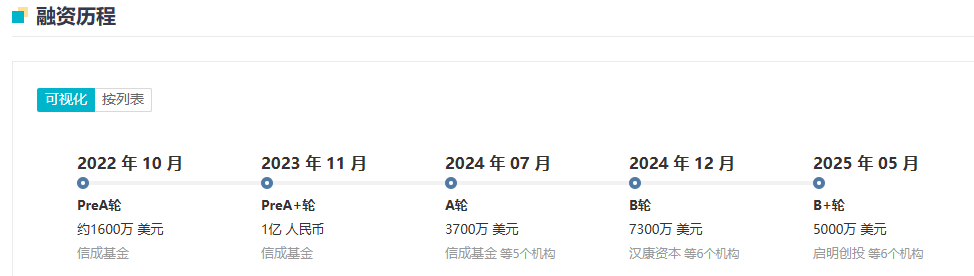
Since its establishment, AusperBio has received multiple rounds of financing, with five publicly disclosed.Especially in the past year, AusperBio has raised three rounds of financing totaling 160 million US dollars against the backdrop of a cold spell in the industry.:
In July 2024, AusperBio completed a US$37 million Series A financing round, led by InnoPinnacle Fund with additional investment from OrbiMed China, HLC, Qiming Venture Partners, and Genesis Capital.
In December 2024, AusperBio announced the completion of a $73 million Series B financing round, led by Hanking Capital, with participation from Sherpa Healthcare Partners, CDH VGC, and a globally renowned industrial investment institution. Qiming Venture Partners, InnoPinnacle Fund, and Vivo Capital also contributed additional investments.
In May 2025, AusperBio announced the completion of a US$50 million Series B+ financing round, led by a globally renowned industry investment institution, with participation from Qiming Venture Partners, CDH VGC, Genesis Capital, Vivo Capital, HanchorBio Capital, and Sherpa Healthcare Partners.
The First ASO Therapy Has Entered Phase II
Expected to Achieve Clinical Cure for Hepatitis B
AusperBio currently owns two proprietary technology platforms—Med-Oligo™ ASO, Med-Oligo™—and has developed multiple R&D pipelines based on these two technology platforms.Its R&D strategy and goal start with achieving a functional cure for chronic hepatitis B, and gradually expand to other disease areas.。
Screenshot source: AusperBio official website
Med-Oligo™ is a multi-segment enhanced dual-action small nucleic acid platform.,Through innovative chemical modifications with forward-looking capabilities, it can achieve higher efficacy and safety while modulating immune function. AusperBio hopes to realize a cure for hepatitis B via the Med-Oligo™ technology platform and expand its therapeutic scope to metabolic diseases, genetic disorders, cancer, infectious diseases, central nervous system diseases, and more.
AHB-137 is the first innovative drug from AusperBio's Med-Oligo™ technology platform to enter clinical trials. It is a non-conjugated antisense oligonucleotide (ASO) that specifically targets the conserved region of all HBV mRNAs and is being developed for the treatment of chronic hepatitis B.`, which has been included by the CDE as a breakthrough therapy drug candidate.`
Based on the achievements and extensive experience gained in the fields of AIDS and hepatitis C treatment, AusperBio believes that a multi-mechanism combination therapy strategy will be adopted for the cure of hepatitis B, which requires the integration of hepatitis B virus DNA replication inhibitors and hepatitis B surface antigen inhibitors.(such as using ASO, siRNA, etc.)And immunomodulators. In the treatment strategy of combination therapy for HBV cure, AHB-137 has great potential to become the best-in-class cornerstone drug.
At the European Association for the Study of the Liver (EASL) Annual Meeting held in May 2025, AusperBio announced the end-of-treatment data from the Phase IIb clinical trial of AHB-137 conducted in China through a breakthrough poster presentation. This Phase IIb clinical study evaluated the efficacy and safety of AHB-137 in HBeAg-negative chronic hepatitis B patients receiving nucleos(t)ide analog (NA) therapy.
In this study, subjects were randomly assigned to the AHB-137 300 mg 24-week treatment group and the 16-week treatment group. The primary endpoint of the study was the hepatitis B surface antigen at the end of the treatment period.(HBsAg)Below the Lower Limit of Quantification(<0.05 IU/mL)And Hepatitis B Virus(HBV)DNA levels below the lower limit of quantification(<10 IU/mL)。
Data shows,
In the 24-week treatment group, 75% of the subjects reached this primary endpoint; in the 16-week treatment group, 66% of the subjects reached this primary endpoint.
Among the subjects who reached the primary endpoint,More than 80% of subjects achieved HBsAg clearance within 12 weeks of treatment., and at the end of treatment, 54% and 33% of subjects in the 24-week and 16-week groups, respectively, achieved seroconversion of hepatitis B surface antibodies.
AHB-137 demonstrated good tolerability and effective safety in both treatment groups.
Currently,AHB-137 is currently conducting a synchronized international multicenter Phase I clinical trial, along with three Phase II clinical trials being carried out in China.One of the main uses of the funds from this B+ round of financing is to support the ongoing clinical development of AHB-137 for chronic hepatitis B, including the planned Phase II clinical trial to be conducted outside of mainland China.
Another Technical PlatformMed-Oligo™ is mainly used for the development of oligonucleotide conjugate drugs.Drug delivery is an important challenge for oligonucleotide therapies. Med-Oligo™ ASO molecules can bind to various ligands, enabling targeted delivery to different tissues and organs. Currently, AusperBio is advancing multiple oligonucleotide conjugate drug pipelines based on this platform for the treatment of other chronic diseases.
Summary
Compared with traditional small molecules and antibody drugs, small nucleic acid drugs have become a popular field in drug research and development due to their advantages such as targeting "undruggable" targets, relatively short R&D cycles, high R&D success rates, and broad treatment areas, showing great market potential.
According to the Insight database, there are currently 743 small nucleic acid pipelines globally at the clinical stage or above.(Only active status is counted)In 2024, the global small nucleic acid drug market size has reached 4.786 billion US dollars. Overseas analysts predict that by 2030, the global small nucleic acid drug market size will exceed 10 billion US dollars.