

AMT Medical Files for IPO: Revolutionizing Cardiac Bypass with Sutureless, Minimally Invasive ELANA Platform

AMT Medical
Coronary Artery Bypass Technology Researcher
Traditional heart coronary artery bypass surgery has always been associated with labels such as thoracotomy trauma and a long recovery period.
And AMT Medical (hereinafter referred to as AMT), a Dutch medical technology company established in 2017, has enabled seamless cardiac bypass procedures with its ELANA sutureless technology.Doctors can perform surgery without cutting open the patient's sternum, thus sparing the patient from the "agony of open-heart surgery."
1Traditional manual suturing is technically challenging and costly in medical terms.
2024 WHO Global Burden of Disease Report Shows,Cardiovascular diseases (CVDs) remain the leading cause of death globally, resulting in approximately 18.5 million deaths in 2023, accounting for 33% of the world's total deaths.By 2030, this number is expected to increase to 24 million, with ischemic heart disease (such as coronary heart disease) accounting for the highest proportion. The latest statistics from the American Heart Association (AHA) in 2024 show that there are approximately 820,000 new cases of heart disease each year.
Coronary artery bypass surgery is a major treatment for severe coronary heart disease, but the traditional method has significant drawbacks and faces three core challenges:
First, the trauma and recovery challenges of thoracotomy.Traditional surgery requires a sternotomy, causing significant trauma to the patient. Postoperative patients often experience severe pain.And the recovery period lasts up to 6-8 weeks.For elderly or frail patients, the surgical risk is significantly increased, and the incidence of postoperative complications is relatively high.
Secondly, the uncontrollability of vascular anastomosis quality.The quality of vascular anastomosis highly depends on the surgeon's manual suturing skills, a process influenced by multiple factors such as the doctor’s professional experience, condition during the operation, and the surgical environment. This leads to significant variations in anastomosis quality, making standardization difficult. Intraoperative issues like vascular leakage or stenosis often occur, directly affecting the success rate of the surgery and increasing postoperative risks for patients.
Thirdly, the use of a cardiopulmonary machine is required during the surgery to maintain the patient's blood circulation, which leads to high medical costs.
In this context, minimally invasive surgery appears to have more advantages.
The growth of the minimally invasive surgery market in the cardiovascular field has been significant. According to the "Global Minimally Invasive Surgical Devices Market Analysis" published by Grand View Research in 2024.In 2023, the global minimally invasive surgery market size reached USD 62 billion, and it is expected to grow at a compound annual growth rate (CAGR) of 9.2% to reach USD 130 billion by 2030, with cardiac minimally invasive devices accounting for over 30% of the share.
The development trend of minimally invasive surgery stems from various factors, such as patients' objective demand for rapid recovery, the popularization of robotic surgery, and policy-driven efforts to reduce medical costs.AMT's ELANA system, with its sutureless design, supports open surgery, minimally invasive incisions, and robot-assisted procedures, breaking through the limitations of traditional treatments that rely on a single surgical approach.
2Sutureless Connection, Full Compatibility with All Surgical Procedures: The Two "Killer Moves" of the ELANA System
AMT Medical's ELANA system enables "beating heart" surgery without sutures or a cardiopulmonary bypass machine through laser-assisted vascular anastomosis and the use of specialized clips. This system primarily relies on two key technologies: laser-assisted anastomosis and compatibility with off-pump cardiac surgery.
First is the laser-assisted sutureless anastomosis technology.
The core innovation of the ELANA system lies inSeamless Vascular Anastomosis Using Excimer LaserDuring the surgery, the surgeon first locates the target blood vessel through a small incision in the chest or via robotic arms, then uses a biocompatible clip specifically designed for the heart (the ELANA system cardiac clip, as shown in Figure 1) to precisely align and secure the donor vessel with the diseased part of the coronary artery. The unique structure of the clip not only ensures effective tight contact between the vessels but also provides stable support for subsequent laser operations.
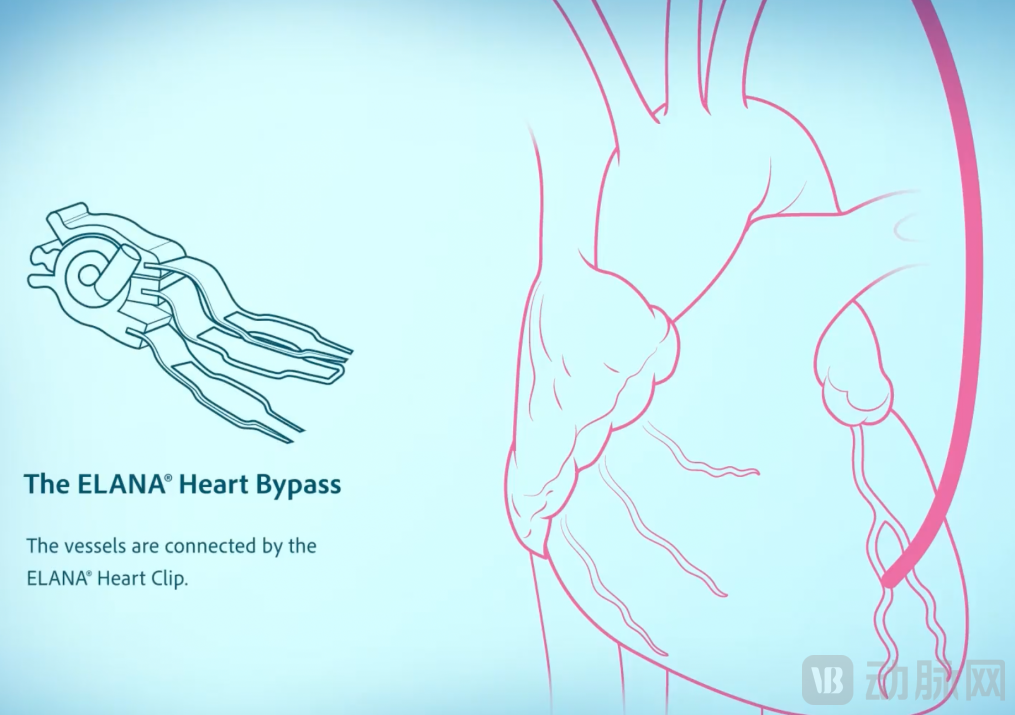
Figure 1: ELANA System Heart Clamp (Source: Official Demo Video)
Next, the excimer laser is introduced into the surgical area through a catheter and precisely ablates the vessel wall at the position fixed by the clamp. The laser’s wavelength and energy are optimized to target only a specific layer of the vascular intima, instantly vaporizing the target tissue to form micropores with a diameter of 1-2 millimeters while avoiding thermal damage to the surrounding healthy tissue.
This process is completed simultaneously at two blood vessels (the donor vessel and the coronary artery), forming a continuous blood flow channel. Due to the smooth edges of the laser perforation and the constant pressure provided by the clip, the vessel walls naturally adhere to each other, achieving a seal without the need for suturing.
The second is the heart beating surgery compatibility technology.
Traditional coronary artery bypass surgery requires stopping the heart, with patients relying on a cardiopulmonary bypass machine to maintain blood circulation. In contrast, the ELANA system enables surgical procedures to be performed while the "heart keeps beating." First, the ELANA heart clamp employs an adaptive locking mechanism, which maintains stable alignment of blood vessels during the heart’s periodic contraction and relaxation movements, minimizing interference from the heartbeat.
Secondly, the system integratesHigh Frame Rate Real-Time Image Navigation Technology,By using intravascular ultrasound (IVUS) or optical coherence tomography (OCT) to generate microscopic three-dimensional images of the vascular wall, doctors can accurately locate laser perforation points in a dynamic cardiac environment. During the procedure, the laser pulse duration is only nanoseconds, allowing the perforation to be completed within the instantaneous "window period" of a heartbeat, ensuring synchronization with the cardiac rhythm.
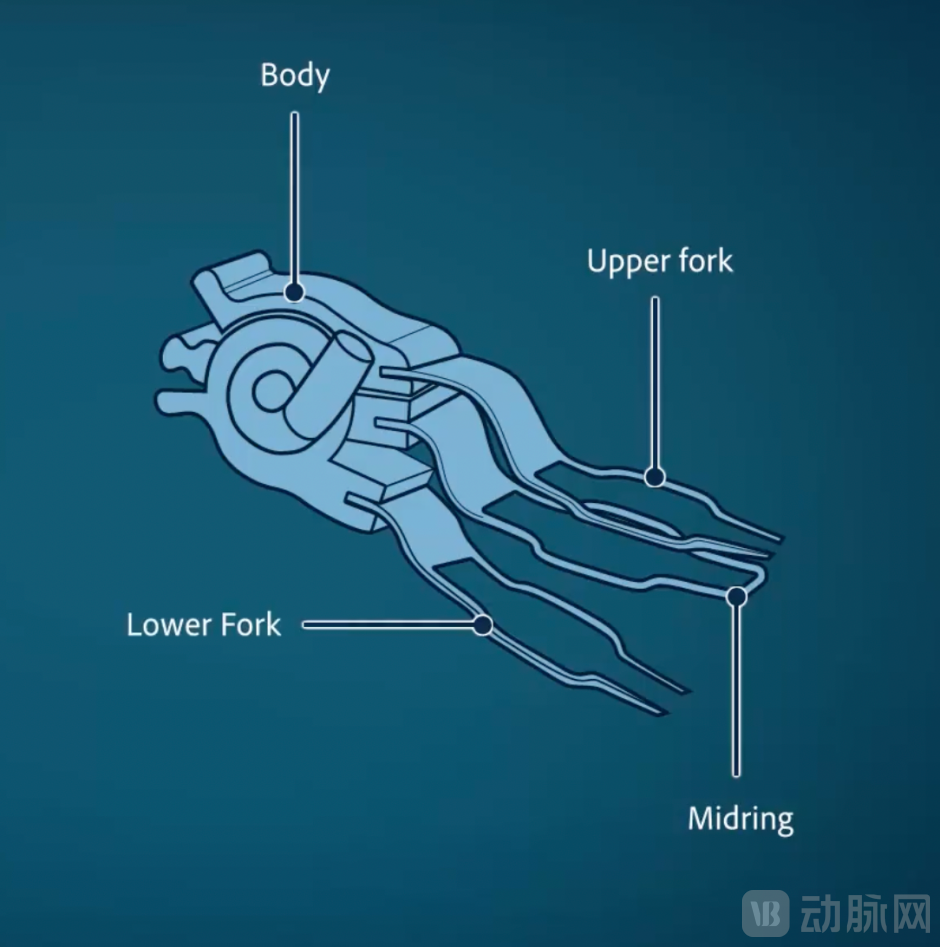
Figure 2: Components of the ELANA System Heart Clamp (Source: AMT Medical BV Official Demo Video)
3Minimization of Surgical Trauma, Standardization of Anastomosis Quality
Minimally invasive procedures without thoracotomy do not require splitting the patient's sternum, effectively reducing postoperative discomfort. According to publicly available AMT Medical BV data, compared with the 3%-5% stroke risk of traditional surgery, the ELANA system reduces the risk to <1% (a 70% decrease).
The ELANA system further improves the quality of anastomosis.
The complication report of STS bypass surgery shows,The leakage rate of traditional anastomosis is about 8%-12%. ELANA, through standardized laser parameters and clamping pressure, achieves a leakage rate of <2%., which can effectively reduce human error (Source: official website information). Moreover, the edges cut by laser are smoother, reducing turbulence, which can effectively improve the long-term patency of blood vessels.
These advantages have also expanded the application scenarios of the system while reducing medical costs.
Compared with the average duration of 4-6 hours for traditional coronary artery bypass surgery, the ELANA system reduces the operation time to 2.5-3.5 hours. The postoperative hospital stay for patients is shortened from the traditional 7-10 days to 3 days, and the total medical cost is reduced by 40% (Source: AMT Cost Analysis Report). The cost savings are mainly due to the system not requiring a cardiopulmonary machine, reducing the incidence of complications, and shortening the nursing period.
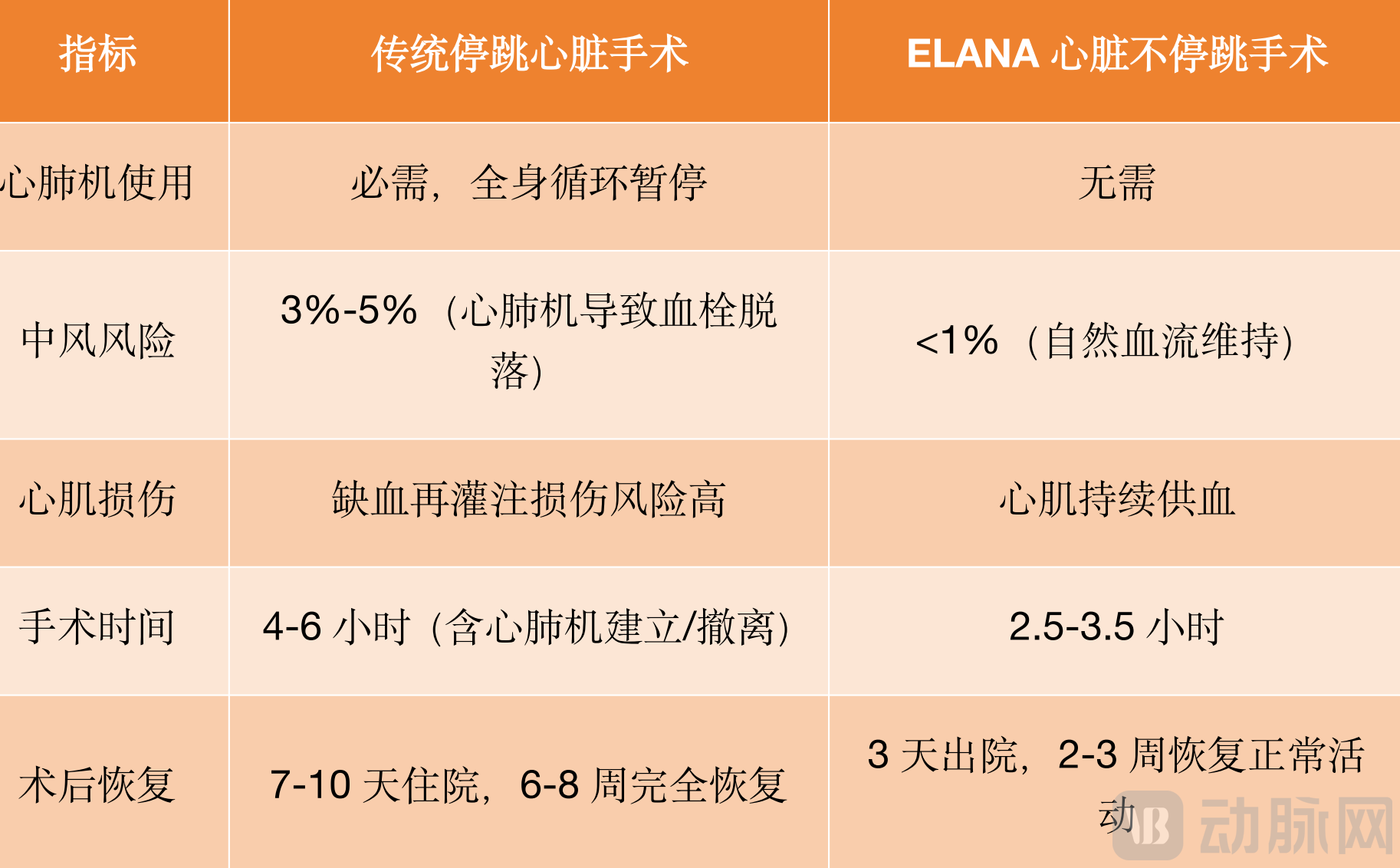
Comparison with Traditional Surgery Results
The ELANA system is suitable for both traditional surgery and minimally invasive surgery, and can flexibly adapt to the equipment conditions of different medical institutions.Its technical framework has the capability to expand across diseases, and it has currently extended to scenarios such as peripheral vascular bypass and heart valve repair. It is also actively exploring clinical applications for diabetic foot vascular reconstruction, providing a unified solution for minimally invasive treatments of pan-vascular diseases, further expanding its market coverage.
4EU Invests, Total Financing Reaches 192 Million
April 2025,AMT Medical BV Announces Completion of €22 Million (Approx. RMB 172 Million) Series B Financing, Led by Bender Analytical Holding with EIC as a Follower。To date, AMT Medical BV has raised a total of 24.5 million euros (approximately 192 million RMB).
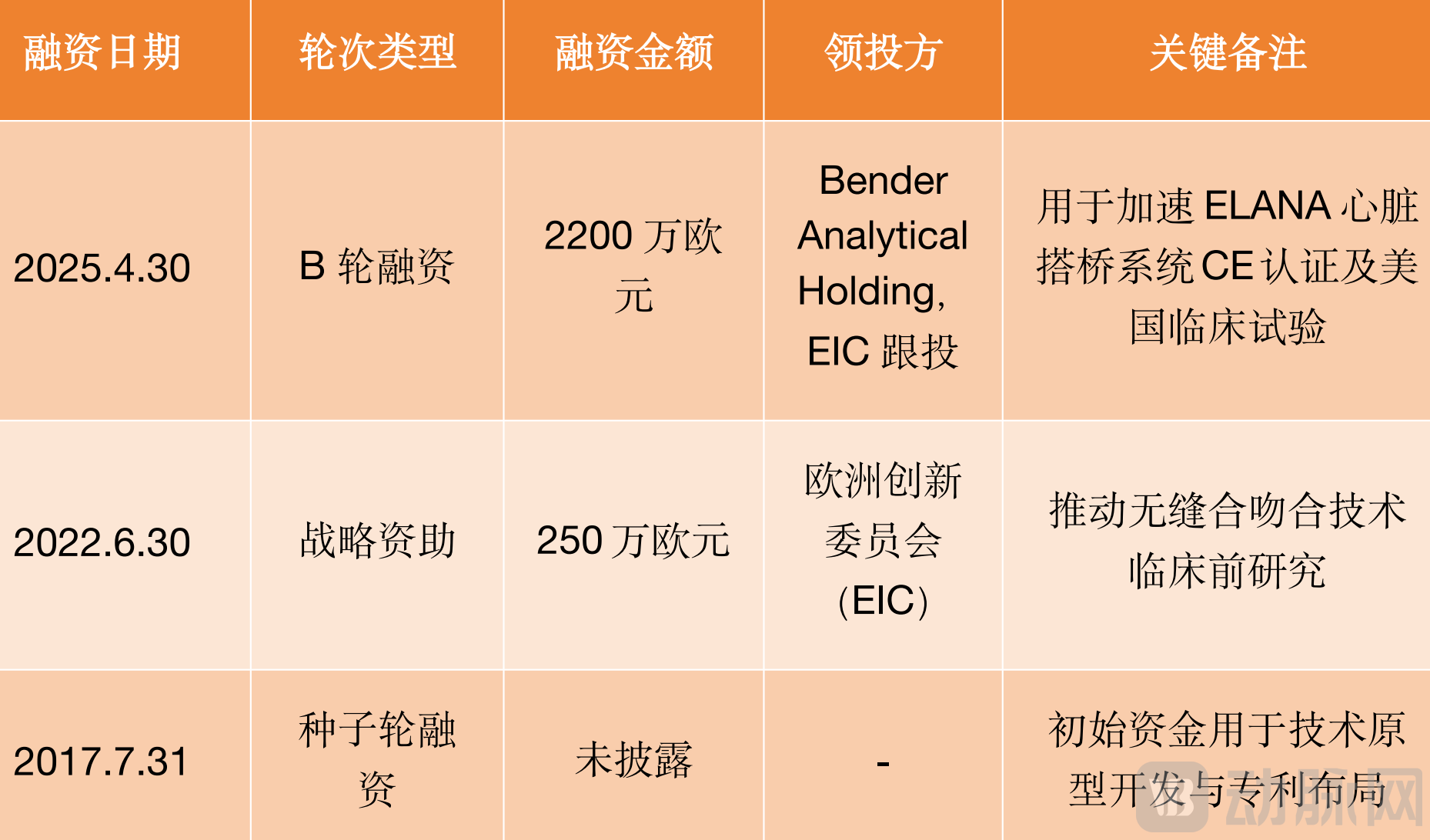
Historical Financing Situation (Source: Crunchbase)
Notably, in June 2022, AMT Medical received €2.5 million (approximately RMB 19.62 million) in funding from the EIC (European Innovation Council). The EIC, established by the European Union in 2021 as a flagship innovation funding body under the Horizon Europe framework, focuses on supporting high-risk, high-potential disruptive technological innovations with global leadership and commercialization potential.
Receiving EIC funding is regarded as the "gold standard" in the field of European technological innovation, signifying that the technology's cutting-edge nature, commercial viability, and social value have all passed the verification of the EU’s highest standards.
For AMT, receiving EIC funding not only signifies financial support but also strengthens its technical authority, providing crucial endorsement for subsequently attracting investments from venture capital institutions like Bender Analytical Holding.
5FDA Approval Initiated in 2027, Industry Trend Continues to Improve
Currently, the ELANA system has completed the first human trial in Europe (open-chest surgery) and is planned to obtain CE certification by 2026, while initiating clinical trials in the United States.Initiate FDA approval in 2027, targeting coverage of mainstream markets in Europe and the U.S., with plans to reduce surgical costs by another 30%, benefiting 1 million patients globally each year.
In addition, the in-depth cooperation between AMT Medical BV and Utrecht University Medical Center as well as the German Heart Center Berlin has allowed it to accumulate over 200 valuable clinical experiences, which is conducive to improving the efficiency of technical validation.
The key to differentiating competition with peers lies in the coordination between AMT's team technology and industrial transformation.
Founder and CEO Rutger Tulleken, with a background in neurosurgery, participated in the development of the ELANA cerebral vascular technology and adapted it for cardiac applications. Chief Medical Officer Stewart Hay, formerly a consultant at the German Heart Center Berlin, led multiple clinical trials for cardiac devices.
Not only that, the team also integrates supply chain experts from Philips and ISO-certified quality management directors, forming a complete chain of "R&D - Clinical - Compliance."
In general, AMT, with its sutureless and minimally invasive ELANA technology, is driving the transformation of the healthcare system from "doctor-centered" to "patient-centered": shorter recovery time, lower risk of complications, and more equitable distribution of medical resources. If successfully promoted globally, the treatment of cardiovascular diseases will undergo a revolutionary change: patients will no longer have to endure the pain of open-heart surgery, and the societal medical burden will be significantly reduced. This also shows that the core of medical innovation is not only about technological iteration but also a return to the essence of human-centered healthcare. By reducing pain and shortening the rehabilitation period, AMT's technology may meet people’s expectations for "healing," allowing more patients to return to life with dignity and vitality.