Home Genius Teen Publishes Six Nature Papers, Shattering Skepticism and Redefining Life Science Paradigms

Genius Teen Publishes Six Nature Papers, Shattering Skepticism and Redefining Life Science Paradigms

Jun 12, 2025 09:29 CST Updated 09:29
Isomorphic Labs

AI Drug Developer


Image

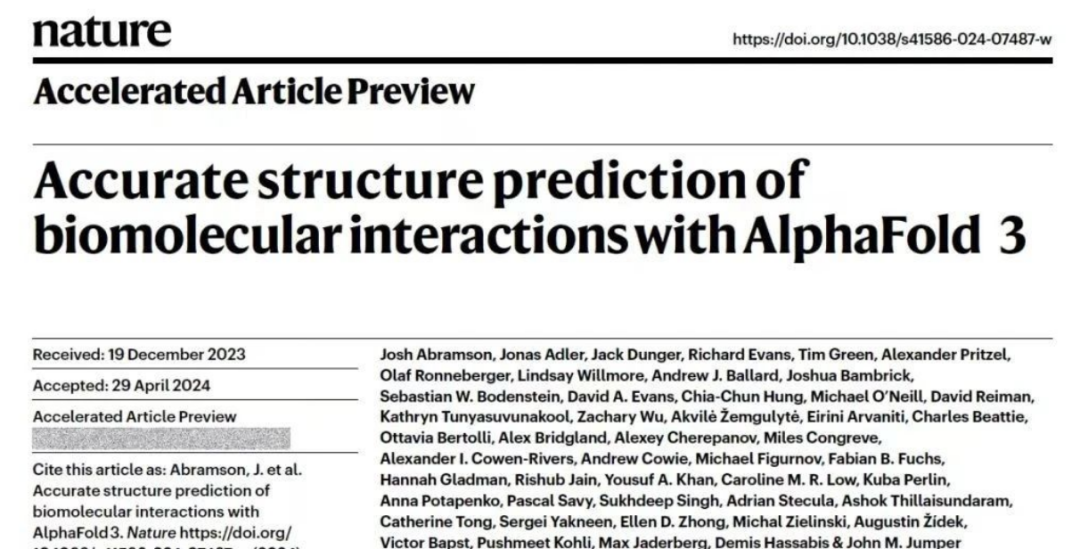
May 8, 2024, GoogleDeepMindJointly published with Isomorphic Labs in the journal *Nature* the latest AI model in the field of proteins, AlphaFold 3! This model can accurately predict the structures of biomolecules such as proteins, DNA, RNA, and ligands, as well as their interaction patterns. This follows...AlphaFold 2Another major breakthrough following that,In predicting drug interactions, AlphaFold 3 has achieved unprecedented accuracy, including the binding of proteins with ligands and antibodies with their target proteins.PoseBustersIn the benchmarking of,AlphaFold 3 is 50% more accurate than the current best traditional methods, and it requires no structural information input, making it the first artificial intelligence system to surpass traditional physics-based prediction tools.This ability to predict antibody-protein binding is crucial for understanding various aspects of the human immune response and new antibodies.The design is crucially importantYes.
Image


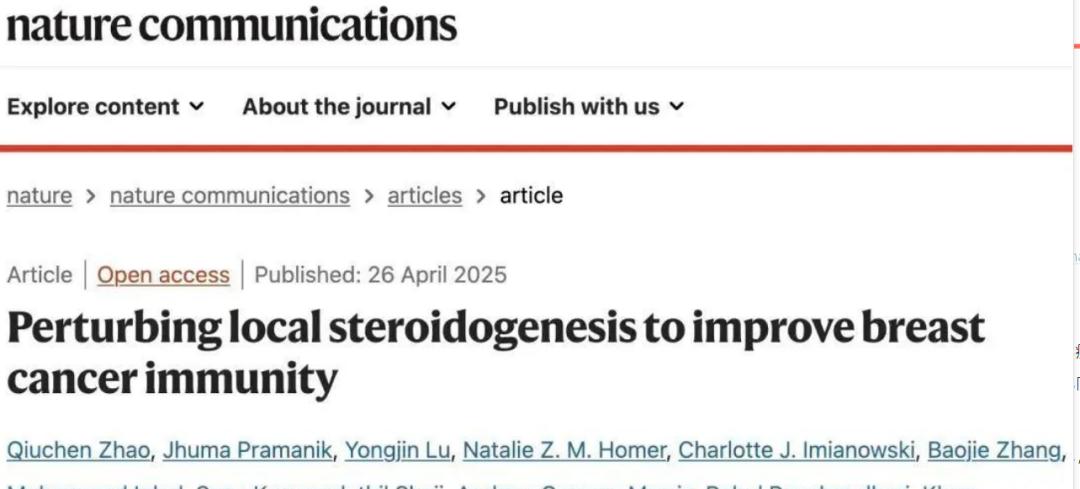
Recently, researchers have comprehensively appliedMulti-omics Technology, in vitro experiments and mouse model experiments, to explore the interaction mechanism between TNBC and the immune system. They analyzed tumor samples from 16 untreated primary TNBC patients and detected 31 differentSteroid HormonesAnd 9 kinds of steroids.

With the development of high-throughput biotechnology,Multiple Omics TechnologiesTo characterize different but complementary biological information, includingGenomicsEpigenomicsTranscriptomicsProteomicsAndMetabolomicsetc.

RecentArtificial Intelligence TechnologyHas already been translated from"Shallow" Learning ArchitectureDevelop into"Depth" Learning Architecture. As an important branch of artificial intelligence,Machine Learning (ML)YesAutomatically learn to capture complex patterns, and make decisions based on the dataIntelligent Decision-MakingMachine learning (ML) has a very wide range of applications in cancer research and clinical oncology. In particular,Rapid Growth of Multi-Omics DataDriven by, belongs toMachine LearningSubfields of MLMethods Based on Deep Learning (DL)Has becomeA Powerful Tool for Biomedical Data Analysis

Artificial IntelligenceAndOmicsResearchHow Hot Is It, andWhy Hold Training, The following content provides the answer.

In the past two yearsTop research groups at home and abroadMITHarvard UniversityUPennTsinghua UniversityFudan UniversityWestlake UniversityAre all engaged inArtificial IntelligenceAndOmicsresearch, this research achievement has been published multiple times inNature、Nature Biotechnology、Nature Reviews GeneticsNature MethodsScience AdvancesCancer Cellon internationally renowned academic journals, laying the foundation for our publication on top-tier journals.

Due toThe Research DataAndLearning PlatformLess,Information Technology Not DisclosedTraining and Learning Are Imminent, hereby sincerely invite youAttend the "Artificial Intelligence and Omics" Online Training Course, the number of attending members has reachedMore than 2,000! Publish in top journals! Hop on quick!

Image

Image

Eight Major Courses to Help Publish in Top Journals


Image

01

AI Protein Design

02

CADD Computer-Aided Drug Design

03

AIDD Artificial Intelligence Drug Discovery and Design Top Journal Reproduction

04

Machine Learning Microbiome Multi-Omics Joint Analysis

05

CRISPR-Cas9 Gene Editing Technology

06

Deep Learning Genomics

07

Machine Learning Metabolomics

08

Deep Learning Analysis of Proteomics


Image

Introduction of the Lecturer

Image
Image

Image

AI Protein Design

The lecturer, Dr. Liu, is a Ph.D. in Bioinformatics with 15 years of experience in bioinformatics and medical artificial intelligence research. He has developed several bioinformatics tools and published over 20 SCI papers, including nearly 10 articles on artificial intelligence algorithms. He has also authored a practical textbook on medical data analysis. His research focuses on the application of medical artificial intelligence in the diagnosis and treatment of complex diseases.

CADD Computer-Aided Drug Design

The lecturer is from the Institute of Biological Sciences at Peking Union Medical College. The lecturer specializes in research areas such as deep learning, machine learning, virtual drug screening, computer-aided drug design, AI-driven drug discovery, molecular docking, and molecular dynamics. They have published several articles in CNS and possess extensive training experience, having trained over 5,000 students.

AIDD Artificial Intelligence Drug Discovery Top Journal Reproduction

The lecturer is from Tianjin University, with over a decade of experience in computer algorithm research and programming. Research areas include bioinformatics, deep learning, drug synthesis pathway design, and adverse drug reactions. The lecturer holds 5 invention patents, has participated in 4 key national scientific research projects, and has published 10 high-level SCI papers in well-known journals such as BMC Bioinformatics, Journal of Biomedical Informatics, and International Journal of Molecular Sciences.

Machine Learning Metabolomics

The lecturer is a Ph.D. in Neuroscience from a 985 university, primarily utilizing technologies such as metabolomics, transcriptomics, and molecular biology to study the pathogenesis and biomarkers of chronic diseases in neurology. Proficient in the entire workflow of untargeted and targeted metabolomics research using liquid chromatography-mass spectrometry (LC-MS) technology, from sample preparation to data analysis, as well as bioinformatics integration analysis of multi-omics big data. In the past five years, they have published 10 SCI papers in journals such as J Clin Invest, EBioMedicine, Cell Death Dis, Cell Death Discov, and Nanotoxicology.

Machine Learning Microbiomics

The main speaker, Dr. Li, holds a Ph.D. in Bioinformatics and has over a decade of experience in sequencing data analysis. His research areas include machine learning, microarray data analysis, nucleic acid and protein sequence analysis, metagenomics, DNA, RNA, methylation sequencing data analysis, single-cell sequencing data analysis, miRNA and target gene analysis, survival analysis, and prognostic model construction. He has extensive training experience, having conducted more than 50 online and offline training sessions. The training content covers the application of machine learning in biomedicine, microbiology, and proteomics, single-cell multi-omics data mining, WGCNA co-expression network construction, ceRNA network construction, and basics of the R programming language. He has published over 30 SCI papers, including 15 as the first author or co-first author, with an h-index of 20.

Deep Learning Genomics

The lecturer is Dr. Chen, a doctoral candidate from the Netherlands. He has published several papers in domestic and international academic journals, including prestigious ones like Nature Communications and Cell Regeneration. His research focuses mainly on 3D chromatin structure, bioinformatics, developmental biology, and genetics. By utilizing multi-omics data and deep learning algorithms, he conducts data analysis and mining, including ChIP-seq, ATAC-seq, RNA-seq, CNV, etc., to address and answer fundamental biological mechanisms in the field.

Deep Learning Analysis of Proteomics

The lecturer, Dr. Liu, holds a Ph.D. in Bioinformatics and has been engaged in bioinformatics and medical artificial intelligence research for 15 years. He has developed several bioinformatics tools, published over 20 SCI papers, including nearly 10 articles on artificial intelligence algorithms, and authored a practical textbook on medical data analysis. His research focuses on the application of medical artificial intelligence in the diagnosis and treatment of complex diseases.

CRISPR-Cas9 Gene Editing Technology

The lecturer, from the Chinese Academy of Agricultural Sciences, has over a decade of experience in gene editing research, is familiar with the application of gene editing across various fields, and has deeply engaged in the development and optimization of gene editing systems for many years. They have published dozens of SCI papers and possess extensive teaching experience!


Image
1
AI Protein DesignCurriculum Content
Image

Swipe to view


Day One

Overview of Protein Design and Tool Preparation

1.Why Do Protein Design?

The vast potential conformational space of proteins

2.Classification of Protein Design Methods

The Optimal Solution at Present:

Protein Structure Prediction:Alphafold2,Rosettafold2

Fixed Structure Sequence Prediction:ProteinMPNN

De Novo Design:RFDiffusion+ProteinMPNN+Alphafold2Iteration

3.VscodeThe use ofsshConnecting to Supercomputing Clusters (Hands-on)

VScodeInstallation

Remote sshPlugin Installation

~/.ssh/configConfiguration in Chinausername, ipInformation

4.LinuxConfiguration, CreationpythonEnvironment (Practical Operation)

Conda create -n env_name python=3.9

5.Supercomputing Job Submission (Hands-on)

SlurmTeaching of the Operation Management System,sbatch, salloc,scancelUse of

6.Overview of Generative Models, Special LectureDiffusion modelTheory

The Next Day

Deep Learning Methods for Protein Structure Prediction

1.Deep Learning-Based Model--Alphafold2Rosettafold

AF2Reasons for Success:

a.UtilizeMSAInformation

b.TransformerExtract RowMSAInformation

c.Recycling

d.Self-distillation Dataset (pLDDTThe Introduction of )

2. AF2 Local Operation (Practical)

2.1Based onAlphafold2Reproduction Work—OpenfoldUnifold

3.Alphafold2Hands-on Operation

3.1MSABymmseqs2 apiGenerate, no need to download the dataset of structures and sequences (required3TBSpace)

4.Model Based on Language Model—ESMfold(Practical Operation)

4.1ESMfoldThe Logic: UseMasked LMReplaceAF2inMSAModule

4.2ESMfoldInstallation: (EnsurenvccInstallation)

5.Protein Multichain Structure Prediction—Alphafold multimer

6.Protein-Nucleic Acid Complex Prediction—RosetaffoldNA(Practical Operation)

Add nucleic acid representation

7.Protein-Nucleic Acid-Small Molecule Complex Prediction—Rosetaffold-all atom, Alphafold3

Day 3

Deep Learning Methods and Models for Protein Multi-Conformation Sampling

Protein Multiconformation Prediction (Simulation)

1. Traditional Physics-Based Methods - Molecular DynamicsMD

2. Based onMSAMethod of manipulation—MSA subsamplingAF cluster(Practical Operation)

MSA subsamplingMethod SubsamplingAF2ofMSAInput

MSA subsamplingMethod

2.1Environment Configuration andAF2Isomorphic

2.2AF_clusterMethod

2.3Environment Configuration andAF2Isomorphic Operation

2.4GenerateMSA

2.5Model Prediction

3.Methods Based on Generative Models—AlphaflowUFConfDiGAlphaflow uses flow matching(Practical Operation)

3.1AlphaflowMethod

3.2pythonEnvironment Configuration Operation

3.3input_csvSequence Information of Representative Proteins

3.4msa_dirRepresentativeMSAThe Path

3.5weightsModel used by the representative

3.6.samplesRepresentative Sampling Number

4.UFConfUseDiffusion model(Practical Operation)

Day Four

Deep LearningProtein Dataset Mining Tools and Protein Pocket Search Tools

1.Protein Dataset Mining Tool

1.1Sequence Alignment and Clustering Tools

1.2BLASTSlow speed

2.Sequence Rapid Alignment ToolMMseqs2

2.1.Diagonalk-merShort Sequence Matching

22.tableFind CorrespondencetargetSequencek-merLocation of occurrence

2.3.targetSequence andquerySequence Matching

3.Structure Comparison and Clustering Tools

3.1TM-align

4.Structural Rapid Comparison ToolFoldseek

41FoldseekTeam &mmseqsSeries Comparison

5.FoldseekHands-on Operation

6Deep Learning Protein Pocket Search Tool

6.1.Protein Pocket Search

6.2Alpha sphere

7.Structure-Based Protein Pocket Search Tool--FpocketCavityPlus(Practical Operation)

8.Trajectory-based (multi-conformation) protein pocket search—Mdpocket(Practical Operation)

9.A Deep Learning-Based Tool for Predicting Protein-Small Molecule Binding Sites—Diffdock

DiffdockHands-on Operation

Day Five

Application of Deep Learning in Protein Design

1.Overview of Deep Learning-Based Protein Design

2.Structural Generation Model--RFDiffusion

3.RFDiffusionIsconditionalStructural Generation Model (Practical Operation)

3.3.RFDiffusion: Based onRosettaFold

3.4.RFDiffusion-All-Atom: Based onRosettaFold-All-Atom

3.5.RFDiffusionHands-on Operation

3.6.RFDiffusionDesign Framework Structure

4.Inverse Folding Model--ProteinMPNN(Practical Operation)

4.1inverse foldingModel

4.2ProteinMPNNHands-on Operation of Reverse Folding Design Sequence

5.UtilizeAF2Improve the Success Rate of Protein Design (Practical Operations)

5.1Alphafold2Folding Design Sequence

5.2ScreeningAlphafold2MiddlepLDDTHigher Sequence

5.3Iterative Prediction Structure

6.Binder designDesign Process

6.1RFDiffusionDesignbinder

6.2ProteinMPNN-FastRelax Binder DesignDesign

6.3AF2 complex predictionDesign

7.Structural Sequence Generation Model--ProteinGenerator

7.1ProteinGeneratorIs the generation of structure and sequence

Day Six

Protein Design Based on Deep Learning Language Models

1.Deep Learning Enzyme Design (Hands-on)

11.Basic Principles of Enzyme Design

1.2.Enzyme Property Prediction

1.3.RFDiffusionAAModel

1.4RFDiffusionAAAndRFDiffusionComparison

2.Protein Design Based on Language Models

2.1ProgenModel (Practical Operation)

2.2ProgenTraining

2.3conditional tagTraining of the language model below

3.ESM2ESM3(Practical Operation)

3.1MultimodalESM3Language Model

3.2Training in three modules: sequence, structure, and function

Day Seven

Deep Learning-Assisted Enzyme Design

1. Basic Knowledge Explanation

Enzyme Transition State Theory, Theozyme, Fitness Landscape, Epistasis

2. Development of Directed Evolution Methods for Enzymes as Seen from the Work of Frances H. Arnold (who won the 2018 Nobel Prize in Chemistry for her contributions to the field of directed evolution of enzymes)

1. Traditional Directed Evolution Experimental Process

2. MLDE (Machine Learning Directed Evolution), learns the mapping relationship between sequences and enzyme performance, recommends new mutation combinations (PNAS article)

3.ftMLDE (focused training MLDE), active learning process, building informative training data (Cell Systems article)


3.De novo design of enzymes

1.De novo design of Diels-Alder catalytic enzymes

a) Inside-out strategy based on Rosetta (Science article)

b) Improving structural issues through the Foldit protein folding game (Nat. Biotechnol. article);

c) Practice of Foldit Protein Folding Game*


2. De novo design of luciferase, Family-wide hallucination, generating new structures based on the structural hallucination of the enzyme family (Nature article)

3. RFdiffusion+PLACER De Novo Design of Serine Hydrolase (Science Article)

4. Using the similarity of predicted structures to mine new enzyme functions in sequences (Reproducing Dr. Gao Caixia's Cell article)*

1. Download data from the InterPro database

2. TM-score Calculates Structural Distance

3.UPGMA Structural Clustering, Draw the Phylogenetic Tree

4. Sequence Selection


Case Study Images:

Image
Image
2
CADD Computer-Aided Drug DesignCurriculum Content
Image

Swipe to view

The Morning of the First Day

Background, Theoretical Knowledge, and Tool Preparation

1. Introduction and Use of the PDB Database

1.1 Introduction to the Database

1.2 Query and Selection of Target Protein Structures

1.3 Download of Target Protein Structure Sequence

1.4 Download and Preprocessing of Target Proteins

1.5 Batch Download Protein Crystal Structures

2. Introduction and Usage of Pymol

2.1 Introduction to Basic Software Operations and Fundamental Knowledge

2.2 Protein-Ligand Interaction Diagram

2.3 Protein-Ligand Small Molecule Surface Diagram, Electrostatic Potential Representation

2.4 Protein-Ligand Structure Superposition and Alignment

2.5 Plotting Interaction Forces

3.Introduction and Use of Notepad

3.1 Introduction to Advantages and Main Functions

3.2 Interface and Basic Operations Introduction

3.3 Plugin Installation and Usage

Afternoon

General Protein

-Ligand Molecular Docking Explanation

1. Introduction to Relevant Theories of Docking

1.1 The Concept and Basic Principles of Molecular Docking

1.2 Basic Methods of Molecular Docking

1.3 Commonly Used Software for Molecular Docking

1.4 General Process of Molecular Docking

2. Conventional Protein-Ligand Docking

2.1 Collection of Receptor and Ligand Molecules

2.2 Processing of Complex Pre-conformations

2.3 Preparation of Receptor and Ligand Molecules

2.4 Protein-Ligand Docking

2.5 Analysis of Docking Results

Taking the main protease of the新冠病毒 protein and related inhibitors as an example

The Next Day

Virtual Screening

1. Introduction and Download of Small Molecule Database

2. Introduction to Related Programs

2.1 Introduction and Usage of OpenBabel

2.2 Introduction and Use of ChemDraw

3. Preprocessing for Virtual Screening

4. The Process and Practical Demonstration of Virtual Screening

Case: Screening for Main Protease Inhibitors of the Coronavirus

5. Result Analysis and Plotting

6. Drug ADME Prediction

6.1 Introduction to ADME Concepts

6.2 Introduction to Relevant Websites and Software for Prediction

6.3 Analysis of Prediction Results

Day 3

Methods for Expanding Docking Usage

1.Protein-Protein Docking

1.1 Application Scenarios of Protein-Protein Docking

1.2 Introduction to Related Programs

1.3 Collection and Preprocessing of Target Proteins

1.4 Calculation Using Examples

1.5 Preset of Key Residues

1.6 Acquisition of Results and File Types

1.7 Analysis of the Results

With the current popular target

PD-1/PD-L1, etc.

2. Docking involving metalloenzyme proteins

2.1 Background Introduction of Metalloenzyme Protein-Ligand

2.2 Collection and Preprocessing of Proteins and Ligand Molecules

2.3 Treatment of Metal Ions

2.4 Docking of Metal Cofactor Protein-Ligand

2.5 Result Analysis

Taking human farnesyltransferase and its inhibitors as examples

3. Protein-Polysaccharide Molecular Docking

4.1 Protein-Polysaccharide Interactions

4.2 Key Points of Docking Processing

4.3 The Process of Protein-Polysaccharide Molecular Docking

4.4 Protein-Polysaccharide Molecular Docking

4.5 Analysis of Related Results

Inα-Example of glycosyltransferase and polysaccharide molecular docking

5. Nucleic Acid-Small Molecule Docking

5.1 Application Status of Nucleic Acid-Small Molecules

5.2 Introduction to Relevant Procedures

5.3 Types of Nucleic Acid-Small Molecule Binding

5.4 Nucleic Acid-Small Molecule Docking

5.5 Analysis of Related Results

Human Telomere

g - Quadruple chain and ligand molecular docking as an example.

Introduction to Operation Process and Practical Demonstration

Day 4

Methods for Expanding Docking Usage

1.Flexible docking

1.1 Introduction to the Use Cases of Flexible Docking

1.2 Advantages of Flexible Docking

1.3 Protein-Ligand Flexible Docking

Focus: Method for setting flexible residues

1.4 Analysis of Related Results

Cyclin-dependent kinase

2 (CDK2) with ligand 1CK as an example

2. Covalent Docking

2.1 Introduction to Two Covalent Docking Methods

2.1.1 Flexible Side Chain Method

2.1.2 Two-Point Attractor Method

2.2 Collection and Preprocessing of Proteins and Ligands

2.3 Covalent Docking of Covalent Drug Molecules with Target Proteins

2.4 Comparison of Results

Taking the currently popular covalent drugs for COVID-19 as an example.

3. Protein-Hydration Docking

3.1 The Significance and Methods of Hydration in Protein-Ligand Interactions

3.2 Collection and Preprocessing of Proteins and Ligands

3.3 Preparation of Relevant Parameters for Docking

Focus: The Addition and Treatment of Water Molecules

3.4 Protein-Water Molecule-Ligand Docking

3.5 Result Analysis

Acetylcholine-binding protein

(AChBP) with nicotine complex as an example

Day 5

Molecular Dynamics Simulation (Linux and GROMACS Installation and Usage)

1. Introduction and Simple Use of Linux System

1.1 Common Linux Command Lines

1.2 Common Program Installation on Linux

1.3 Experience: How to Perform Virtual Screening on Linux

2. Introduction to Molecular Dynamics Theory

2.1 Principles of Molecular Dynamics Simulation

2.2 Methods and Related Programs of Molecular Dynamics Simulation

2.3 Introduction to Related Force Fields

3. Introduction and Usage of Gromacs

Focus: Introduction to Main Commands and Parameters

4. Introduction and Use of Origin

Day Six

Execution of Solvated Molecular Dynamics Simulations

1. General Process for Handling Solvated Proteins

2. Preparation of Protein Crystals

3. Energy Minimization of Structures

4. Pre-equilibration of the system

5. Unrestricted Molecular Dynamics Simulation

6. Presentation and Interpretation of Molecular Dynamics Results

Taking lysozyme in water as an example

Day Seven

Execution of Protein-Ligand Molecular Dynamics Simulations

1. Protein-Ligand Processing Workflow in Molecular Dynamics Simulations

2. Preparation of Protein Crystals

3. Preparation of Initial Conformations for Protein-Ligand Docking

4. Preparation of Ligand Molecular Force Field Topology Files

4.1 Brief Introduction to Gauss

4.2 Brief Introduction to Ambertool

4.3 Generating Force Field Parameter Files for Small Molecules

5. Pre-equilibration with separate restraints on temperature and pressure in the complex system

6. Unrestricted Molecular Dynamics Simulation

7. Presentation and Interpretation of Molecular Dynamics Results

8. Trajectory Post-processing and Analysis

Taking the main protease of the新冠病毒 protein and related inhibitors as an example                                                           

Case Study Images:

Image


3
AIDD Artificial Intelligence Drug Discovery Top Journal ReproductionCurriculum Content
Image

Swipe to view


FirstDay

Environment Setup andDepthBasic Knowledge Lecture

1.AIDDOverview: FromCADDToAIDD

2.Software Installation and Environment Setup

(1)anaconda

(2)vscode

(3)Configuration of Environmental Variables

(4)SwitchpipAndcondaMirror Source

(5)Creation of Virtual Environment

3.RDKITUse of the Toolkit

(1)Based onRDKitMolecular Reading and Writing

(2)Based onRDKitMolecular Drawing

(3)Based onRDKitMolecular Fingerprint and Molecular Descriptors

(4)Based onRDKitCompound Similarity and Substructure

4.Methods for Acquiring Comprehensive Drug Databases

(1)Based onrequestsBasic Crawling Operations

(2)Small Molecule DatabasePubChemData Acquisitionpubchempy / requests

(3)Protein DatabasePDBUniProtData Acquisition

5.Deep Learning-Assisted Drug Design

(1)Basic Concepts of Neural Networks andsklearnIntroduction to the Toolkit

(2)Basic Knowledge of Graph Neural Networks and Message Passing Mechanisms

(3)TransformerBasic Model Knowledge: Tokenization, Positional Encoding, Attention Mechanism, Encoder, Decoder, Pre-training-Fine-tuning Framework,huggingface Ecosystem Introduction

(4)Model Evaluation and Validation: Accuracy, Precision, Recall,F1Score,ROCCurve,AUCCalculation, Mean Absolute Error, Mean Squared Error,R2Scores, Explained Variance Score, Cross-Validation, etc.

SecondDay

Top Journal Reproduction Series1——Representation Learning and Property Prediction of Molecules and Biochemical Reactions for Drug Discovery

Training Background:In artificial intelligence-assisted drug discovery (AIDD) In,Representation Learning and Property Prediction of Molecules and Biochemical ReactionsIs the cornerstone of the entire research process. The structure of a molecule determines its function, and how to effectively represent complex molecular structures and biochemical reaction processes in a form that computational models can understand is a prerequisite for achieving efficient prediction and optimization. By constructing reasonable molecular representations (such as graph neural networks,SMILESEncoding, fingerprint, etc.), we can letAIThe model captures key chemical features, which are then used to predict the physicochemical properties, biological activity, and toxicity of molecules, providing a reliable foundation for subsequent virtual screening, molecular generation, and reaction design. Therefore, this topic not only lays the groundworkAIDDThe core competency framework for modeling and predictive capabilities in China also lays a solid foundation for intelligent decision-making throughout the drug discovery process.

Training Content1:

Nature Machine Intelligence|Application of Attention-Based Neural Networks in Chemical Reaction Space Mapping《Mapping the space of chemical reactions using attention-based neural networks

1.Dataset

1.1.PistachioDataset: Contains260Tens of thousands of chemical reactions, sourced from patent data, covering792A category of reactions. The data was deduplicated and filtered for validity (usingRDKit)。

1.2.USPTO 1k TPLDataset: Based onUSPTOPatent data, including44.5Ten Thousand Reactions, Generated through Atom Mapping and Template Extraction1,000A category of reaction templates.

1.3.Schneider 50kDataset: Public dataset, containing5Myriad Reactions,50A category used for comparison with traditional fingerprint methods.

2.Model.The study compared twoTransformerArchitecture:

2.1.BERTClassifier: An encoder-based model, after being pre-trained through masked language modeling, fine-tuned for classification tasks, using[CLS]Marked embedding as a reaction fingerprint (rxnfp)。

2.2.Seq2SeqModel: Encoder-Decoder structure that breaks down the classification task into hierarchical predictions of superclasses, categories, and specific reactions. Both adopt a simplified version.BERT(Hidden Layer256Dimension), Input is UnlabeledSMILESSequence, no reagents required-Reagent differentiation or atomic mapping.

3.Training. Model training is divided into two steps:

3.1.Pre-training:BERTThrough MaskSMILESToken prediction tasks are used for self-supervised learning to learn generalizable representations.

3.2.Fine-tuning: Optimizing the model for classification tasks using cross-entropy loss, learning rate2×10⁻⁵, Sequence Length512. The evaluation adopts confusion entropy (CEN) and Matthews Correlation Coefficient (MCC) to handle data imbalance.


Training Content2:

TOPJournal | Deep Learning-Based Prediction of Biochemical Reaction YieldsPrediction of chemical reaction yields using deep learning》 

1.Data. The study utilized three types of data:  

1.1.Buchwald-Hartwig HTEDataset: Contains3955IndividualPdCatalysisC-NCoupling reaction, covering15Halide minerals,4Ligand,3Alkaline and23A combination of additives, yield measured by uniform experiment, high data quality.

1.2.Suzuki-Miyaura HTEDataset: Contains5760A reaction, involving15For electrophilic/Nucleophile,12Ligand,8Alkaline and4A combination of solvents with uniformly distributed yields.

1.3.USPTOPatent Dataset: Extracted from publicly available patents, containing reaction yields of different scales (gram-scale and sub-gram-scale). The data is noisy and inconsistently distributed, requiring smoothing through neighboring reaction yields to improve model performance.

2.Model. The core model is based on pre-trainedrxnfp(Reaction Fingerprint)BERTArchitecture, with the addition of a regression layerYield-BERT. The input is a standardized reactionSMILES, capturing contextual information of the reaction center and key reagents through the self-attention mechanism. The model does not require manual features (such asDFTCalculate descriptors), directly predict yield in an end-to-end manner. Experiments show that its performance is superior to traditional methods (such as random forests and molecular fingerprint splicing), especially inHTEThe data is close to the predictive level of chemical descriptors, and the parameters are highly robust (little impact from hyperparameter tuning).

3.Training. Training is divided into two steps:  

3.1.Pre-training:BERTLearning through masked language tasksSMILESGeneral representation.

3.2.Fine-tuning: Adopt SimpleTransformersLibrary andPyTorchFramework, toMSELoss Optimization Regression Layer, Learning Rate (2×10⁻⁵) anddropoutRate (0.1–0.8) as the main parameter tuning object.HTEData Adopted Randomly/Time Division Validation,USPTOData is smoothed by proximity reaction yield to mitigate noise impact. Small-sample experiments (5%Training data) shows that the model can quickly screen high-yield reactions and guide synthesis optimization.


Training Content3:

TOPJournal|Based onT5ChemRepresentation Learning and Property Prediction of Biochemical Reactions in ModelsUnified Deep Learning Model for Multitask Reaction Predictions with Explanation

1.Data Sources and Processing.Through self-supervised pre-training andPubChemThe molecular dataset is trained to achieve excellent performance in four different types of chemical reaction prediction tasks. The model handles reaction type classification, forward reaction prediction, single-step retrosynthesis, and reaction yield prediction.

2.Model Architecture and PrinciplesT5ChemThe model is based on natural language processing.“Text-to-Text Transfer Transformer”(T5)Unified deep learning model developed through adaptationT5Framework for handling multiple chemical reaction prediction tasks.T5ChemThe model contains an encoder.-The decoder structure introduces task-specific prompts and different output layers, such as molecular generation heads, classification heads, and regression heads, to handle sequence-to-sequence tasks, reaction type classification, and product yield prediction.

3.Training Process and Details.

3.1.T5ChemThe model was first introduced inPubChemThe97 millionPerform self-supervised pre-training on molecules, usingBERTSimilar“masked language modeling”Target.

3.2.During the pre-training phase, in the source sequencetokensRandomly masked, the model's goal is to predict the correct masked elements.tokens

3.3.After pre-training is completed, the model is fine-tuned in downstream supervised tasks using different task-specific prompts and output layers.

3.4.The model generates molecules during the testing phase.token by tokenin a predictive manner until generationEnd of sentence markerOr reach the maximum predicted length.


TheThreeDay

Top Journal Reproduction Series2——Representation Learning and Property Prediction of Proteins Facilitate Drug Discovery

Training BackgroundInAIDDIn China, proteins are the main targets of drug action, and the complexity of their structure and function determines the success or failure of drug design.Representation Learning and Property Prediction of ProteinsIsomorphic Labs-Target interactions and the discovery of candidate drugs are crucial steps. Proteins, especially enzymes, serve as the primary targets for drug action, and their functions, structures, and dynamic properties directly impact drug design and efficacy. This topic is explained through two cutting-edge research works:*Enzyme function prediction using contrastive learningDemonstrates how to use contrastive learning to extract high-quality functional representations from protein sequences, achieving precise prediction of enzyme functions;CatPred*This paper proposes an integrated deep learning framework for in vitro enzyme kinetics parameters (such asKmkcatetc.) is crucial for establishing efficacy models and optimizing lead compounds. These methods significantly enhance the accuracy and generalization ability of protein modeling, providingAIProvides strong support for target discovery, mechanism understanding, and candidate drug screening.

Training Content1: 

Nature Communication|A Comprehensive Framework for Deep Learning of In Vitro Enzyme Kinetic Parameters《CatPred: a comprehensive framework for deep learning in vitro enzyme kinetic parameters

CatPred A comprehensive deep learning framework for predicting in vitro enzyme kinetic parameters (kcatKmKi), to address the issues of high experimental measurement costs, sparse data, and poor generalization ability. This method not only provides accurate predictions but also introduces a quantification of prediction uncertainty, supporting out-of-distribution (out-of-distribution) Robust prediction of enzyme sequences. In addition, the authors constructed a new standardized dataset (CatPred-DB), and systematically compared various enzyme representation methods.

1.DataCatPred The dataset used comes fromBRENDA AndSABIO-RK Database, the author constructedCatPred-DB, including:23197 Articlekcat41174 ArticleKmAnd11929 ArticleKi Data, each record contains the amino acid sequence of the enzyme,AlphaFold OrESMFold Predicted structures, substratesSMILES Expression. The data underwent cleaning and standardization processing, with missing values and duplicates removed, and a logarithmic transformation applied to the parameters to conform to a normal distribution.

2.ModelCatPred A modular design is adopted, where enzymes and substrates are characterized through different neural network modules, and probabilistic regression output (in the form of mean and variance of a Gaussian distribution) is used, allowing for uncertainty estimation.aleatoric + epistemic)。

3.Training

3.1.All models adopt the negative log-likelihood loss function (NLL) training, to simultaneously predict parameter mean and uncertainty.

3.2.Training Use-Verification-Trichotomy Test (80%-10%-10%), and establishOut-of-training-setThe test subset is used for evaluating generalization ability.

3.3.In order to assess uncertainty,CatPred Use10An ensemble of models trained with different initial parameters to quantifyepistemic uncertainty

3.4.During model training, different similarities (sequencesidentity<99%80%60%40%) of the test set, demonstrating its robustness.


Training Content2:

Science|Based on Contrastive LearningProteinClassificationAttribute PredictionEnzyme function prediction using contrastive learning

1.Data Sources and Processing: CLEANThe model's training is based onUniProtHigh-quality data in the database, which contains approximately1.9100 million protein sequences.CLEANThe model takes amino acid sequences as input and outputs a list of enzyme functions sorted by probability (ECNumbering as an example). In order to verifyCLEANaccuracy and robustness, the authors conducted extensivein silicoExperiment, andCLEANApplied to an internally collected database of uncharacterized halogenases (total36Individual)ECNumbering annotations, followed by in vitro experimental validation through case studies.

2.Model Architecture and Principles: CLEANThe model adopts a contrastive learning framework, aiming to learn an embedding space for enzymes, where Euclidean distance reflects functional similarity. Embedding refers to the numerical representation of protein sequences, which is machine-readable while preserving the important characteristics and information carried by the enzyme. InCLEANIn the task, with the sameECThe numbered amino acid sequences have smaller Euclidean distances, while those with differencesECThe sequence of numbers has a greater distance.

3.Training Process and Details:

3.1.During the training process,CLEANThe model is supervised trained using a contrastive loss function, by prioritizing the selection of anchors (anchor) Embed negative sequences with small Euclidean distances to improve training efficiency.

3.2.Model uses language modelESM1bThe obtained protein representation serves as the input to a feedforward neural network, with the output layer generating refined, function-aware input protein embeddings.

3.3.When predicting, by calculating the query sequence with allECThe pairwise distance between numbered cluster centers to predict the input proteinECNumbering.

3.4.CLEANTwo methods have also been developed to predict confidence from the output rankings.ECNumber: One is the greedy method, and the other is based onPMethod of Value.


FourthDay

Top Journal Reproduction Series3——Deep Learning-Based Molecular Generation Aids Drug Discovery

Training BackgroundMolecular generation is a key technology in fields such as chemistry, biology, and materials science, and is of great significance for new drug development, new material design, and chemical reaction prediction. Traditional molecular generation methods rely on expert knowledge and trial-and-error experiments, which are time-consuming and costly. With the development of artificial intelligence technology, especially the application of natural language processing and diffusion models in molecular generation, we are now able to use computational models to accelerate this process. This course will introduce fromNLPTo the design patterns of diffusion models, these models are able to understand and generate molecular structures, thereby improving the efficiency and accuracy of molecular design. Through this course, participants will be able to master the latest technologies and methods in molecular generation, as well as how to apply these techniques to practical problems.

Training Content1

Nature CommunicationBased onMolecular Generation in an End-to-End Graph Generation FrameworkRetrosynthesis prediction using an end-to-end graph generative architecture for molecular graph editing

1.Data Sources and Processing:Graph2EditsThe model used a publicly available benchmark dataset.USPTO-50k, including50016A reaction, these reactions are correctly atom-mapped and classified as10Different types of reactions. The dataset is divided into40k5k5kThe reactions were used for training, validation, and test sets.

2.Model Architecture and Principles:Graph2EditsThe model is an end-to-end graph generation architecture based on graph neural networks (GNN) Predict the editing sequence of the product graph and generate intermediates and final reactants based on the predicted editing sequence order. This model merges the two-stage process of the semi-template method (identifying the reaction center and completing synthons) into a one-pot learning process, enhancing its applicability in complex reactions and making the prediction results easier to interpret. The core of the model is a graph encoder and an autoregressive model used to generate the editing sequence and apply these edits to infer intermediates and reactants.

3.Training Process and Details:

3.1.Graph2EditsThe model uses a directed message-passing neural network (D-MPNN) as the graph encoder to obtain atomic representations and global graph features, and predict atoms/Key editing and termination symbols.

3.2.Model Training UseTeacher Mandatory Policy, that is, using real editing sequences as model input. At each editing step, the model calculates the probabilities of all possible edits and selects the highest-scoring one.kAn editor applies these edits to the input graph to obtainkAn intermediate.

3.3.During the generation process, the generation branch will stop if the maximum number of steps is reached or the graph representation indicates termination.

3.4.Finally, according to the possibilities for the precedingkA sequence of edits and graphs are ranked and collected as the final prediction result.


Training Content2

Nature Computational Science|Molecular Generation Network Based on Equivariant Diffusion Model《Structure-based drug design with equivariant diffusion models

1.Brief introduction. This paper presents a structure-based drug design method (SBDD), utilizingSE(3)-Equivariant Diffusion Model (DiffSBDD) Generate novel small molecule ligands that match the binding site conditions of proteins. This method involvesSBDDThe problem is modeled as a 3D conditional generation task, capable of generating all atomic positions at once, overcoming the limitations of traditional autoregressive methods that lose global context due to sequential generation.DiffSBDDNot only supports de novo molecular design, but also enables property optimization, negative design, and molecular fragment modification (inpainting) and other tasks are applied flexibly.

2.Data Summary. The study usedCrossDockedAndBinding MOADTwo datasets for training and evaluation.

2.1.CrossDockedThe dataset contains40,344Training Protein-Ligand Pair and130A test pair, validation set size is246Ensure that proteins from different sets come from different main enzyme classification categories to avoid overfitting.

2.2.Binding MOADThe dataset was filtered and used for testing, with analysis limited to samples that all methods could generate.78IndividualCrossDockedAnd119IndividualBinding MOADObjective. In addition, dataset processing involves removing corrupted entries and throughZenodoPublicly provide processed data and sampled molecules to ensure research reproducibility.

 3.Model Summary.DiffSBDDIsSE(3)-Equivariant diffusion models, conditioned on protein binding sites to generate 3D molecular structures, adopt3DThe graph representation (atomic coordinates and types) avoids the complex post-processing required to infer molecular structures from density maps using traditional methods. The model design respects the rotation and translation of three-dimensional space.


FifthDay

Top Journal Reproduction Series4: Protein Combined with Molecular Dynamics-Dynamic Prediction of Ligand-Complex Interactions

Training Background:Protein-The prediction of ligand interactions is one of the core tasks in modern drug discovery and bioengineering, and its importance goes without saying. In the drug development process, accurately predicting the binding sites, three-dimensional structures, and affinities of proteins with small molecule ligands not only reveals the mechanisms of intermolecular interactions but also significantly accelerates the screening and optimization of candidate drugs, reducing research and development costs and time. Traditional experimental methods, such asXAlthough X-ray crystallography and nuclear magnetic resonance are precise, they are time-consuming, expensive, and struggle to meet the demands of large-scale screening. However, with the rapid advancement of deep learning and artificial intelligence technologies, computational methods are becoming increasingly important in protein-Show great potential in ligand prediction.

Research Content1: 

Nature Communication|Interaction-Aware Proteins-Ligand Docking and Affinity Prediction Model《Interformer: an interaction-aware model for protein-ligand docking and affinity prediction

1.Brief Introduction: This study proposes a method namedInterformerBased onGraph-TransformerUnified Model Architecture for Protein-Ligand docking and affinity prediction. Addressing the limitation of existing deep learning models that neglect modeling non-covalent interactions between protein and ligand atoms,InterformerIntroduced the Interaction-Aware Mixture Density Network (MDN) to explicitly capture hydrogen bonds and hydrophobic interactions, combined with a negative sampling strategy and pseudoHuberLoss Function: Optimizing Interaction Distribution through Contrastive Learning to Enhance the Accuracy of Docking Poses and the Robustness of Affinity Prediction.

2.Dataset: The study usedPDBBindTime-split Test Set (333samples) to evaluate docking accuracy,PosebustersBenchmarking validates physical reasonableness, and internal real-world datasets test generalization ability. Training data is sourced fromPDBBindCrystal Structure Database

3.ModelInterformerBased onGraph-TransformerArchitecture, including:(1) The graph represents modules, with atoms as nodes and proximity relationships as edges;(2) Masked Self-Attention (MSA) mechanism, throughIntra-BlocksAndInter-BlocksCapture ligands separately/Interactions within and between proteins;(3) Interactive PerceptionMDN, integrating four Gaussian distributions to simulate van der Waals forces, hydrophobic interactions, and hydrogen bonds;(4) The edge output layer integrates node and edge features to predict energy;(5) The Pose Scoring and Affinity modules predict the correct pose and experimental affinity values based on virtual nodes.

4.Training Details: The training is divided into two stages: first, the energy model is trained based on crystal structures to generate negative samples, and then the pose scoring and affinity models are jointly trained using both positive and negative samples. Optimization is performed using negative log-likelihood loss.MDNBinary cross-entropy loss optimizes pose scoring, pseudoHuberLoss (σ=4) Optimize Affinity Prediction (UnitIC50KdKI, after negative logarithmic normalization). Monte Carlo sampling generates candidate poses,


Research Content2:

Nature CommunicationProtein Driven by Molecular Dynamics-Dynamic Prediction of Ligand Complex StructuresDynamicBind: predicting ligand-specific protein-ligand complex structure with a deep equivariant generative model

1.Brief Introduction: This study proposes a method namedDynamicBindA deep learning method for predicting ligand-specific proteins-Ligand complex structure. Traditional molecular docking methods often treat proteins as rigid or only partially flexible, making it difficult to handle large-scale conformational changes in proteins. While molecular dynamics simulations can capture dynamic conformations, the computational cost is high.DynamicBindBy constructing smooth energy landscapes through equivariant geometric diffusion networks, protein simulations without ligands are efficiently performed (apo) State to Ligand Binding (holo) Conformational transition of the state, without relying onholoStructure or extensive sampling.

2.Dataset: Research based onPDBbind2020Database (19,443A protein-Ligand complex crystal structure), divided by time:2019Data from previous years were used for training and validation,2019The data from the year was used for testing. Additionally,Major Drug Targets (MDT)Test set (599Yes), focusing on kinase,GPCRSuch as the main drug targets, requirementsAlphaFoldPredicted structure and crystal structurepocket RMSD>2Å, ensuring test difficulty. Achieved through training.AlphaFoldPredictive structures and crystal structure interpolation for generating protein samples.

3.ModelDynamicBindIt is an equivariant generative model based on graph neural networks, using coarse-grained representations (proteins asNodes and side chain dihedral angles representation, ligands represented by heavy atom nodes), outputs include translations, rotations, torsion angle updates of proteins and ligands, as well as binding affinity andcLDDTConfidence Score. The model learns fromapoToholoof“morph-like”Transform, optimize energy landscape, including63.67Million parameters.

4.Training Details: Training in8BlockNvidia A100 80GB GPUCarry out on5Days, input is additionmorphTransformed ProteindecoyConformations and ligand conformations with added Gaussian noise, the goal is denoising. The loss function includes eight terms (ligand and protein translation, rotation, torsion, etc.), throughKabschAlgorithm AlignmentapoAndholoStructure, combined with diffusion noise to adjust conformational transitions. Iterate during inference.20Update the initial structure.


Case Practice Images:

Image
Image


4
Deep Learning Genomics Curriculum Content
Image

Swipe to view


Day One

Theoretical Part

Introduction to Deep Learning Algorithms

1.Supervised Learning Neural Network Algorithms

1.1Fully Connected Deep Neural NetworkDNNExamples of Applications in Genomics

1.2Convolutional Neural NetworkCNNExamples of Applications in Genomics

1.3Recurrent Neural NetworkRNNExamples of Applications in Genomics

1.4Graph Convolutional NetworkGCNExamples of Applications in Genomics

2.Unsupervised Neural Network Algorithms

2.1AutoencoderAEExamples of Applications in Genomics

2.2Generative Adversarial NetworkGANExamples of Applications in Genomics

Practical Content

1.LinuxOperating System

1.1Commonly UsedLinuxCommand

1.2 VimEditor

1.3Genomic Data File ManagementModify File Permissions

1.4View and Explore Genomic Regions

2.PythonLanguage Foundation

2.1.PythonPackage Installation and Environment Setup

2.2.Common Data Structures and Data Types

The Next Day

Theoretical Part

Fundamentals of Genomics

1.Genomic Database

2.Epigenome

3.Transcriptome

4.Proteome

5.Functional Genomics

Practical Content

Common Deep Learning Frameworks in Genomics

1.Install and Introduce Deep Learning Toolkitstensorflow, keraspytorch

2.Identifying Deep Learning Model Elements in the Toolkit

2.1.Data Representation

2.2.Tensor Operations

2.3."Layer" in Neural Networks

2.4.Model Composed of Layers

2.5.Loss Function and Optimizer

2.6.Dataset Splitting

2.7.Overfitting and Underfitting

3.Genomic Data Processing

3.1Install and Usekeras_dnaProcessing various gene sequence data such asBED GFFGTFBIGWIGBEDGRAPHWIGetc.

3.2Usekeras_dnaDesign Deep Learning Models

3.3Usekeras_dnaSplit Training Set, Test Set

3.4Usekeras_dnaSelecting gene sequences of specific chromosomes, etc.

4. Deep Neural NetworkDNNApplied in the Identification of Motif Features

4.1Implement Single-Layer Single FilterDNNRecognition Motif

4.2Implement Multi-layer Single FilterDNNRecognition Motif

4.3Implement Multi-layer Multi-filterDNNRecognition Motif

Day 3

Theoretical Part

Convolutional Neural NetworkCNNApplications in Gene Regulation Prediction

1.Chip-SeqIdentify Motif Features inG4, such asDeepG4

2.Chip-SeqPredicted in ChinaDNAMethylation,DeepSEA

3.Chip-SeqPredicted transcription factor binding in,DeepSEA

4.DNase-seqPredicting Chromosome Affinity in China,Basset

5.DNase-seqPredicting Gene Expression in ChinaeQTLEnformer

Practical Content

Reproducing Convolutional Neural NetworksCNNIdentify Motif FeaturesDeepG4, Non-coding Gene MutationDeepSEA, Predict Chromosome AffinityBasset, Gene ExpressioneQTL

1.ReproductionDeepG4FromChip-SeqIn recognitionG4Features

2.Installationselene_sdk, ReproductionDeepSEAFromChip-SeqPredict in ChinaDNAMethylation, Non-coding Gene Mutation

3.ReproductionBasset, fromChip-SeqPredicting Chromosome Affinity in China

4.ReproductionEnformer, fromChip-SeqPredicting Gene Expression in ChinaeQTL

Day Four

Theoretical Part

Deep Learning in Identifying Copy Number VariationsDeepCNV, Regulatory FactorDeepFactorApplication on

1.SNPPrediction of Copy Number Variations in MicroarraysCNVDeepCNV

2.RNA-SeqPredict in ChinapremiRNAdnnMiRPre

3.Predicting regulatory factor proteins from protein sequences,DeepFactor

Practical Content

1.ReproductionDeepCNVUtilizeSNPMicroarray Combined with Image Analysis for the Identification of Copy Number Variations

2.Recurrent Neural Network ReproductionRNNTool dnnMiRPre, fromRNA-SeqPredicted in ChinapremiRNA

3.ReproductionDeepFactor, Identify transcription regulatory factor proteins from protein sequences

Day Five

Theoretical Part

Application of Deep Learning in Identification and Disease Phenotypes and Biomarkers

1.Deep Learning Tool for Identifying Breast Cancer Subtypes from Gene Expression DataDeepType

2.Identifying disease phenotypes from high-dimensional multi-omics data,XOmiVAE

3.Deep Learning Tool for Identifying Key Genes in Gene Sequences and Protein Interaction NetworksDeepHE

Practical Content

1.ReproductionDeepType, fromMETABRICDistinguishing Breast Cancer Subtypes in Breast Cancer Data

2.ReproductionXOmiVAE, fromTCGAIdentification of Breast Cancer Subtypes in Multidimensional Databases

3.ReproductionDeepHEIdentification of Key Genes Using Gene Sequences and Protein-Protein Interaction Networks                                                         


Case Study Images:


Image
5
Machine Learning Metabolomics Curriculum Content
Image

Swipe to view


The Morning of the First Day

A1 Metabolites and the Development and Application of Metabolomics

(1) Metabolism and Physiological Processes;

(2) Metabolism and Disease;

(3) Untargeted and Targeted Metabolomics;

(4) Spatial Metabolomics and Mass Spectrometry Imaging (MSI);

(5) Metabolomics and drugs and biomarkers;

(6) Metabolic Flux and Mechanism Research.

A2 Metabolic Pathways and Metabolism Database

(1) Brief Introduction to Several Classical Metabolic Pathways;

(2) Three major common metabolite databases: HMDB, METLIN, and KEGG;

(3) Metabolomics Raw Database: Metabolomics Workbench and Metabolights. A3 Recommended References

The First Day, Afternoon

A4 Metabolomics Experimental Workflow Overview

A5 Chromatography, Mass Spectrometry Hardware and Principle Analysis

(1) Principles and Structure of Chromatographic Analysis;

(2) Selection of Chromatograph and Chromatography Column;

(3) Chromatographic mobile phase: Gradient elution method;

(4) Analysis of Ion Source, Mass Analyzer, and Mass Detector;

(5) Principle of Mass Spectrometry and Animation Demonstration;

(6) Liquid Chromatography-Mass Spectrometry (LC-MS);


The next morning

B1 Metabolite Sample Processing and Extraction

(1) Extraction procedures and precautions for various tissues, blood, and body fluid samples;

(2) Metabolite Extraction Process and Precautions;

(3) Issues related to the transportation and storage of samples and metabolites;

B2 LC-MS Data Quality Control and Database Search

(1) The method for setting QC and Blank samples during the LC-MS experiment;

(2) Data quality control monitoring and analysis during the LC-MS operation process;

(3) Principles of Upstream Metabolomics Analysis — Based on Compound Discoverer and Xcms Software;

(4) Data conversion, peak picking, peak alignment, and library searching using Xcms software;

The Next Afternoon

B3 R Software Foundation

(1) Installation of R and RStudio;

(2) Configuration of Rstudio Interface;

(3) Basic Operations and Statistical Calculations in R;

(4) Packages in R: The use of packages, functions, and parameters;

(5) R language syntax, data types and data structures;

(6) R Basic Plotting;

B4 R Language Graphing Tool —— ggplot2 Package

(1) Introduction to ggplot2

(2) The Philosophy of ggplot2 Plotting;

(3) The color system of ggplot2;

(4) Practical Data Mining and Plotting with ggplot2;


The Morning of the Third Day

Machine Learning

C1 Application of Supervised Machine Learning in Metabolomics Data Processing

(1) The relationship among artificial intelligence, machine learning, and deep learning;

(2) Regression Algorithms: Starting from Linear Regression, Logistic Regression, and Cox Regression;

(3) PLS-DA Algorithm: Is there still hope for data with no differences after PCA dimensionality reduction?

(4) The Meaning and Selection of VIP Score;

(5) Classification Algorithms: Decision Trees, Random Forests, and Bayesian Network Models;

C2 Classification Algorithm Implementation for a Set of Metabolomics Data in R

(1) Data Interpretation;

(2) Drills and Operations;

The Third Day, Afternoon

C3 Application of Unsupervised Machine Learning in Metabolomics Data Processing

(1) Dimensionality reduction in big data processing;

(2) PCA analysis plotting;

(3) Three Common Types of Cluster Analysis: K-means, Hierarchical Analysis, and SOM

(4) Implementation of Heatmaps and Hcluster Plots in R;

C4 A R Walkthrough for Dimensionality Reduction and Clustering Analysis of a Metabolomics Dataset

(1) Data parsing;

(2) Drills and Operations;


The Fourth Day, Morning

D1 Online Metabolomics Analysis Webpage Metaboanalyst Operation

(1) Use R to clean the data into the format required by the webpage;

(2) Data format issues for independent groups, paired groups, and multiple groups;

(3) Upstream Analysis in Metaboanalyst (Raw Data Peak Extraction, Peak Alignment, and Library Search)

(4) The pipeline of Metaboanalyst, parameter settings, and precautions;

(5) Viewing and exporting results from MetaboAnalyst;

(6) Data editing in Metaboanalyst;

(7) Full-process Drills and Operations.

(8) Metabolic Joint Multi-Omics Analysis Web Operation.

The Fourth Day, Afternoon

D2 Metabolomics Data Cleaning and Advanced R Programming

(1) t, fold-change, and response values in metabolomics;

(2) Data Cleaning Process;

(3) R language tidyverse;

(4) Data Preprocessing: Data Filtering and Data Standardization (Normalization of Samples and Scaling of Metabolites);

(5) Metabolomics Data Cleaning Exercise;


The Fifth Day, Morning

E1 Reproduction of Literature Data Analysis Section (1 paper)

(1) In-depth interpretation of literature;

(2) Practical operation: From raw data download to image reproduction;

(3) Students' practical operation.

The Fifth Day, Afternoon

E2 Machine Learning and Metabolomics Top Journal Interpretation (3 Articles);

(1) Signal Transduction and Targeted Therapy: An article on the effects of starvation on metabolomics in different brain regions

Metabolic atlas of mouse brain tissue with chemical transformation (Database type)

(2) A metabolomics analysis of pregnant women's blood throughout pregnancy in Cell identifies metabolic biomarkers for predicting gestational age and delivery timing.

Literature; (Biomarker Type)

(3) A metabolomics analysis of the gut microbiota in pancreatic cancer patients published in Nature identifies metabolites that can enhance chemotherapy efficacy.

Literature. (Mechanism Research Type)


Case Study Images:


Image
Image


6
Deep Learning Analysis of Macromolecular Proteomics Course Content
Image

Swipe to view


Day 1

Proteomics Sequencing Technology and Databases

MorningTheoretical Explanation

1.Proteomics Sequencing Mass Spectrometry Technology

2.Introduction to Proteomics Databases

3.Introduction to Deep Learning Analysis of Proteomics Models

AfternoonGPUServer Hands-on Operation

1.LinuxOperating System

1.1Commonly UsedLinuxCommand

1.2 VimEditor

1.3Genomic Data File ManagementModify File Permissions

1.4View and Explore Genomic Regions

2.PythonLanguage Foundation

2.1.PythonPackage Installation and Environment Setup

2.2.Common Data Structures and Data Types

The Next Day

Deep Learning Identifies Physicochemical Properties of Protein Peptides in Mass Spectrometry Sequencing

MorningTheoretical Explanation

1.Deep Learning Model Predicts Chromatography Retention Time and Fragment Ion ConcentrationProsit

2.Deep Learning Predicts Cross-Sectional Collisions in Mass Spectrometry SequencingCCSToolDeepCollisionalCrossSection

3.Deep Learning Predicts Single-Cell Proteomics CoverageDeepSCPModel

AfternoonDeep Learning ModelPythonCode Parsing andGPUServer Hands-on Operation

1.Reproducing Deep Learning Model Predictions for Chromatographic Retention Times and Fragment Ion ConcentrationsPrositModel

2.Reproducing Deep Learning Prediction of Cross-Sectional Collision Tools in Mass Spectrometry SequencingDeepCollisionalCrossSection

3.Reproducing Deep Learning Predictions of Single-Cell Proteomics CoverageDeepSCPModel

Day Three

Deep Learning for Peptide Identification and Peptide Assembly

MorningTheoretical Explanation

1.Deep Learning Identifies Peptides from Metaproteomics DeepFilterModel

2.Deep Learning Identifies Peptides from Protein DatabasesDeepDIAModel

3.Deep Learning for Peptide AssemblyDeepNovo AndDeepNovo-DIAModel

AfternoonDeep Learning ModelPythonCode Parsing andGPUServer Hands-on Operation

1.Reproducing Deep Learning for Peptide Identification from Metaproteomics DeepFilterModel

2.Reproducing Deep Learning for Peptide Identification from Protein DatabasesDeepDIAModel

3.Reproducing Deep Learning for Peptide AssemblyDeepNovoAndDeepNovo-DIAModel

Day 4

Deep Learning Identification of Post-Translational Modification Binding Sites for Disease and Drug Target Recognition

MorningTheoretical Explanation

1.Capsule Network Deep Learning Model for Predicting Post-Translational Modification Binding SitesCapsNet_PTM

2.Attention Mechanism Deep Learning PredictionMHC I Binding SiteACMEModel

3.Deep Learning ModelPUFFINQuantificationPeptide-MHCEnhancing High-Affinity Peptide Screening in Drug Design by Incorporating Uncertainty

4.Deep Learning Model Predicts Cancer AntigensACP-MHCNN Model

AfternoonDeep Learning ModelPythonCode Parsing andGPUServer Hands-on Operation

1.Reproducing Capsule Network Deep Learning Model for Predicting Post-Translational Modification Binding SitesCapsNet_PTM

2.Recurrent Attention Mechanism in Deep Learning for Predictionspan-specific MHC I Binding SiteACMEModel

3.Reproduce Deep Learning ModelsPUFFINQuantificationPeptide-MHCEnhancing High-Affinity Peptide Screening in Drug Design by Incorporating Uncertainty

4.Reproducing Deep Learning Model Predictions for Cancer AntigensACP-MHCNNModel

Day 5

Deep Learning Identifies Protein Function

MorningTheoretical Explanation

1.Deep Learning Model3DConvolutional Networks Predict Proteins-Protein InteractionDeepRank

2.Deep Learning Model Quantifies Protein ExpressionDLNetworkForProteinAbundance

3.Predicting Protein Function Using Deep Learning Models Based on Natural Language Attention MechanismSPROF-GO

4.Deep Learning ModelPCfun Predicting Protein ComplexesGene OntologyFunction

AfternoonDeep Learning ModelPythonCode Parsing andGPUServer Practical Operation

1.Reproduce Deep Learning Models3DConvolutional Networks Predict Proteins-Protein InteractionDeepRank

2.Reproducing Deep Learning Models for Quantifying Protein ExpressionDLNetworkForProteinAbundance

3.Reproducing Deep Learning Models Based on Natural Language Attention Mechanisms for Predicting Protein FunctionSPROF-GO

Reproduce Deep Learning ModelsPCfun Predicting Protein ComplexesGene OntologyFunction


Case Study Images:


Image
Image

7
Machine Learning Multi-Omics Joint Analysis of MicrobiotaCurriculum Content
Image

Swipe to view


Day One

Introduction to Microbial Multi-omics

1.Basic Concepts of Microbiology

2.Introduction to Commonly Used Analysis in Microbiology

3.Basic Concepts and Detection Methods of Metabolomics

4.Basic Concepts and Detection Methods of Transcriptomics

5.Introduction to Basic Concepts of Machine Learning

RIntroduction and Practical Operation of Language

1.RLanguage Overview

2.RSoftware andRPackage Installation

3.RLanguage Grammar and Data Types

4.Conditional Statement

5.Cycle

6.Function

7.Commonly Used Machine Learning and Microbial Multi-Omics Data Analysis RelatedRPackage Introduction

The Next Day

Introduction to Microbial Multi-Omics Related Databases and Data Retrieval

1.Gut Microbiota+Metabolic Database

2.Curated Metagenomic Data

3.IBDMDBDatabase

4.GEODatabase

Case Studies on the Application of Microbial Multi-Omics

1.Using Machine Learning Based on Microbiomics+Metabolomics Data Predict Sample Type

2.Integration of Microbiome and Metabolomics Data to Identify Disease-Associated Modules

3.Microbiomics in Tumor Research+Host Transcriptomics+Immunoassay

4.Based on Microbiome Data+Transcriptome Array+Longitudinal Integrated Analysis of Metabolomics Data

Day Three (Practical Operation)

Introduction and Use of Zero-Code Microbial Multi-Omics Integration and Network Visualization Analysis Tools

1.Data Upload (Supported8Various types of data, including microbiological, metabolic, genetic, proteomic, etc.)

2.Select the appropriate database based on the data type

3.Building Networks

4.Visualization

Zero-Code Microbiome-Introduction and Use of Metabolomics Network Analysis Tools

1.Construction of Microbiota and Metabolic Models

2.Calculating Microbial Contribution to Metabolites Using Metabolic Models

3.Calculate the metabolic potential scores at the community level and use regression models to evaluate the differences in potential scores across different samples.

4.Visualize the impact of characteristic microorganisms on specific metabolites and identify key microorganisms

Introduction and Use of Zero-Code Microbiomics and Metabolomics Correlation Analysis Tools

  1. 1. Correlation Analysis within Omics
  2. 2. Inter-omics Correlation Analysis
  3. 3. Multi-omics Integrative Analysis
  4. 4. Multi-omics Network Analysis
  5. 5. Result Visualization

Day Four (Practical Operation)+Reproduction)

Using Machine Learning Based on Microbiomics+Metabolomics Data Predict Sample Type

1.α-diversity,β-diversityAnalysis

2.Dynamic Correlation Analysis of Diet and Metabolites

3.Microbiome Differences and Disease-Specific Analysis

4.Multi-omics Factor Analysis

5.Association Analysis of Microbiota Function and Metabolic Phenotypes

6.Integrating Microbiome and Metabolomics Data to Predict Sample Types

Integrating Microbiomics and Metabolomics Data to Identify Disease-Associated Modules

1.Integration of Microbiomics and Metabolomics Data

2.Identification of Disease-Related Multi-Omics Modules

3.Module Intersection Analysis

4.Predicting Disease States Using Machine Learning-Based Modules

5.Important Module Analysis

Day 5 (Practical Operation)+Reproduction)

Integrated Analysis of Microbiomics, Host Transcriptomics, and Immunity in Cancer Research

1.Microbiome Analysis

2.Transcriptomics analysis, identification of differentially expressed genes

3.ThroughCCAMethod for Correlating Microbiome Data with Host Transcriptomics Data

4.Microbial Immune Correlation Analysis

Longitudinal Integrated Analysis Based on Microbiome Data, Transcriptome Arrays, and Metabolome Data

1.Analysis of Gut Microbiota Composition

2.Combined Analysis of Microbiome and Metabolome

3.Integrated Analysis of Metabolomics and Transcriptomics

4.Microbiome-Host Interaction Analysis

Course Objectives

1.Understanding the Concepts Related to Microbial Multi-Omics

2.Understanding machine learning related concepts and commonly used machine learning models

3.UnderstandRLanguage

4.Mastering Common Microbial Multi-omics Data Analysis and Machine Learning Related SkillsRUse of the Package

5.Mastering Microbiomics/Metabolomics/Host Transcriptomics Joint Analysis Ideas and Methods

6.ReproductionSCIArticle


Case Study Images:


Image
Image


Image

8
CRISPR-Cas9 Gene Editing TechnologyCurriculum Content
Image

Swipe to view


Day One

1.Introduction to Gene Editing Tools

1.Getting to the Root: Gene Editing and GMOs

a)Analyze the Essential Differences Between Gene Editing and Genetic Modification, Discuss Regulatory Variations of the Two Technologies

2.Pioneer of Gene Editing Tools-ZFNsAndTALENs

a)Design Principles, Advantages, Disadvantages, and Historical Contributions of Early Gene Editing Tools

3.CRISPRSystem Family Introduction

a)The Evolution from Bacterial Immune Systems to Gene Editing Tools, Various TypesCasClassification of Proteins

4.CRISPR-Cas9Working Principle

a)sgRNAAndDNACombining Mechanism,PAMIdentification, Double-Strand Break Repair Pathways

5.CRISPR-Cas9Mediated Gene Knockout and Knockin

a)ThroughNHEJAndHDRDifferent editing effects achieved by two repair pathways

6.CRISPR-Cas1213Working Principle

a)RNAPotential Applications of Targeted Editing and Diagnosis

7.NovelCRISPRSystem

a)CasΦ, Small-sizedCasProteinCasMINIetc.

b)High FidelityCas9VariantSpCas9-HFeSpCas9etc.

8.Introduction to Gene Cloning Related Technologies

a)Plasmid Design,PCR, Restriction enzyme digestion, ligation and other basic techniques

9.SnapgeneSoftware Practical Operation

a)Plasmid Map Design, Primer Design, Virtual Cloning and Sequencing Analysis


The Next Day

1.CRISPR-Cas9Practical Operation of System Knockout Vector Construction

a)sgRNADesign-related Precautions

i.     PAMSite Selection, Off-Target Prediction,GCContent Consideration, Secondary Structure Avoidance

b)Recommended auxiliary tools,CRISPickCHOPCHOP、Based on Deep LearningsgRNAPrediction tools, etc.

c)Conventional Construction Scheme

i.     FromoligoDetailed Process of Synthesizing into a Complete Vector and Common Problem Solutions

d)Introduction to Sequencing Principles

i.     SangerSequencing and High-Throughput Sequencing Technology: Principles and Application Choices

e)Sequencing Data Analysis

2.Principle of Multiplex Gene Editing

a)Strategies for Simultaneous Editing of Multiple Genes and Methods to Improve Editing Efficiency

b)Design of Multiple Targets and Strategies to Avoid Mutual Interference

3.Practical Operation of Multiplex Gene Editing Vector Construction

a)MoresgRNATandem Strategy

b)Multi-promoter Design Strategy and Expression Balance Considerations

4.CRISPRa/CRISPRi(Gene Activation and Gene Suppression)

a)dCas9-PVPRSystem Introduction, Detailed Explanation of Working Principles

b)dCas9-VP64/GI/SAMIntroduction to Gene Activation Systems

c)Introduction to Gene Editing Recruitment System (Suntag/Moontag

5.CRISPRSystem's 'Alternative' Applications

Day Three

1.CBEThe Principle and Application of the System

a)CBESummary of the system evolution process, fromBE1To the latestCBEThe Evolution and Performance Improvement of the System

b)GenomeCBEEditor (Plant Breeding)/Gene Function Research/Clinical Treatment)

c)OrganelleCBEIntroduction to Editing Tools, Mitochondria/Special Challenges and Solutions in Chloroplast Editing

d)CBESystematic off-target effects,RNAOff-target &DNAOff-target Detection and Avoidance Strategies

e)NovelCBESystem, Comparison and Selection Guide for Various Improved Versions

2.ABEThe Principle and Application of the System

a)PACEAndPANCEIntroduction to Artificial Directed Protein Evolution Systems and Other Conventional Protein Evolution Techniques

b)Escherichia coli Orthogonal Evolution System

c)ABESummary of the System's Evolution Process,ABE1.xToABE8.xPerformance Parameters Comparison

d)ABEThe "Alternative" Application of the System,ABEHow the System is ImplementedCEditing, splicing regulation, and other non-conventional functions

3.Dual Base Editing System

a)SWISS/STEME/A&C-BEmax/SPACE/ACBE, Design principles and application scenarios of various dual-base editing systems

b)Summary of Dual-Base Editing System Modifications

4.Other Types of Base Editing Systems

a)Glycosylase-Mediated Base Editing: A Novel Editing Mechanism and Application Potential

b)CGBEAYBEgGBETSBE

Day 4

1.Reporting System

a)Cell Experiment Combined with Flow Cytometry Analysis

b)Plant Stable Transformation Herbicide Resistance, Colorimetric and Other Reporter Systems

2.Practical Operation of Protoplast Preparation and Application

3.Practical Optimization of Cells and Gene Editing Tools

4.RNAEditing System

5.PESystem Principle

a)Prime EditingWorking Mechanism: Reverse Transcription, Strand Displacement, Repair

b)Detailed Analysis of Factors Affecting Editing Efficiency: Comparison of the Impact of Various Parameters on Editing Efficiency

c)DoublepegRNAPrinciples and Applications (Large Genomic Fragment Insertion)

d)Large Genomic Deletion


Day 5

1.PESystem Optimization Case

a)All FieldsPEOptimization Success Case Analysis: Plants, Human Cells

b)System Transformation Strategy for Specific Application Scenarios

2.PESystem Construction Practice

a)Application of Primer Design Tools

b)Hands-on Practice of Vector Construction: Experimental Workflow from Basic Vectors to Mature Systems

3.Lentivirus Packaging and Delivery

4.Other Delivery Systems

a)Nanoparticle Delivery: Liposomes, Polymers, etc.

b)Physical Methods: Electroporation, Microinjection, Biolistic Technology

5.Ethics and Safety


Case Practice Images:


Image
Image


Image

Image

Training Objectives

Image


Image
Image

Image


01.Deep Learning Genomics: An in-depth study and understanding of the basic frameworks and logic of deep learning, while mastering the use of fundamental bioinformatics software (such as Linux, R, Python, etc.), enabling learners to better handle genomic data and uncover new knowledge beyond existing information. Constructing effective deep learning models to explore new research ideas and identify potential biological mechanisms, thereby better supporting one’s own scientific research and exploration.

02. Machine Learning Metabolomics: 1. Familiar with the background knowledge of metabolomics and machine learning, as well as hardware and software; 2. Introduction to R language and machine learning theory and common usage; 3. Master the entire process of metabolomics from sample processing to upstream and downstream data analysis and graphing; 4. Able to reproduce figures from metabolomics-related articles in CNS and its subsidiary journals; 5. Able to analyze one's own metabolomics data flexibly and proficiently.

03.Deep Learning Analysis of Proteomics: The course provides in-depth explanations and hands-on practice on the application cases of deep learning in proteomics, enabling students to master the process of analyzing proteomics data using deep learning, systematically learn the theories of deep learning and proteomics, become familiar with software coding operations, proficiently use these cutting-edge analytical tools, and explore innovative deep learning algorithms to address biological and clinical disease-related issues and demands.

04. Machine Learning Multi-Omics Analysis of Microbiome: AIDD Artificial Intelligence Drug Discovery and Design: This course enables students to understand the frontier background of drug discovery, learn various common algorithms in the field of artificial intelligence, become familiar with the installation and use of toolkits, acquire certain algorithm programming skills, and be able to apply computational methods to study drug-related issues. Through extensive case studies and hands-on practice, students will gain the ability to construct AIDD models and perform data analysis.

05.Application of CRISPR-Cas9 Gene Editing Technology: This course starts from a global perspective, covering the fundamental principles of cutting-edge tools like CRISPR-Cas9 to their practical applications in fields such as medicine and agriculture. It progresses from basic concepts to advanced application practices. Upon completing this course, you will master the relevant principles and applications of gene editing technology. Additionally, you will learn optimization strategies for gene editing systems and how to operate commonly used biological software. Whether you are a biology student or a researcher interested in gene editing, this course will provide you with valuable knowledge and skills to help you make breakthroughs in this revolutionary field.

06.AI Protein Design: The course will provide a detailed explanation of various protein structure prediction models, including Alphafold2, Rosettafold2, ESMfold, RosettafoldNA, Rosettafold All Atom, and AlphaFold3, enabling students to master the use of multiple protein structure prediction models and compare different protein sampling methods. Students will also learn about protein multi-conformation sampling methods and model usage tools, deep learning protein dataset mining tools, and protein pocket search tools, with hands-on demonstrations. Students will understand the theoretical basis of these two tools and, through practical operation, learn how to identify and analyze protein pockets. Deep learning-based protein RFDiffusion (structure generation model), ProteinMPNN (inverse folding model), and ProteinGenerator (structure and sequence generation model) utilize Alphafold2 to improve the success rate of protein design; enabling students to master David Baker's core technologies.

07.CADD Computer-Aided Drug Design: This training mainly covers 10 docking methods, including metalloenzyme-protein docking, protein-polysaccharide docking, nucleic acid-small molecule docking, flexible docking, covalent docking, protein-hydration docking, protein-water-ligand docking, antibody docking, macromolecule docking protein-peptide docking, macromolecule protein-protein docking, as well as virtual screening and molecular dynamics simulation.

08.AIDD Artificial Intelligence Drug Discovery Top Journal Reproduction: This training focuses on mastering the application of deep learning in chemical reaction prediction, establishing a thinking framework for real drug development scenarios, and building a systematic understanding from protein modeling to downstream tasks (such as drug screening, mechanism of action analysis). It enhances the ability to apply AI methods to practical biomedicine problems, explores the application of natural language processing (NLP) in molecular generation, and diffusion models in molecular generation. Through case studies (e.g., Interformer screening for high-affinity small molecules), learn how to apply these predictive technologies to enzyme engineering and drug discovery, accelerating the screening and optimization of candidate molecules.

Image

Image

Lecture Time

Image


Image
Image

Image


01.Deep Learning Analysis of Proteomics

2025.07.12-2025.07.13  (09:00-11:30--13:30-17:00)

2025.07.19-2025.07.20  (09:00-11:  30--13:30-17:00)

2025.07.26                    (09:00-11:  30--13:30-17:00)


02 Deep Learning Genomics

2025.07.19-2025.07.20  (09:00-11:  30--13:30-17:00)

2025.07.26-2025.07.27  (09:00-11:  30--13:30-17:00)

2025.08.02                    (09:00-11:  30--13:30-17:00)


03.Machine Learning Multi-Omics Joint Analysis of Microbiota

2025.07.19-2025.07.20  (09:00-11:  30--13:30-17:00)

2025.07.26-2025.07.27  (09:00-11:  30--13:30-17:00)

2025.08.02                    (09:00-11:  30--13:30-17:00)


04. Machine Learning Metabolomics

2025.07.14-2025.07.17  (19:00--22:00)

2025.07.21-2025.07.24  (19:00--22:00)

2025.07.29-07.30          (19:00--22:00)


05.Application of CRISPR-Cas9 Gene Editing Technology

2025.07.12-2025.07.13  (09:00-11:30--13:30-17:00)

2025.07.19-2025.07.20  (09:00-11:  30--13:30-17:00)

2025.07.26                    (09:00-11:  30--13:30-17:00


06.AI Protein Design

2025.07.12-2025.07.13  (09:00-11:30--13:30-17:00)

2025.07.19-2025.07.20  (09:00-11:  30--13:30-17:00)

2025.07.26-2025.07.27  (09:00-11:  30--13:30-17:00)

2025.08.02                    (09:00-11:  30--13:30-17:00


07.CADD Computer-Aided Drug Design

2025.07.12-2025.07.13  (09:00-11:30--13:30-17:00)

2025.07.19-2025.07.20  (09:00-11:  30--13:30-17:00)

2025.07.26-2025.07.27  (09:00-11:  30--13:30-17:00)

2025.08.02                    (09:00-11:  30--13:30-17:00


08.AIDD Artificial Intelligence Drug Discovery Top Journal Reproduction

2025.07.15-06.07.18       (19:00--22:00)

2025.07.20-06.07.23       (19:00--22:00)

2025.07.28-06.07.29       (19:00--22:00)


Tencent Meeting Live Streaming Class Replay provided after class


Image

Image

Training Fees


Image

Image


Course Registration Fee:

Deep Learning Genomics, Machine Learning Metabolomics, Deep Learning Proteomics Analysis, Machine Learning Multi-Omics Integration of Microbiome, Application of CRISPR-Cas9 Gene Editing Technology

Public Price: ¥4980 per person per class (including registration fee, training fee, and material fee)

Self-funded Price: ¥4,680 per person per class (including registration fee, training fee, and material fee)


AI Protein Design:

Public Fee: ¥6,880 per person per class (including registration fee, training fee, and material fee)

Self-funded Price: ¥6,580 per person per class (including registration fee, training fee, and material fee)

AIDD and CADD:

Public Price: ¥5880 per person per class (including registration fee, training fee, and material fee)

Self-funded Price: ¥5,580 per person per class (including registration fee, training fee, and material fee)


Heavyweight Offers:

Offer 1:

Buy Two, Get One Free (Sign up for two classes and get one free learning spot; the free class can be chosen freely)

Two Classes Together: 10,880 RMB (Can attend three live courses)

Three Classes Together: 14,880 RMB (Can study four live courses)

Four classes together: 18,880 yuan (Free access to any courses held by our institution for a whole year)

Special Offer 2: 28,880 RMB (Free access to any courses hosted by our institution for two full years)

Discount 3: Early registration and payment can enjoy a 300 yuan discount (limited to fifteen participants).

Special Offer: Buy One Get One Free (Bonus Replay)(Including full set of course replays and lecture materials PPT)

Free Gift Course | Machine Learning Biomedical Online Replay Course

Free Gift Course | Single-Cell Spatial Transcriptomics Online Replay Course

Free Gift Course | Comparative Genomics Online Replay Course

Free Gift Course | Machine Learning Proteomics Online Replay Course


Image


Training Features and Benefits
Image


1. Course Features -- Comprehensive coverage of course technology applications, principles and processes, and practical examples throughout.

2. Learning Mode -- Combining theoretical knowledge with hands-on operation, enabling beginners to quickly master proficiency.

3. Course Service Q&A -- The main instructor will provide professional answers to questions you encounter in your actual work.


Teaching Method: Online live streaming via Tencent Meeting, theory+Hands-on teaching mode, where the teacher guides students step by step through the operations.Starting from scratch, electronicPPTAnd TutorialsSent to students one week before the start of the course. All software used in the training will be sent to the students. Any questions can be resolved through voice communication, screen sharing, and WeChat group discussions. Students and teachers can communicate, and students can also interact with each other. After the training is completed, the teacher will continue to answer questions for a long time. The training group will not be disbanded. Past trainees have consistently given extremely high evaluations of the training quality and teaching methods!


Tencent Meeting Live Stream Q&A | Step-by-Step Operation Guidance


Image
Registration Consultation Method (Please scan the QR code below for WeChat)


Image
WeChat: 766728764
Email: m15238680799@163.com
Phone: 15238680799

Quoting a sentence from one of the participants at this conference:

It is truly found that while staying grounded, one occasionally needs to look up at the stars.Thank you all very much for your recognition of our training! Wishing you all the best in your endeavors!