

Pfizer Bets Big on China-Originated PD-1/VEGF Bispecifics: From Summit Collaboration to $6.05B Deal with 3SBio
Pfizer
Pharmaceutical R&D Developer
The going-out and BD of Chinese assets require more details and actions to support.
On June 9 local time, at the Goldman Sachs Global Healthcare Conference,Pfizer Chairman and CEO Albert Bourla Responds to Collaboration with 3SBio for the First Time, Calling SSGJ-707 an "Excellent Asset" with Strategic Synergy to Enhance Pfizer's Extensive ADC Portfolio.
In previous reports, Pfizer had revealed that the expected scale of the acquisition would be between 10 billion and 15 billion US dollars. Albert Bourla stated that in broader disease areas, such as obesity, Pfizer is rapidly evaluating, including a large number of studies being conducted in China and emerging participants."However, I may be less inclined to engage in a mega-deal worth $15 billion and prefer to carry out several smaller-scale deals instead. These deals, however, must be strategically significant and capable of delivering good value returns to shareholders."
On May 20, Pfizer acquired SSGJ-707, a PD-1/VEGF bispecific antibody from 3SBio, for a non-refundable and non-deductible upfront payment of $1.25 billion, potential development, regulatory approval, and sales milestone payments of up to $4.8 billion, and a $100 million equity investment. Pfizer obtained global (excluding mainland China) development, manufacturing, and commercialization rights, setting a new record for the highest upfront payment in an outbound licensing deal for a Chinese innovative drug.
Coincidentally, Summit, the cooperation partner of Akeso Biopharma's Evoxatinib, also highly affirmed the cooperation with Akeso Biopharma in an interview on the same day.Mahkam Zanganeh, Co-CEO, President, and Director, emphasized, "Summit and Akeso Biopharma have more than 22 or 23 different trials ongoing, completed, or about to be launched, including 11 Phase III trials conducted in collaboration between China and us. Over 3,000 patients have already been enrolled. Therefore, we have obtained very good safety and efficacy data across many different therapeutic areas."
1Behind the 3SBio Deal: Weeks of On-site Research, Bullish on the Huge Potential of ADC Combination Therapies
Albert Bourla pointed out that currently, Pfizer's risk exposure in this project amounts to $1.2 billion, including all R&D costs. If the project is highly successful with substantial sales, Pfizer will pay $6 billion. He mentioned that there are several noteworthy details regarding the deal.
“First, I think it's an extremely good asset. It belongs to a very promising category — in the decade where PD-1 drugs have existed and dominated the market, it is the only category proven to be superior to the efficacy of PD-1 drugs, with no similar products available.(Note: In 2024, Akeso/Summit's PD-1/VEGF bispecific antibody Ivonescimab became the world's first and only drug to defeat Keytruda in a Phase III single-agent head-to-head clinical trial.)
This company (3SBio) has excellent data, but of course, it's the R&D data from China. So we need to understand this company while conducting due diligence in China with great caution.
So we sent a team to China, spent weeks going to every research site, reviewed the scan images one by one, and interviewed the doctors in charge of the research. We didn't do due diligence in the data room; we sent people to the scene. I met with the CEO. They are trustworthy people. So now we feel reassured and feel good about this asset.
Currently, why is this asset (SSGJ-707) of strategic importance to Pfizer? Not only because it is a standalone product, but also because it represents a very significant opportunity—if its superior efficacy compared to PD-1 drugs can be sustained and proven.
This is because Pfizer has the largest ADC portfolio. Our ADC portfolio is based on the vedotin payload. Vedotin has been proven to be effective. But because it can induce immunogenic cell death, it has a synergistic effect with PD-1 drugs.
All of these (past) study results were generated in conjunction with Keytruda. Therefore, combining ADC with any PD-1 drug yields better outcomes than using it alone. Given the range of ADC drugs we possess, incorporating new, standard immunotherapies into our portfolio holds significant strategic importance."
2PD-1/VEGF Bispecific Antibody: After Head-to-Head Victory Over K Drug
Notably, three months before the official announcement of acquiring SSGJ-707 from 3SBio, Pfizer had reached an agreement with Summit, which was considered by the industry as a "trial" where Pfizer only paid for the clinical trial costs. This once affected Summit's stock price.
On February 24, 2025, Summit announced a clinical trial collaboration with Pfizer to jointly evaluate the efficacy and safety of the PD-1/VEGF bispecific antibody AK112 in combination with several of Pfizer's ADCs for various solid tumors. According to the terms of the collaboration, Pfizer will be responsible for conducting the clinical trials and covering the costs, while Summit will supply the drug. Both parties will retain respective rights to their products.
In this interview, Pfizer Chairman and CEO Albert Bourla responded: "The previous partnership with Summit fell within the scope of a research and development collaboration, and there was no financial exchange between the two parties regarding the relevant molecules. (Our collaboration) is based on the synergistic effects demonstrated by ADCs in combination with PD-1 and PD-L1. It was a joint research effort driven by mutual interest. They are responsible for providing the product, and we are responsible for conducting the research. There have been no discussions yet, but we do not have any financial interests tied to this aspect."
Ivonescimab, originally developed by Akeso Biopharma, is currently the fastest-progressing PD-1/VEGF bispecific antibody globally.In May 2024, the first Phase III clinical trial of Ivolacimab reached the primary endpoint of progression-free survival (PFS).Approved for marketing in ChinaThe indication is for combination chemotherapy to treat locally advanced or metastatic non-squamous non-small cell lung cancer (nsq-NSCLC) with EGFR mutations that have progressed after treatment with epidermal growth factor receptor (EGFR) tyrosine kinase inhibitors (TKIs).
The battle that made Yivoshimab famous worldwide was the Phase III HARMONi-2 study, which was published in 2024.Defeating the PD-1 Dominator K Drug (Pembrolizumab) with Significant Advantages,mPFS 11.14 months vs 5.82 months, PFS HR reached 0.51 (P<0.0001), ORR (50.0% vs 38.5%) and DCR (89.9% vs 70.5%) significantly improved.
In 2022, Akeso Biopharma licensed the overseas rights of Ivonescimab to Summit. The total deal amount reached 5 billion US dollars, with an upfront payment of 500 million US dollars, setting a new record for China's innovative drug export transactions at that time.Subsequently, Summit led the advancement of the first global Phase III clinical trial of Ivolitinib, the HARMONi study. In 2024, the FDA granted Ivolitinib Fast Track Designation (FTD) for the treatment of EGFR-mutated non-small cell lung cancer patients whose disease has progressed after EGFR TKI therapy.
On May 30, 2025, Summit announced the topline results of the HARMONi study. The results showed that compared with chemotherapy alone, ivonescimab combined with chemotherapy achieved statistically significant and clinically meaningful improvement in the primary endpoint of progression-free survival (PFS), with overall survival (OS) data showing a positive trend. Based on the results of the HARMONi clinical trial,Summit Plans to Submit Biologics License Application (BLA), in order to seek approval for ivosidenib combined with chemotherapy in the aforementioned indications.
3Verify China Data, Add Notes to China Assets
In fact, following the head-to-head trial where Ivolacimab outperformed Keytruda (K drug), the advantages of the PD-(L)1/VEGF synergistic mechanism were fully validated. Since then, the PD-1/VEGF bispecific antibody has become a key target for MNCs in their procurement efforts in China. Notably, Merck, which owns Keytruda, also purchased LM-299, a PD-1/VEGF bispecific antibody from Limin Pharmaceuticals, at a high price.
The Next "Blockbuster" in the Field of Oncology: Will It Emerge from Chinese Assets? The Industry Awaits with Bated Breath.
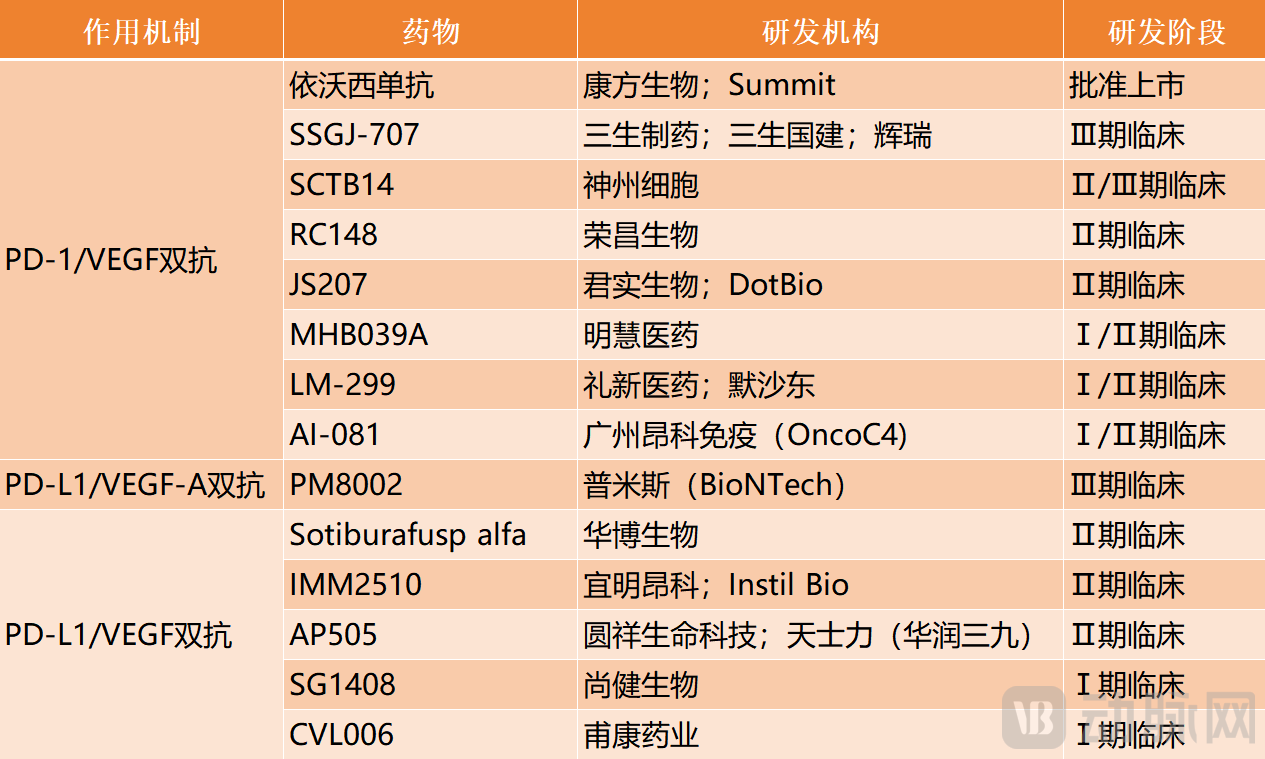
From Chinese clinical trials to global multi-center trials, Ivolitinib continues to validate Chinese data.Summit Chief Business and Strategy Officer Dave Gancarz noted in an interview: "The results of the HARMONi trial demonstrated statistically significant and clinically meaningful progression-free survival benefits, as well as a strong trend in overall survival for the primary endpoints (two primary endpoints), showing data comparability from a single-region study in China to a multi-regional environment. This is consistent with what we observed in our single-region HARMONi-A trial in China, further validating the results of the randomized Phase III study we saw in China and, overall, affirming the opportunity for ivonescimab in a global context."
Furthermore, past transaction details such as effective communication, reliable data, and a solid team will help more Chinese assets go global, securing upfront payments or even mergers and acquisitions that reflect their actual value.Akeso's $500 million upfront payment and 3SBio's $1.25 billion upfront payment set new records for overseas deals; the $55 million upfront payment for PM8002/BNT327, a PD-L1/VEGF bispecific antibody developed by Primus and BioNTech, along with an $800 million acquisition prepayment in the later stage, is another example.
For Pfizer, which is facing a huge patent cliff and holding a BD budget of $10 billion to $15 billion, Chinese assets have been included in its key considerations.
Albert Bourla gave a clear direction: "We are currently fully committed to collaborating with research and development institutions in the field of oncology, without any intention of acquisition. Clearly, we have a strong interest in the cardiometabolic and obesity sectors and are actively monitoring them. There is a significant unmet medical need in the obesity space, and there are also many emerging players now.". Especially in China, there is a large amount of scientific research on obesity.But one thing is very clear: we will strive for it, but we don’t want to pay an excessively high price. Sometimes the valuation already includes a premium, and the premium is indeed very high.I might be less inclined to do a $15 billion big deal, but more willing to do a few smaller deals. However, these deals must be strategic and bring good value returns to the shareholders.”
References:
1-https://seekingalpha.com/article/4793457-pfizer-inc-pfe-presents-at-goldman-sachs-46th-annual-global-healthcare-conference-transcript
2-PharmaCube "Behind the Record-Breaking BD Deals of China's Innovative Drugs"
3-UmabsDB "Summit: The Cooperation with Akeso is a Model of US-China Relations"