

BMS Subsidiary RayzeBio Inks $1.35B Deal for Global Rights to OncoACP3, a Novel Radiopharmaceutical Targeting ACP3 in Prostate Cancer
Philochem
Compound and New Drug Developer
RayzeBio
Targeted Drug Developer

Bristol-Myers Squibb
Biopharmaceutical and Nutritional Product R&D and Sales
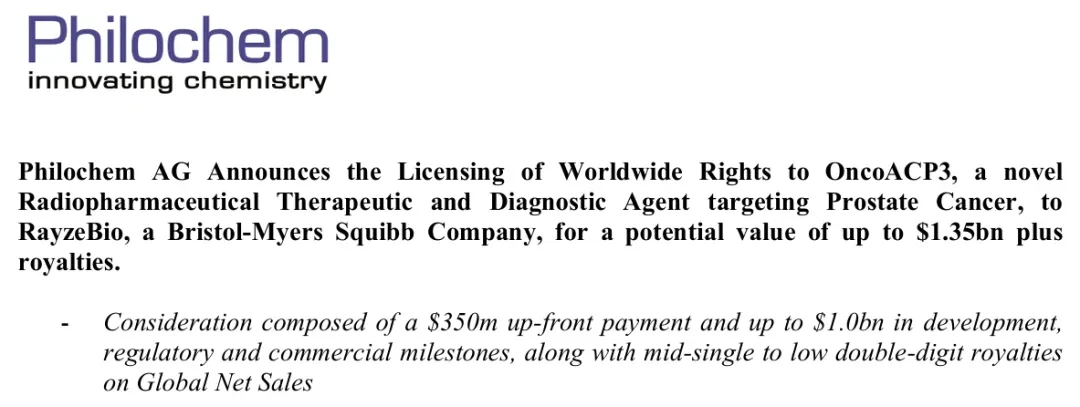
June 10,RayzeBioSir,Philogen Group (MIL:PHIL)Wholly-owned subsidiaryPhilochem AG(“Philochem"") and Bristol-Myers Squibb's wholly-owned subsidiary RayzeBio announced a mostFinal Agreement ($4.1 Billion! BMS Acquires RayzeBio, Eborz Holds Greater China Rights),According to the agreement,PhilochemWill grant RayzeBio the global exclusive rights to develop, manufacture, and commercialize OncoACP3 (a clinical-stage therapeutic and diagnostic agent targeting cancer).
Under the terms of the agreement, Philochem will receive an upfront payment of $350 million, along with development, regulatory, and commercial milestones potentially worth up to $1 billion.PhilochemWill also receive mid-single-digit to low-double-digit royalties on global net sales of OncoACP3 therapeutics and diagnostics. The completion of the transaction is subject to regulatory approvals and other customary closing conditions. Both parties expect the transaction to be completed in the third quarter of 2025.
'%20fill='%23FFFFFF'%3E%3Crect%20x='249'%20y='126'%20width='1'%20height='1'%3E%3C/rect%3E%3C/g%3E%3C/g%3E%3C/svg%3E)
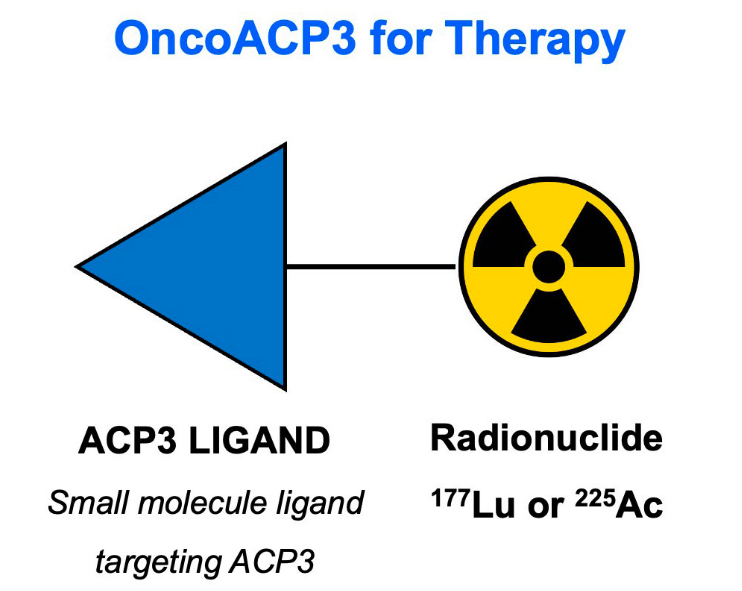
OncoACP3 is a small molecule ligand with high affinity and specificity for the novel cancer target acid phosphatase 3 (ACP3). This compound is currently being evaluated in a Phase I trial (NCT06840535). Preliminary data from the first patients assessed using OncoACP3 diagnostics are promising, showing selective tumor uptake and long retention time, with minimal uptake in healthy tissues.Hold²²⁵Ac-OIN for ncoACP3 Phase I Treatment Study ApplicationD-enabling R&DIn progress.
ACP3 is a phosphatase that is highly expressed in prostate cancer but undetectable in normal organs, except for the healthy prostate. A side-by-side comparison between ACP3 and PSMA (currently considered the most effective marker for cancer) indicates that ACP3 is more abundantly expressed in cancerous prostate tissue than PSMA, but cleaner in normal organs.
OncoACP3 demonstrated optimal performance both in vitro and in vivo, with the highest affinity for the ACP3 antigen. In preclinical models of cancer, the product showed rapid and selective accumulation in tumors, with minimal uptake in normal organs, including the kidneys and salivary glands. ¹⁷⁷Lu-OncoACP3 exhibited potent monotherapy antitumor activity in tumor-bearing mice at low and very low doses (5 and 20 MBq/mouse).OncoACP3 and¹⁷⁷LuOr²²⁵Ac ConjugationIs being developed for the treatment of metastatic prostate cancer.
Professor Dario Neri, CEO and CSO of Philogen, stated:"We are delighted to enter into this new collaboration with RayzeBio, a leader in the field of radiopharmaceuticals. This partnership will focus on the development and commercialization of OncoACP3 for diagnostic and therapeutic applications in cancer care. OncoACP3 is a first-in-class targeted agent with the potential to become a breakthrough treatment in this field. This collaboration reflects our shared commitment to translating scientific innovation into meaningful clinical solutions, ensuring broad access to OncoACP3 for patients in need."
Ben Hickey, President of RayzeBio, Inc., said:"The collaboration with Philochem strengthens our leadership position in the rapidly evolving field of radiopharmaceuticals, aligning with our strategy to advance best-in-class RPT candidates. OncoACP3 has demonstrated initially encouraging safety, providing Bristol-Myers Squibb and RayzeBio with a differentiated entry point in the prostate cancer space, reinforcing our leadership in actinium-based RPT development. This agreement marks a significant milestone for RayzeBio and our goal of delivering radiopharmaceuticals to patients."
Philogen is an Italian-Swiss group active in the biotechnology sector, specializing in the research and development of pharmaceuticals for the treatment of highly lethal diseases. Philogen's mission is to discover, develop, and commercialize innovative drugs for diseases with high unmet medical needs. This is achieved by leveraging (i) proprietary technologies for isolating ligands that react with antigens present in certain diseases, (ii) experience in developing products targeting tissues affected by disease, (iii) expertise in drug manufacturing and development, and (iv) an extensive portfolio of patents and intellectual property. Although the group’s drugs are primarily used in oncology, the targeted approach may also be applicable to other conditions, such as certain chronic inflammatory diseases.