

Modernizing Preclinical Drug Development: The Role of New Approach Methodologies (NAMs)

AliveX Biotech
Precision Medicine Solution Provider
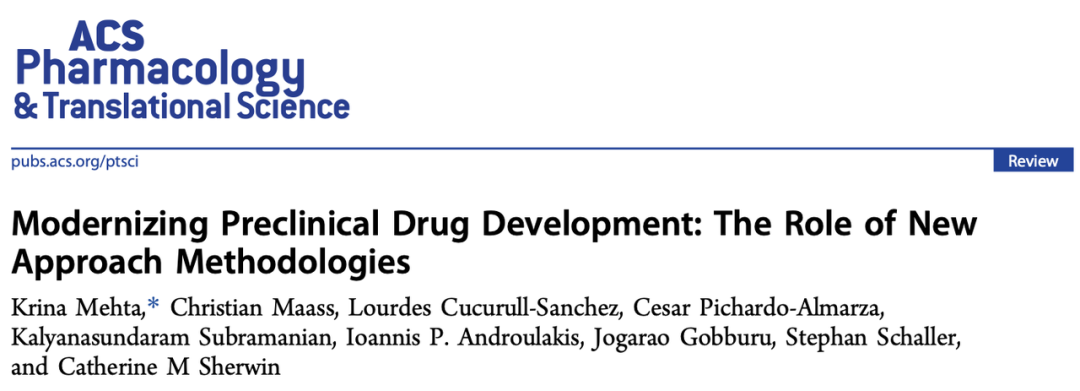
Recently, the pharmacological modeling expert team of AliveX BiotechDr. Kalyanasundaram Subramanian and Dr. Catherine M Sherwin, as corresponding authors, collaborated with authoritative colleagues from both industry and academia.An important review was published in the journal ACS Pharmacology & Translational Science, which focuses on drug translational science.Discusses the trend of NAMs (New Approach Methodologies) as a new regulatory standard in preclinical drug development.
Title:Modernizing Preclinical Drug Development: The Role of New Approach Methodologies
Published Journal:ACS Pharmacology & Translational Science
IF:5.1
Publication Time:May 29, 2025
Author of the article:
Christian Maass - ESQlabs GmbH, MPSlabs
Lourdes Cucurull-Sanchez - Pharmetheus AB−UK Branch
Cesar Pichardo-Almarza - AstraZeneca R&D, Systems Medicine
Kalyanasundaram Subramanian - Differentia Biotech Ltd
Ioannis P. Androulakis - Biomedical Engineering, Rutgers University
Jogarao Gobburu - Center for Translational Medicine, School of Pharmacy, University of Maryland
Stephan Schaller - ESQlabs GmbH, 26683 Saterland
Catherine M Sherwin - Differentia Biotech Ltd
'%20fill='%23FFFFFF'%3E%3Crect%20x='249'%20y='126'%20width='1'%20height='1'%3E%3C/rect%3E%3C/g%3E%3C/g%3E%3C/svg%3E)
Kas Subramanian, PhD
Quantitative Systems Pharmacology Expert
World's top quantitative pharmacologist and academician of the Indian National Academy of Engineering. With over 25 years of drug development experience and nearly 30 years of global pharmaceutical modeling technology and industry expertise, supported 45 new drug development pipelines, including gene and cell therapies, ADCs, small nucleic acid drugs, etc., spanning from preclinical to clinical trial stages, as well as products that have been marketed after clinical validation. Previously served as Executive Director of Modeling Technology at the leading U.S. company Applied Biomath. Ranked first in the number of published papers on quantitative pharmacology in cardiovascular, oncology, immunology, and neurological diseases on Google Scholar.
Catherine Sherwin, MD, PhD
Clinical Pharmacology Modeling Expert
20 years of experience in clinical pharmacology, pharmacological modeling, toxicology, and drug clinical trials. Former Vice President of Clinical Pharmacology at Allucent, Editor-in-Chief and Editorial Board Member of several clinical pharmacology journals, Certified Member of the American Board of Clinical Pharmacology (ABCP), Fellow of the American College of Clinical Pharmacology (ACCP), Certified Principal Investigator (CPI) by the Association of Clinical Research Professionals (ACRP), and former Professor of Pediatrics and Pharmacology & Toxicology at the University of Otago. Served as an editorial board member for multiple SCI journals, with an H-index of 42 and over 5,000 total citations on Google Scholar.
In April 2025, the U.S. Food and Drug Administration (FDA) announced that it would be involved in the development process of monoclonal antibodies and other drugs.Gradually replace animal experiments with other tools, which will be immediately implemented in the new drug clinical trial application (IND),And encourage the inclusion of NAMs data.
The release of this announcement marks a new era of transformation for the traditional drug development model that has persisted for decades:
NAMs, represented by AI-driven high-precision computer simulation mechanism modeling and advanced in vitro models, are reshaping the rules of drug development.
NAMs can help companies advance innovative drug development efficiently and at a lower cost by providing more human-relevant data, enabling them to lead in global competition for the approval of similar drugs while meeting requirements for scientific rigor, ethical considerations, and sustainable development.
What are New Approach Methodologies (NAMs)? Why are they so important?
NAMs(New Approach Methodologies):Refers to a new drug development model that no longer solely relies on traditional animal experiments, but fully integrates advanced in vitro models, computer modeling, and artificial intelligence (AI) technologies to support the evaluation of drug safety and efficacy, aiming to reduce and even replace traditional animal experiments. Mainly includes:
Advanced In Vitro Experiments:Such as 3D cell culture, Organ-on-Chip, Microphysiological Systems (MPS), and Organoids, which can better simulate the human physiological and pathological environment.
Mechanism Modeling and Artificial Intelligence:Such as Physiologically-Based Pharmacokinetic (PBPK), Quantitative Systems Pharmacology (QSP), Quantitative Systems Toxicology (QST) models, immunogenicity prediction, Digital Twin, etc., predicting human pharmacokinetics, efficacy, dosage, etc., based on in vitro/computational data.
By integrating NAMs technology, we can:
Increase the Success Rate of New Drug Development
More than 90% of candidate drugs fail during the clinical development stage, primarily due to species differences between animals and humans, which prevent the effective translation of preclinical research outcomes into clinical applications. This commonly manifests as insufficient efficacy or unacceptable toxicity in humans.
With the emergence of novel therapies such as bispecific antibodies, antibody-drug conjugates (ADCs), targeted protein degraders (TPDs), and cell and gene therapies, The limitations of traditional preclinical-clinical translation methods relying on animal experiments in predicting human responses are becoming increasingly prominent.This is mainly due to differences between humans and animals in terms of homologous target affinity, target expression, or downstream signaling pathways. NAMs can more accurately simulate and predict the mechanisms of drug action, efficacy, and toxicity in the human body, thereby enhancing the scientific rigor and success rate of drug screening and development.
Significantly reduce the need for animal testing, lower R&D costs, and shorten drug time-to-market.
Traditional preclinical research heavily relies on animal experiments, which not only raises ethical concerns but also leads to low predictive accuracy due to the homogeneity of animal samples and insufficient representation of disease models, resulting in increased R&D costs and longer development cycles.The average preclinical development cost for each successful drug is $237.8 million, and the total cost of bringing a new drug to market is as high as $985.3 million.High failure rates and long cycles drive up the prices of marketed drugs and impose a heavy financial burden on biopharmaceutical companies.
NAMs can enhance predictive accuracy in many aspects such as drug safety and efficacy evaluation, while significantly reducing or even replacing animal experiments, greatly saving R&D costs, accelerating drug approval, and better aligning with ethical and social development needs.
Application Scenarios and Practical Cases of NAMs in Drug Development
1. PBPK Model: An Efficient Tool for Preclinical Evaluation of Toxicokinetics and Pharmacokinetics
Physiologically-based pharmacokinetic (PBPK) models, combined with methods such as quantitative structure-activity relationship (QSAR) and in vitro to in vivo extrapolation (IVIVE), have been widely used to predict the PK characteristics of small molecules and biologics. However, preclinical PBPK models often rely on a large amount of independent in vivo data for fitting and validation, which demands high data availability. In the absence of sufficient data, the potential of PBPK models to simplify preclinical development has not been fully realized.
▍Practical Application Cases:
PK Prediction for Small Molecule and Monoclonal Antibody Drugs:The research team constructed an "a priori" PBPK model using data from in vitro experiments and physicochemical properties of compounds. Based solely on in vitro data and existing knowledge, they successfully predicted the PK characteristics of eight small-molecule drugs in rats and monkeys, as well as the PK characteristics of 22 monoclonal antibodies in humans. This approach can also provide crucial mechanistic information during the early stages of drug development, such as predicting non-specific binding of antibody drugs and FcRn receptor interactions, thereby reducing the need for animal testing.
CNS Drug (Central Nervous System) Distribution Prediction:A PBPK model was developed for an Alzheimer's disease antibody drug (tau protein target), accurately predicting the drug’s concentration in rat and monkey cerebrospinal fluid (CSF) and brain interstitial fluid.
Improving Drug Metabolism Prediction Performance by Combining Organoids:Liver-on-a-chip combined with PBPK model successfully predicted the clearance rate of propranolol in humans and accurately captured interpersonal differences in the metabolism of six small-molecule drugs.
2. Pharmacodynamics and Mechanism of Efficacy Dose-Response Evaluation
Based on a rigorous in vitro experimental mechanistic model, it is possible to establish reliable drug dose-response predictions, effectively supporting the design of preclinical studies on pharmacodynamics and efficacy.
▍Practical Application Cases:
Clinical Translation Prediction of Bispecific Antibody (BiTE) Drugs:Researchers successfully predicted the clinical data performance of multiple drugs by constructing a BiTE drug QSP platform model and integrating a large amount of cellular experimental data.
ADC Drug Dose Prediction and Tumor Target Saturation Analysis:Through the Thiele modulus analysis method, the research team clarified the relationship between drug permeability, target density, and drug-target affinity, successfully predicting the target saturation and tolerance of marketed ADC drugs. This method performs exceptionally well in analyzing the clinical tolerance and target saturation of drugs such as antibody-drug conjugates (ADCs) and immune checkpoint inhibitors.
Optimization of Anti-Angiogenic Drug Dosage Selection and Medication Strategies:Digital twin models of the tumor microenvironment have been successfully used to predict the preclinical efficacy of anti-angiogenic drugs, including optimizing dose selection and combination therapy strategies.
3. Mechanism Dose-Response Assessment of Drug Safety
In the preclinical drug development stage, assessing the potential toxicity risks of candidate drugs to important organ systems in the human body is a clear requirement of pharmaceutical regulatory authorities.In recent years, a large number of mechanistic models have been developed in the academic community, which can accurately predict drug-induced organ-specific toxicity and minimize the risk of drug-induced toxicity.These models cover several important toxicity areas, including hepatotoxicity, nephrotoxicity, cardiotoxicity, and hematotoxicity. Particularly, when these mechanistic models are integrated with advanced in vitro technologies (such as liver-on-a-chip, kidney-on-a-chip, heart-on-a-chip), the accuracy of toxicity prediction can be significantly improved.
▍Practical Application Cases:
Hepatotoxicity Risk Prediction (DILIsym Platform):This platform combines in vitro liver chip experimental data with QST models to successfully predict the hepatotoxicity risks of various drugs and has been widely applied in the FDA drug registration and approval process.
Prediction of Nephrotoxicity Risk:Researchers combined renal chip experimental data with QSP models to accurately predict the clinical renal toxicity profiles of commonly used drugs such as cisplatin and rifampicin.
Cardiotoxicity Prediction:Researchers combined heart chip data with QST models to accurately predict the clinical cardiac toxicity risks of drugs such as doxorubicin and terfenadine.
Hematotoxicity Prediction:Myelosuppression is one of the most common adverse reactions to anticancer drugs, and the QSP model for bone marrow and granulopoiesis has successfully achieved the translation of drug-induced myelosuppression effects from in vitro to humans.
4. Machine Learning: Precise Transformation from Big Data to Information
With the rapid advancement in computing power, algorithms, and data accessibility, the application of artificial intelligence and machine learning (AI/ML) technologies in the field of drug development is also expanding quickly.AI/ML algorithms can efficiently mine information from large drug development datasets, accurately predicting the relationship between molecular structures and pharmacokinetics (ADME) and toxicology (ADMET) properties.Thereby accelerating the screening of new drugs with excellent ADME and safety profiles, streamlining the drug discovery process, and reducing reliance on animal testing.
▍Practical Application Cases:
Deep Learning Platform Deep-PK:Deep-PK, a QSAR-based graph neural network platform, successfully predicted pharmacokinetic and toxicity profiles from drug molecular structures, significantly reducing the time cycle for early drug screening.
Digital Twin Model:Animal Digital Twin Model Built on Generative Adversarial Network (GAN) Technology Successfully Predicts Drug-Induced Liver Toxicity Risk, Showing High Consistency with Real Clinical Data.
Global Regulatory Trends: NAMs Accelerate into the Fast Lane
Acceleration of European and American Policies:In 2022, the United States passed the "FDA Modernization Act 2.0," while Europe issued relevant directives as early as 2010, explicitly promoting the "3R Principles" (Replacement, Reduction, and Refinement of animal testing). These regulations encourage the adoption of new technologies such as cell-based assays or computational models to replace animal testing, thereby obtaining exemptions from animal experiments when studying drug safety and efficacy.
Specific Measures Released:In April 2025, the FDA released a strategic roadmap, stating that it will gradually phase out animal testing in drug development, prioritizing the promotion of NAMs in drugs with clear mechanisms and easy modeling, such as monoclonal antibodies; EMA, NIH, and others have also launched multiple dedicated programs (e.g., Complement-ARIE) to promote the development and standardization of NAMs.
Industry Impact:With regulatory support, NAMs have moved from laboratory exploration to practical applications in the new drug registration and approval process.
New Paradigm for Future Drug Development
1. Workflow for Preclinical Development Alternatives
Researchers have proposed a new "model-centric" early-stage R&D process to reduce animal usage, lower costs and ethical burdens, and significantly improve R&D efficiency:
1
In vitro experiment
Conduct preliminary in vitro experiments to obtain key drug parameters such as biochemical characteristics, molecular interactions, and cellular responses;
2
Model Analysis
Integrate in vitro data into computational models such as PBPK, QSP, and QST, and use these models to analyze and predict species-, drug-, and dose-specific responses;
3
Model Prediction
Before actual animal testing, computer simulation models are used to predict preclinical pharmacokinetics, toxicity, and biological efficacy;
4
Small-scale preclinical in vivo experiments
Optimize experimental conditions, dosage selection, and research parameters, and design smaller-scale preclinical studies based on prior predictions;
5
Continuous Iteration
Iterative feedback as needed, using the results of preclinical in vivo studies to improve in vitro, in silico, and in vivo experiments for enhanced predictive accuracy.
2. Combination Application of Multiple NAMs
A single method can hardly cover all demands, and the future trend will be multi-dimensional integration of in vitro - in vivo - computation - AI, such as the combination of "organ-on-a-chip + mechanism modeling + AI prediction + digital twin" to achieve a 1+1>2 effect.
3. Challenges and Opportunities of New Drug Types
ADC, multispecific antibodies, cell/gene therapies and other novel drugs highlight the limitations of traditional animal models, making the value and application space of NAMs even greater.
4. Quantifying Benefits and Industry Promotion
Taking the liver chip as an example, if it replaces animal models in DILI prediction, the predictive sensitivity can increase from 50% to 87%, with specificity reaching 100%. This would save $3 billion annually in R&D costs and reduce the number of animal experiments from 5,000 to 50. For monoclonal antibody (mAb) drugs that show no risk signals in a 1-month study and NAM testing, the standard 6-month primate toxicology testing can be shortened to 3 months, saving millions in animal testing costs. The FDA will also offer expedited review channels for companies using NAMs.
Conclusion
NAMs are reshaping the global drug R&D paradigm. It not only represents a technological breakthrough but also drives comprehensive progress in industrial efficiency, ethical compliance, and social responsibility. In an era of regulatory policy transformation, explosive growth in innovative drugs, and accelerating globalization, biopharmaceutical companies are encountering a golden window for strategic upgrading.
Proactively embracing NAMs and strategically laying out a new paradigm for drug development not only enables more efficient early dialogue with regulatory agencies such as the FDA, especially in areas like monoclonal antibodies, but also completely reshapes the R&D process—significantly compressing the development cycle, markedly reducing costs, and supporting regulatory decisions with more precise and reliable data.Companies that take the lead in driving NAMs transformation will gain a decisive advantage in global market competition and seize the new high ground of the future pharmaceutical industry.
AliveX Biotech NAMOptimizer™ Solution
AliveX Biotech LaunchesNAMOptimizer™ SolutionWill help the biopharmaceutical industry identify and seize innovative opportunities under the NAM strategy in the early stages of R&D.Especially for monoclonal antibody drug companies in the preclinical or early clinical development stage., scientifically plan regulatory strategies to gain a competitive edge and core advantages in the global market:
Early Project Planning and Strategy Consulting
In the field of antibody drugs,Assist companies in evaluating and developing scientific NAMs strategies for replacing animal testing, as well as submission plans, to reduce R&D costs, accelerate development timelines, and lead the competition in product development progress.
Full-process Application Support and Regulatory Communication
Proactive Communication with Regulatory Agencies such as the FDA
1. Guide and assist companies in efficiently preparing for early-stage communications such as Pre-IND Meetings, and organize key scientific issues and regulatory concerns;
2. Assist in preparing communication materials, clarify the scientific basis for the NAMs approach and the reduction of animal experiments, and assist in meeting defenses.Promote the consensus with regulatory authorities on technical routes and data requirements.
Customized NAMs Technology Implementation and Data Support
Development of customized NAMs technical roadmap design, with optional applications including PMx and PBPK modeling, QSP modeling, and AI/ML integration, providing high-quality, verifiable predictive data.Support key nodes such as project safety and efficacy, significantly enhancing the scientific rigor of research and human relevance.
Preparation of Application Materials and Compliance Support
Comprehensive assistance for enterprises in organizing and integrating NAMs and traditional data, and preparing IND submission materials that meet international standards such as FDA,Clarify the scientific justification and data support for the reduction of animal experiments in the declaration.Ensure the logical rigor and sufficient data of the submission materials to enhance the success rate and compliance of the application.
Communication and Supplementary Support After Submission
During the FDA review period, continuously provide scientific consulting and material supplementation services, quickly respond to regulatory feedback, and assist in further improving NAMs-related data and arguments.Provide comprehensive scientific and compliance support for supplementary data, subsequent reviews, and global synchronized registration, reducing uncertainty and project risks.
AliveX Biotech's pharmacology modeling expert team has over 40 years of profound experience and service case accumulation in the fields of pharmacology modeling simulation, QSP, and pharmacometrics., with full-process, systematic professional services, become yourPromote non-animal methods, obtain exemptions for laboratory animals, significantly shorten the R&D cycle and save R&D costs, improve R&D success rates and compliance levels, and accelerate new drug launches.An important partner, helping companies achieve outstanding breakthroughs in clinical outcomes for their drug pipelines, leading the clinical approval process for similar drugs, and seizing the global market opportunity.
About AliveX Biotech
AliveX Biotech boasts a world-leading AI + multi-omics technology platform, dedicated to providing end-to-end premium R&D solutions in the biomedicine research and development field, including AI bio-computation, model-guided drug development, and multi-omics central laboratory services. The company consistently upholds the core values of "cutting-edge, innovation, professionalism, and rigor," driven by AI + multi-omics technology. It focuses on disease and drug mechanism research, biomarker and target discovery and evaluation, pharmacology and pharmacodynamics assessment, as well as optimization of clinical trial protocols and precision treatment plans in disease areas such as oncology and immunology, enhancing the efficiency and success rate of R&D. AliveX Biotech has an internationally top-tier interdisciplinary team of academician professors and experts, with expertise spanning AI, biology, omics technologies, pharmacological digital twins, and more, offering robust global service capabilities.
#FDA Submission #Non-animal Model #Alternatives to Animal Testing #NAMs #NewDrugExport #Monoclonal Antibody Drugs #Computational Modeling #QSP