

Thermo Fisher Scientific Explores $4 Billion Sale of Diagnostic Business

Thermo Fisher Scientific
Biotechnology Product Developer
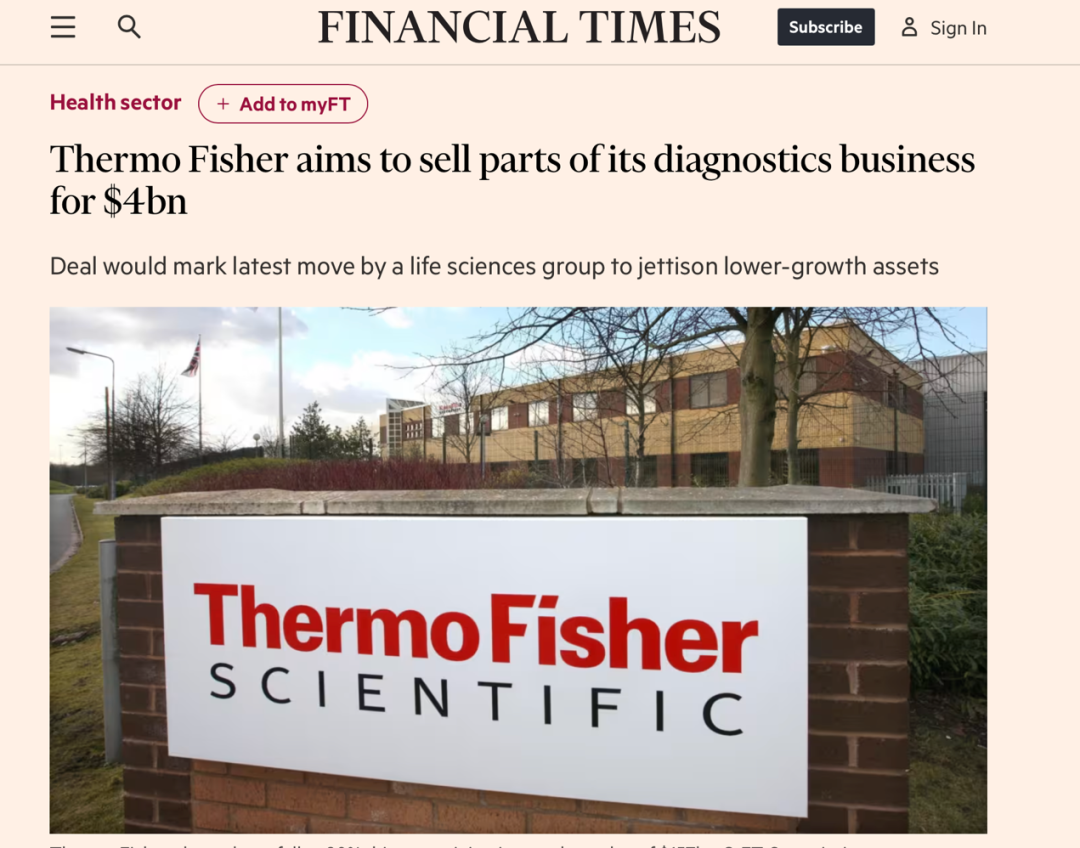
It is reported that Thermo Fisher Scientific Inc., a global life sciences giant, is selling part of its diagnostic business for approximately $4 billion. The company has recently reached out to multiple private equity firms through advisory institutions to gauge their interest in acquiring diagnostic businesses, including the microbiological testing division (which produces infectious disease testing equipment).
The diagnostic business unit for sale has an annual adjusted profit of approximately $300 million and annual sales reaching $1.4 billion, accounting for about one-third of Thermo Fisher Scientific's overall specialty diagnostics division revenue. Informed sources added that the company expects to complete the transaction at a price exceeding $4 billion.
This asset sale comes as Thermo Fisher Scientific and the entire healthcare industry are facing a turbulent period. Due to investor concerns that Trump's budget cuts to the U.S. National Institutes of Health (NIH) could impact company performance, Thermo Fisher Scientific's stock price has fallen 20% year-to-date, with a market value of $157 billion at Thursday's close.
Thermo Fisher Scientific declined to comment on this matter. The informed sources emphasized that the auction process does not guarantee a final deal, and the company may choose to continue holding this asset.
Thermo Fisher Scientific's last major asset divestiture was six years ago, when it sold its anatomical pathology business to Japan's PHC Holdings for $1.1 billion. Earlier this year, the company had just acquired Solventum's purification and filtration business for $4.1 billion.
Thermo Fisher Scientific Inc. CEO Marc Casper said at an investor conference last month regarding the impact of the NIH budget cuts: "Congressional intervention in the institute's budget may result in a smaller-than-expected reduction, which should be a source of confidence." The company also responded to the Trump administration’s call and pledged to invest an additional $2 billion over the next four years to expand its U.S.-based manufacturing footprint.