


H&H Healthcare
R&D and Producer of Interventional Medical Devices for Heart Disease
As transcatheter tricuspid valve intervention in China officially enters the commercialization phase.Fuwai Hospital, Chinese Academy of Medical Sciences; Fuwai Central China Cardiovascular Disease Hospital; Xijing Hospital, Air Force Medical University; Wuhan Asia Heart Hospital; Suzhou Municipal Hospital(The order is not ranked)Five Well-Known Cardiac Centers in China Successfully Apply HuiHe Healthcare's K-Clip®Through catheterTricuspid AnnulusShaping System Completes First Batch of Implants. Opens a New Chapter for Tricuspid Valve Interventional Treatment in China.
K-Clip®It is a transcatheter tricuspid annuloplasty system independently developed by HuiHe Healthcare, and also the first approved interventional tricuspid device in China, specifically designed for treating severe Tricuspid Regurgitation (TR). Through minimally invasive intervention, it accurately repairs the dilated tricuspid annulus, restoring the original valve function, providing a safe and effective solution for high-risk patients unable to tolerate traditional open-heart surgery.
✧ Fuwai Hospital, Chinese Academy of Medical Sciences ✧
Professor Xianghua Pan's Team
Patient Baseline
Patient, female, 66 years old, admitted with a diagnosis of tricuspid regurgitation.
Preoperative Imaging:Normal blood flow velocity below the tricuspid valve, with massive regurgitation above the valve; CTA indicates a tricuspid annulus area of 1411mm².
Surgical Strategy:Plan to implant 2 K-Clips
Surgical Procedure and Outcomes
Intraoperatively, under the guidance of transesophageal echocardiography, one 14T K-Clip was implanted at the posterior annulus and another at the anteroposterior annulus. Immediately postoperatively, regurgitation decreased from baseline severe (5+) to mild (1+).
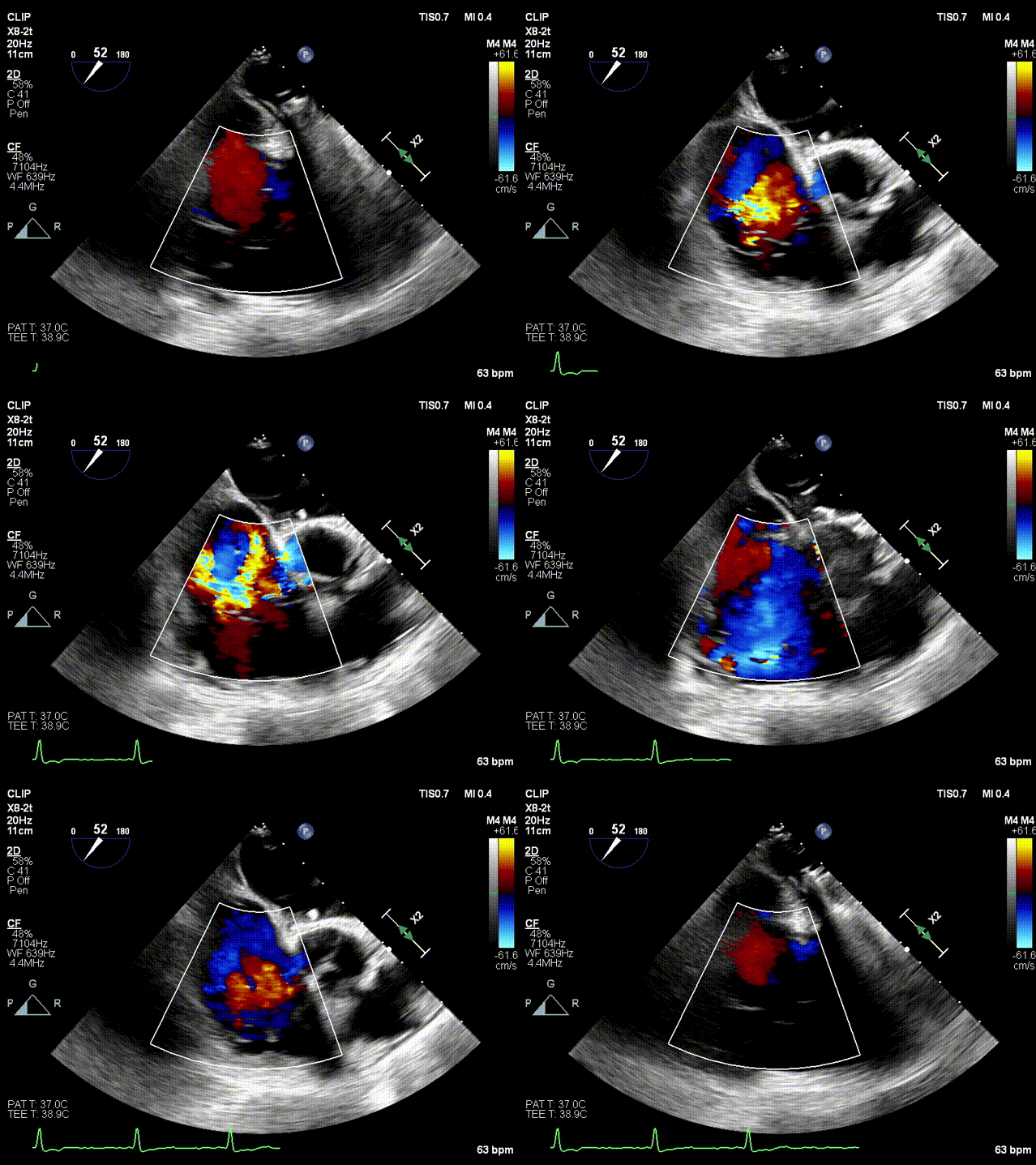
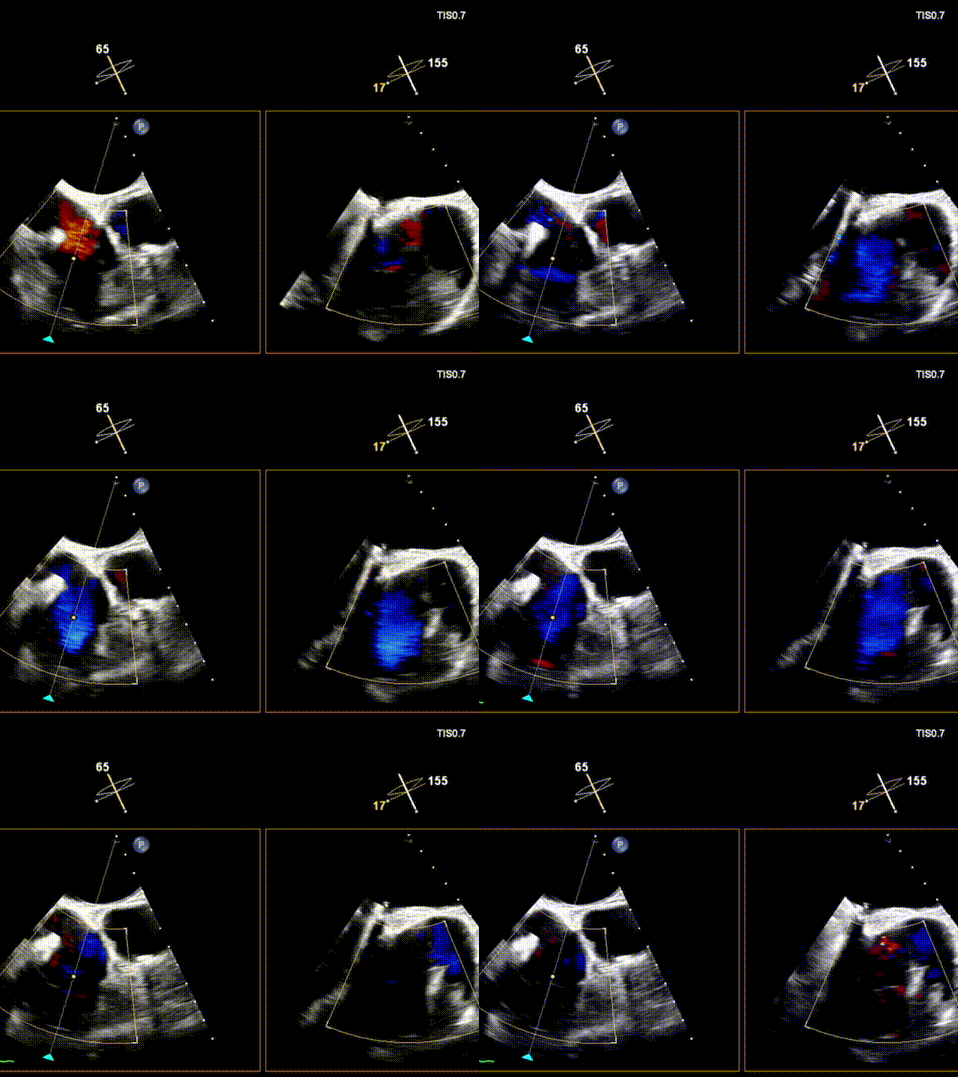
Preoperative Ultrasound
Postoperative Ultrasound
✧ Fuwai Huazhong Cardiovascular Hospital ✧
Professor Han Yu's Team
'%20fill='%23FFFFFF'%3E%3Crect%20x='249'%20y='126'%20width='1'%20height='1'%3E%3C/rect%3E%3C/g%3E%3C/g%3E%3C/svg%3E)
Patient Baseline
Patient, female, 65 years old, with atrial fibrillation for 6 years, whose condition worsened a few days ago, presenting with bilateral lower limb edema and inability to lie flat; further examination diagnosed severe tricuspid regurgitation.
Preoperative Imaging:The blood flow velocity below the tricuspid valve is normal, with severe regurgitation (5+) above the valve; CTA indicates a tricuspid annular area of 1552 mm².
Surgical Strategy:Plan to implant 2 K-Clips
Surgical Procedure and Outcomes
Intraoperatively, under the guidance of transesophageal echocardiography, one 14T K-Clip was implanted at the posterior annulus and another at the anteroposterior annulus, while one 12T K-Clip was implanted. Immediately postoperatively, the regurgitation decreased from baseline severe-to-profound (5+) to moderate (2+).
Preoperative Ultrasound
Postoperative Ultrasound
✧ Xijing Hospital, Air Force Medical University ✧
Professor Yang Jian's Team, Professor Li Weidong
Patient Baseline
Patient, female, 74 years old, with a history of cardiac valve surgery 16 years ago, presented with intermittent chest tightness and shortness of breath for 1 year; admitted with a diagnosis of tricuspid regurgitation.
Preoperative Imaging:The blood flow velocity below the tricuspid valve is normal, with massive regurgitation above the valve; CTA indicates a tricuspid annulus area of 1332.5mm².
Surgical Strategy:Plan to implant 2 K-Clips
Surgical Procedure and Outcomes
Intraoperatively, under the guidance of esophageal ultrasound, one 14T K-Clip was implanted at the posterior annulus and another at the anterior-posterior annulus, respectively. Additionally, one 12T K-Clip was implanted. Immediately postoperatively, the regurgitation decreased from baseline severe (4+) to trace (0-1+).
Preoperative Ultrasound
Postoperative Ultrasound
✧ Wuhan Asia Heart Hospital ✧
Professor Song Dan's Team
Patient Baseline
Patient, female, 80 years old, with atrial fibrillation, post-left atrial appendage closure surgery, presented with symmetrical lower limb symptoms without obvious cause approximately 20 days ago.Depressed Edema, accompanied by mild chest tightness and shortness of breath. Upon examination, diagnosed with severe tricuspid regurgitation.
Preoperative Imaging:The blood flow velocity under the tricuspid valve is normal, with severe regurgitation (5+) above the valve; CTA indicates a tricuspid annulus area of 1760 mm².
Surgical Strategy:Plan to implant 2 K-Clips
Surgical Procedure and Outcomes
During the surgery, under the guidance of intraoperative echocardiography, one 12T K-Clip was implanted at the posterior annulus and another at the anterior and posterior annulus. Immediately after the operation, the regurgitation decreased from baseline severe (5+) to moderate-severe (3+).
Preoperative Ultrasound
Postoperative Ultrasound
✧ Suzhou Municipal Hospital ✧
Professor Zhang Haifeng's Team
Patient Baseline
Patient, female, 68 years old, has experienced recurrent chest tightness and shortness of breath over the past two years, accompanied by bilateral leg edema. Further examination diagnosed her with severe tricuspid regurgitation.
Preoperative Imaging:The blood flow velocity under the tricuspid valve is normal, with severe regurgitation (4+) above the valve; CTA indicates a tricuspid annulus area of 1324 mm².
Surgical Strategy:Plan to implant 1 K-Clip
Surgical Procedure and Outcomes
Intraoperatively, under the guidance of transesophageal echocardiography, one 14T K-Clip was implanted at the posterior annulus. Immediately postoperatively, regurgitation decreased from baseline severe (4+) to mild (1+).
Preoperative Ultrasound
Postoperative Ultrasound
K-Clip®The transcatheter tricuspid annuloplasty system, K-Clip, demonstrated outstanding performance in the first batch of commercial implants in China, earning unanimous praise from clinical experts for its excellent clinical outcomes.®The clinical application fills the technical gap in the field of tricuspid valve interventional treatment in China, providing a revolutionary treatment option for patients with severe tricuspid regurgitation. In the future, with the popularization of the technology and the accumulation of evidence-based experience, it is expected to be combined with atrial fibrillation ablation and left heart valve intervention to explore a "one-stop" solution for complex cardiac lesions.
K-Clip®Transcatheter Tricuspid Annuloplasty System:
1. Through vascular puncture approach, minimal damage, outer diameter of the sheath is 18Fr.
2. Simple operation, all completed on the atrial surface, with a short learning curve.
3. All operational steps before dissociation are reversible, and the surgical outcome is controllable.
4、Physiological Annular Reduction Technology, without damaging the native valve leaflets.