

Chongqing-Based NeuroInterface Medical Unveils High-Throughput, Low-Power Flexible Brain-Computer Interface to Revolutionize Neurological Therapeutics
BrainSpace
Brain-Computer Interface Technology and Product Developer
Driven by both technological innovation and the capital market, brain-computer interface, as a future industry that deeply integrates life science and information technology, has evolved from once being scientific fantasy and cutting-edge exploration to becoming a new driver of economic development fostered by major countries, nurturing the seeds of the next industrial revolution.
In recent years, "brain projects" have been launched worldwide, providing direction and focus for the development of brain-computer interfaces. In 2024, seven departments in China jointly released the "Implementation Opinions on Promoting the Innovation and Development of Future Industries," explicitly listing "brain-computer interfaces" as one of the future industries and outlining key development tasks.
At the 2nd "Belt and Road" Science and Technology Achievements Conference held in June, BrainSpace (Chongqing BrainSpace Medical Technology Co., Ltd.), a key brain-computer interface innovation enterprise recommended by Chongqing, made a stunning debut with its self-developed "High-Throughput Flexible Electrode Array Brain Signal Acquisition and Analysis Device (YuQiXing 001)." This innovative product not only showcased the hardcore technological strength of Chinese enterprises in the fields of neuroscience and brain-computer interfaces to the world, but also demonstrated the innovative vitality and leading position of western China in the future brain science industry.
As we all know, invasive brain-computer interface technology has high technical barriers, requires significant investment, involves high risks, and has a long development cycle. However, it is a key technology for the long-term monitoring and decoding of brain information in humans. Once the key technical bottlenecks are overcome, it is expected to bring disruptive changes to fields such as medical rehabilitation, neuroscience research, and human-computer interaction.
BrainSpace, as a high-tech enterprise focusing on invasive brain-computer interface technology, has core team members all coming from top universities both in and outside China. Meanwhile, the company also collaborates withTechnical University of Munich, Chongqing University, Peking University, Guangxi University, and Chongqing Brain and Intelligence Science CenterDeep collaborations have been established with well-known universities and institutions both in China and abroad, accelerating the R&D innovation and commercialization of brain-computer interface technology by integrating top global scientific research resources.
Based on the innovation and technical strength of the interdisciplinary medical team, BrainSpace showcased at this year's technology exhibition.High-Throughput, Low-Power, Flexible Electrode EEG Acquisition and Analysis System —— YuQixing 001 System, integrating three core technologies, redefining the standards for neural signal acquisition and analysis:
01 Ultra-fine Flexible Electrode Technology: Carbon/metal flexible neural electrodes that are finer and softer than a hair strand, capable of non-invasively adhering to the surface of the cerebral cortex to achieve precise capture of single-cell level signals.
02 Aerospace-grade chip empowerment: Equipped with low-power chips, the power consumption for recording thousands of channels of EEG signals is only 1/10 that of traditional devices, doubling the system's battery life.
03 Intelligent Decoding and Regulation: Equipped with AI algorithm software for real-time analysis of neuronal activity patterns, supporting long-term stable recording and precise electrical stimulation regulation for consecutive months.
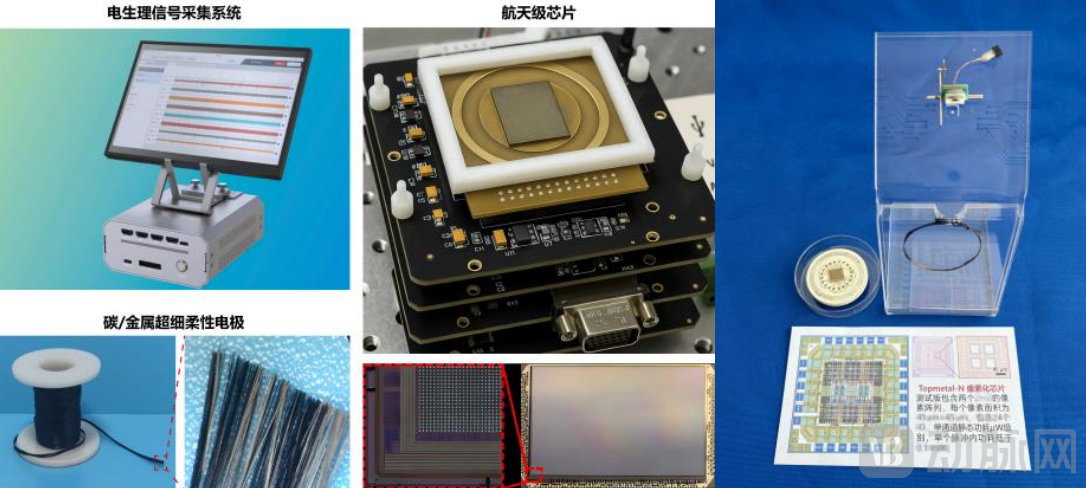
Source: BrainSpace
Overall, the Yuhqi Star 001 system developed by BrainSpace has broken through the bottlenecks of traditional EEG devices, which are "low throughput, high power consumption, and short-term recording," achieving dual breakthroughs in kiloneuronal-level resolution and long-term stable monitoring. Experts at the conference evaluated it as "combining high precision with biocompatibility, paving new paths for precise diagnosis and treatment of brain diseases and clinical transformation of brain-computer interfaces, as well as providing solutions for...Clinical diagnostic and treatment issues such as sensory-motor disorders, epilepsy, and neurodegenerative diseases"Providing New Ideas".
As a frontier field at the intersection of brain science, neuroscience, materials science, and computer science, brain-computer interface (BCI) demonstrates enormous development potential. However, globally speaking, BCI technology is still in its early stages of development.
Neuralink, the prominent invasive brain-computer interface company founded by Elon Musk, has established a significant first-mover advantage in the global brain-computer interface race through its system integration capabilities in hardware, surgical automation, and AI decoding algorithms. Neuralink's N1 single-chip product supports 1024-channel readout and stimulation (expandable to 3072 channels), with microelectrodes approximately 10 micrometers in diameter, achieving an accuracy rate of 92.3% in motion intent recognition.
BrainSpace, an innovative enterprise incubated by the Chongqing Brain and Intelligence Science Center and grown locally, has undertaken several national-level scientific research projects. It is committed to providing disruptive solutions for the diagnosis and treatment of neurological diseases. Currently, the company has developed a full-chain product matrix from EEG analysis to neuromodulation. Its high-lead digital electroencephalograph (EEG) machine is about to enter the market, its invasive precision modulation device for epilepsy is undergoing clinical trials, and its EEG-based early screening equipment for Alzheimer's disease has been included in a national key R&D program. The company’s technical capabilities have reached an internationally leading level.
In the face of the global competition for cutting-edge brain-computer interface technology, Yu Qixing 001 directly rivals the world-leading Neuralink in several key parameters, showcasing China's strong competitiveness in the brain-computer interface field. Its single chip is equipped with 2048 channels (multiplexable up to 8192 channels); the system’s flexible microelectrode diameter can be adjusted within a range of 2-10 micrometers and is capable of simultaneously decoding thousands of motor cortex neurons.
From the perspective of underlying technology, the design and production of flexible electrodes are among the most technically challenging components in the entire brain-computer interface system. This includes not only materials, structural design, and manufacturing processes but also decoding algorithms, electrochemical stability, and biocompatibility as they become critical with the advancement of human body implants. Currently, innovative companies worldwide have developed distinctive technical approaches in the field of flexible electrode research and development.
BrainSpace is no exception. Driven by both technology research and external cooperation, the company has achieved synergistic breakthroughs in the two fields of flexible electrode technology: coaxial heterogeneous structured ultrafine fiber electrodes and MEMS high-throughput microelectrode arrays.
Notably, the number of channels determines the quantity of neurons that can be read from and written to, while the key challenge in increasing electrode channels lies in chip design — a higher channel count leads to a dramatic increase in data volume, requiring greater wireless transmission bandwidth, intensifying the chip's power consumption pressure, and potentially causing safety issues such as excessive implant temperature.
Targeting this technical pain point, BrainSpace has collaborated with the world’s leading aerospace chip team to adapt aerospace chip technology. The core metrics such as detection sensitivity, static power consumption, and sampling rate have reached internationally leading levels, showcasing China's full-chain technological self-reliance and controllability in the brain-computer interface field through independent innovation. Currently, the YuQiXing 001 system is undergoing animal experiment implantation verification, demonstrating high stability and reliability.
Recently, Neuralink filed documents with the U.S. Securities and Exchange Commission (SEC) to raise $649 million through an equity offering. This follows the company’s $650 million Series E financing completed in May, marking another significant fundraising effort. The move not only highlights capital markets' recognition of the company's product potential and R&D roadmap but also signals the enormous commercial potential and disruptive transformative power of the brain-computer interface market.
Against this backdrop, BrainSpace, relying on its deep scientific research accumulation and continuous innovation capabilities, focuses on the core technology breakthroughs of brain-computer interfaces. By increasing R&D investment and promoting industry-university-research collaborative innovation, it has successfully achieved breakthroughs in multiple key technologies. Currently,The company is accelerating the research and development as well as the clinical trial progress of products like Yu Qixing, digital electroencephalogram machines, and other EEG analysis tools along with invasive and non-invasive neuromodulation products.
At the same time, taking advantage of the exhibition opportunity at the 2nd "Belt and Road" Science and Technology Achievements Conference, BrainSpace, with innovative technology as a link, actively integrates into the "Belt and Road" science and technology cooperation network. It collaborates with countries along the route to explore the application potential of brain-computer interface technology in areas such as neurological diseases, jointly witnessing how brain-computer interface technology reshapes the future medical landscape.
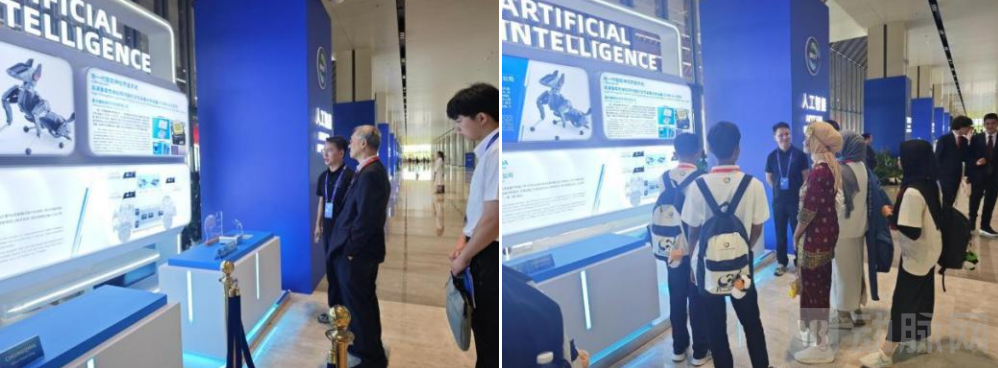
BrainSpace Booth
Looking ahead, BrainSpace stated: "We hope that through core technology breakthroughs, brain-computer interfaces will move from scientific research to clinical applications, and from China to the international stage. Building on the earlier in-depth collaborations with countries such as Germany and Singapore, we aim to leverage the ‘Belt and Road’ cooperation platform to bring Chinese brain-computer interface technology to the global stage."