

Amgen's Next-Gen Obesity Drug MariTide Poised for Dual Breakthrough Ahead of Full Phase 2 Data Disclosure

Amgen
Developer of Treatment Drugs for Serious Diseases
Intelligent Finance APP learned that Amgen, Inc. (AMGN.US), the U.S. biotech giant, will present the full clinical data of Phase II (Part 1) for "next-generation weight loss drug" MariTide in obesity indication at the American Diabetes Association (ADA) Annual Meeting to be held on June 23, 2025. The trial, which targets patients who are obese or overweight without type 2 diabetes, lasts for 52 weeks. Although the management stated that the top-line data released in November 2024 already covered most of the key data, Goldman Sachs expects this full data disclosure will still become an important stock price upside catalyst for Amgen and even the entire weight loss drug sector. Amgen will be able to provide details and insights not previously covered in the summary data.
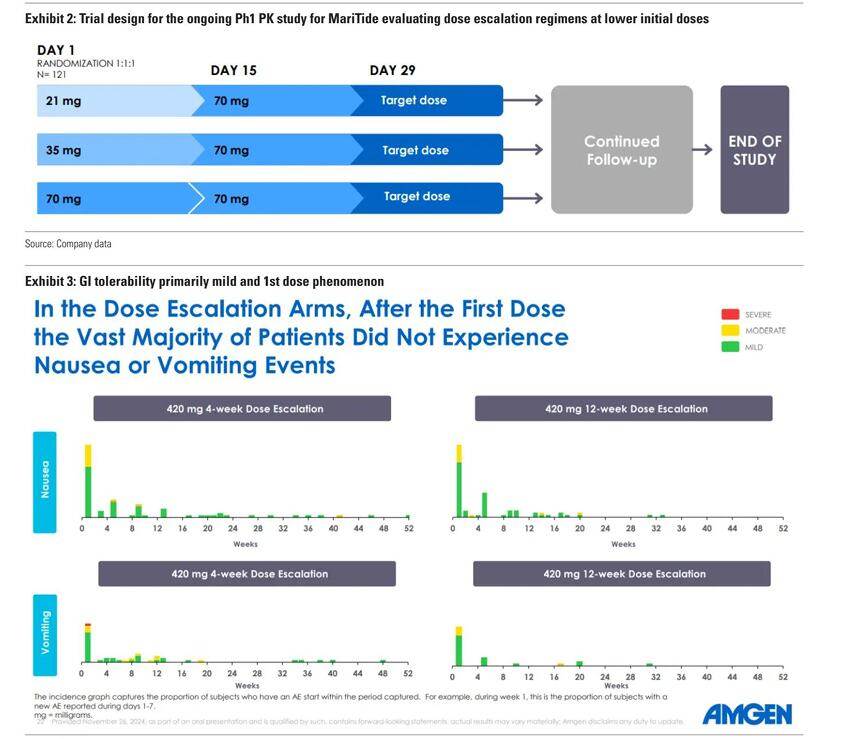
In its latest research report, Goldman Sachs stated that the results of a Phase I pharmacokinetic dose-escalation study on MariTide will also be released at the same time. These additional data are expected to further clarify the clinical characteristics of MariTide. Goldman Sachs believes that the possibility of MariTide achieving a "dual breakthrough" is very high — balancing the enormous potential of weight-loss drugs with clinical controversies, both achieving significant breakthroughs. Therefore, Goldman Sachs maintains a "Buy" rating for Amgen stock, with a target price of $400, implying that, according to Goldman Sachs' analyst team, Amgen's stock price has an upside potential of approximately 40% over the next 12 months from the current level.
Goldman Sachs believes that under the significant catalyst related to "the next generation of weight-loss drugs" such as MariTide, Amgen is expected to embark on a path of value reassessment, with potentially greater upside potential for its stock price compared to its peers. Goldman Sachs stated that Amgen's current 2025 estimated PE ratio of just 14x is significantly lower than the biotech sector average of 22x, and the target price of $400 implies approximately 40% upside potential for the company’s stock.
The Goldman Sachs analyst team is most focused on the specific details of "the next generation weight-loss drug" MariTide, including:
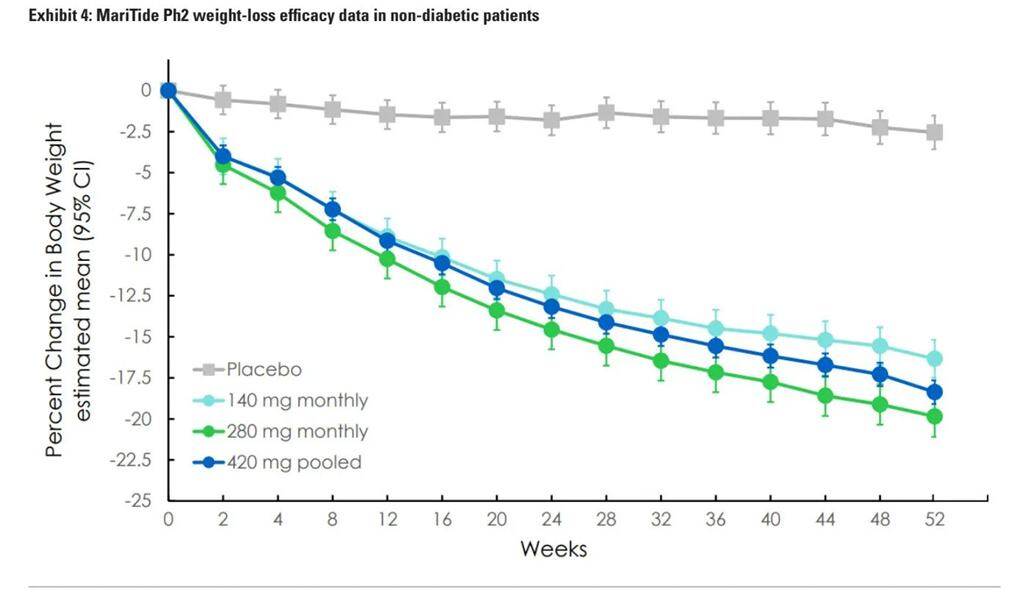
Weight Loss Efficacy: The weight loss effects of different dose groups of MariTide (including the extent of weight reduction in the step-up dosing regimen group and additional clinical data from other dosing frequency groups).
Safety and Tolerance: The incidence of adverse events in different dose groups and their changes over time (the proportion and timing of adverse reactions at each dose need to be further clarified). Goldman Sachs’ analysis team pays particular attention to the occurrence and alleviation trends of gastrointestinal adverse reactions across various regimens.
Market Positioning: The market positioning of long-acting weight loss drugs (especially in the field of primary healthcare). Goldman Sachs believes that MariTide, with its lower dosing frequency and milder clinical side effects, is expected to occupy a unique leading position in obesity treatment, and looks forward to gaining more insights from the upcoming data release.
Phase III Clinical Plan: The strategy and timeline for the recently initiated MariTide Phase III project (The company plans to conduct further outcome studies in the field of obesity-related complications, such as cardiovascular outcome trials, etc.).
Production and Supply Capacity: The company's capacity investment in manufacturing at MariTide (Given the long-term bottlenecks that peer companies have previously encountered in the supply of obesity drugs, Goldman Sachs is particularly focused on how Amgen ensures supply to meet potential large-scale demand).
Goldman Sachs stated that MariTide's efficacy and tolerability profile in the obesity field remains highly anticipated after the release of the topline data. On one hand, the drug achieved nearly a 20% average weight reduction at 52 weeks (without showing an obvious plateau), surpassing the performance of currently leading weight-loss therapies (such as Eli Lilly's tirzepatide, brand name: Zepbound, and Novo Nordisk's semaglutide injection, brand name: Wegovy). On the other hand, a relatively high proportion of gastrointestinal adverse reactions were reported in the early stages of the trial.
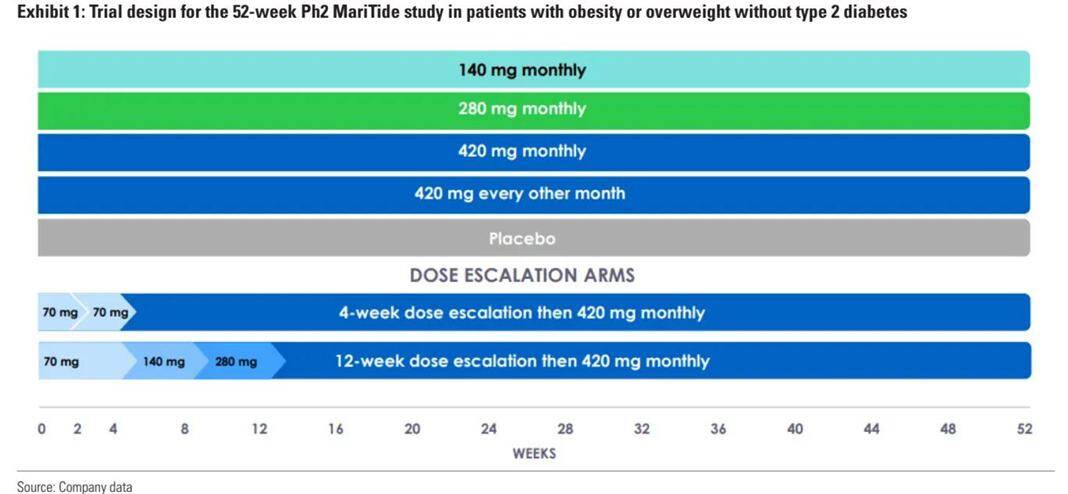
However, according to Goldman Sachs' interpretation, these gastrointestinal events were mainly mild and mostly occurred during the initial dosing phase; as the dose was gradually increased, the incidence of related adverse reactions significantly decreased. This improvement in gastrointestinal tolerability is a positive signal for MariTide's future clinical acceptance. If MariTide can leverage the convenience of monthly dosing while ensuring good safety and tolerability, and match or even surpass the weight-loss efficacy of existing therapies (such as Zepbound and Wegovy), Goldman Sachs believes it has the potential to achieve substantial commercial returns and secure a significant position in the obesity and type 2 diabetes treatment markets, possibly reshaping the therapeutic landscape in these areas.
Looking ahead, Goldman Sachs expects that the data from the maintenance phase (Part 2, extended by 52 weeks) of the Phase II trial for MariTide's obesity indication will be unveiled in the second half of 2025. The results from this phase are expected to clearly define the drug’s efficacy potential during the weight maintenance non-rebound phase. Based on the current available data, Goldman Sachs is optimistic about MariTide’s performance in long-term continuous treatment. The 104-week long-term follow-up data from this maintenance phase will also help address unresolved questions regarding durability of efficacy and long-term safety. Additionally, a Phase II clinical trial of MariTide in patients with type 2 diabetes (T2D) is currently ongoing, with Goldman Sachs anticipating that relevant data will likely be released in the second half of 2025. If the results are positive, MariTide may expand its indications to the T2D field, further broadening its potential market.
Goldman Sachs also pays attention to other key research data in the obesity field. In addition to the trial results of MariTide itself, this ADA conference and the near future will announce several important studies in the obesity field, which the Goldman Sachs analyst team also closely monitors, mainly including:
Lilly: Ph3 ACHIEVE-1 Study (Oral GLP-1 Receptor Agonist Orforglipron) Complete Data for Obesity Indication (Expected Release in Second Half of 2025). Notably, Lilly announced the topline results of the Phase III trial of orforglipron for T2D patients last month.
Novo Nordisk: Full data from the Phase 3 REDEFINE 1 and 2 studies (investigating CagriSema combination therapy in adult patients with obesity).
Eli Lilly: Results data from the Phase 2 BELIEVE study (evaluating bimagrumab in obese/overweight individuals without diabetes).
Novo Nordisk: Ph3 SOUL Study (Cardiovascular Outcomes Trial of Oral Semaglutide in Patients with T2D) Results Data.
Novo Nordisk: Phase Ib/IIa Trial Results of "Amycretin" (A Single Molecule Agonist Acting on Both GLP-1 and Amylin Receptors) for Obesity Indication.
Lilly: Phase I Proof-of-Concept Data for Eloralintide (a Selective Long-Acting Amylin Receptor Agonist for Obesity).